Can You Wash a Cooling Pillow? Care Without Wrecking the Cooling Layer
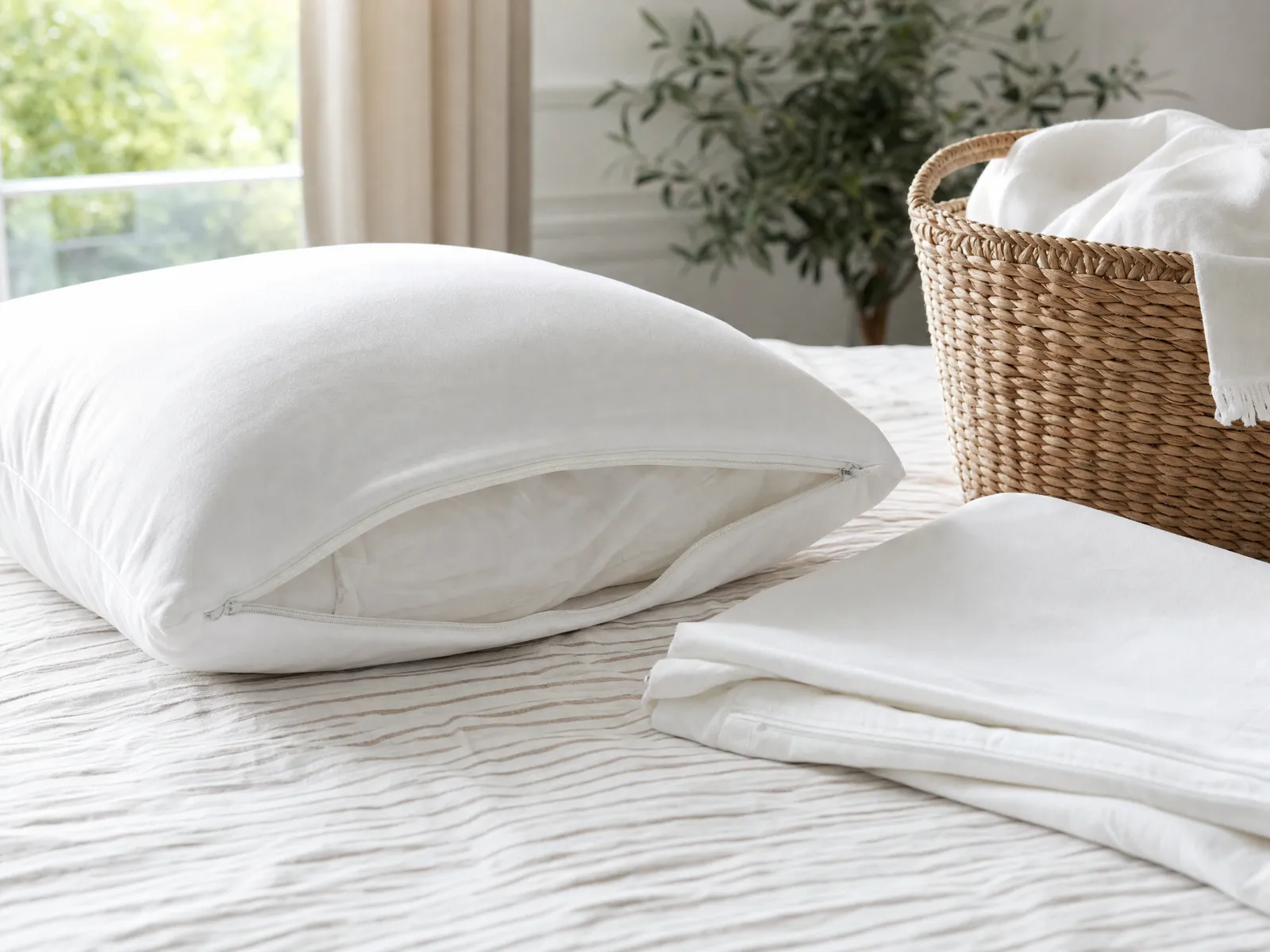
You can wash the cover. You should not wash the core. Can you wash a cooling pillow? Almost every pillowcase and most removable covers are machine washable, and the memory foam inside almost never is. The quickest way to destroy one is a hot wash and a tumble dryer. We earn a commission from links on this page, at no cost to you.
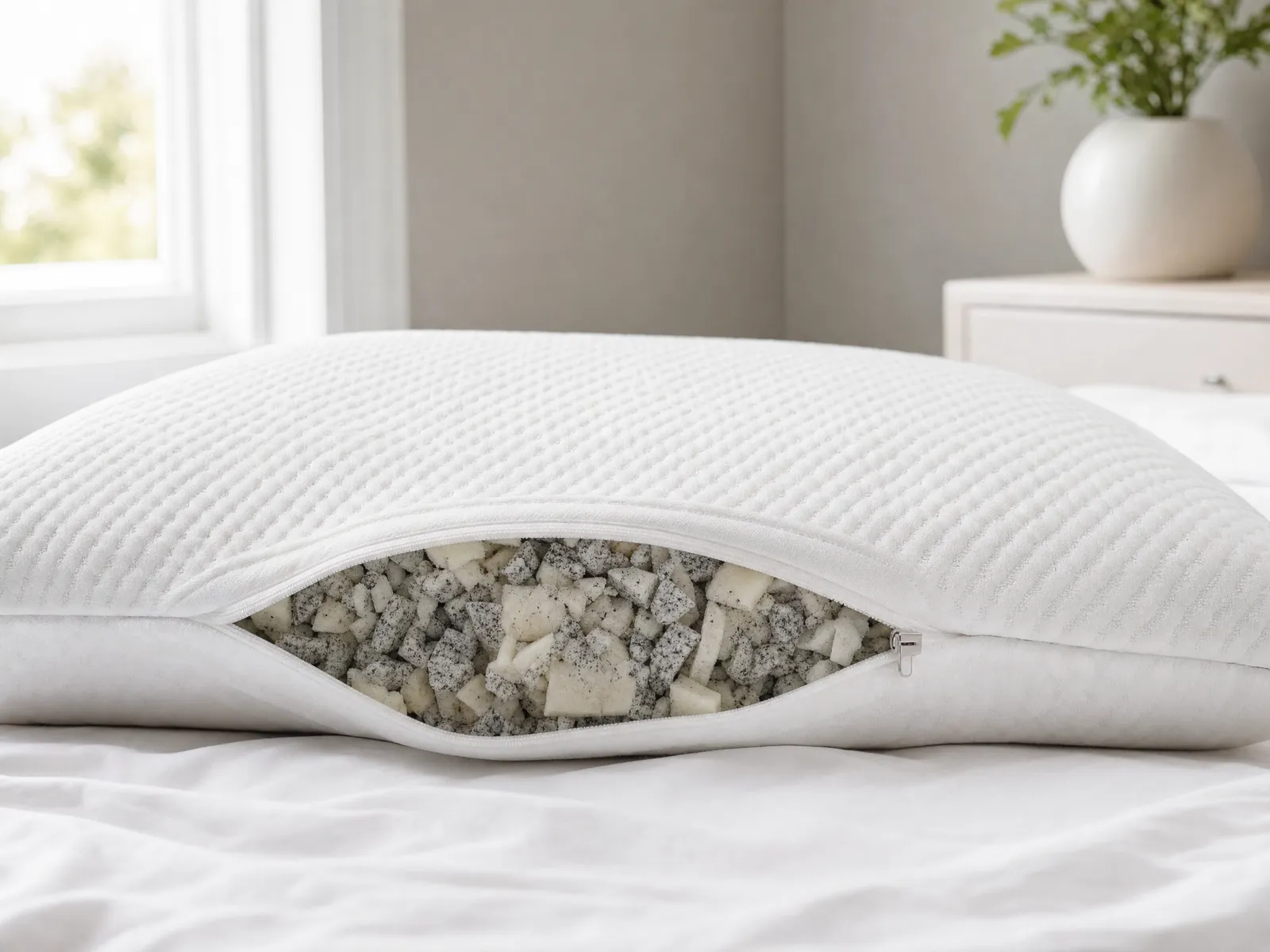
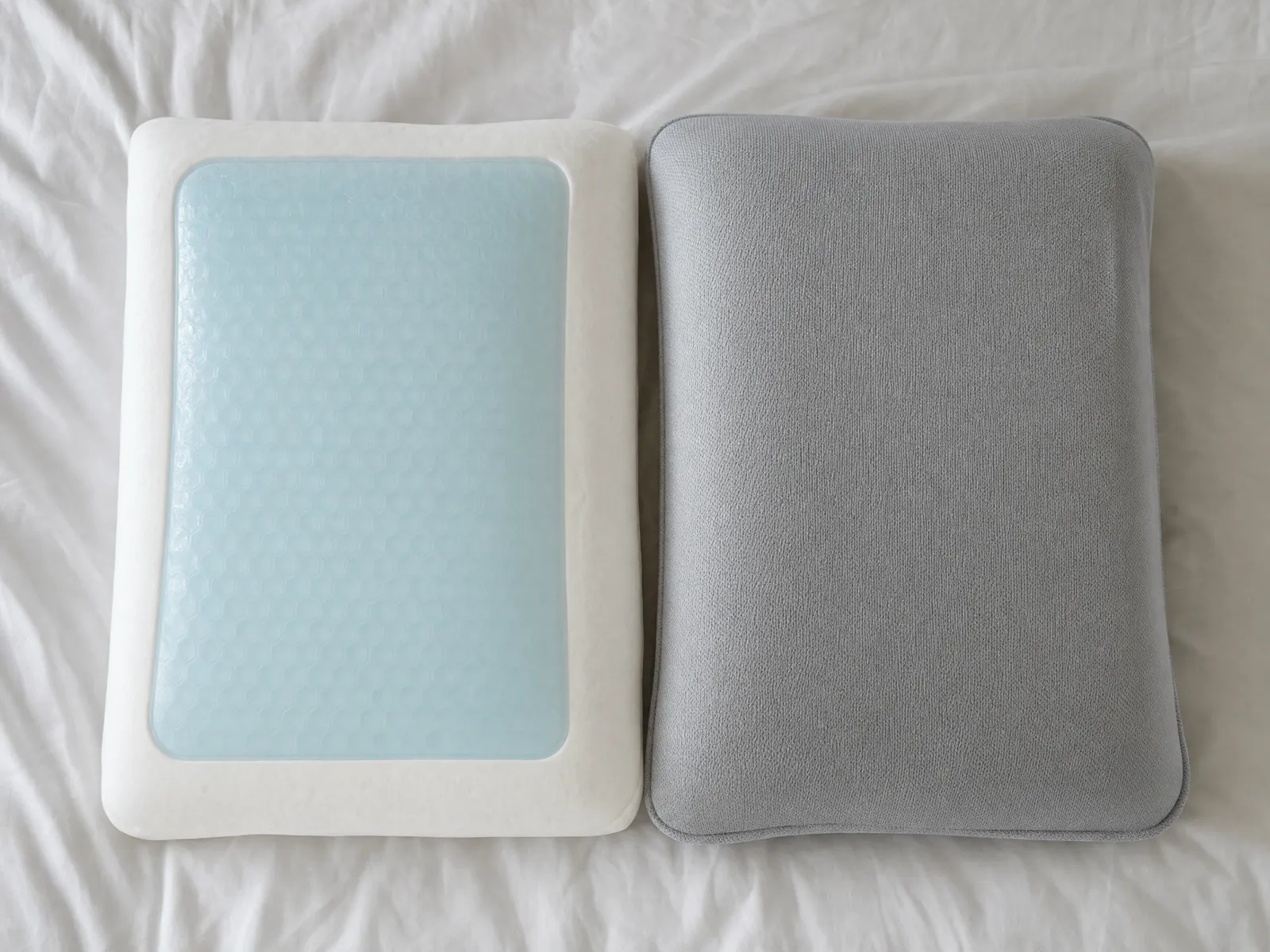
The more useful question is which part of the pillow you are holding. A cooling pillow is up to four objects stacked together: a pillowcase, sometimes a removable cover, a foam core, and sometimes a gel pad bonded to one face. Each wants a different instruction, and only the last one ends in a bin. If you are still shopping, our guide to choosing a cooling pillow covers which of those layers you are paying for.
The Short Answer
- The pillowcase goes in weekly with the sheets. The Sleep Foundation's bedding schedule gives sheets "once per week" and pillowcases "Once a week".
- A removable cover goes in cold, on a gentle cycle, every few weeks, and comes out to air dry rather than into a dryer.
- The foam core is spot clean only, because open-cell foam holds water, softens while wet, and dries from the outside in.
- Mould, not shrinkage, is the real failure mode. EPA states that "It is important to dry water-damaged areas and items within 24-48 hours to prevent mold growth", and that "There are many types of mold, and none of them will grow without water or moisture".
- Heat is what puts the cooling at risk, acting on the foam and on any adhesive holding a gel layer to it. We found no published before-and-after measurement for a laundered pillow, so that is mechanism, not measurement.
- Prevention is cheaper than laundering. One waterproof protector at $15.00 as of November 2026 is about 17 percent of the price of the $89 pillow it sits under.
How to Clean a Cooling Pillow: Four Layers, Four Instructions
Take the pillow apart in your head before you take it near a machine. Once you have counted the layers, the instructions stop competing.
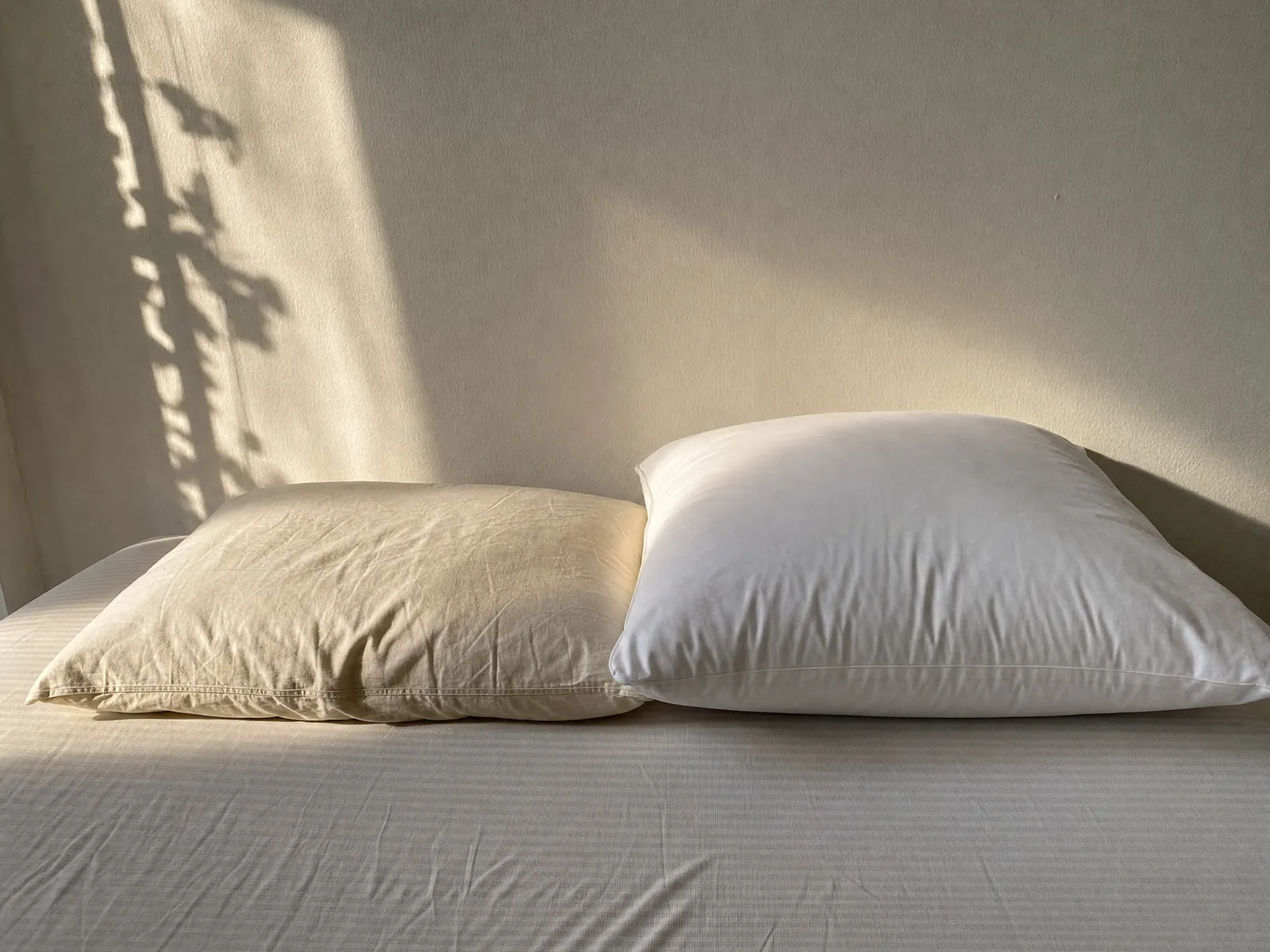
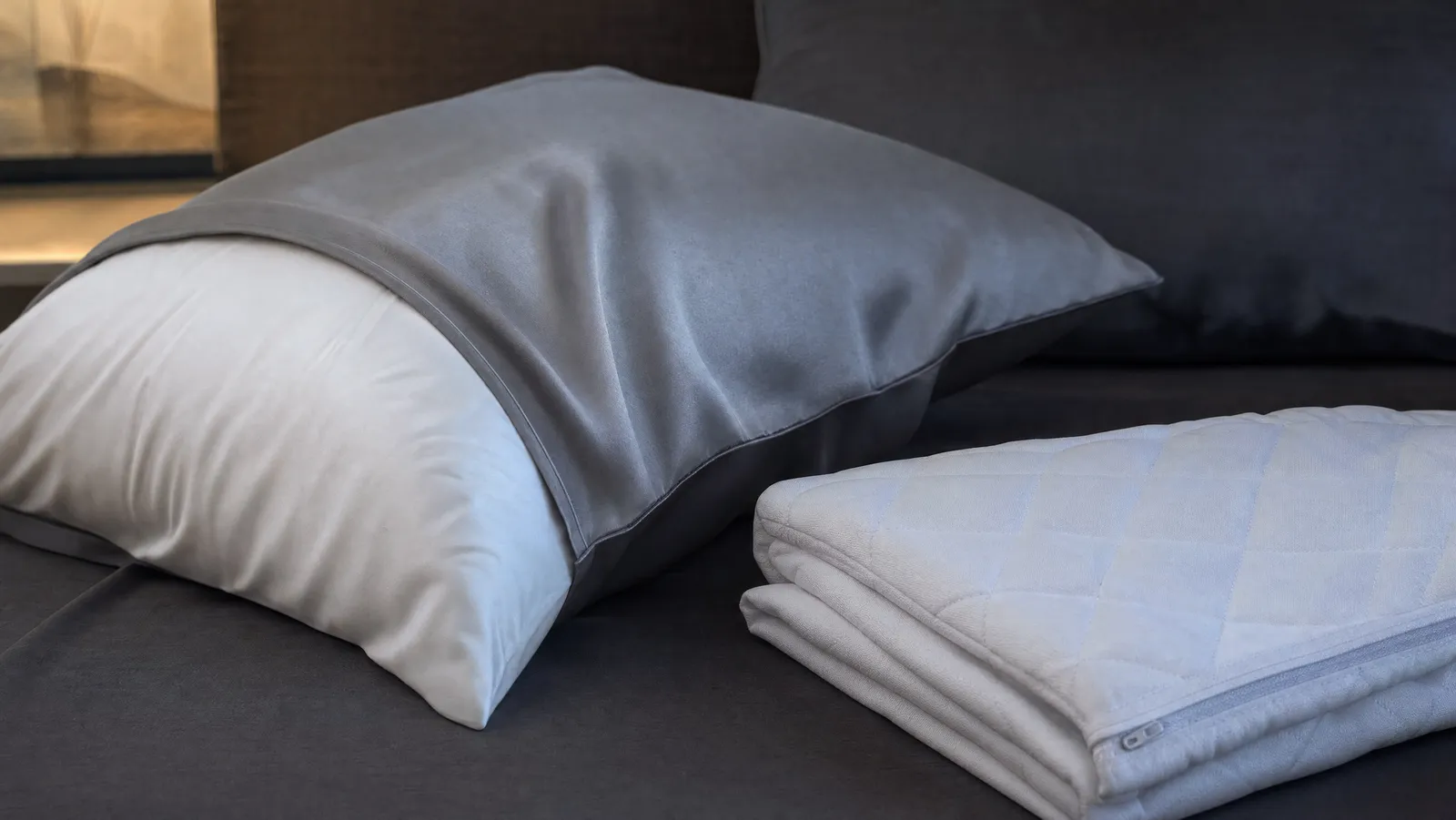
The pillowcase is a thin sleeve you launder with the sheets, at whatever temperature its label allows. It does most of the hygiene work in the bed and it is the cheapest layer to replace. If you want it to feel cooler as well as cleaner, what a cooling pillowcase can and cannot do is the companion piece to this one.
The removable cover is part of the pillow, and it comes off only if the maker designed it to. Cold water, gentle cycle, air dry, every few weeks. This layer decides how easy a pillow is to live with.
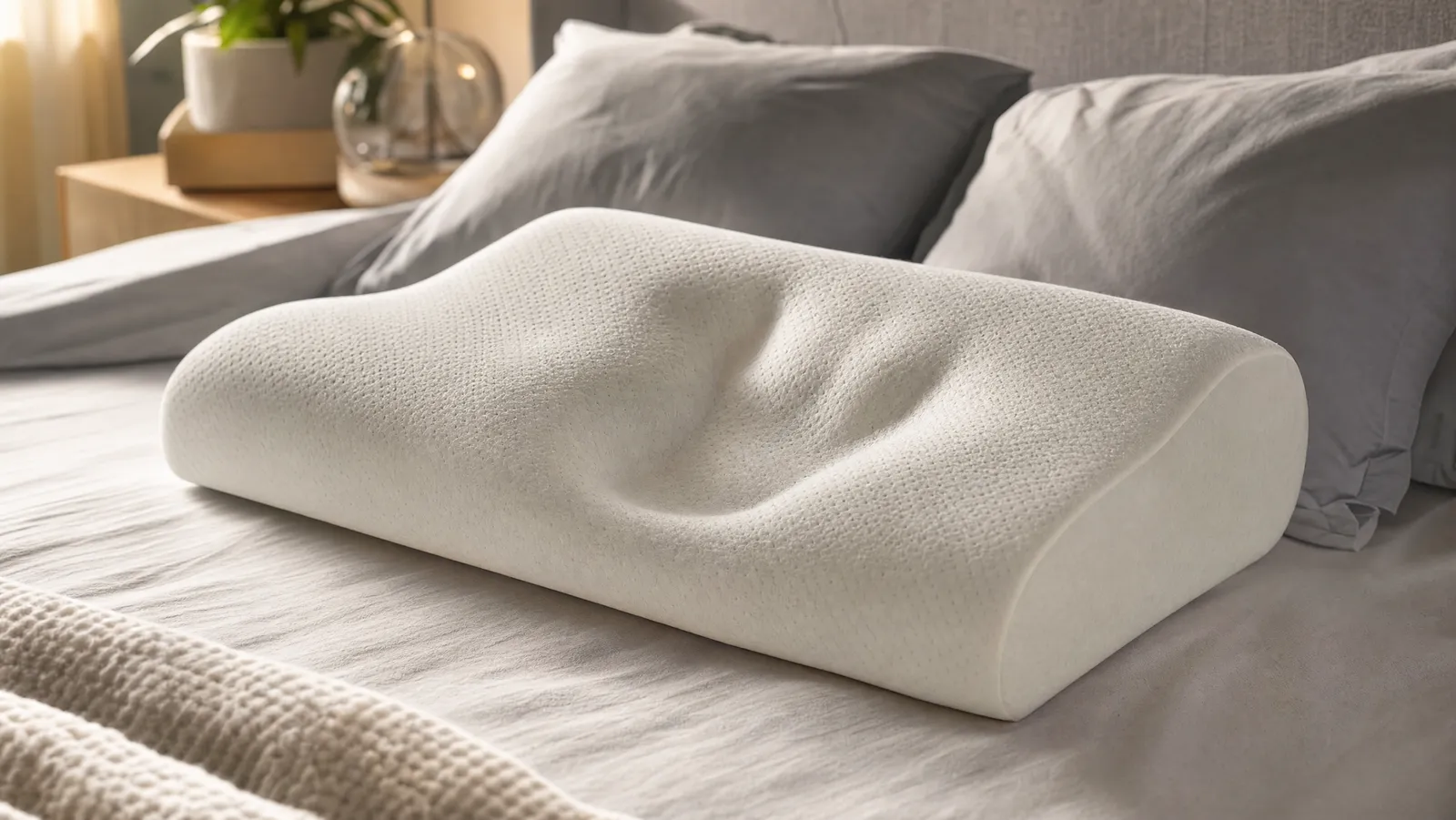
The foam core is spot clean. Do not submerge it, do not wring it, do not put it in a dryer.
The laminated gel or phase-change face is a bonded layer, and adhesive plus heat is a bad pairing. It is also rarer than the marketing implies. On 4 November 2026 we searched Amazon's catalogue through its Creators API for "phase change material cooling pillow": it reported 126 matches, and every one of the top ten results described gel-infused or shredded memory foam. Not one declared a phase-change material. For what is in the gel itself, see what is actually inside cooling gel.
Why Submerging a Memory Foam Core Is the Mistake
Three reasons, in ascending order of how much damage they do.
It holds water. Open-cell polyurethane foam is structurally a sponge. Saturate a queen core and you are lifting pounds of water inside a material built to be soft.
It takes a spin cycle badly. The Materials study below reports water plasticising the foam walls, and a spin cycle is a wringing action by design.
It dries slowly, and slow drying is how mould starts. EPA's household guidance is blunt about both mechanism and deadline: "The key to mold control is moisture control", and "It is important to dry water-damaged areas and items within 24-48 hours to prevent mold growth". A thick foam core in an ordinary bedroom is a poor candidate for that deadline, and the centre dries last.
There is also no remediation step for a pillow. EPA notes that "Absorbent or porous materials, such as ceiling tiles and carpet, may have to be thrown away if they become moldy", and a foam core is one. We have written separately about mould in pillows. Why we will not be casual about it: the US National Institute for Occupational Safety and Health states that "people who spend time in damp buildings report health problems" including "respiratory symptoms and infections, developing or worsening asthma". That is a finding about buildings, not bedding, and we will not inflate it.
The materials argument points the same way. In a study of polyurethane foam conditioned at raised temperature and humidity, published in Materials in 2021, Lapčík and colleagues reported that "the increasing relative humidity of the surrounding atmosphere leads to the initiation of the degradation processes". Laboratory conditions, not a washing machine, so we cite the direction and not a service life.
What the Care Labels on Our Three Picks Actually Say
Here is where the theory meets three real listings, quoted from their own copy.
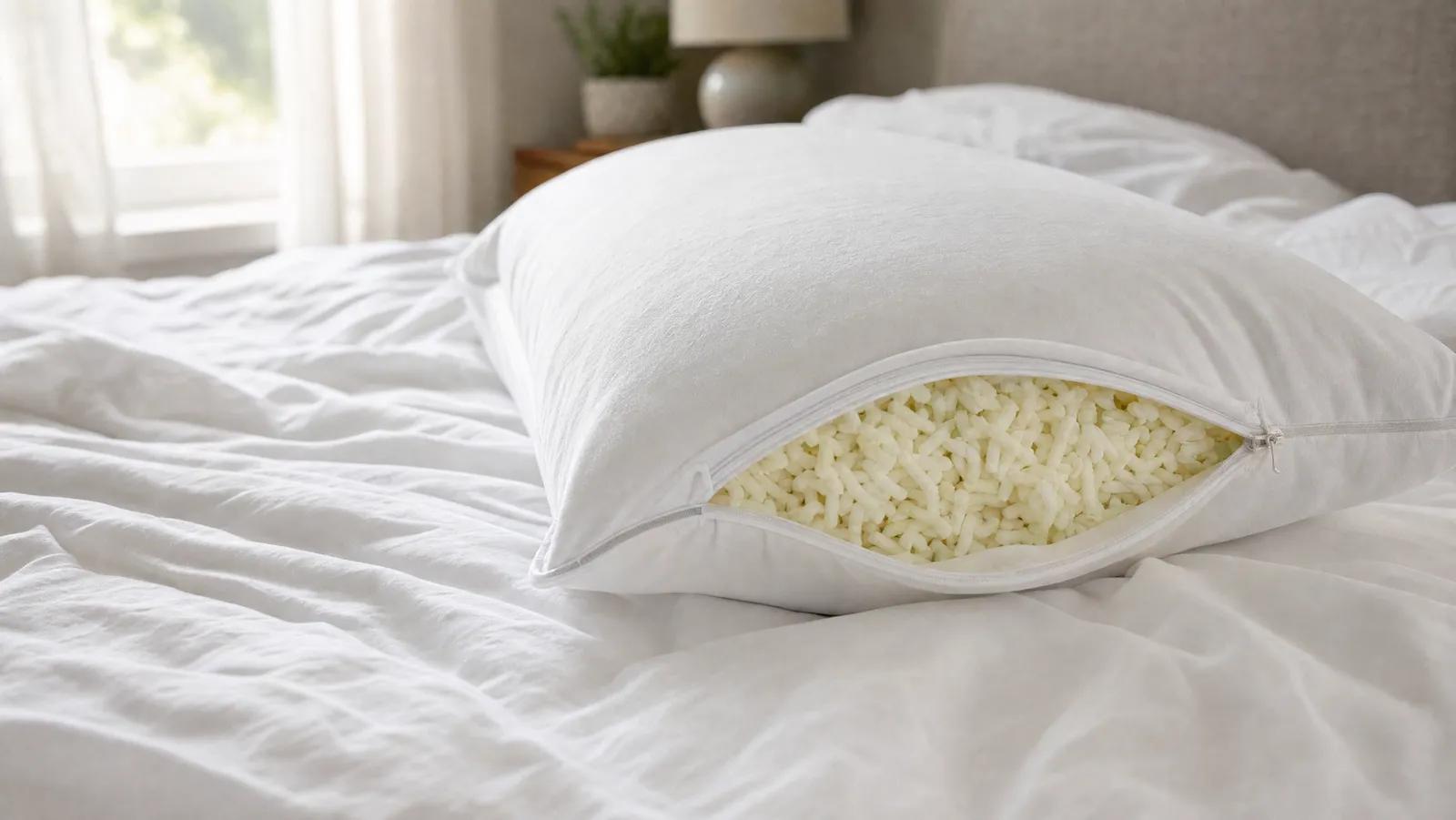
The Luxe Linen king pair is the clearest: a "MACHINE WASHABLE COVER: removable and machine washable" over a shredded memory foam fill. Note what that covers and what it does not. The cover is the washable object; the foam inside it is not mentioned.
The Coop Home Goods Original states a "signature Lulltra fabric cover" filled with "proprietary Oomph fill, a blend of cross-cut memory foam and microfiber", and our product data records that cover as machine-washable. Again the washable noun is the cover, and we will not call the Oomph fill launderable on a listing that does not say so.
The SOLOSHINE protector pair is the only one of the three whose entire body is washable, which is the point of a protector. SOLOSHINE states it is "machine washable" and adds a caveat most sellers would leave out: "minor shrinkage and wrinkling after washing are normal for bamboo viscose", which it says will not affect waterproof performance.
One point before you trust any of it. The FTC's Care Labeling Rule guidance lists what is covered as "Textile apparel worn to cover or protect the body" and "Piece goods sold for making apparel at home". A pillow is not apparel, so whatever care instruction yours carries, the maker chose to put it there. Read it as information rather than a regulated disclosure.
How to Spot-Clean a Cooling Pillow's Foam Core
This is the method for a mark, a spill or a patch of sweat staining. Add the smallest amount of water that will do the job.
- Strip the pillow to bare foam and set the case, cover and protector aside for the machine.
- Mix a weak solution of mild liquid detergent in cool water. Cool, not warm.
- Wring a cloth out until it is barely damp. If it drips, it is too wet for foam.
- Dab the stain, working inwards from its edge. Do not scrub or knead the foam, which drives moisture deeper.
- Go over the patch with a second cloth and plain water to lift the detergent, which otherwise dries sticky.
- Press, do not wring. Fold a dry towel over the damp patch and push down with a flat hand.
- Air dry fully before the pillow goes near a pillowcase.
For a shredded-fill pillow there is an easier route. If the fill comes out of the shell, as it does on the Coop and Luxe Linen pillows, take it out, machine wash the shell, and leave the foam alone.
How to Wash a Removable Cooling Cover
The cover is the easy one, and washing it is what keeps the core clean.
- Check the label for a temperature and a cycle. If it specifies cold and gentle, that is a constraint rather than a suggestion.
- Zip or fasten it closed so the zip cannot catch the drum.
- Wash cold on a gentle cycle, mild detergent, no bleach. Bleach and optical brighteners are not kind to coated or laminated fabrics.
- Skip fabric softener. It leaves a film, and on a cover sold for moisture wicking that is the opposite of what you paid for.
- Air dry it flat or on a line. A cover is thin enough to take hours rather than days, and this is the step that preserves any coating.
Drying Is the Step That Ruins Pillows
If you take one instruction from this page, make it this one: no heat, and no shortcuts on time.
Heat is the enemy twice over. It accelerates the chemistry that breaks polyurethane down, the mechanism in the Materials study above, and it is the input we would expect to attack the adhesive holding a gel pad or coated panel to the foam. A dryer supplies heat and tumbling at once, which is why we would not put a foam core in one at any setting.
What works instead is airflow and patience. Lay the core flat on a dry towel somewhere with moving air, turn it every few hours, and swap the towel when it stops being dry. A fan pointed across the pillow does more good than a warm room, and EPA's asthma-trigger guidance puts the room on your side too: "Maintain low indoor humidity, ideally between 30-50% relative humidity".
We will not give you an hour count, because it depends on the core's thickness, the humidity of the room and how much water you put in. What we will give you is EPA's deadline of 24 to 48 hours. Squeeze the middle of the core before the pillow goes back on the bed, and if it feels cool and heavy compared with the edges it is still wet.
How Often Should You Wash a Cooling Pillow?
Different layers, different intervals, and the schedule is less work than it sounds.
- Pillowcase: weekly. The Sleep Foundation puts sheets at "once per week" and pillowcases at "Once a week", and EPA's asthma-trigger guidance says to "wash bedding in hot water once a week, and dry completely".
- Removable cover: every few weeks, or sooner if you sweat heavily.
- Protector: on its own label, which for the SOLOSHINE cover means machine washable with the shrinkage caveat it states itself.
- Foam core: when something has happened to it. The Sleep Foundation lists pillows at "Once every 4-6 months (if washable)", and for a foam pillow that parenthesis does almost all the work.
There is a tension worth naming. The hot wash EPA recommends for bedding is the one thing a foam core cannot take, and EPA pairs that weekly hot wash with "Use dust proof covers on pillows and mattresses". That is a division of labour, not a contradiction: the barrier handles the layer you cannot wash hot, and the case takes the heat. We cover the allergen side in dust mites in pillows and the routine in how to remove dust mites from pillows.
Sweat and Yellowing: What Laundering Cannot Undo
A yellow core is what makes people reach for the washing machine, and it is usually the worst reason to.
Sweat is certainly part of it. The rest is less clear: foam discolours as it ages, and we could not find a published study separating sweat staining from the material's own ageing. We found no laundering method that reverses either, and no maker that claims one. Treat yellowing as cosmetic unless it comes with odour.
Odour is different, and it is information. A smell that returns after the core has properly dried most likely means moisture still living inside the foam, and that is not a cleaning job.
Cooling Pillow Care That Skips the Wash Entirely
The best care routine for a foam cooling pillow is one where the core never gets dirty, and it is cheap to set up.
A zippered waterproof protector with a washable case over it gives you two launderable layers and a barrier between your skin and the layer you cannot clean. The SOLOSHINE protector pair is $29.99 as of November 2026 for two queen covers, or $15.00 each, about 17 percent of the $89 Coop pillow it would sit under.
Be honest about where that stops being obvious. At $24.62 a pillow, the Luxe Linen king pair costs only about 64 percent more per unit than a single protector, so you would be spending real money to protect something barely dearer than the protection. The case is strongest when the pillow is expensive, when you sweat heavily, or when it has no removable cover.
The limitation from our pillowcase piece applies here too: a waterproof film blocks liquid water and adds resistance to water vapour leaving your skin, breathable or not. If you sleep hot that is a trade, not a free win, which is why we rate it temp neutral.
When Washing Is No Longer the Answer
Some pillow problems are laundry problems; some are the end of a pillow.
Replace rather than wash if the core has gone lumpy or lost its rebound, if it stays flat after you fold it and let go, if a smell comes back after a full dry, or if you can see mould. None of those is recoverable by cleaning. How often to replace your pillow sets out the intervals and the tests.
And if the reason you are washing bedding this often is that you are soaking it, that is a question for a clinician before it is a question for a pillow. Mayo Clinic describes night sweats as "repeated episodes of very heavy sweating during sleep, heavy enough to soak your nightclothes or bedding", says "They're often caused by an underlying condition or illness", and advises scheduling a visit if they "Occur on a regular basis" or come with "a fever, weight loss, pain in a specific area, cough, diarrhea or other symptoms of concern". No care routine treats a cause.
The Bottom Line
Can you wash a cooling pillow? Wash the case weekly, the cover cold every few weeks, spot clean the core, and never put foam in a dryer. The failure that costs you the pillow is not a shrunken cover but a core that went into the wash and did not dry in time, and EPA's 24 to 48 hour window is the number to keep in your head.
The better answer avoids the question. A waterproof protector under a washable case means the core is a once-a-year problem at most, and at $15.00 a protector as of November 2026 it costs a fraction of the pillow it protects. If the pillow underneath is past saving, our guide to the best cooling pillow is the next page, and we would look hardest at the launderable covers.
The shortlist
3 pillows compared — firmness, loft, and temperature side by side. The top pick is highlighted.
| Pillow | Firmness | Loft | Sleeps | Best for | Price |
|---|---|---|---|---|---|
Washable Cover, Certified FoamCoop Home Goods Original Adjustable Pillow (Queen) | Medium Firm | Adjustable | Neutral | Certified foam with published emissions testing | $89 Check |
Removable Washable CoverLuxe Linen Bamboo Viscose Gusseted Pillows (King, Set of 2) | Medium Firm | Adjustable | Cooling | Bamboo viscose surface, washable cover | $49.23 Check |
Protect Instead of WashSOLOSHINE Waterproof Bamboo Pillow Protector (Queen, 2 Pack) | — | — | Neutral | Blocking sweat from reaching the pillow | $29.99 Check |
Coop Home Goods Original Adjustable Pillow (Queen)

Being able to pull the cover off and wash it, and take a handful of fill out when the loft is wrong, means I have never once needed to think about washing the pillow itself.
It is $89 for one pillow and nothing in the listing claims cooling, so if you are here because you sleep hot this is the wrong product at the wrong price.
At $89 as of November 2026 for a single queen pillow, this is the dearest item on the page, and it is here for its construction. Coop Home Goods states a "signature Lulltra fabric cover" over "proprietary Oomph fill, a blend of cross-cut memory foam and microfiber", and our product data records that cover as machine-washable. The maker also says you can "add or remove memory foam fill", so the fill lifts out of the shell rather than being sewn in.
What the listing does not say is that the fill itself is launderable, so neither will we. Treat the cover as the washable layer and the Oomph fill as spot-clean-only until your own care label says otherwise. Coop states CertiPUR-US and GREENGUARD Gold certification; GREENGUARD Gold is a chemical-emissions scheme and CertiPUR-US covers content, emissions and foam durability, so neither speaks to care or cooling. Note our spec: temp neutral — a certified foam pillow with a washable cover, not a cooling pillow.
Luxe Linen Bamboo Viscose Gusseted Pillows (King, Set of 2)

The cover zips off and goes in with the towels, which is the whole reason I bought these, and two king pillows for under fifty dollars made it an easy decision.
The shredded foam inside is still a spot-clean-only job, so the washable cover solves the surface problem and not the core problem, and the pillows need a day or two out of the bag before the loft is right.
Two king pillows for $49.23 as of November 2026 is $24.62 a pillow, down from a $69.99 list price, about 30 percent off and the lowest per-pillow figure here. The feature that matters for care is stated plainly: a "MACHINE WASHABLE COVER: removable and machine washable", over shredded memory foam. That moves the launderable boundary one layer closer to your skin, which is the thing we would shop for.
Read the rest precisely. Luxe Linen describes a "3-LAYER PILLOW COVER" whose middle and reverse layers are "durable polyester that holds shape wash after wash", and separately states the bamboo viscose surface "breathes better than cotton and wicks moisture away" — a manufacturer claim with no published figure behind it. One useful detail from its own copy: the pillows are vacuum-sealed and need "24-48 hours to fully expand after opening", the same window EPA gives for drying a damp item before mould becomes a risk.
SOLOSHINE Waterproof Bamboo Pillow Protector (Queen, 2 Pack)

Two years on and the pillow underneath still looks new, which is not something I could say about any pillow I owned before I started using these.
It is a waterproof layer, so it does not feel cool and there is a faint crinkle when I move at night, and at $15.00 each it is not far off the price of a budget pillow.
This is the preventative buy, and on a care page the one we would make first. $29.99 as of November 2026 for two queen protectors is $15.00 each, about 17 percent of the $89 Coop pillow above. SOLOSHINE states a "durable waterproof TPU backing" that "blocks spills, sweat, drool and everyday moisture" behind a "PREMIUM 100% RAYON FROM BAMBOO SURFACE". Sweat that never reaches a foam core is sweat you never have to get back out of it.
Two caveats. The arithmetic is less flattering against a cheap pillow: at $24.62 each, the Luxe Linen pair above costs only about 64 percent more per unit than one protector. And the feature list claims both that waterproof backing and a "highly breathable fabric", which pull in opposite directions, because even a film marketed as breathable adds some resistance to water vapour leaving your skin. We found no published water-vapour transmission figure for it, so we rate it temp neutral.
How to Clean a Cooling Pillow Without Wrecking It: The Checklist
Every instruction below is free, and the only tool you need is a bowl of cool water. Work through it in order: the cheap, low-risk jobs come first and the one irreversible job comes last.
Can You Wash a Cooling Pillow? FAQ
Can you wash a cooling pillow in the washing machine? The cover, usually yes, cold and gentle if its label allows. The foam core, no. Open-cell polyurethane soaks up water, softens while wet, and dries from the outside in, so the middle of the core is still damp long after the surface feels dry. EPA states that "It is important to dry water-damaged areas and items within 24-48 hours to prevent mold growth", and a thick foam core in a cool bedroom is a poor bet against that deadline.
How do you clean a cooling pillow that smells? Odour usually tracks moisture, so treat the moisture rather than the smell. Spot clean the mark, air the core somewhere with moving air, and keep the room dry — EPA's asthma guidance recommends holding indoor humidity "ideally between 30-50% relative humidity". If the smell returns after a full dry, that is a replacement signal rather than a laundering problem.
Can you tumble dry a memory foam pillow? We would not, and we have not found a maker that tells you to. Heat is the common enemy of the foam and of any laminated gel or coated panel on its surface. In a study of polyurethane foam conditioned at raised temperature and humidity, published in Materials in 2021, Lapčík and colleagues reported that "signs of matrix hydrolysis were identified at 80 °C conditioning for both relative humidity conditions". A domestic dryer is not a laboratory, but the direction of travel is clear enough.
How often should you wash a cooling pillow? On the Sleep Foundation's bedding schedule, pillowcases go weekly and pillows "Once every 4-6 months (if washable)" — and the parenthesis is carrying most of the weight for a foam pillow. Covers every few weeks, protectors on their own label, core only when something has actually spilled on it.
Does washing a pillow get rid of dust mites? Hot water helps, which is exactly the problem for foam. EPA's asthma-trigger guidance says to "wash bedding in hot water once a week, and dry completely", and separately to "Use dust proof covers on pillows and mattresses". A foam core cannot take a hot wash, so for a cooling pillow the barrier does the job the wash would otherwise do.
Will washing ruin the cooling? It can, and the mechanism is heat rather than water. Gel pads and coated cooling panels are bonded to the foam, and heat is the input we would expect to attack that bond. We could not find a published test of cooling performance before and after laundering for any pillow on sale, so this is a mechanism and a precaution, not a measurement.
I soak the bedding most nights. Is this a laundry problem? That is a question for a clinician before it is a question for bedding. Mayo Clinic describes night sweats as "repeated episodes of very heavy sweating during sleep, heavy enough to soak your nightclothes or bedding", says "They're often caused by an underlying condition or illness", and advises scheduling a visit if they "Occur on a regular basis" or are "accompanied by a fever, weight loss, pain in a specific area, cough, diarrhea or other symptoms of concern". No washing routine treats any of that.
Why you can trust us

Aimee Cannon
Sleep & bedding writer
Aimee Cannon is a sleep and bedding writer who has spent years testing pillows of every kind — memory foam, down, wool, bamboo, buckwheat, and specialty support pillows. She focuses on matching the right pillow to each sleeping position and need, and reports what actually holds up after months of nightly use. When she is not testing pillows, Aimee is usually with her husband and her dog.