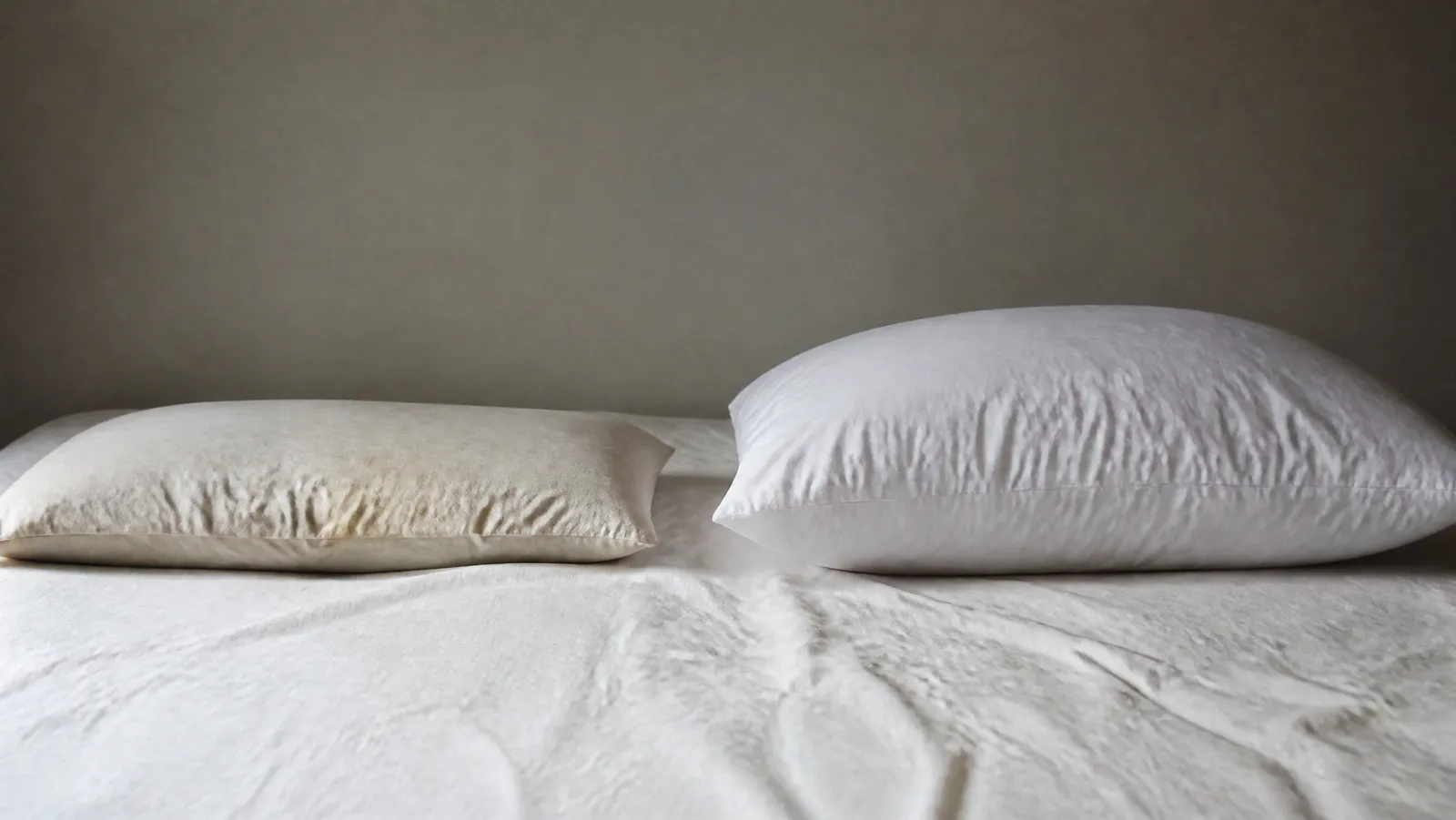
Do Cooling Pillows Actually Work? What the Evidence Says
Partly, briefly, and less than the packaging implies. Do cooling pillows actually work? The mechanism is real: a gel or phase-change surface pulls heat out of your skin faster than the fabric it replaced, and being too hot does interfere with falling asleep. But a pillow touches a small patch of you, and the cool feeling fades as the surface warms to your temperature. We earn a commission from links on this page, at no cost to you.
The verdict has two halves, and this page keeps them apart. The physiology behind "sleep cooler" is textbook. The claim that a pillow delivers a meaningful share of it all night is not evidenced at all, because as far as we can establish, nobody has run a controlled trial on a cooling pillow. Our best cooling pillow guide ranks what we would buy, for the cover and the airflow rather than the gel.
The Short Answer
- The physics is real. Core body temperature falls as you fall asleep, and shedding heat through the skin is part of how sleep gets initiated. A hot surface works against that.
- The pillow's share is small. By the burn-assessment rule of nines, an adult's whole head and neck are about 9% of total body surface area, and only part of that touches a pillow. The room, the mattress, the duvet and your sleepwear own the rest.
- "Cooling" nearly always means conduction, and conduction is self-limiting. A gel surface feels cool because it moves heat out of your skin quickly, and it stops once it has equilibrated with you, which we would put in minutes rather than hours. The cool side of the pillow is a real effect, and roughly the whole one.
- Almost nobody has measured a cooling pillow. We searched for a controlled trial of one and did not find it. What exists is research on cooling pads, caps, phase-change mattresses and rooms.
- What reliably helps is cheaper than the pillow. A cooler room, moving air, a launderable wicking cover, less insulation under your head, and treating the real cause if you wake up drenched.
What Sleep Science Actually Says About Being Too Hot
This half is not controversial, and deserves stating properly before anyone sells you a pillow on the strength of it.
According to Harding, Franks and Wisden's 2019 review The Temperature Dependence of Sleep, in Frontiers in Neuroscience, "Whether diurnal or nocturnal, sleep onset and a reduction in core temperature occur together", and "Non-rapid eye movement (NREM) sleep episodes are also accompanied by core and brain cooling". The review adds that NREM onset is most likely when core temperature is at its steepest rate of decline. Falling asleep and losing heat are one event described twice.
The applied number comes from the Sleep Foundation, which states that "The best room temperature for sleep is approximately 65 degrees Fahrenheit (18.3 degrees Celsius)" and reports that "most doctors recommend keeping the thermostat set between 65 to 68 degrees Fahrenheit". On the mechanism it says that "A higher core body temperature has been associated with a decrease in restorative slow-wave sleep". At population scale, Minor and colleagues, in Rising temperatures erode human sleep globally in One Earth in May 2022, linked over 7 million wristband sleep records from 68 countries to local weather and found warmer temperatures shorten sleep "primarily through delayed onset".
Now the part the marketing leaves out. The same review notes that "direct skin warming can shorten sleep-latency and promote NREM sleep". The proposed mechanism is peripheral vasodilation, which may be why warm socks help some people sleep. "Colder is better" is too crude. What you want is a body able to shed heat, not a cold patch under one ear.
What a "Cooling" Pillow Is Physically Doing
A pillow has no power source, so it cannot refrigerate anything. It has three moves: conduct heat away from your skin faster, let air and moisture through so evaporation can work, or store a little heat in a material that changes phase. Every cooling pillow is some combination of those, and the step-by-step version is in our companion piece on how cooling pillows work.
The four mechanisms that are actually mechanisms:
- Gel infusion or gel particles, which raise thermal conductivity so heat leaves your skin faster.
- A phase-change coating, which absorbs latent heat while it melts at around body temperature.
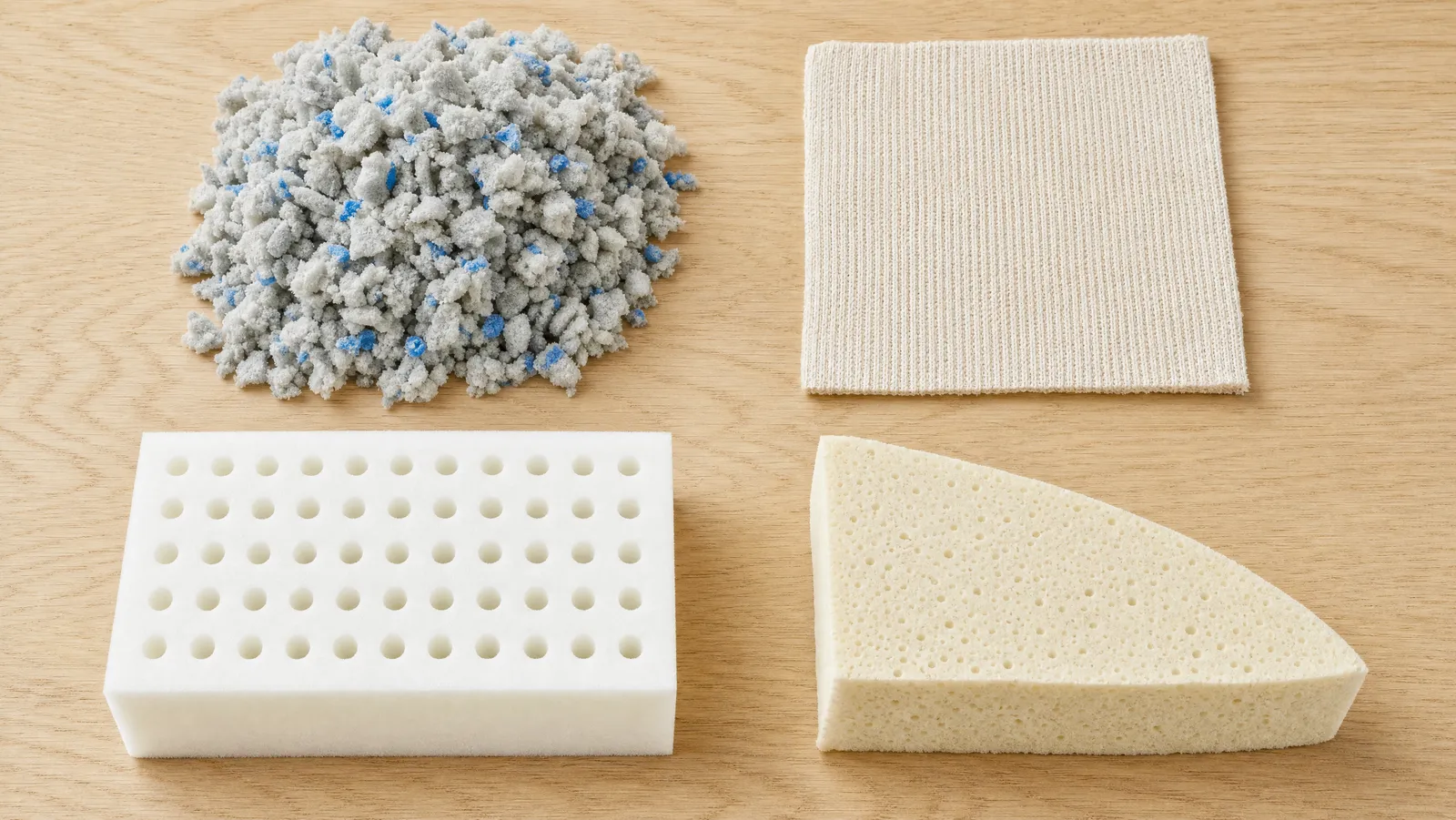
- Structure: ventilated foam, shredded rather than solid fill, or latex pinholes, which move air instead of trapping it.
- Cover fibre: bamboo viscose, a lyocell such as Tencel, or a crisp cotton weave, which wick moisture and dry quickly.
There is measured support for the first, though it comes from the people selling it. A US patent filing covering gel particles in flexible polyurethane foam reports thermal conductivities of 0.0226 and 0.0292 Btu/(hr-ft-°F) for a non-gel and a gel-foam sample, by the ASTM E1225 method, roughly 29% higher for the gel, plus a 5.1°F (2.8°C) shift attributed to its phase-change material turning from solid to liquid. Read those as manufacturer-side material measurements, not a test of a night's sleep.
Gel versus phase-change cooling is a real distinction rather than a marketing one, and it decides duration: a gel infusion changes how fast heat flows, while a true phase-change material also soaks up a fixed quantity of latent heat while it melts, and then it is full.
Fill structure matters more than either. A solid slab of memory foam is the hostile case: dense, closed and closely conforming, so it insulates while increasing contact area. That is not an argument against the material, which has advantages we set out in what memory foam actually does well. It is an argument for shredded over solid if heat is your complaint.
Why the Cool Feeling Does Not Last
The textile industry's own metric gives the game away. The property sold to you as cooling is measured as q-max, and Japan's standard for it, JIS L 1927, published in February 2020, is titled "Textiles - Measurement method of cool touch feeling property". North Carolina State University's Textile Protection and Comfort Center describes the Qmax value as "the instantaneous thermal feeling sensed when there is initial contact" with the skin, and says the test is "[s]imulating initial touch when shopping". It is a peak at first contact. No part of the measurement covers hour three.
The best human data on a cooling surface points the same way. In Assessment of a mattress with phase change materials using a thermal and perception test, published in Experimental Thermal and Fluid Science in 2017, Priego Quesada and colleagues had 20 participants lie on a phase-change mattress and a conventional one for 20 minutes each. It did work thermally: back skin temperature rose less on it, by 0.3 to 1.0 degrees Celsius, and the authors report the materials "improved the heat dissipation of the human body during lying in a proportion between 2.7% and 25.6%". And yet: "No differences in thermal comfort and thermal perception were observed between mattresses."
Read that twice. A whole mattress, far more contact area than any pillow, produced a statistically significant thermal effect that nobody noticed as comfort.
Why cooling pillows stop working is mostly this rather than a defect: the surface reaches your temperature and the heat flux collapses. Compressed fill and a cover washed soft over a year make it worse by cutting airflow. The free fix is the oldest in the bedroom: turn the pillow over and start the transient again.
What the Research on Cooling Pillows Does and Does Not Cover
The honest sentence first. We could not find a controlled trial of a cooling pillow. What we found was four cousins, worth knowing so you can spot when a retailer borrows one.
A cooling pad, in a clinical population. The closest match is a 2016 phase II randomised trial by Marshall-McKenna and colleagues in Supportive Care in Cancer, testing a "cool pad" pillow topper plus standard care against standard care alone in 74 women on endocrine therapy for breast cancer who had hot flushes and insomnia. Median sleep efficiency improved in both arms, but the intervention arm's increase was "almost twice that on the control arm (p = 0.024)", and HADS depression scores improved too (p = 0.036). The hot flush reduction came in at p = 0.09, which we read as a trend rather than a result. A genuine positive finding, and also a pad rather than a pillow, in women with hot flushes, against nothing rather than an ordinary pillow.
An active cooling cap. A randomised crossover pilot of head cooling during sleep in 14 female university students in the luteal phase found fewer arousals than the control condition, with a higher proportion of deep non-REM sleep and greater delta power. That is a device actively cooling the head, not a passive surface.
A phase-change mattress. The Priego Quesada test above: measurable, unnoticed.
Room cooling. A randomised crossover trial comparing radiant and convection cooling ran with 7 participants, and is about rooms, not bedding. A trial of cooling pillowcases for hot flushes is registered on ClinicalTrials.gov as NCT06415162, with no published results we could find.
So when a cooling pillow review calls the category "clinically proven", ask what the clinic put on the bed. We will not launder mattress or cooling-cap evidence into a pillow claim, and neither should anyone selling you one.
The Marketing Tells: How to Read a Cooling Pillow Claim
One question separates most of this category: is there a mechanism, or only an adjective?
A mechanism is a noun you can check: gel particles, a phase-change layer, shredded or ventilated fill described as an airflow structure, latex pinholes, a named cover fibre such as bamboo viscose or lyocell. An adjective is "cool", "ice", "chill" or "arctic" in the title with nothing thermal in the feature list, or "breathable" as the only temperature word over a fill of ordinary polyester.
Our budget pick is the worked example. Amazon's title for the Utopia Bedding four-pack reads "Cooling Pillows for Side, Back or Stomach Sleepers". Utopia's own feature copy claims only that a "breathable microfiber fabric ensures a cool, comfortable sleep in every season", over a fill it describes as "100% virgin polyester fiber". No gel, no phase-change material, no ventilation structure anywhere. So we rate it neutral rather than cooling: the word "cooling" here lives in the listing title, not in the product. At $31.49 as of October 2026 for four pillows, or $7.87 each, it is good value and a decent pillow. It is not a cooling pillow.
The contrast is the DORMANOVA adjustable pillow at $64.80 as of October 2026, where the maker names three verifiable things: cooling gel particles in a shredded memory foam fill, a breathable cover that comes off for machine washing, and a 200g refill bag for setting your own loft. The gel is still conduction and will still equilibrate, but you know what you bought, and two of the three keep working all night.
Two more tells. Certifications are about chemistry, not temperature, and we untangle which says what in pillow certifications explained. And the smell of a new gel foam pillow has nothing to do with cooling, but catches people out: see pillow off-gassing.
Are Cooling Pillows Worth It? What Actually Helps a Hot Sleeper
Ranked by how much heat each one moves, which reverses the order the bedding industry prefers.
- The room. The Sleep Foundation's number is "approximately 65 degrees Fahrenheit (18.3 degrees Celsius)", with a thermostat band of 65 to 68. Nothing on the bed competes.
- Moving air. The Sleep Foundation's cooling tips include "Using a fan or air conditioner in hot climates" and "Controlling bedroom humidity". Evaporation keeps working after conduction has finished.
- Launderable wicking layers. The Sleep Foundation recommends "Reducing sweating by using the best mattress, sheets, duvet, comforter, pillow, and pajamas for temperature regulation". The word doing the work is "sweating". A thin wicking pillowcase you wash weekly beats a thick gel pillow you cannot.
- Less insulation under your head. Lower loft and shredded rather than solid fill cut trapped heat and contact area both. Choose height for spinal alignment first, a trade-off we work through in pillow height for neck pain.
- A pillow that has not collapsed. Compressed fill holds less air, so if yours is flat the heat is a symptom; how often to replace your pillow sets out the intervals.
- The cool side of the pillow. Still free, still works, still temporary.
When It Is Not the Pillow
Some overheating at night is a bedding problem and some is not.
Mayo Clinic is clear about what does not count: waking after sweating heavily "particularly if you're sleeping under too many blankets or your bedroom is too warm" is uncomfortable, but in its words these episodes "aren't usually considered night sweats". A cooler room and a thinner duvet may well fix that version.
The other version has criteria. Mayo Clinic advises scheduling a visit with a health care provider if night sweats "occur on a regular basis", "interrupt your sleep", are "accompanied by a fever, weight loss, pain in a specific area, cough, diarrhea or other symptoms of concern", or "start months or years after menopause symptoms ended". Its list of causes includes menopause, medication side effects such as some antidepressants and hormone therapy, sleep apnea, hyperthyroidism, and infections including tuberculosis and HIV, with lymphoma and leukemia as less common possibilities.
We cannot tell you which of those applies, and neither can a product page. A pillow treats none of them, and buying one can be a way of not asking the question. If you are regularly waking drenched, or sweating alongside fever or unexplained weight loss, that is a consultation rather than a purchase.
Our Picks: A Cooling Pillow That Actually Works, Within Limits
Two pillows, and the contrast between them is the argument.
The DORMANOVA adjustable pillow at $64.80 as of October 2026 is our pick, and not mainly for the gel. It wins because the maker describes a mechanism instead of implying one, and because two of its three cooling-relevant features, the airflow through a shredded fill and the removable machine-washable cover, keep doing something once the first-contact coolness has faded. Pulling fill out is also the cheapest way to put less insulation under your head.
The Utopia four-pack is the honest counterweight, rated neutral and recommended as what it is: $7.87 a pillow, as of October 2026, for a guest bed or a spare set.
What we will not claim is that we tested either. Nobody publishes thermal data for individual pillows, ourselves included, and we would rather say so than put up a number we cannot defend.
The Bottom Line
Do cooling pillows actually work? Yes at the surface and briefly, no in the sense the box implies. The physiology is real and well evidenced, and the Sleep Foundation's 65 to 68 degree band is the most useful number here. The pillow's slice is small by geometry, self-limiting by physics, and unmeasured in any controlled trial we could find.
So spend in order: the thermostat, then airflow, then a wicking cover you can wash weekly, then the pillow. Buy the mechanism rather than the adjective, read the care label, and expect a cool first contact instead of a cold night. For the shortlist we would buy from, our guide to cooling pillows for hot sleepers is the next page.
The shortlist
2 pillows compared — firmness, loft, and temperature side by side. The top pick is highlighted.
| Pillow | Firmness | Loft | Sleeps | Best for | Price |
|---|---|---|---|---|---|
Medium | Adjustable | Cooling | Adjustable loft & gel cooling | $64.80 Check | |
Budget Pick, Not CoolingUtopia Bedding Bed Pillows (Queen, Set of 4) | Medium Soft | Medium | Neutral | Budget multipacks & guest beds | $31.49 Check |
DORMANOVA Adjustable Cooling Memory Foam Pillow

Pulling a couple of handfuls of fill out got the height right for side sleeping, and the cover washing properly is the part I notice in summer, because I can strip it weekly instead of living with it.
The cool feeling is a first-contact thing that goes away once the surface warms up to you, so if you are buying it expecting a pillow that stays cold until morning you will be disappointed.
This is the pillow on the page whose cooling is a described mechanism rather than a word in the title, which is the whole test we apply in this category. DORMANOVA states shredded memory foam with "cooling gel particles" that "helps regulate temperature and reduce heat build-up", an "ultra-soft breathable outer cover" that "promotes airflow" and is removable for machine washing, and a 200g refill bag so you can set your own height and firmness. Those are three separate claims you can check against the product in your hands, which is more than most of this category offers, at $64.80 as of October 2026.
The trade-off is the subject of this article. The gel is a conduction effect, and conduction equilibrates with your skin, so expect a cool first contact rather than a cool night — and no, we have not measured how long it lasts, because nobody publishes that figure for pillows. What should keep working is the rest of the package: airflow through a shredded fill instead of a solid slab, a cover you can actually launder, and a loft you can lower by pulling fill out, since a thinner pillow puts less insulation between your head and the room. Buy it for the adjustability and the washable breathable cover, and treat the gel as a bonus.
Utopia Bedding Bed Pillows (Queen, Set of 4)

Four usable pillows for under $32 as of October 2026 is hard to argue with, and they are perfectly comfortable — I just would not have bought them expecting anything to feel cold.
Spot clean or hand wash only is the real limitation, because the one thing I want from a hot-weather pillow is to be able to wash it often.
Amazon's listing title for this set calls them "Cooling Pillows for Side, Back or Stomach Sleepers". The maker's own feature copy does not support that: the only temperature-related wording in it is that a "breathable microfiber fabric ensures a cool, comfortable sleep in every season", over a fill described as "100% virgin polyester fiber". No gel, no phase-change material, no ventilation structure, no cover fibre with a wicking claim. We have rated it temp: neutral for exactly that reason, and we have kept it on the page as the worked example — here, "cooling" is a search term rather than a feature.
Judged as what it is, it is a sensible buy. Four queen pillows for $31.49 as of October 2026 is $7.87 each, with a microfiber cover and double-needle stitching, which is the right money for a guest bed or a spare set, and plain polyester is no disaster for a hot sleeper once the room and the covers are doing the real work. The catch is care: Utopia says "spot clean or hand wash. Do not bleach", so this is not a pillow you can put through a weekly hot wash, which is a genuine drawback if you are shopping because you sweat into your bedding.
Mechanism or Marketing? How to Read a Cooling Pillow Listing, in Order
Every cooling claim is either a described physical mechanism or an adjective in a search-optimised title. These steps separate the two in about two minutes, using only what the maker publishes.
Do Cooling Pillows Actually Work? FAQ
Do cooling pillows actually work? Partly and briefly. The underlying physiology is solid: in Harding, Franks and Wisden's 2019 review in Frontiers in Neuroscience, "Whether diurnal or nocturnal, sleep onset and a reduction in core temperature occur together", and NREM sleep episodes "are also accompanied by core and brain cooling". A cooler sleeping surface works with that rather than against it. What is not evidenced is the size of a pillow's contribution. We could not find a controlled trial of a cooling pillow, and a pillow touches a small patch of skin for part of the night.
How long does a cooling pillow stay cool? Minutes, as a rule, because the cooling is conduction and conduction stops when the surface reaches your temperature. The industry metric for it, q-max under Japan's JIS L 1927 standard — titled "Textiles — Measurement method of cool touch feeling property" — records the peak heat flux at initial contact, not a temperature sustained for hours. Nobody we can find publishes a measured duration for a specific pillow.
Is there any trial showing a cooling pillow improves sleep? Not for a pillow. The closest is a 2016 phase II randomised trial by Marshall-McKenna and colleagues in Supportive Care in Cancer, which tested a "cool pad" pillow topper against standard care in 74 women on endocrine therapy for breast cancer who had hot flushes and insomnia. Median sleep efficiency improved in both arms, but the intervention arm's increase was "almost twice that on the control arm (p = 0.024)". That is a cooling pad, in a population with hot flushes, compared against nothing rather than against an ordinary pillow.
Are cooling pillows worth it? As the fourth thing you change, yes, for some people. As the first thing, no. A cooler room, moving air, and a launderable moisture-wicking cover each move far more heat than a pillow surface does, and all three are cheaper.
Is gel-infused memory foam actually cooler? It is measurably more conductive, which is not the same as cooler all night. A US patent filing covering gel particles in flexible polyurethane foam reports thermal conductivity of 0.0226 versus 0.0292 Btu/(hr-ft-°F) for non-gel and gel foam samples under ASTM E1225, roughly 29% higher for the gel. That is a manufacturer-side document measuring a material, not an independent test of a night's sleep.
Why does my cooling pillow feel warm by 2am? Because it has equilibrated with your head, which is the expected behaviour of a conductive surface rather than a fault. Compressed fill and a cover that has been washed soft reduce airflow too. Flipping the pillow restores the effect, briefly, for free.
What about a cooling pillowcase instead? A thin wicking case is a reasonable buy on its own terms, because moisture management keeps working after conduction has stopped. On the sleep evidence, a trial of cooling pillowcases for hot flushes is registered on ClinicalTrials.gov as NCT06415162, and we found no published results for it.
I wake up drenched. Is a cooling pillow the answer? That is a question for a clinician before it is a question for bedding. Mayo Clinic advises scheduling a visit if night sweats "occur on a regular basis", "interrupt your sleep", or are "accompanied by a fever, weight loss, pain in a specific area, cough, diarrhea or other symptoms of concern". Its list of causes includes menopause, some medications, sleep apnea and thyroid problems. No pillow treats any of those.
Why you can trust us

Aimee Cannon
Sleep & bedding writer
Aimee Cannon is a sleep and bedding writer who has spent years testing pillows of every kind — memory foam, down, wool, bamboo, buckwheat, and specialty support pillows. She focuses on matching the right pillow to each sleeping position and need, and reports what actually holds up after months of nightly use. When she is not testing pillows, Aimee is usually with her husband and her dog.