Dust Mites vs Bed Bugs: How to Tell Them Apart
If something is biting you, it is not house dust mites. That single fact does most of the work in the dust mites vs bed bugs question, because the two problems pull in opposite directions: one is an invisible allergen you manage with laundry, barriers and humidity, and the other is an insect infestation that usually needs a professional. We may earn a commission from links on this page, at no extra cost to you.
So the first job is identification, not shopping. Mites leave no marks and no bodies you can see; bed bugs leave a physical evidence trail and no respiratory symptoms. Getting that wrong costs months. If the answer turns out to be mites, our guide to pillows made for allergy sufferers covers what to sleep on afterwards.
Do dust mites bite? No, and the sources are not split on it
This is one of the rare consumer-health questions with no live disagreement in it.
The Texas A&M AgriLife Extension Service's house dust mite page states it in six words — "House dust mites do not bite" — and describes them feeding on "shed scales from human skin such as dandruff." Washington State University Extension's Pestsense fact sheet says the same thing: "They do not bite." The Asthma and Allergy Foundation of America's dust mite allergy page never mentions a bite or a sting at all; it has them feeding "mainly on the tiny flakes of human skin that you shed each day."
They are also not insects. AAFA describes dust mites as microscopic, eight-legged and "related to spiders", which puts them in the same broad company as ticks rather than beetles.
Bed bugs are the opposite case in every respect. Blood is the business model. The EPA's position is that "While bed bugs have not been shown to transmit disease, they do cause a variety of negative physical health, mental health and economic consequences", and the first item on its list is "Allergic reactions to their bites, which can be severe."
So: bites point away from mites. That does not automatically mean bed bugs — plenty of other things bite, and skin is a poor witness — but it does take mites off the board.
Size and visibility: a third of a millimeter against an apple seed
The size gap is the easiest field test you have.
- House dust mite. AAFA puts them at "only about one-quarter to one-third of a millimeter". Texas A&M AgriLife says "microscopic (0.3 to 0.4 mm long)". Washington State University Extension says "extremely small (up to 0.5 mm)".
- Bed bug. The University of Kentucky's entomology extension puts adults at "about 3/16-inch long and reddish-brown, with oval, flattened bodies" — roughly 4.8 mm, which is where the apple-seed comparison comes from. The EPA's version is that bed bugs "are only about the width of a credit card."
That is roughly an order of magnitude of difference in body length, and it lands on one practical rule: if you can see it without magnification, it is not a dust mite.
The complication is the young. Kentucky notes that "Immature bed bugs (nymphs) resemble the adults, but are smaller and lighter in color", with newly emerged nymphs "straw-colored and no bigger than a pinhead", and eggs that are "tiny (about the size of a dust spec), whitish and hard to see without magnification". A pinhead is still enormous next to a mite, but it is small enough to miss on a patterned sheet.
The difference between dust mites and bed bugs, feature by feature
Four things separate them, and each one has a different consequence for you.
What they eat. Mites eat you only after you have shed. Texas A&M AgriLife: "They feed on shed scales from human skin such as dandruff." Bed bugs feed on blood, which is why they bite and why their evidence is the color it is.
Where they live. Texas A&M AgriLife says house dust mites "live in warm, humid environments in carpets, upholstery, feather pillows, and under furniture and bedroom mattresses", and Washington State University Extension reports them "principally found in cotton-stuffed mattresses and furniture". AAFA adds the conditions: temperatures "around 70° F and above" and "humidity levels above 50%." That is a distributed problem spread through soft furnishings — we take the pillow apart in detail in dust mites in pillows. Bed bugs are a localized problem: Kentucky says they "prefer to hide close to where they feed", listing mattress seams, box springs, bed frames, headboards, upholstered furniture seams, baseboards and carpet edges, wall outlets, picture frames and electronics.
What they leave behind. For mites, the residue is the problem. Texas A&M AgriLife: "Waste product particles (droppings) produced by the mites are the main substances in house dust to which allergic people react." AAFA adds that "Both the body parts and the waste of dust mites are allergens for many people." You cannot see any of it. Bed bugs leave things you can photograph. The EPA's list: "Rusty or reddish stains on bed sheets or mattresses caused by bed bugs being crushed", "Dark spots… which are bed bug excrement and may bleed", and "Eggs and eggshells, which are tiny (about 1mm) and pale yellow skins that nymphs shed." Kentucky adds "tan-colored 'skins' shed by developing nymphs" and "dark spotting and staining, which is the dried excrement of the bugs."
How you notice. A mite problem announces itself through symptoms. AAFA's list runs "runny nose", "stuffy nose", "sneezing", "itchy nose, eyes, ears, and mouth", "red and watery eyes" and "swelling around the eyes", and for allergic asthma "shortness of breath", "cough", "chest tightness or pain" and "wheeze". A bed bug problem announces itself on your skin and on your bedding.
What about "dust mite bites"?
The phrase is common in search results and absent from the entomology sources, which is worth saying plainly rather than tidying away.
We could not find a public-health or extension source that attributes skin bites to house dust mites. Two of them — Texas A&M AgriLife and Washington State University Extension — say the opposite outright, and AAFA's account of dust mites never mentions a bite at all. AAFA's dust mite allergy symptom list is nasal, ocular and respiratory; it is not a list of marks on skin.
If you have marks on your skin, the honest answer is that this article cannot name the cause, and neither can a photograph. Kentucky makes the same point from the bed bug side twice over: "Confirmation requires finding the bugs and/or their signs, which often requires a professional", and "Studies conducted in bed bug-infested apartments suggest about 30 percent of people do not react even when bitten repeatedly." Skin reactions are unreliable in both directions — present without a cause you have identified, absent in people who are being bitten nightly. A clinician is the right call for the skin; physical evidence is the right call for the insect.
Health risk: two different shapes of harm
The stakes are not symmetrical, and neither are the remedies.
Dust mites are an allergen exposure. They are not infectious and they are not a pest-control emergency; Washington State University Extension notes the mites "contain potent allergens that may cause allergic reactions of the respiratory tract in a very small percentage of people." Whether you are among them is something only testing can establish, which is why reducing exposure is a reasonable experiment and not a diagnosis. We go through the exposure side in how to prevent a dust mite allergy.
Bed bugs are recognized as a public health issue in their own right. The EPA, in a document it developed jointly with the Centers for Disease Control and Prevention as the "Joint Statement on Bed Bug Control in the United States", lists allergic reactions to bites with effects "ranging from no reaction to a small bite mark to, in rare cases, anaphylaxis"; secondary skin infections from the bite reaction, naming impetigo, ecthyma and lymphangitis; and mental health impacts on people living in infested homes, including anxiety and insomnia. On disease, Kentucky is measured: "Although the bugs can harbor various pathogens, transmission to humans has not been proven and is considered unlikely."
Anyone with ongoing respiratory symptoms, or skin reactions they cannot account for, should speak to a clinician who can test rather than work from a web page.
What actually removes each one
Here the two responses stop resembling each other entirely.
For dust mites, the program is domestic and repeatable. AAFA's measures are washing bedding in "water that's at least 130° F or more", enclosing mattresses and pillows in "zippered allergen-barrier covers", holding indoor humidity "between 30 and 50%", and vacuuming with a HEPA-filtered machine weekly. Nothing in that list requires a contractor, and the pillow-level routine is laid out step by step in how to remove dust mites from pillows.
For bed bugs, the program is an eradication effort. The EPA's do-it-yourself guidance runs through sealing covers, a clothes dryer on high heat for infested items, steam cleaners where "steam temperature must be at least 130° F", and quarantine: "Items that cannot be treated should be placed in a sealed plastic bag or storage container and left there for up to a year to ensure any active bugs are dead." It also tells you not to throw out furniture you can safely treat — "Don't discard furniture if you can safely eliminate the bed bugs from it" — and to "hire a pest management professional or use pesticides carefully according to the label directions", noting professionals have "access to more intensive and proven methods that can even treat whole houses with heat."
Kentucky's framing of the same point is the one to keep: "When resources allow, it's prudent to enlist the services of a professional", while acknowledging that "those who cannot afford this may need to tackle the problem themselves."
That asymmetry is the practical heart of this comparison. A dust mite problem is one you can run yourself, for the price of covers and a laundry habit. A bed bug problem is one where doing it yourself is a fallback rather than a plan.
Where a pillow encasing fits, and where it does not
A zippered encasing is genuine equipment for the mite problem and a footnote in the bed bug one. Buying one does not settle which problem you have.
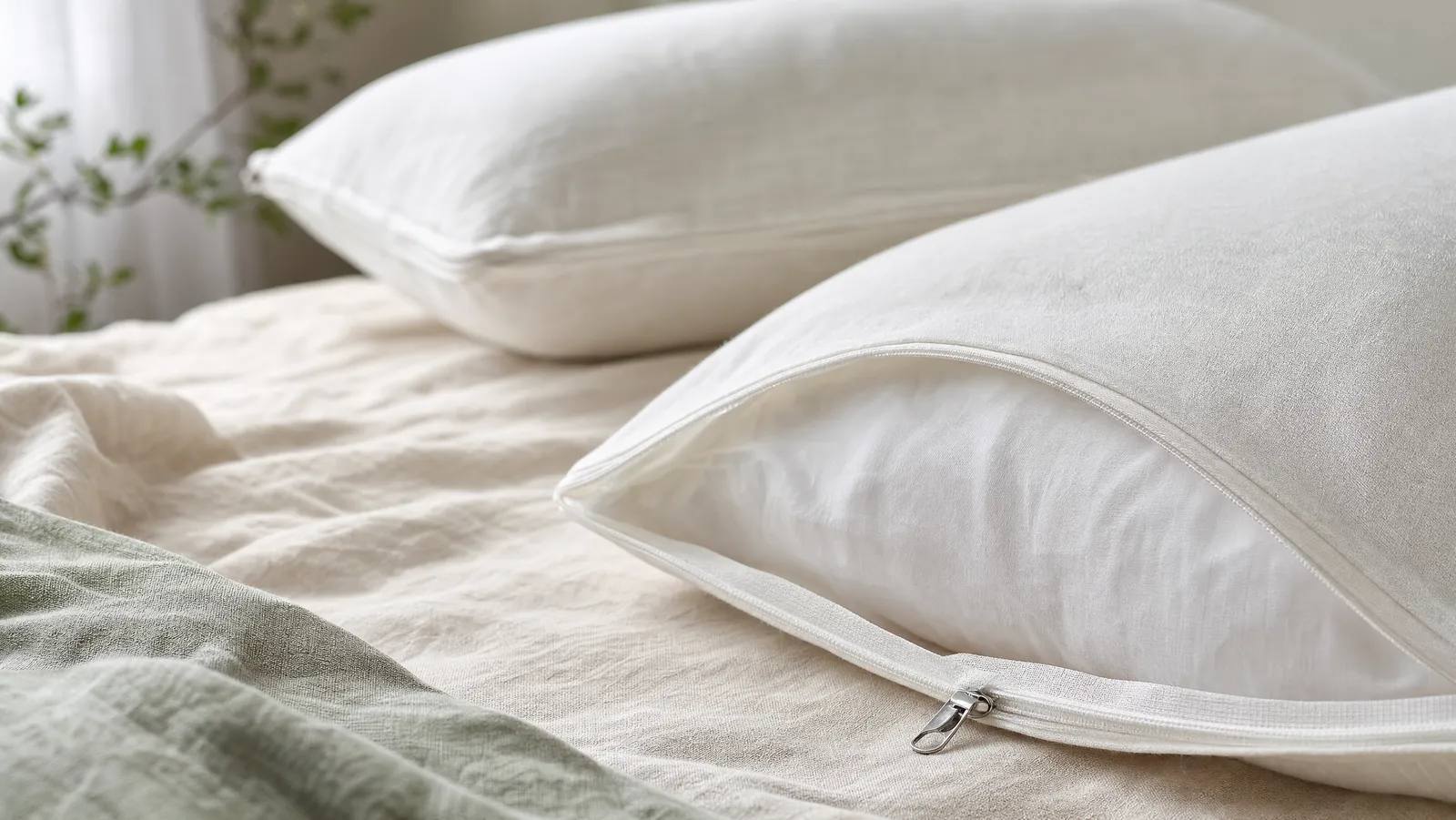
- The Mission: Allergy Barrier II encasing, $24.95 as of October 2026, is our pick because its stated specification reaches both: the maker says it blocks 100% of dust mite and animal dander allergens, attributes that to third-party testing by Indoor Biotechnologies, and states the encasing is certified bedbug-proof. Those are maker and maker-commissioned claims, and a bedbug-proof encasing protects the pillow, not the bedroom.
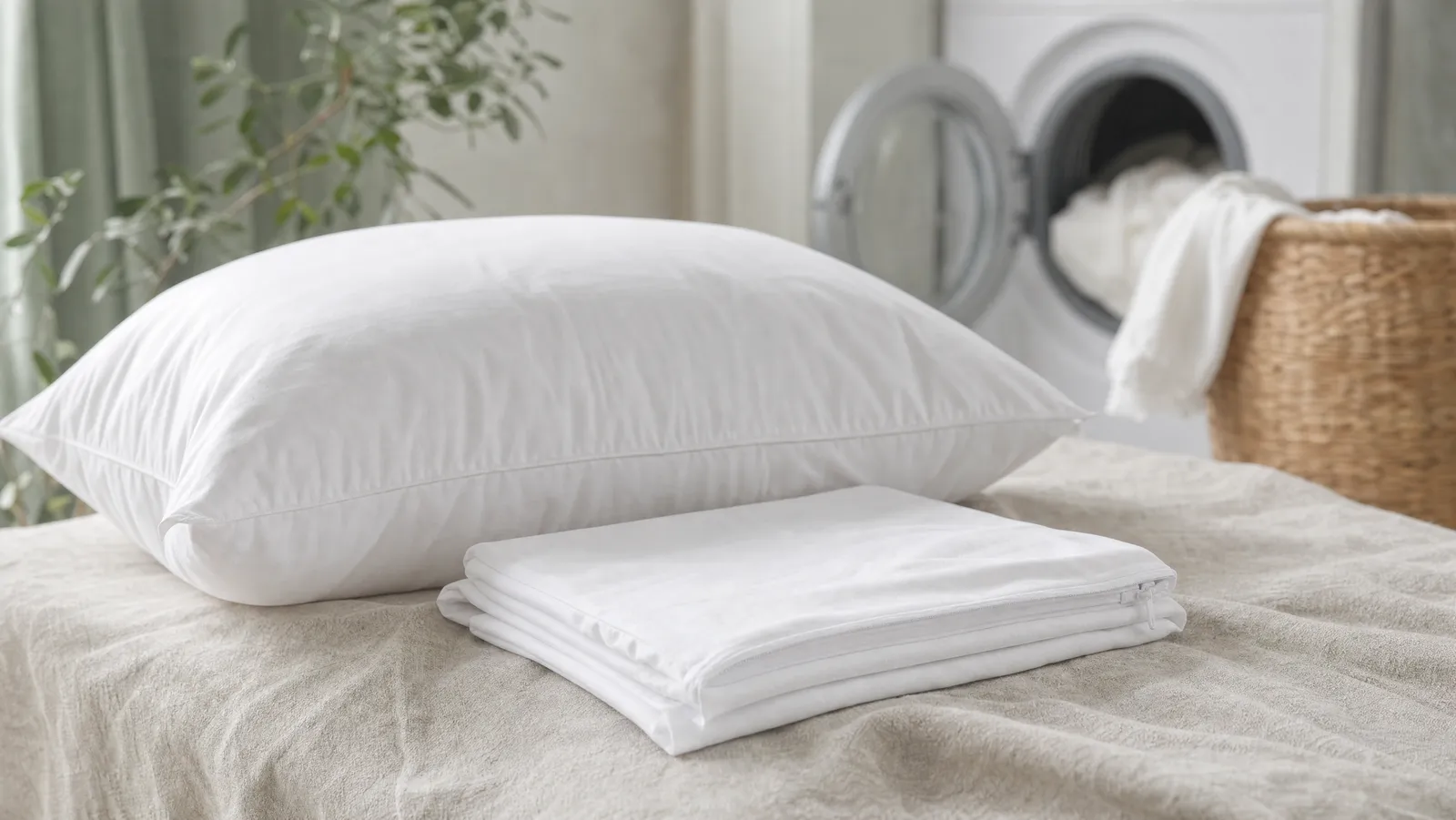
- The AllerEase Premier zipper protectors, four for $21.49 as of October 2026 against a $27.99 list price, are the washable pick: Aller-Ease states machine wash hot, then tumble dry on the lowest setting. No named allergen test, no bedbug claim.
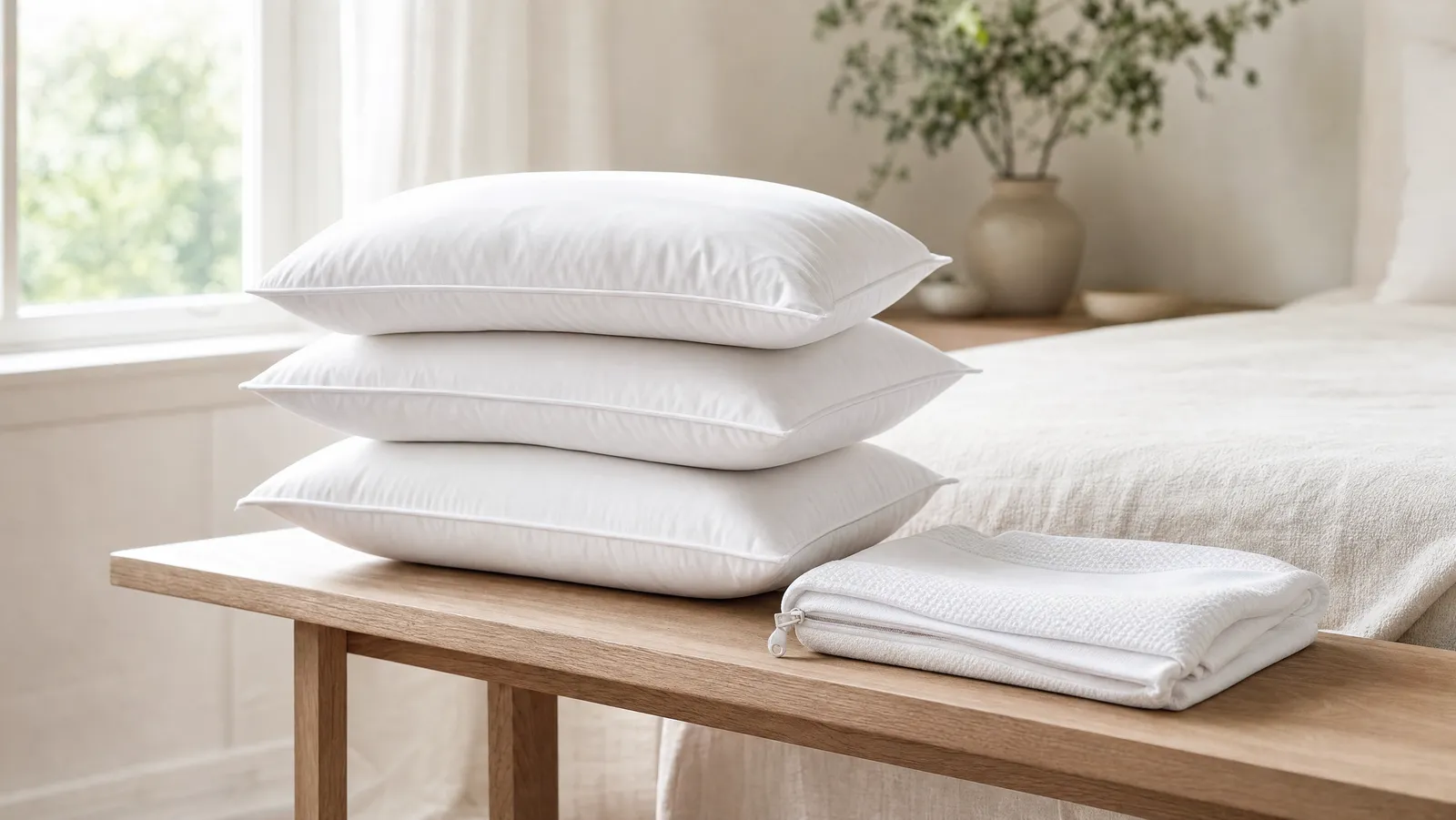
- The Niagara Sleep Solution protectors, four for $7.99 as of October 2026 against a $9.49 list, are the cheapest washable layer — sold for dirt and wear, with no allergy or bedbug claim attached.
The EPA's own logic on covers is instructive about the limit: "Purchase protective covers that seal mattresses and box springs. With covers that seal, the bed bugs will get trapped inside and die." That is a containment step inside a wider program the agency still expects may need a professional. Nobody in the public-health literature treats a pillow cover as a treatment for an infested room, and neither should a product page.
The bottom line
House dust mites do not bite, and that is where the triage starts. If something is biting, strip the bed and look for rusty stains, dark excrement spotting, pale shed skins and reddish-brown insects about 3/16 of an inch long — the EPA and the University of Kentucky both publish the checklist free. If nothing is biting and you wake up congested, you are looking at an allergen you will never see, and the response is hot laundry, zippered covers, humidity between 30 and 50% and weekly HEPA vacuuming, in AAFA's framing.
The costs of confusing them run both ways. Treat a bed bug infestation with an allergen encasing and you lose months. Call in a pest controller for a mite allergy and you pay for a service that has nothing to treat.
If the inspection points at mites and you would rather start from the right pillow than retrofit the one you own, Home Pillow Review's guide to allergy pillows is the next page — and if the inspection points at bed bugs, the next call is a pest management professional, not a shopping cart.
The shortlist
3 pillows compared — firmness, loft, and temperature side by side. The top pick is highlighted.
| Pillow | Firmness | Loft | Sleeps | Best for | Price |
|---|---|---|---|---|---|
| — | — | Neutral | One pillow sealed properly, with a named allergen test behind the claim | $24.95 Check | |
Best Washable CoverAllerEase Premier Zipper Pillow Protector, Standard/Queen, 4 Pack | — | — | Neutral | A weekly hot wash across every pillow in the house | $21.49 Check |
| — | — | Cooling | A cheap washable layer on every pillow, not a tested barrier | $7.99 Check |
Mission: Allergy Dust Mite and Allergen Proof Pillow Encasing, Barrier II, Standard Size
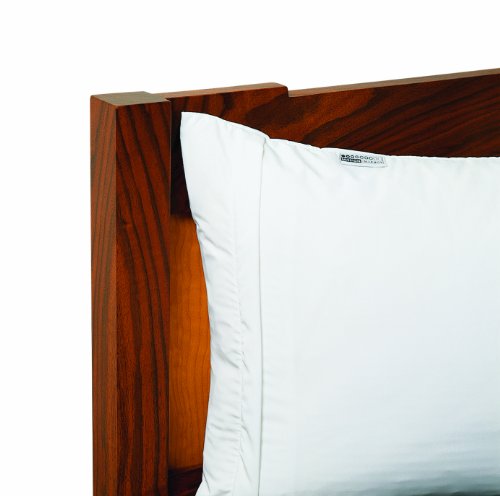
It is the only cover on this page with a named third-party allergen test behind its barrier claim, and bound seams plus interior and exterior zipper flaps and a ten-year warranty are the construction details that make a claim plausible.
It is one standard encasing for $24.95 as of October 2026 rather than a multipack, and the 100% blocking and bedbug-proof figures are maker-stated rather than numbers we were able to verify in a published report.
On a page about telling two problems apart, this is the only cover here whose stated specification speaks to both of them. Mission: Allergy describes the Barrier II as medical grade, states that it blocks 100% of dust mite and animal dander allergens, and attributes that to third-party testing by Indoor Biotechnologies, Inc. It also states the encasing is certified bedbug-proof. Those are maker and maker-commissioned testing claims, which is a step above the "tightly woven" language most covers carry — a named outside lab is not nothing — but we have not seen the test report, so read them as claims rather than as independent measurements.
The construction detail is where the money goes. The maker states soft, tightly woven, breathable 100% microfiber polyester that is air- and water-vapour-permeable yet water repellant, bound seams, interior and exterior zipper flaps, a ten-year warranty, and that it is made in the USA. It says the encasing was designed by a Board-Certified Allergist and is recommended by leading allergy specialists and university allergy departments. At $24.95 as of October 2026 you are buying one standard encasing, not a multipack, which is the honest trade-off against the cheaper sets below.
One boundary we will not blur. A certified-bedbug-proof encasing protects the pillow inside it. It is not a treatment for an infested room, and the EPA's do-it-yourself guidance treats sealing covers as one component of a wider program that it still expects may need a pest management professional. Buy this for the dust mite half of the job, and treat the bedbug certification as insurance on the pillow rather than as a plan.
AllerEase Premier Zipper Pillow Protector, Standard/Queen, 4 Pack

The maker states machine wash hot, which is the rare care label that agrees with the 130°F figure the allergy bodies publish, and four covers at $21.49 as of October 2026 means no pillow in the house gets skipped.
Wash hot but tumble dry on the lowest setting is easy to get backwards, and the protection language has no named allergen test or pore-size figure behind it.
If the inspection in this article points at dust mites, the response is laundry plus barriers, repeated weekly — and this is the cover built for the laundry half. Aller-Ease states the care routine explicitly: machine wash HOT with non-chlorine bleach when needed. That is what lets a cover keep up with AAFA's recommendation of water at least 130°F, which is an instruction very few pillows themselves will accept.
Read the second half of that care label too, because it reverses. Aller-Ease says tumble dry on the LOWEST setting, separately, and remove the cover when it is dry rather than when the dryer stops, and do not iron. Hot water, cool dryer. The maker describes the fabric as tightly woven and "expertly designed" to fully protect the pillow, credits it with temperature-balancing technology of the kind used in high-performance athletic clothing, says a zippered protector extends pillow life by keeping it fresh and clean, and states a lifetime warranty.
Four protectors at $21.49 as of October 2026, down from a $27.99 list price, does the main bedroom and the spare room in one load. What you do not get is a number: "tightly woven" is a description rather than a stated mean pore size, there is no named third-party allergen test in the listing, and there is no bedbug claim at all. We will not call it allergy-proof and you should not buy it as bed bug equipment.
Niagara Sleep Solution Ultra Soft Pillow Protectors with Zipper, Standard, Set of 4

Four washable zippered covers for under eight dollars as of October 2026, with an auto-lock side zipper, and the maker is refreshingly straight that the job is keeping the pillow clean.
It makes no allergen or bedbug claim, so it should not be bought as either kind of barrier, and a thin microfiber zipper is the first part of a cover like this to give out.
Four zippered, machine washable protectors for $7.99 as of October 2026, down from a $9.49 list price. Niagara Sleep Solution describes high thread count, tight weave microfiber that prolongs pillow life and protects from dirt and wear, an auto-lock zipper on the side "so dust does not creep in", and soft cooling microfiber fabric. For the washable-layer part of a dust mite routine, that is most of what the job asks for.
Now the part this site keeps insisting on, and the reason it sits third rather than first. Niagara's own framing is dirt, wear and pillow life. There is no allergy claim, no named test and no pore-size figure on the listing, and no bedbug claim either. That is a maker describing its product accurately, which we would rather reward than punish — and it is also exactly why you should not buy this one as a barrier. The identification work in this article exists so that you spend on the right problem; if the answer is mites and you want a tested barrier, the encasing at the top of this page is the one making that claim.
Treat it as what it is: the cheapest way to get a washable zippered layer onto four pillows, so the weekly wash has something to wash.
The Ten-Minute Bedroom Inspection
You cannot tell these two apart by how you feel. You can usually tell them apart by what is physically on the bed. Do this in daylight or with a bright flashlight, in this order.
Dust Mites vs Bed Bugs FAQ
Do dust mites bite? No. Texas A&M AgriLife Extension's house dust mite page states "House dust mites do not bite" and says "They feed on shed scales from human skin such as dandruff." Washington State University Extension's Pestsense fact sheet agrees: "They do not bite." AAFA does not describe a bite either; it has dust mites feeding "mainly on the tiny flakes of human skin that you shed each day."
So what are "dust mite bites"? Not a thing the entomology sources describe. AAFA's symptom list for dust mite allergy is nasal, ocular and respiratory, not dermatological. If you have marks on your skin, the useful next calls are a clinician and your local extension entomology service — house dust mites are the wrong suspect, and we found no public-health or extension source that attributes skin bites to them.
How big is a dust mite compared with a bed bug? AAFA puts a dust mite at "only about one-quarter to one-third of a millimeter"; Texas A&M AgriLife says "microscopic (0.3 to 0.4 mm long)"; Washington State University Extension says "extremely small (up to 0.5 mm)". The University of Kentucky puts an adult bed bug at "about 3/16-inch long" — roughly 4.8 mm, or roughly ten to twenty times a mite's body length depending on which of those figures you use. The EPA's rule of thumb is that bed bugs "are only about the width of a credit card".
Can you see dust mites in a pillow? Not without magnification. Texas A&M AgriLife calls them microscopic, and AAFA says that "under a microscope, they look like white bugs" with eight legs, "related to spiders".
Do bed bugs or dust mites spread disease? The EPA's position on bed bugs is that "While bed bugs have not been shown to transmit disease, they do cause a variety of negative physical health, mental health and economic consequences." The University of Kentucky puts it this way: "Although the bugs can harbor various pathogens, transmission to humans has not been proven and is considered unlikely." Dust mites are an allergen source rather than an infectious one.
Are bed bugs an allergy problem too? In a different way. The EPA lists "Allergic reactions to their bites, which can be severe", with effects "ranging from no reaction to a small bite mark to, in rare cases, anaphylaxis", plus secondary skin infections including impetigo, ecthyma and lymphangitis, and mental health impacts including anxiety and insomnia for people living in infested homes.
Will an allergen encasing stop bed bugs? It protects the pillow, not the room. The EPA's own do-it-yourself guidance says "Purchase protective covers that seal mattresses and box springs. With covers that seal, the bed bugs will get trapped inside and die" — one step inside a wider program, not the treatment. Mission: Allergy states its Barrier II encasing is certified bedbug-proof; that is a maker claim about the cover, and a sealed pillow in an infested bedroom is still a pillow in an infested bedroom.
Can I get rid of bed bugs myself? Sometimes, and it is harder than it sounds. The EPA says to "hire a pest management professional or use pesticides carefully according to the label directions" and notes professionals have "access to more intensive and proven methods that can even treat whole houses with heat". Kentucky recommends a professional "when resources allow", while acknowledging that "those who cannot afford this may need to tackle the problem themselves".
Does hot laundry handle both? Heat is the one tool both problems share. AAFA's mite advice is water "at least 130° F or more". For bed bugs the EPA points to a clothes dryer on high heat for infested items and specifies that steam-cleaner "steam temperature must be at least 130° F". Laundry alone resolves neither infestation, but it is a legitimate part of both responses.
I still do not know which one I have. Then get eyes on it rather than guessing. The identification sources above are free; so is a call to a local extension office. And anyone with ongoing respiratory symptoms, or skin reactions they cannot explain, should speak to a clinician who can actually test them.
Why you can trust us

Aimee Cannon
Sleep & bedding writer
Aimee Cannon is a sleep and bedding writer who has spent years testing pillows of every kind — memory foam, down, wool, bamboo, buckwheat, and specialty support pillows. She focuses on matching the right pillow to each sleeping position and need, and reports what actually holds up after months of nightly use. When she is not testing pillows, Aimee is usually with her husband and her dog.