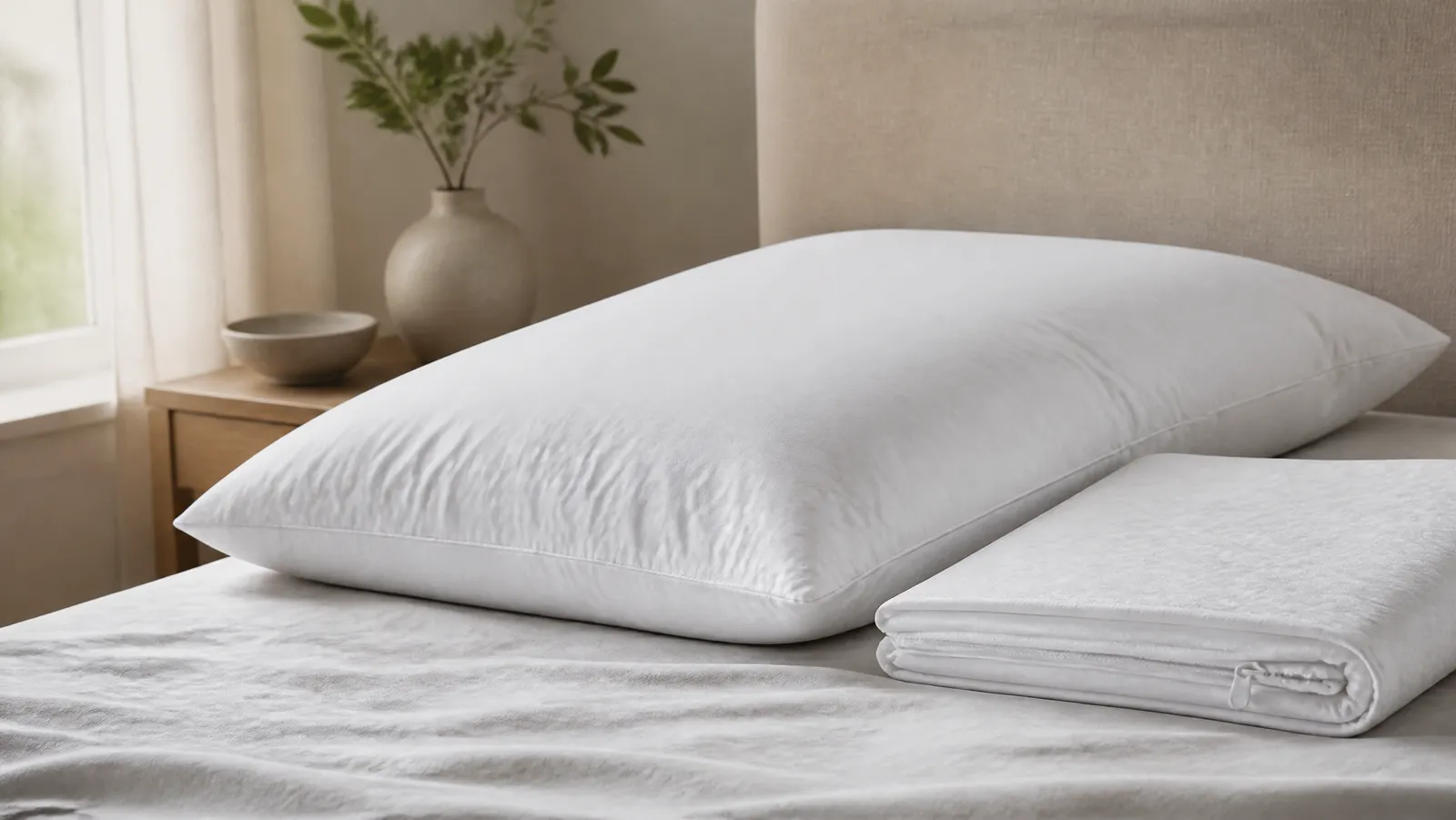
How Often Should You Replace Your Pillow?
If you want a single number, it is every 1 to 2 years. That is the usable answer to how often to replace your pillow, and the honest second half of it is that the number is a rule of thumb published by allergy organizations and bedding sites, not a result from a clinical trial. We may earn a commission from links on this page, at no extra cost to you.
No study we can find has followed pillows to failure and reported the age at which one stops holding up a neck or starts making its owner ill. What exists is a handful of published intervals, each with a different basis, and a short list of tests you can run on the pillow in front of you that beat all of them. This page does both, and it names who says what.
If you landed here because of morning congestion rather than a stiff neck, the evidence worth reading first is in our guide to choosing a pillow for allergies — because the date on the receipt turns out to be the least important variable in that version of the problem.
The published pillow replacement schedule, and who publishes it
Three sources, three numbers, three different reasons.
- Every 2 years. The Asthma and Allergy Foundation of America's bedroom allergen guidance says to replace pillows every 2 years and mattresses every 10. Its stated reason is that after two years, 10% of the weight of your pillow can be from dead dust mites and their droppings.
- Every 1 to 2 years. The Sleep Foundation states that "most experts recommend replacing pillows every 1 to 2 years", then breaks the answer down by fill. Notably, it names no study for any of its intervals — they are attributed to "experts".
- Five years, by implication. Tempur-Pedic's pillow warranty page states a 5-year limited warranty on the pillow and 2 years on the cover. A warranty is not a replacement recommendation, but it is a manufacturer putting a durability figure in writing and accepting a cost if it is wrong.
Those are not really in conflict; they are answers to different questions. AAFA is answering a hygiene question for people with allergies. The Sleep Foundation is answering a comfort-and-support question. Tempur-Pedic is answering a liability question about manufacturing defects, and its exclusions make that explicit: the warranty covers "deterioration of the cell structure of the material that causes the product to not return to its original shape", while specifically excluding "a normal increase in softness" of the material.
Read that last distinction twice, because it is the most useful sentence in this whole subject. The maker of one of the most expensive pillows on the market is telling you that a pillow getting softer is normal and not a failure. A pillow that no longer returns to its shape is a failure. That is a test, not a date.
The claim that does not survive checking
Any search on when to replace pillows turns up a version of this: your pillow or mattress doubles in weight over its life because of dust mites and their droppings. We went looking for the measurement behind it and could not find anyone willing to own it.
The Straight Dope chased the mattress version to its apparent sources. Larry Arlian, the mite researcher at Wright State University, told them: "It's nonsense. I don't know where that originated. They're not that prolific." Thomas Platts-Mills of the University of Virginia, one of the most-cited researchers in the field, said: "I don't believe it. I'm sure there's an added weight but I don't think anyone has ever actually measured it." Emmett Glass, the Ohio State research associate repeatedly named as the origin, said he never originated the statistic, and of the figures circulating online that "none of them are in the literature."
So: do not budget for a pillow on the basis of that claim. It is marketing copy with an academic-sounding shape.
AAFA's 10% figure deserves a gentler but similar treatment. It comes from a serious organization and it is a far more modest claim than doubling. We still could not trace it to a published measurement, which means we can tell you accurately that a major allergy charity publishes it, and we cannot tell you what was weighed, or how many pillows, or how old.
That is not a reason to ignore AAFA. It is a reason to treat "every 2 years" as guidance rather than as a measured expiry date — and to prefer tests you can run yourself over a number neither of us can check.
How long do pillows last, by fill?
The fill is the variable that actually moves the answer. The Sleep Foundation's stated ranges:
- Polyester: 6 months to 2 years. It calls polyester among the least durable fills.
- Down alternative: roughly 1 to 2 years.
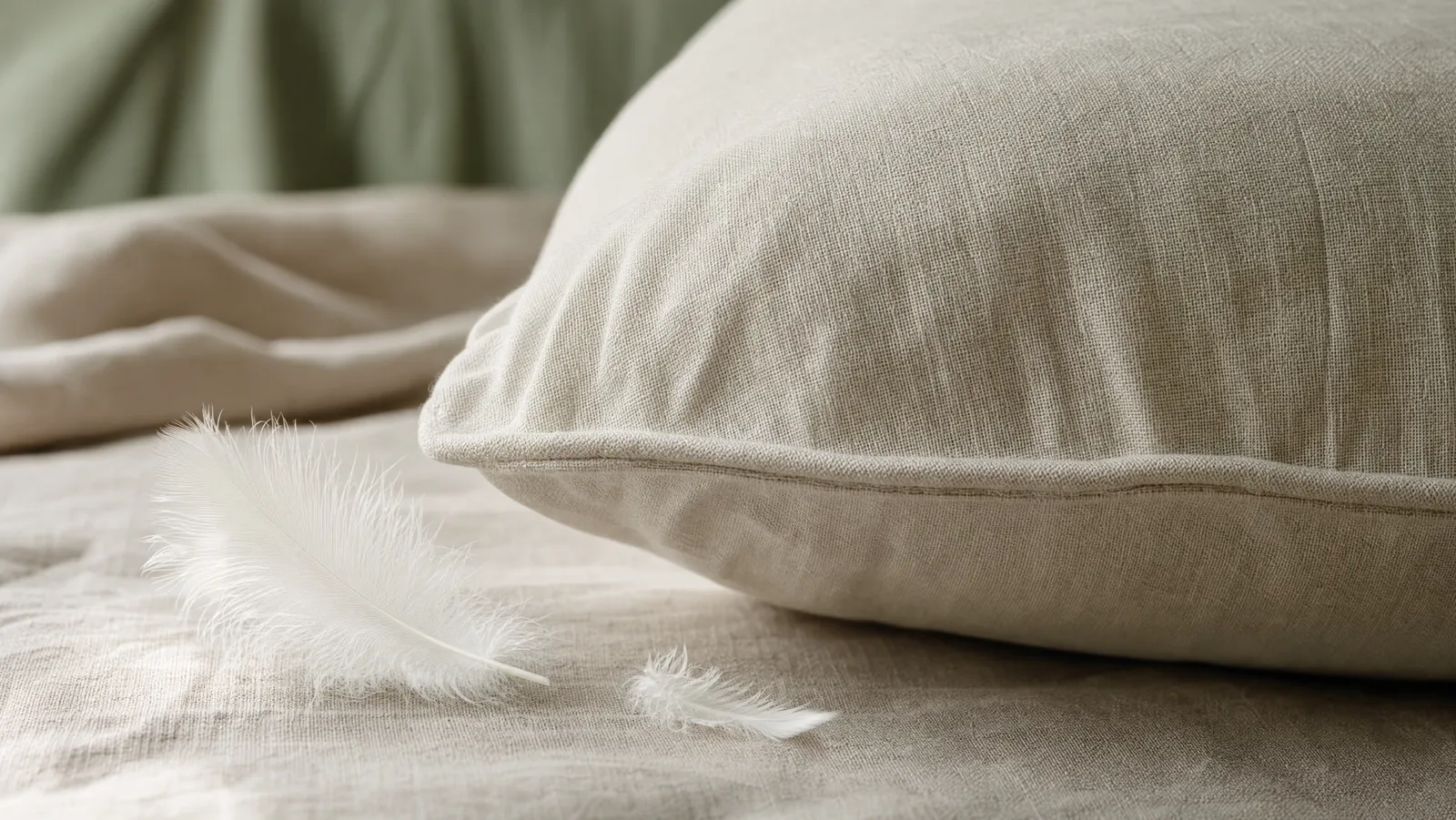
- Down and feather: 1 to 3 years.
- Memory foam and polyfoam: 2 to 3 years.
- Latex: 2 to 4 years.
- Buckwheat: about 3 years before the hulls need replacing.
A spread of 6 months to 4 years across fills is wider than the gap between any two published "replace your pillow every X" headlines, which is worth sitting with: knowing what is inside your pillow tells you more than knowing how old it is.
One correction to a belief that drives a lot of pillow buying. A synthetic pillow is not the low-allergen option by default. Kemp and colleagues of the Wellington Asthma Research Group reported in the BMJ in 1996 that across nine pairs of pillows — each pair one feather and one polyester fiber pillow, used together on the same adult bed for more than six months — the polyester pillows held more than eight times the total weight of Der p 1 that the feather pillows did. The 2013 AAAAI/ACAAI dust mite practice parameter puts it flatly: "Foam pillows are not less prone to dust mite allergens than are feather pillows."
For the common case — a sagging down alternative pair that failed the fold test — the published specifications are what distinguish an upgrade from a sideways move. The Beckham Hotel Collection pillows, two for $39.86 as of October 2026, state 1,050g of hollow fiber fill at an 8-inch loft in a 250 thread count cotton cover, which is more than many pillows at any price will tell you. If the plan is instead to replace cheaply and often — a reasonable plan given that polyester range — the downluxe down alternative pair at $28.49 as of October 2026 are standard 20 by 26 inch, machine washable, and roll-packed with a stated 24 hours to recover their shape.
When to replace pillows: tests instead of dates
Everything above is someone else's average. These are measurements on your pillow.
- The fold test. Fold it in half and let go. The Sleep Foundation's stated sign, specifically for down and feather pillows, is one that does not spring back when folded in half. This is the test that maps most directly onto what Tempur-Pedic's warranty calls failure to return to its original shape.
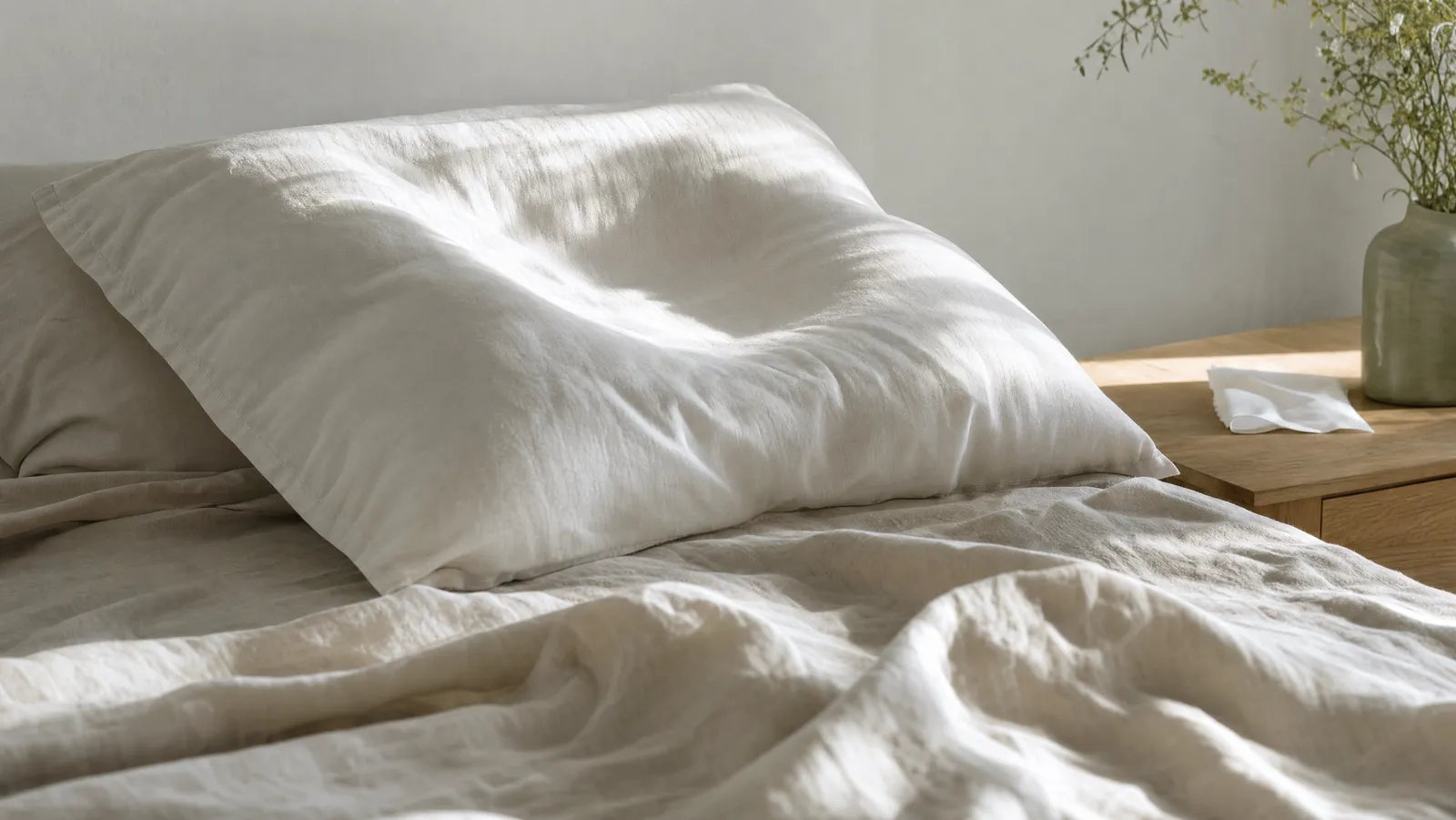
- Lumps, sagging and a hollow in the middle. The Sleep Foundation lists sagging and lumps among its replacement signs. Clumped fill does not redistribute, and a pillow that is thin precisely where your head goes has lost its loft where loft counts.
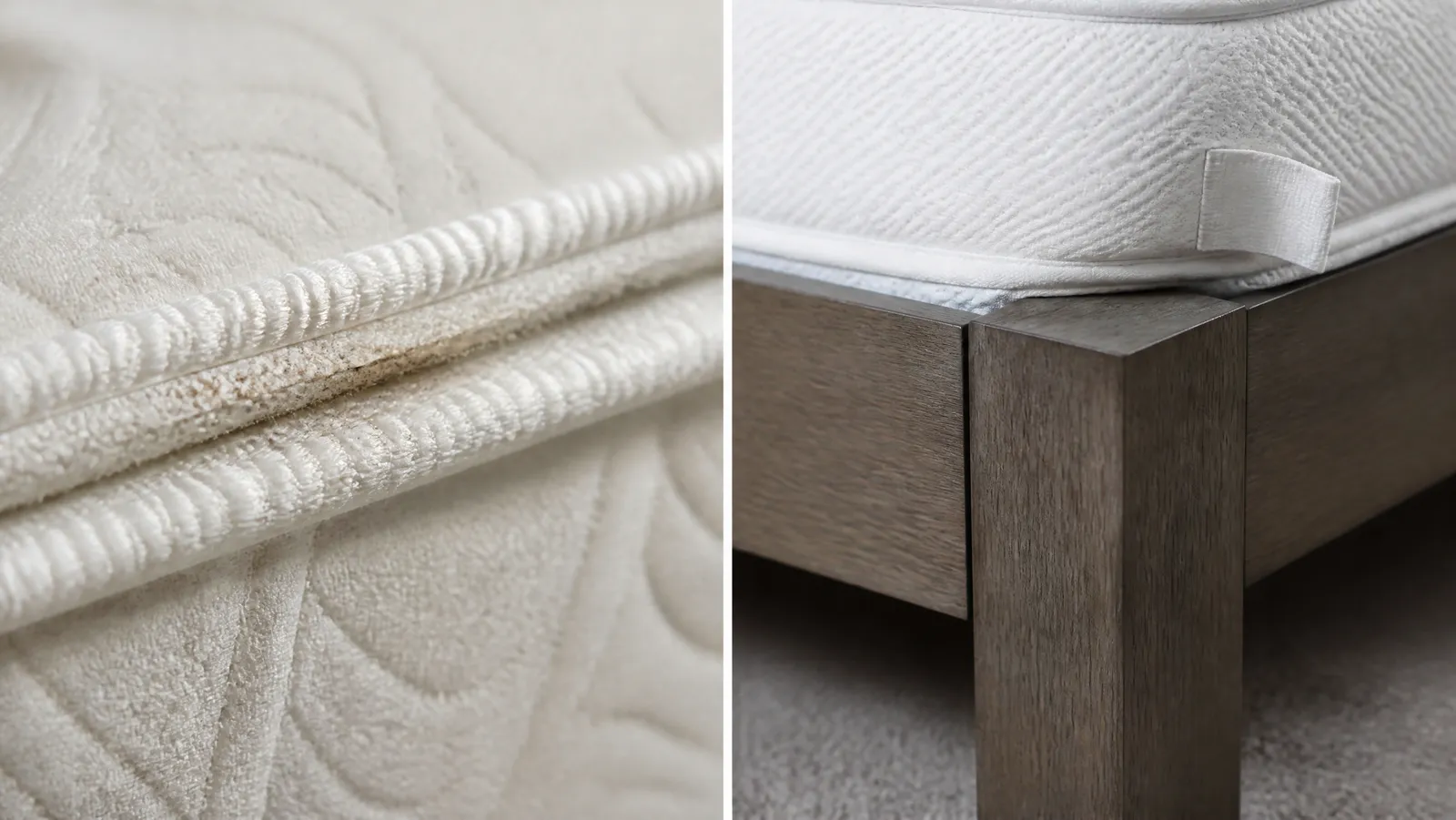
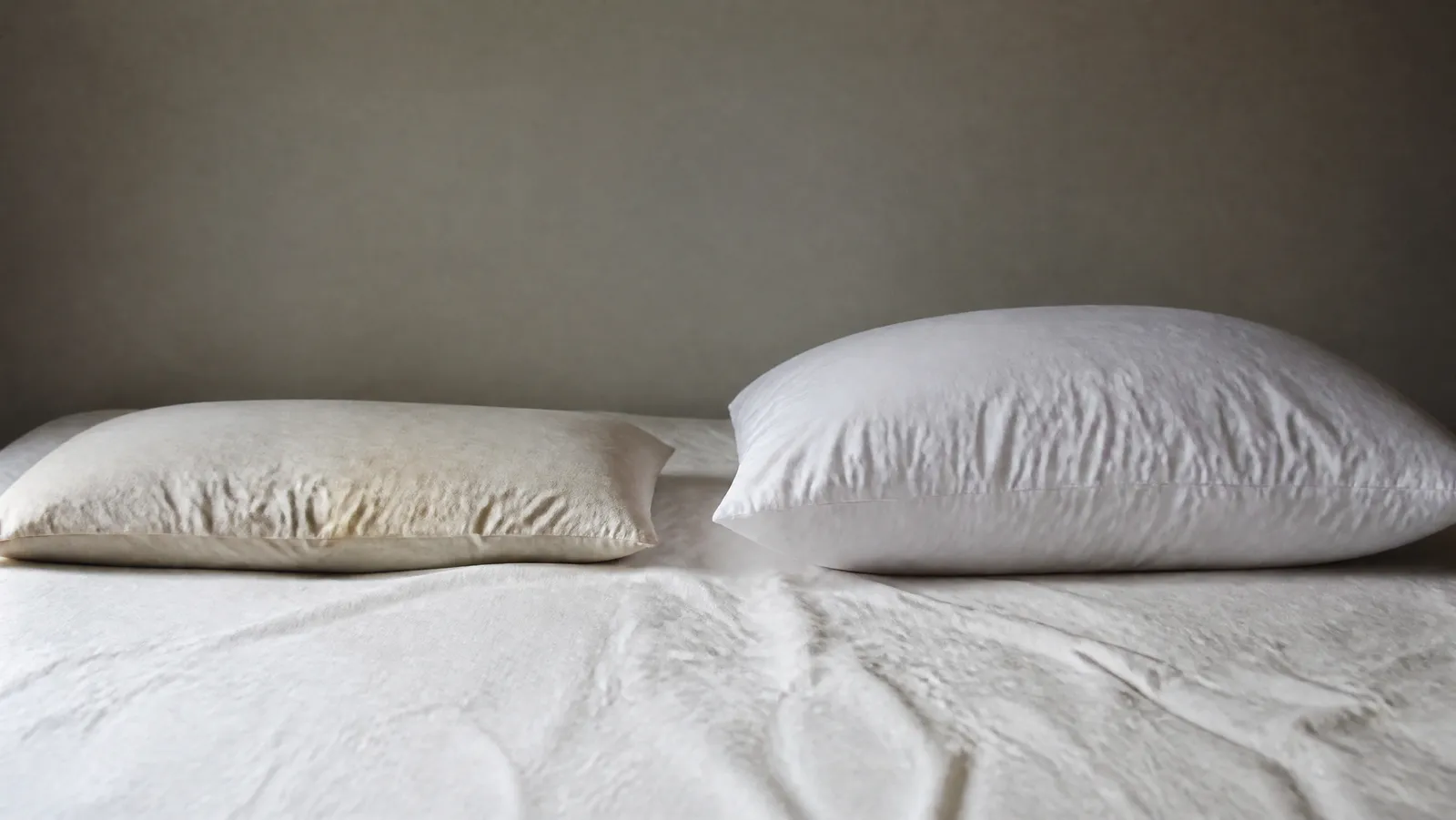
- Yellowing you can see. "Excessive yellowing" is on the Sleep Foundation's list too. If it is visible through a protector, the protector is not doing its job either.
- Symptoms at night that settle elsewhere. Allergies acting up at night is another of the Sleep Foundation's listed signs. Treat it as a prompt to investigate, not a diagnosis — and if it persists, the useful appointment is with a clinician who can test whether you are sensitized to mites at all.
- Smell that survives a wash. This is the one test on the list we cannot point to a published source for, so take it as our judgment rather than as evidence: wash a washable pillow first, dry it completely, and only call it finished if the odor comes back.
Point five is the step most replacement advice skips. A washable polyester pillow that looks and smells past it may simply be dirty, and washing is cheaper than replacing — the sequencing and the temperatures are in our guide to how to remove dust mites from pillows, including the pillows whose own care labels rule washing out.
What a new pillow does not fix
Here is the limit of this entire strategy, and it is a real one.
The practice parameter reports that mattresses are generally not contaminated by mites when new, but "can become contaminated and a significant source of mite exposure in as few as 4 months". We found no equivalent published figure for pillows — but a pillow is the same kind of warm, humid, skin-fed reservoir in a smaller package, and it is pressed against your face. A new pillow resets the clock on wear. It does not install a barrier.
The same document says what to do instead, and says it in the strongest terms it uses anywhere: "The most effective way to prevent mite colonization is to encase a mattress, box spring, or pillow in a mite allergen-impermeable encasing", adding that existing pillows "can be kept if they are encased in allergen-impermeable covers to entrap already-present mites and mite allergens." Its verdict on buying your way out with the pillow itself is one sentence long: "Nonallergenic pillows are not a substitute for covering them with allergy-proof encasements."
It is also honest about the ceiling. Mite-proof bedding covers as part of a structured allergen-control program do reduce measured exposure, the parameter says, and even so "this single avoidance measure does not lead to a significant alleviation of clinical symptoms in patients with allergic rhinitis."
So nothing on this page should be read as a treatment. What lives in an aging pillow is worth understanding on its own terms — we take that reservoir apart in dust mites in pillows — and if the question is which pillow to own when breathing is the issue, that is the subject of our guide to pillows for asthma and allergies. Asthma and allergy are medical conditions, and bedding is not medication.
There is one more thing in old pillows that has actually been measured. Woodcock and colleagues cultured 10 pillows aged from 1.5 to more than 20 years for the journal Allergy in 2006 and found Aspergillus fumigatus in all 10, along with 47 other species across the pillows and their vacuum dust, with more A. fumigatus in synthetic than in feather pillows. Their conclusion was that such pillows "could be" a primary source of fungi and fungal products. Note what that is: a 10-pillow survey of what grows there, not a demonstration that it made anyone ill, and not a threshold age.
The cheapest way to delay the next replacement
If sweat and skin are what age a pillow, the lever is keeping them out of the fill.
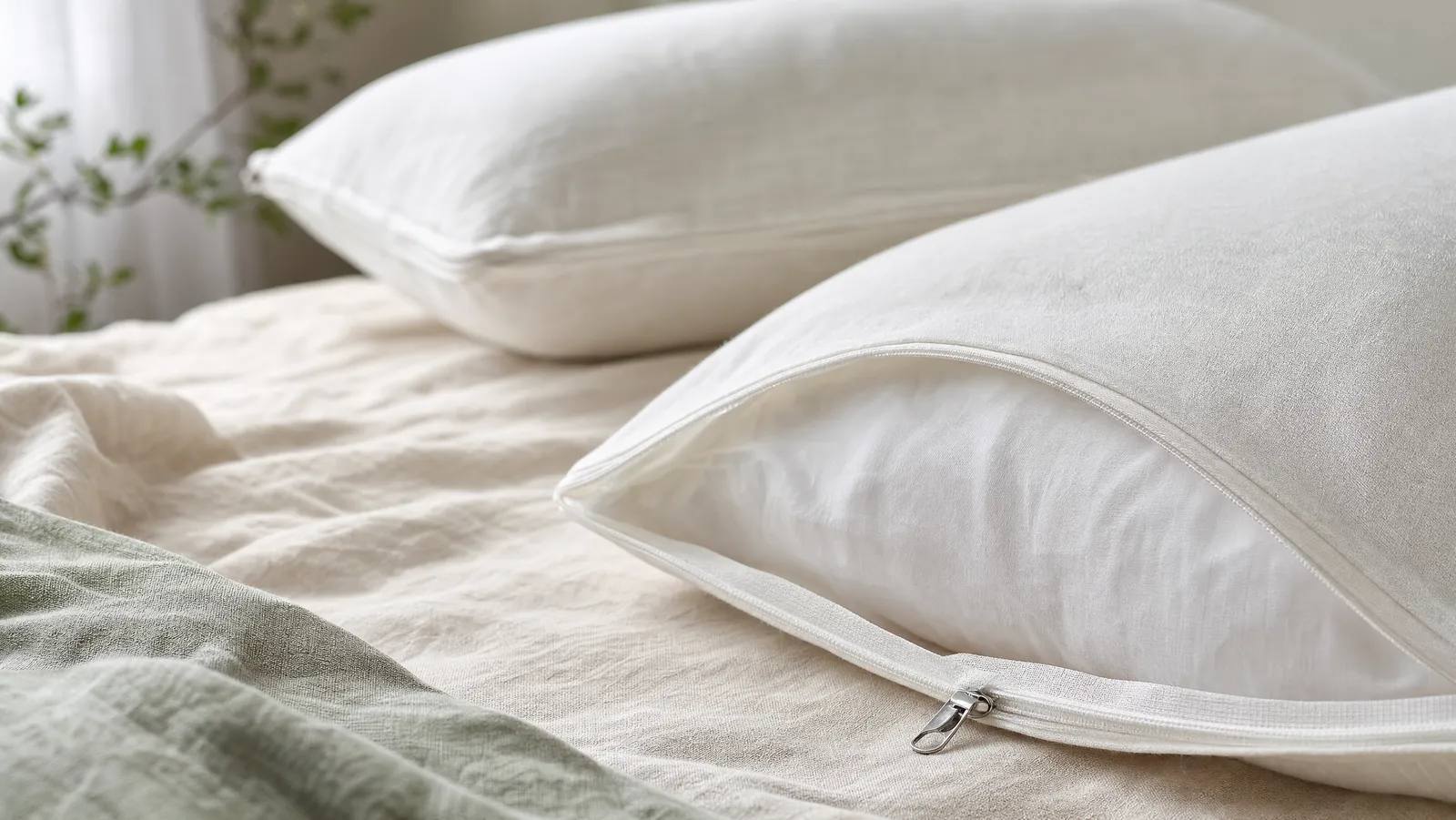
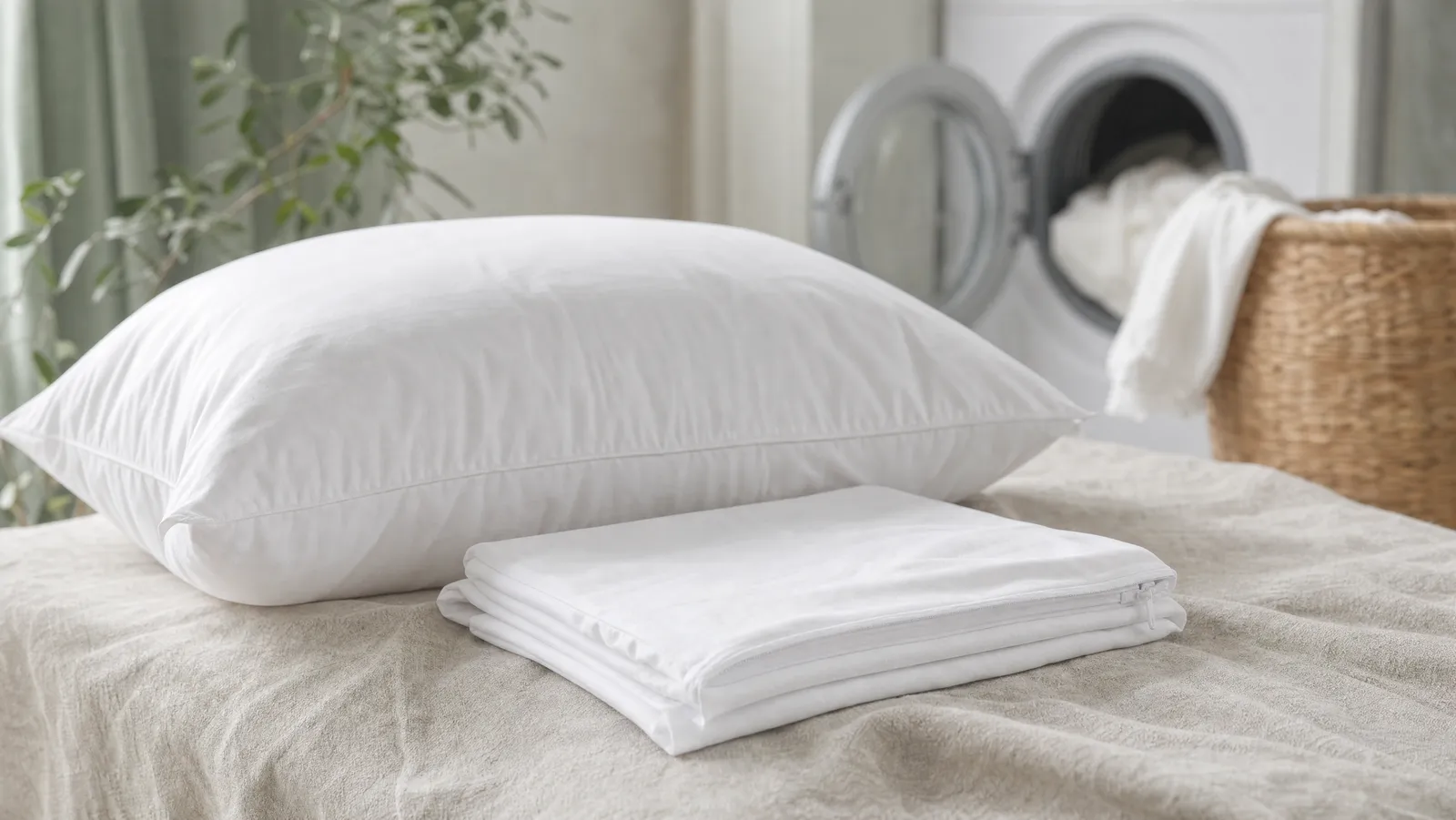
That is the stated claim for the AllerEase allergy pillow protectors — two for $10.99 as of October 2026 — and it is the maker's own wording: fully encasing a pillow with a zippered protector extends pillow life. AllerEase describes a tightly woven fabric, says it is breathable, will not alter the feel of the pillow and does not retain heat, and states that it is machine washable with a lifetime limited warranty.
The construction is the specification that matters here, and not for convenience. The practice parameter does not recommend non-woven encasings specifically because they trap mite allergen and are not washable, which leads to allergen accumulation; it notes that woven encasings, by contrast, do not accumulate allergen on their surface and so do not need routine washing. A woven cover is the category it endorses.
The honest caveat is the same one we apply to every cover on this site: "tightly woven" is a description, not a number. The practice parameter's figure is a mean pore size below 10 micrometers to effectively block Der p 1, and no mean pore size or named third-party allergen test is published for these protectors. So: a cheap, washable, zippered layer with a maker's durability claim behind it and a strong general recommendation for the category — not an allergy-proof guarantee.
A schedule you can actually keep
Put the calendar work where it does something.
- Weekly: wash the pillowcase and the zippered protector. The practice parameter's reason for weekly rather than monthly is that allergen removed by washing "generally reappears within 1 month".
- Every few months: run the five-minute check above. It takes less time than reading this section.
- When a test fails, not when a date passes: replace. A 3-year-old latex pillow that springs back is fine. An 8-month-old polyester pillow that stays folded is not.
The pillow you own is a single variable in a room. Humidity, the mattress, the box spring and the carpet are all in the same system, and a brand-new pillow in an unchanged room is a reset on one of them.
The bottom line
Every 1 to 2 years is a reasonable default, and AAFA's 2 years is reasonable guidance for an allergy household — but neither is a measurement, and the famous claims about pillows filling with mite weight do not trace to one either. The fill matters more than the date: 6 months to 2 years for polyester against 2 to 4 years for latex is a wider spread than any headline interval. The fold test, visible lumps and yellowing, and symptoms that ease away from your own bed are better signals than a receipt. Wash before you judge a washable pillow. And know what a replacement buys you: a pillow that supports your head again, not a barrier against what will start accumulating in the new one.
If you would rather choose the next pillow on the allergy evidence than on its age, the Home Pillow Review allergy pillow roundup is the page to read next — and if you are replacing pillows because you keep waking up congested, a clinician who can test you will tell you more than any pillow will.
The shortlist
3 pillows compared — firmness, loft, and temperature side by side. The top pick is highlighted.
| Pillow | Firmness | Loft | Sleeps | Best for | Price |
|---|---|---|---|---|---|
Medium Firm | High | Neutral | Replacing both pillows on a bed with published loft and fill figures | $39.86 Check | |
Best Budget Pairdownluxe Down Alternative Pillows, Standard Size, Set of 2 | Soft | — | Neutral | A cheap washable pair on a deliberately short replacement cycle | $28.49 Check |
Best Way to Delay the Next ReplacementAllerEase Allergy Pillow Protector, Standard/Queen, 2 Pack | — | — | Neutral | Keeping sweat and skin out of the fill so the pillow ages slower | $10.99 Check |
Beckham Hotel Collection Bed Pillows, Standard/Queen, Set of 2

Beckham states the two things nobody else states — 1,050g of fill at an 8-inch loft — and it is machine washable, so the next two years do not depend on a pillow staying clean by luck.
Medium-firm with 8 inches of loft is a lot of pillow for a stomach sleeper, and the allergy language rests on OEKO-TEX chemical testing rather than any named allergen barrier test.
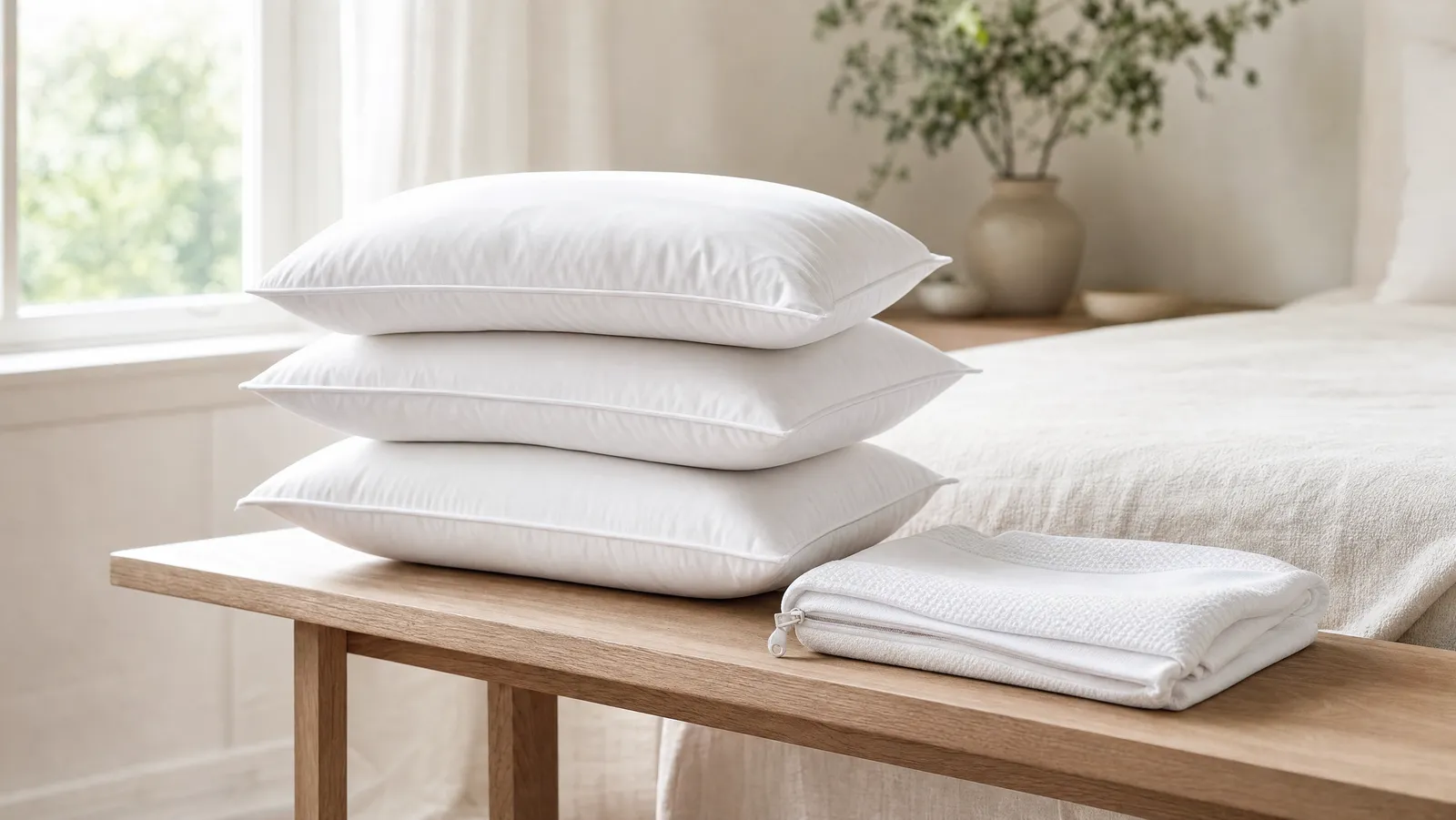
The reason this is the pick on a page about replacement is that Beckham publishes the numbers that decide whether a replacement is actually an upgrade. The listing states a 250 thread count 100% cotton cover filled with 1,050g of hollow fiber down alternative fill at an 8-inch loft, described as medium-firm with an even-fill bounce-back and no fluffing required. Loft and fill weight are the two specifications that tell you what a pillow will do under a head, and many pillows at this price publish neither.
It is machine washable with air drying, which matters more than it sounds. The Sleep Foundation's shortest stated lifespan of any fill is polyester, at 6 months to 2 years, and an unwashable pillow has no route back from grubby to usable — a washable one does, which may buy back part of that interval. Beckham also states OEKO-TEX certification and that the pillows are tested and verified free from 100+ harmful substances. Read that as a chemical residue certification, which is what it is; we found no named allergen barrier test for these pillows, and a down alternative fill is not a mite defense on its own.
Two for $39.86 as of October 2026, down from a stated list price of $59.99. That is the whole bed replaced at once, which is the version of this job people actually finish.
downluxe Down Alternative Pillows, Standard Size, Set of 2
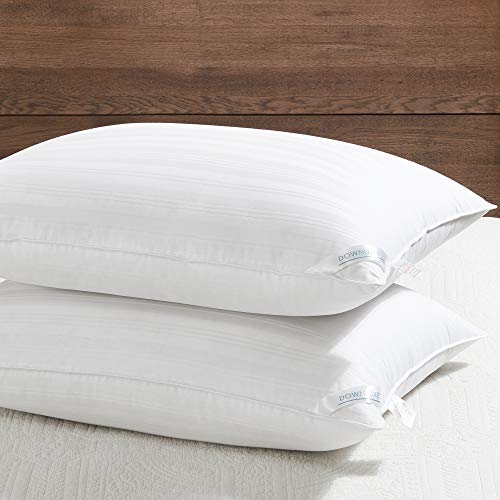
Two washable standard pillows for $28.49 as of October 2026 is the right shape for a fill the Sleep Foundation puts at 6 months to 2 years, and downluxe is straight that they need 24 hours to recover and regular fluffing.
No published loft or fill weight, and a soft fill the maker says to fluff frequently is the kind most likely to shift into clumps.
If the Sleep Foundation's polyester range of 6 months to 2 years is roughly right, then a cheap pair bought on a short cycle is a defensible strategy rather than a compromise. downluxe states a premium polyester blend fiber fill with a soft feel, a standard 20 by 26 inch size, a soft breathable striped cover with edge piping, and suitability for stomach, side or back sleepers. Two for $28.49 as of October 2026, from a stated list price of $36.99.
The maker is also unusually upfront about the two things that annoy owners of budget polyester pillows. These arrive roll-packed, and downluxe says to allow 24 hours to recover — so judge the loft on day two, not on arrival. And it states that you should fluff frequently to keep the shape, which is the honest version of what a soft polyester fill needs. A pillow that asks to be fluffed is a pillow whose fill moves, and fill that moves is what the fold test eventually catches.
It is machine washable, which is the feature that matters on a replacement page: washing is the step that tells you whether a tired pillow is dirty or finished. What you do not get is a loft figure or a fill weight, so there is no way to know in advance how high it will sit.
AllerEase Allergy Pillow Protector, Standard/Queen, 2 Pack

Two zippered washable protectors for $10.99 as of October 2026, from a maker that states encasing extends pillow life and that the fabric does not retain heat or change how the pillow feels.
The barrier claim rests on "tightly woven" with no published mean pore size or named allergen test, and a protector only works on the pillow it is actually zipped around.
This is the only product on the page that changes the answer to the question in the title. AllerEase states it directly: fully encasing a pillow with a zippered protector extends pillow life. The mechanism is not mysterious — a zippered layer is what keeps sweat, skin and spills in the wash rather than in the fill, and accumulated sweat and body oils are what bedding makers point to as the cause of a yellowing pillow.
The maker describes a tightly woven, expertly designed fabric intended to prevent unhealthy household particles from collecting in your pillow, says the fabric is breathable, will not alter the feel of the pillow and does not retain heat, calls it soft and quiet, and states that it is allergist recommended, machine washable and carries a lifetime limited warranty. Washability is the specification to care about: the 2013 AAAAI/ACAAI dust mite practice parameter does not recommend non-woven encasings specifically because they trap allergen and cannot be washed.
At $10.99 for two as of October 2026, it is the cheapest intervention here by a wide margin, and the one with the strongest independent backing — the practice parameter calls encasing a pillow in an allergen-impermeable encasing the most effective way to prevent mite colonization. One limit, stated plainly: "tightly woven" is a description, not a mean pore size, and the practice parameter's figure for blocking Der p 1 is a mean pore size below 10 micrometers. Without a published number or a named third-party allergen test, we will not call this allergy-proof.
The Five-Minute Pillow Check
Run this instead of counting birthdays. It takes one pillow, one minute each, and it answers the question a date on a receipt cannot: is this pillow still doing its job?
Pillow Replacement FAQ
How often should you replace your pillow? The two most-cited answers are AAFA's, which says to replace pillows every 2 years and mattresses every 10, and the Sleep Foundation's, which states that "most experts recommend replacing pillows every 1 to 2 years". Both are published intervals rather than trial results — the Sleep Foundation names no study for any of its figures.
How long do pillows last by fill? The Sleep Foundation's stated ranges are 6 months to 2 years for polyester, roughly 1 to 2 years for down alternative, 1 to 3 years for down and feather, 2 to 3 years for memory foam and polyfoam, 2 to 4 years for latex, and about 3 years for buckwheat before the hulls need replacing.
Is it true that a pillow doubles in weight from dust mites? We could not find anyone willing to stand behind it. In The Straight Dope's investigation of the mattress version of the claim, mite researcher Larry Arlian of Wright State University said "It's nonsense. I don't know where that originated. They're not that prolific", and Thomas Platts-Mills of the University of Virginia said "I don't believe it. I'm sure there's an added weight but I don't think anyone has ever actually measured it." Ohio State research associate Emmett Glass, often cited as the source, said of such statistics that "none of them are in the literature."
What about the claim that 10% of a 2-year-old pillow's weight is dust mites? That figure is AAFA's stated reason for the 2-year interval. We could not trace it to a published measurement, so we report it as what it is: guidance from a major allergy organization, not a number we can follow to a primary source.
Does a new pillow lower my dust mite exposure for long? Not necessarily. The practice parameter reports that mattresses are generally uncontaminated when new but "can become contaminated and a significant source of mite exposure in as few as 4 months". We found no equivalent published figure for pillows, but the logic is the same reservoir in a smaller object.
Is a synthetic pillow the safer choice? The evidence runs the other way. Kemp and colleagues of the Wellington Asthma Research Group reported in the BMJ in 1996 that across nine pairs of pillows used together on the same adult bed, the polyester pillows held more than eight times the total weight of Der p 1 that the feather ones did. The practice parameter states plainly that "Foam pillows are not less prone to dust mite allergens than are feather pillows."
Is there anything growing in an old pillow? Fungi, in the ones that have been looked at. Woodcock and colleagues cultured 10 pillows aged from 1.5 to more than 20 years for Allergy in 2006 and found Aspergillus fumigatus in all 10, alongside 47 other species across pillows and vacuum dust, with more A. fumigatus in synthetic than feather pillows. The authors concluded such pillows "could be" a primary source of fungi and fungal products — a 10-pillow survey, not a demonstration of harm or a threshold age.
Can a protector make a pillow last longer? That is AllerEase's stated claim for its allergy pillow protector: fully encasing a pillow with a zippered protector extends pillow life. It is a maker's claim rather than a trial, but it is also the only lever here that costs $10.99 for two as of October 2026 and addresses what accumulates in the fill in the first place.
Will replacing my pillow stop my symptoms? Nobody should promise that. The practice parameter notes that mite-proof bedding covers used as a single avoidance measure "does not lead to a significant alleviation of clinical symptoms in patients with allergic rhinitis", and a new pillow is a weaker intervention than a cover. Persistent nighttime symptoms belong with a clinician.
Why you can trust us

Aimee Cannon
Sleep & bedding writer
Aimee Cannon is a sleep and bedding writer who has spent years testing pillows of every kind — memory foam, down, wool, bamboo, buckwheat, and specialty support pillows. She focuses on matching the right pillow to each sleeping position and need, and reports what actually holds up after months of nightly use. When she is not testing pillows, Aimee is usually with her husband and her dog.