How to Prevent a Dust Mite Allergy Flare-Up
Hold indoor humidity at 35% to 50%, encase the mattress, box spring and pillow, wash the bedding weekly, and vacuum with HEPA filtration — all of it, together. That is the short version of how to prevent dust mite allergy symptoms from flaring, and the stacking matters far more than the order. We may earn a commission from links on this page, at no extra cost to you.
The longer version starts with a distinction the search phrase hides. Preventing a dust mite allergy from developing and preventing a flare-up in someone who already has one are two different problems with two different bodies of evidence — and the first one goes worse than most readers expect. We take both below, with the grades the allergy specialists put on their own advice. If you would rather start from a shortlist than a checklist, our guide to the best pillow for allergies runs the same evidence over a set of picks.
Prevention or management? The evidence is not the same
Primary prevention means stopping sensitization — stopping the immune system from making mite-specific IgE at all. Summary statement 1 of the 2013 practice parameter Environmental Assessment and Exposure Control of Dust Mites, published by Portnoy and colleagues in Annals of Allergy, Asthma and Immunology for the AAAAI and the ACAAI, advises minimizing exposure of susceptible children to dust mite allergens to decrease that risk, at a strong recommendation on A evidence. Then it attaches a caveat in the same breath: "because intermittent exposure to mite allergens can lead to sensitization, primary prevention might not be possible to achieve in regions where mite exposure is prevalent."
Its narrative is more direct. According to the parameter, primary prevention "requires strict, continuous avoidance of exposure for long periods", prevention of sensitization "has been observed in arid regions where mites are absent", and because intermittent exposure elsewhere is hard to avoid, "most attempts at primary prevention have been unsuccessful."
Its example is the Manchester Asthma and Allergy Study, which recruited subjects before birth and randomized them to full mite avoidance — encasings, HEPA vacuums, vinyl flooring in the infant's bedroom, weekly washing of bedding and soft toys. The intervention worked on the measurement: the parameter reports Der p 1 from mattresses fell by 97% in the active group. It did not reliably prevent sensitization, which the authors attribute partly to exposure outside the home.
Secondary prevention does better. Summary statement 2 — minimize exposure for already-sensitized children to decrease their risk of developing asthma and possibly rhinitis — is also strong on A evidence, and it cites a review of six prevention studies in which environmental modification "consistently identified decreases in asthma and in some cases rhinitis and atopic dermatitis". For someone already sensitized and symptomatic, summary statement 3 is strong on B evidence for asthma and strong on C evidence for rhinitis.
So: if you already react, you are in the better-evidenced half of the literature. If you are reading this to keep a child from ever developing the allergy, lowering exposure is worth doing and unlikely to be sufficient.
Step 1: Get the humidity to 35% to 50%
This step costs almost nothing and has physics behind it. Summary statement 10 of the practice parameter: "relative humidity in the home should be kept at 35% to 50% to decrease the growth of dust mites" — a strong recommendation on B evidence.
The mechanism is water. According to the parameter, mite bodies are 70% to 75% water by weight, they extract water vapor directly from unsaturated air rather than drinking, they "require RH higher than 65% to prevent water loss and to thrive", and once humidity decreases below 50% "mite proliferation decreases and survival is decreased."
It is less forgiving than that sounds. The same document notes a house kept dry most of the time can still harbor living mites if RH rises for as little as 1.5 hours a day — cooking or a shower will do it — and that as few as 3 hours a day of elevated humidity enables mites to lay eggs. To completely prevent the growth of Dermatophagoides farinae, it cites a study in which RH had to stay below 35% for at least 22 hours a day.
The EPA's general figure is adjacent and slightly looser. According to the EPA, "a relative humidity of 30-50 percent is generally recommended for homes", and "maintaining the relative humidity between 30% - 60% will help control mold, dust mites and cockroaches."
Measure it before you spend on it. Summary statement 9 is to encourage mite-allergic patients to obtain and use a hygrometer to measure humidity at home — a strong recommendation, though candidly on D evidence. The parameter calls it an inexpensive hygrometer, available from many outlets in the United States, and it answers whether this step is even yours to take.
One expectation to set: the parameter reports that studies of humidity control using portable and central dehumidifiers "have failed to decrease mite exposure", partly because brief rises are enough to sustain a population. Homes where RH is held in range continuously carry less mite allergen than homes where it swings.
Step 2: Encase the mattress, box spring and pillow
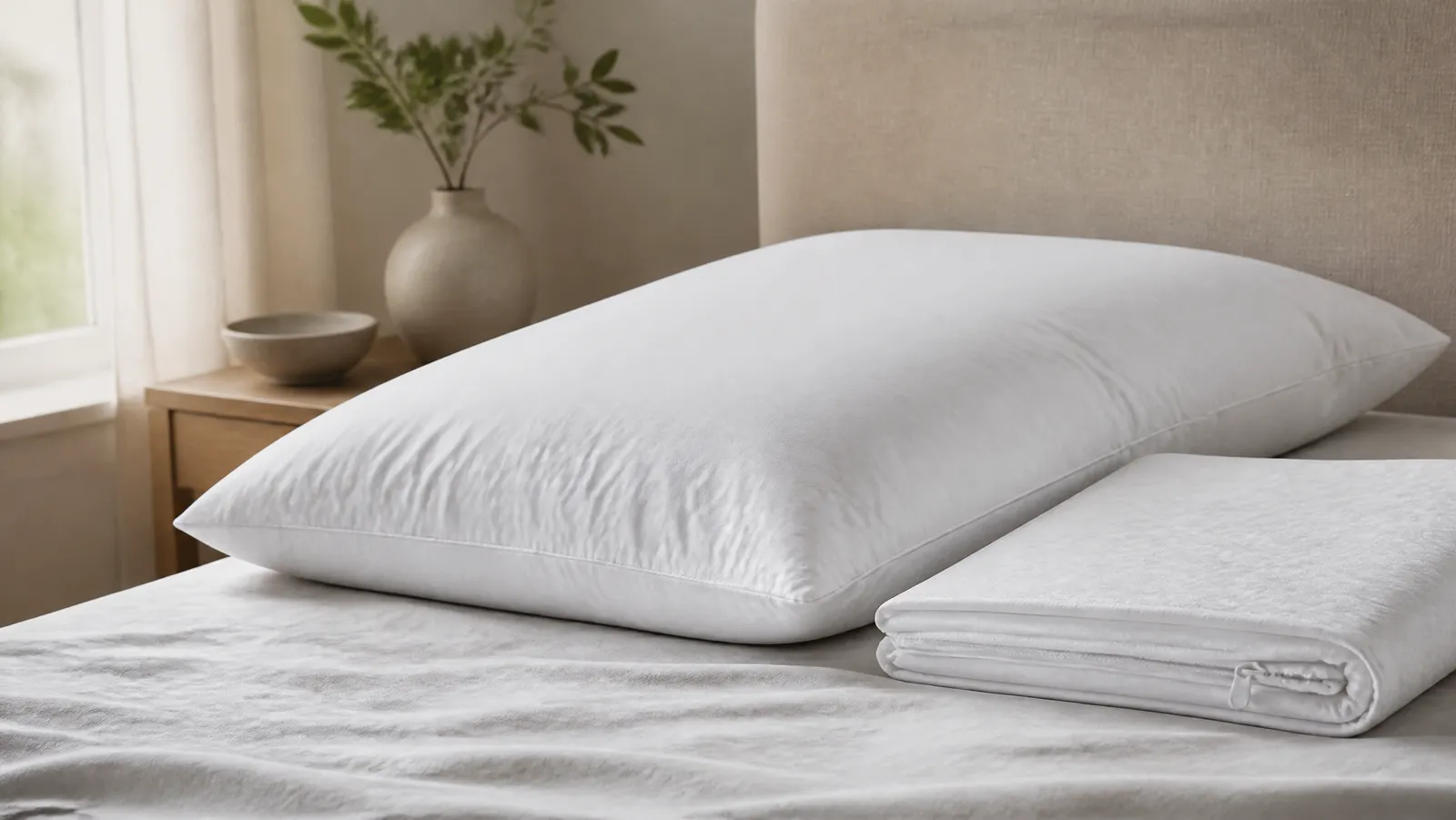
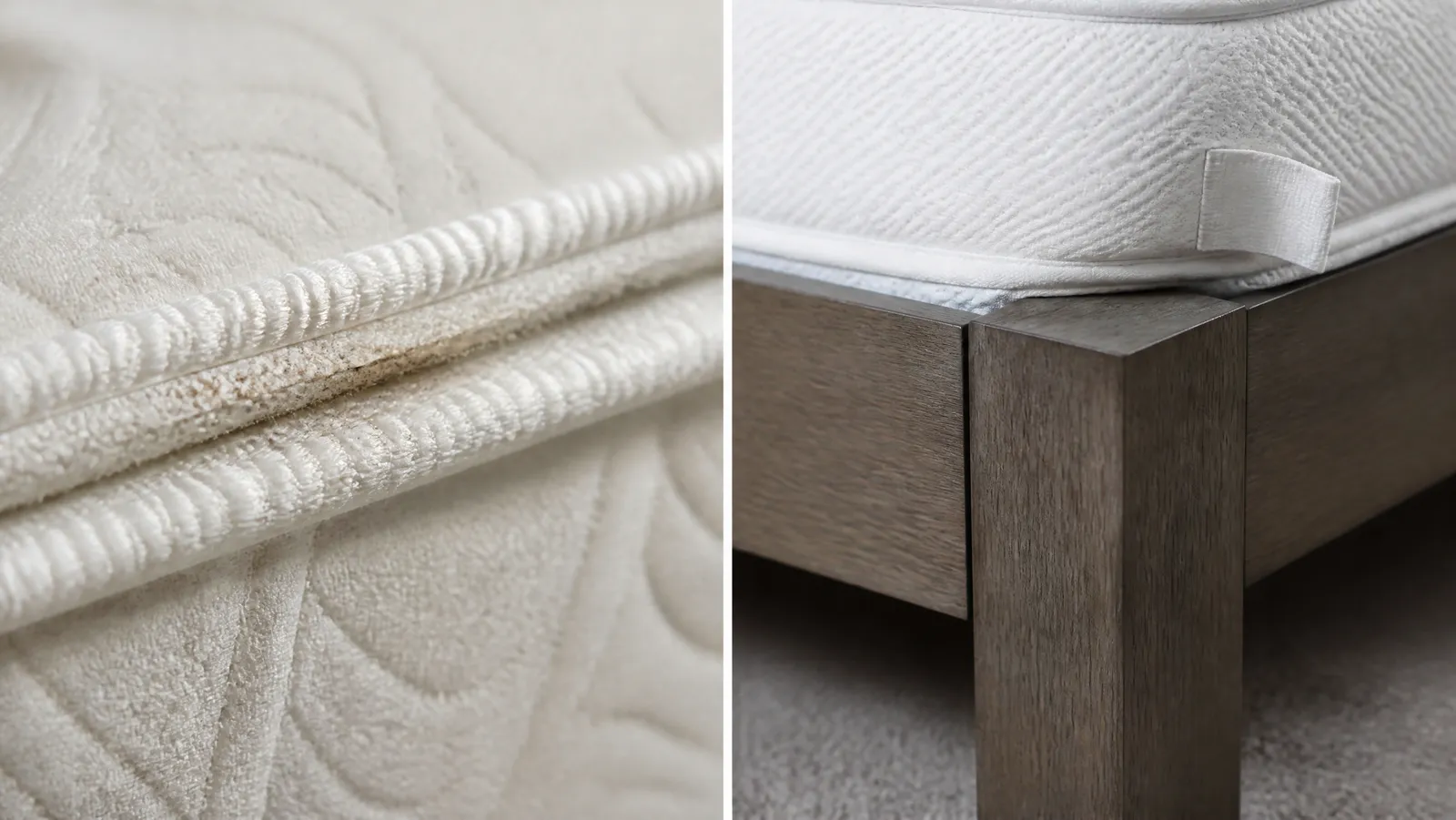
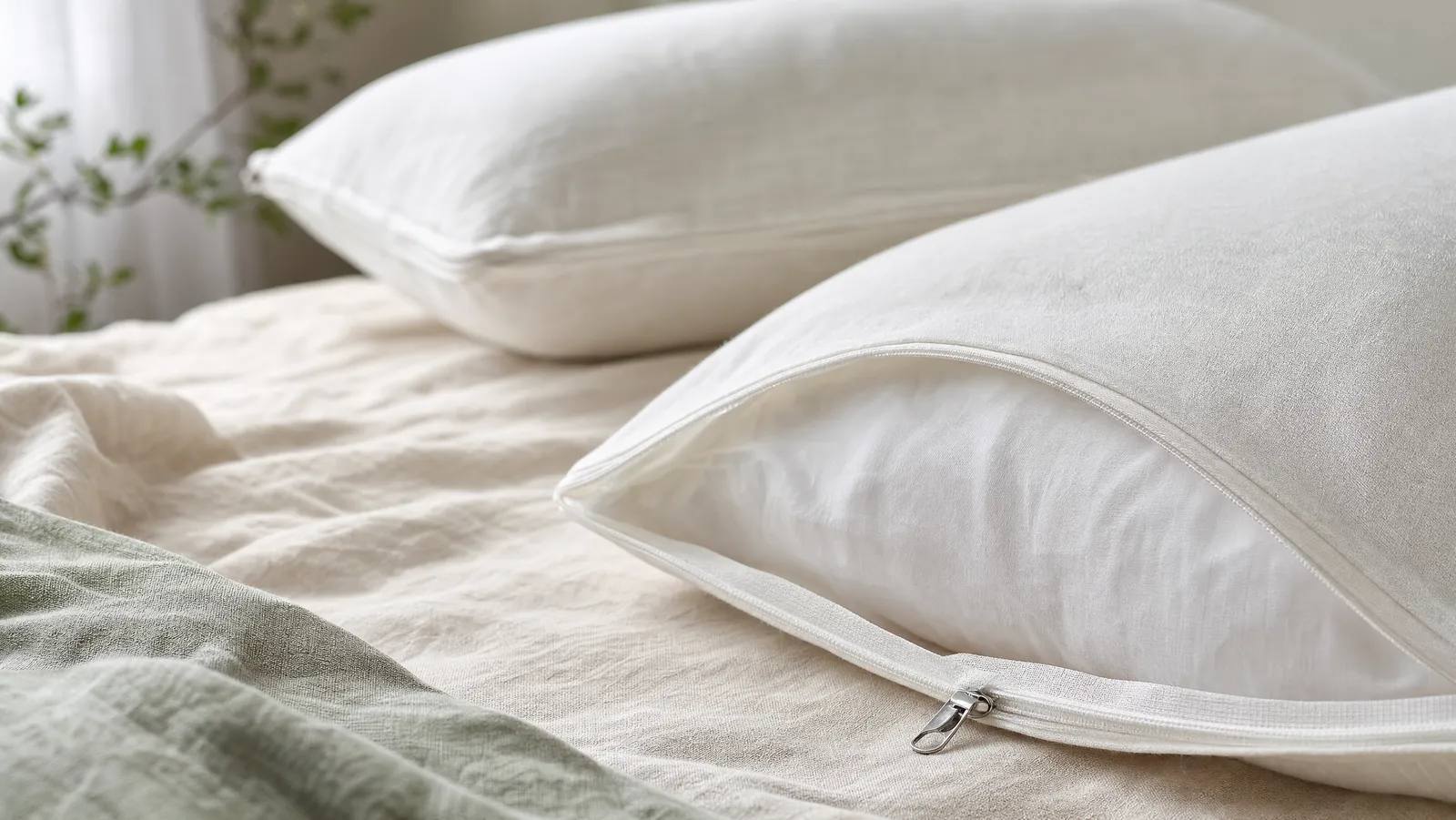
Summary statement 17 recommends mite allergen-proof mattress, box spring and pillow encasings to decrease exposure: strong recommendation, B evidence. The parameter calls encasing "the most effective way to prevent mite colonization" and says existing mattresses, box springs and pillows "can be kept if they are encased in allergen-impermeable covers to entrap already-present mites and mite allergens."
The specification matters more than the packaging. According to the parameter, woven microfiber fabrics with a mean pore size smaller than 10 micrometers can effectively block Der p 1, while non-woven encasings "are not recommended because they trap mite allergens and are not washable, leading to allergen accumulation." Woven, not non-woven. That is the buying rule, covered in more detail in our guide to dust mite pillow protectors.
Our pick is the Mission: Allergy Barrier II pillow encasing at $24.95 as of October 2026, the only cover we have reviewed with a named third-party test on the listing. Mission: Allergy states it is medical grade, blocks 100% of dust mite and animal dander allergens, and was third-party tested by Indoor Biotechnologies, Inc. It also states the encasing is certified bedbug-proof — a separate claim about a separate animal, and if you are not sure which you are dealing with, the difference between dust mites and bed bugs is worth reading first. The listing publishes no mean pore size, so we report the test rather than the number.
Step 3: Wash the bedding weekly — hot is optional
Summary statement 13: bedding "should be washed weekly to decrease dust mite numbers and mite allergen levels, and that high temperature is not necessary." Strong recommendation, B evidence.
The temperature half is where two credible sources part company. According to AAFA, you should wash sheets, blankets and throw rugs weekly in hot water "that's at least 130° F or more to kill dust mites" and dry them in a hot dryer cycle. The practice parameter's position is that weekly is the active ingredient and that chasing 130°F carries a real risk: it notes the US Consumer Product Safety Commission has recommended domestic hot water be set at 120°F, and that exposure to water at 131°F "will lead to a second-degree burn within 17 seconds". Its own recommendation is to wash weekly in warm water "without aiming for a specific and potentially dangerous temperature", which removes most, not all, mites and allergen.
Both agree on frequency, and the parameter explains why weekly beats monthly: allergen removed from blankets by washing "generally reappears within 1 month".
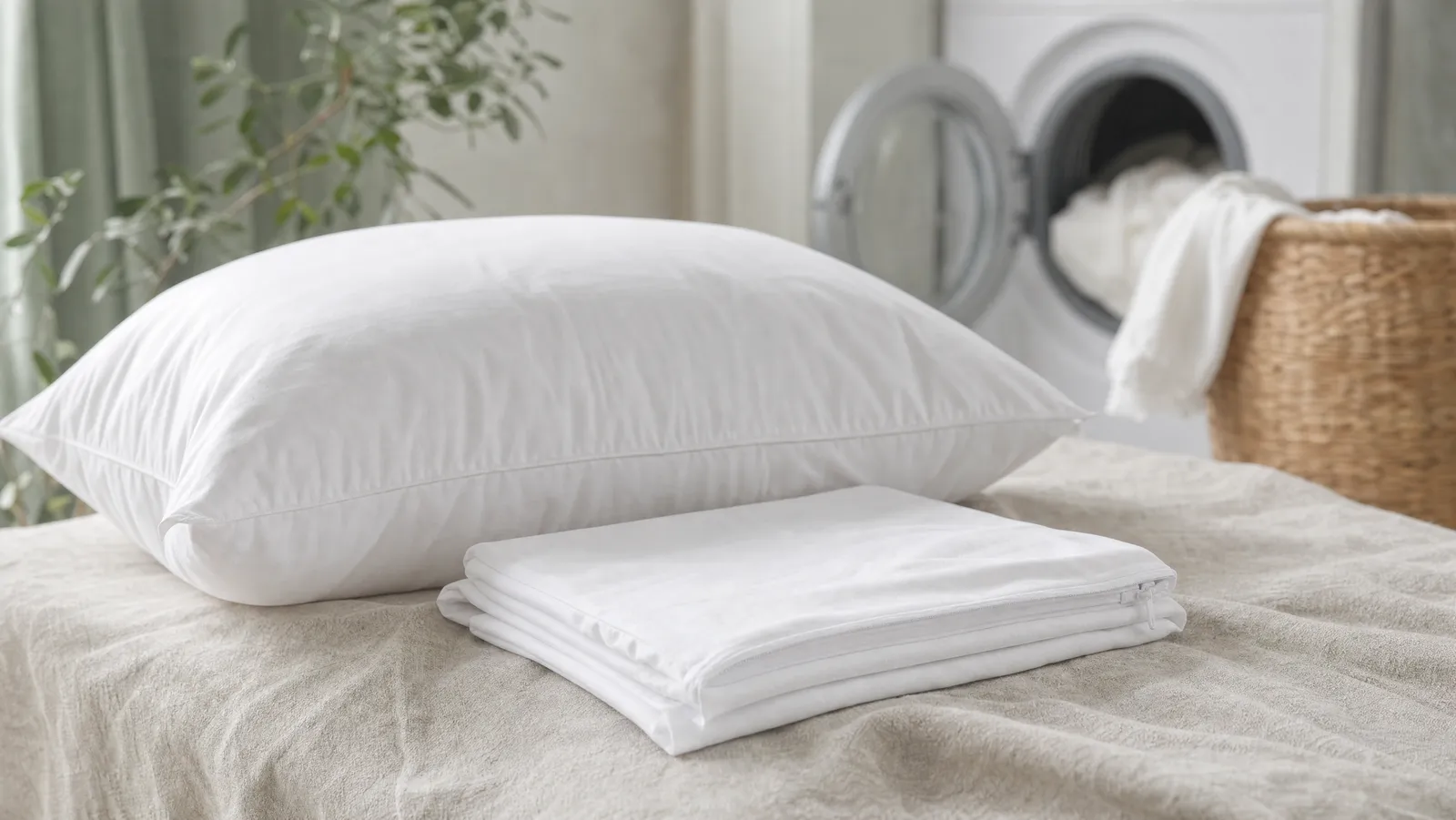
Weekly washing has a precondition nobody prints: something in the bed has to be washable weekly, and most pillows are not. The AllerEase Premier zipper protectors, four for $21.49 as of October 2026 against a $27.99 list price, are here for one stated instruction: machine wash HOT. The drying instruction reverses — AllerEase says tumble dry on the lowest setting, separately, and remove the cover when it is dry rather than when the dryer stops.
Step 4: Allergy-proof your bedroom without gutting it
The most effective way to reduce dust mites in a bedroom is also the least practical, and the parameter says so. It lists carpeting, upholstered furniture, mattresses, bedding and settled dust as the reservoirs, states that the most effective way to remove them "is to eliminate carpeting, furniture, and mattresses from the home", and then adds: "In many cases, this is impractical."
AAFA's version is the livable one: keep surfaces clean and uncluttered — "bare floors and walls are best, especially in the bedroom where you spend one-third of your time" — get rid of fabric you cannot easily wash regularly in hot water, and prefer low-pile carpet or washable throw rugs to wall-to-wall.
Two specifics worth copying:
- Soft toys go through the weekly wash. AAFA says to wash bedding, uncovered pillows and stuffed toys in water 130 degrees Fahrenheit or hotter each week and dry them in a hot dryer cycle.
- Pets stay out. AAFA's indoor allergen guidance is to keep pets out of your bedroom and to close bedroom doors when you are not home. This is dander control rather than mite control, but the bedroom is where both arguments land.
Step 5: Vacuum with HEPA, and be realistic about purifiers
Summary statement 16 recommends regular vacuuming with a cleaner that has HEPA filtration, a central vacuum with adequate filtration, or one that vents to the outside — strong recommendation, B evidence. The parameter is candid: vacuuming does not remove all live mites, but mite allergen in the form of fecal particles can be removed.
Air purifiers are a weaker proposition than the marketing suggests. Summary statement 20: "HEPA filtration alone is of uncertain benefit for patients with mite allergy, although it can decrease local exposure to airborne mite allergens and to some irritants" — weak recommendation, C evidence. If you use one, the parameter says to place it where air disturbance suspends particles rather than in a still corner.
What to skip
Three measures the specialists recommend against or decline to endorse:
- Acaricides and mite sprays. Summary statement 11: "Do not recommend the use of acaricides to eliminate mite populations because of their limited efficacy at lowering allergen levels and concerns about the use of chemical agents in the home." Moderate recommendation, B evidence.
- Tannic acid for carpets. Summary statement 19 advises against it "because it is only marginally effective." Moderate, C evidence.
- Freezing, heating and drying things out. Summary statement 12 tells clinicians to say these measures "theoretically should be effective; however, controlled trials have not been performed to demonstrate clinical benefit when they are used." Weak recommendation, D evidence. Widely repeated, barely studied.
The pillow itself, and what a new one cannot do
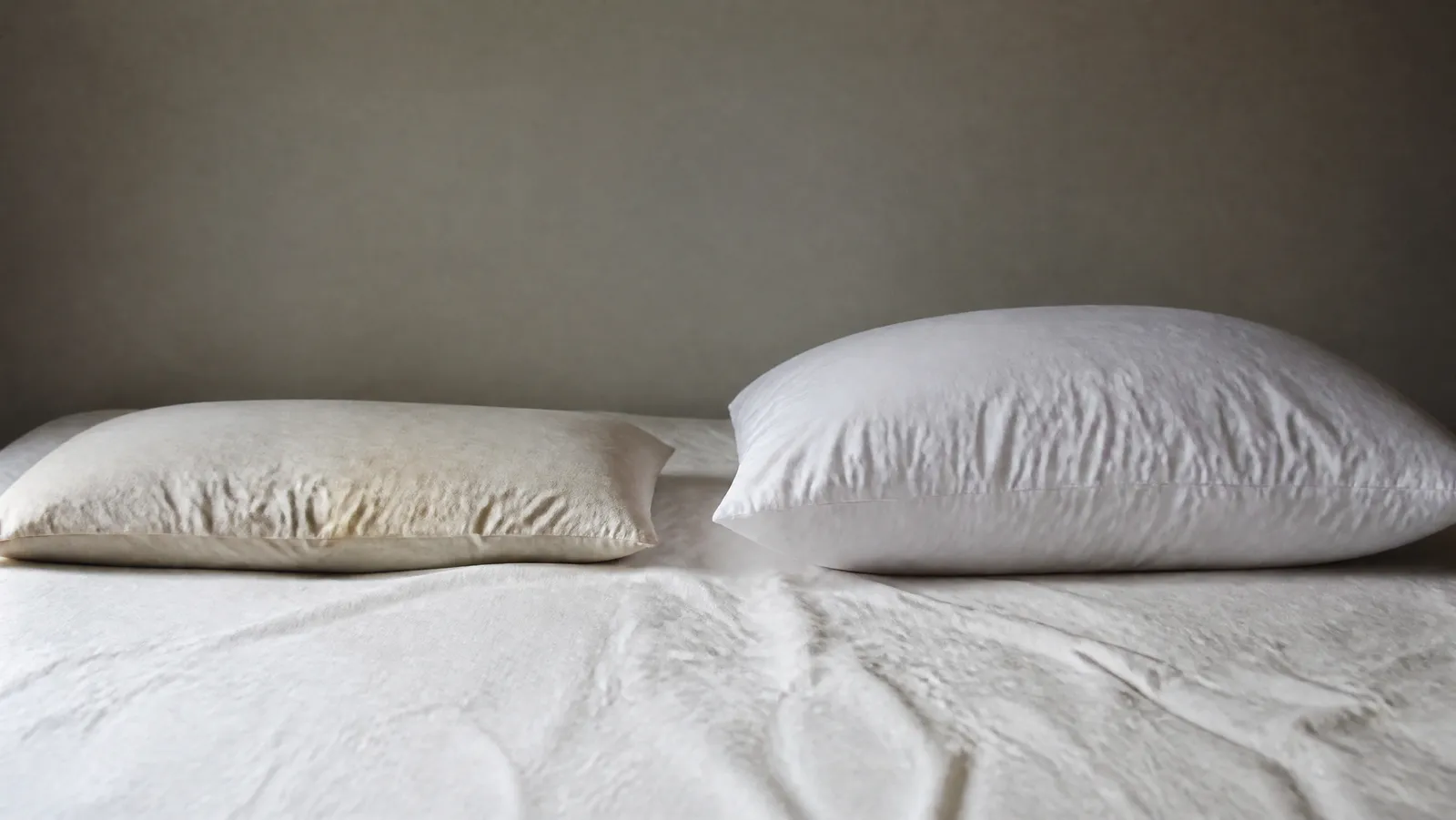
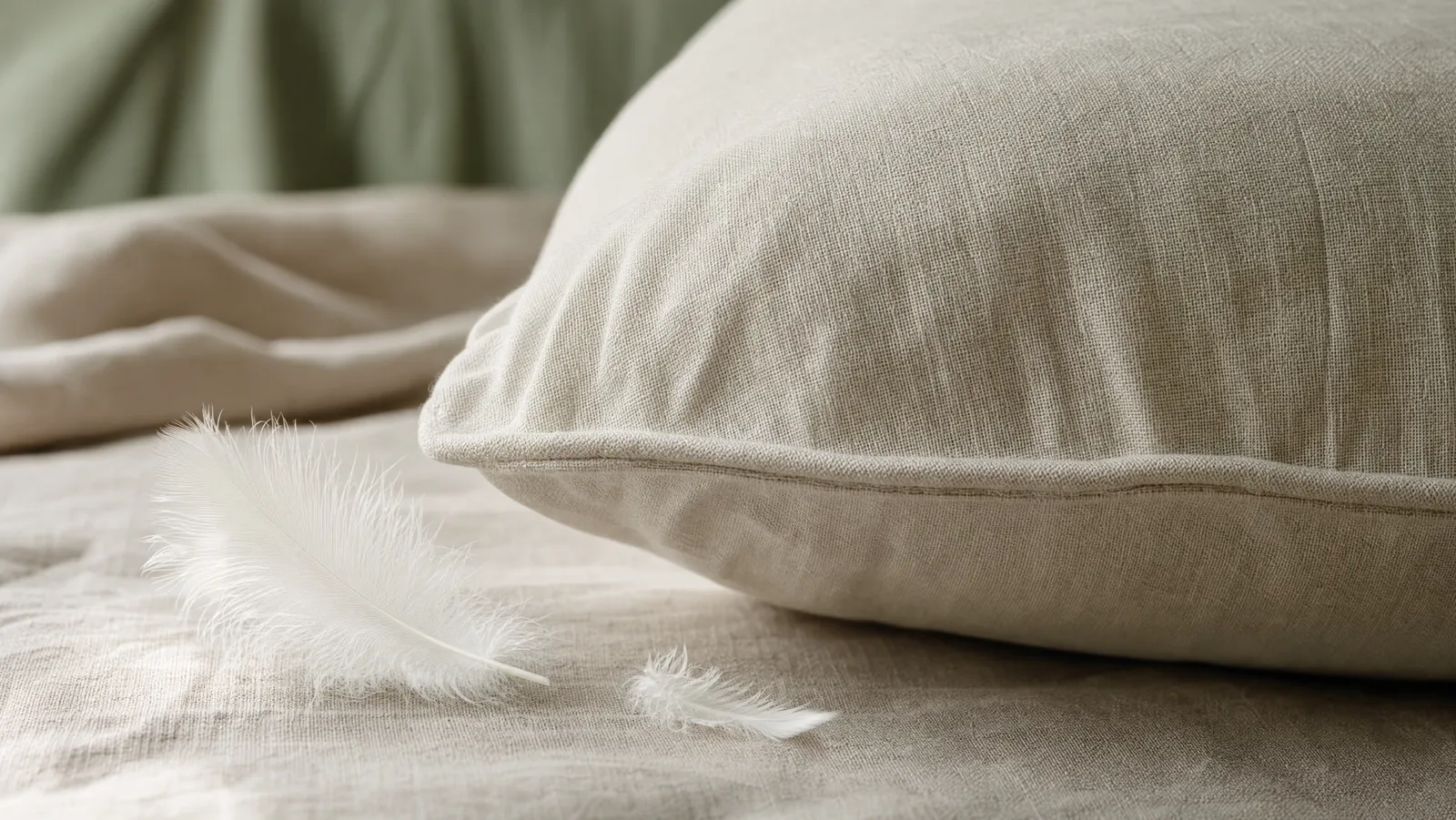
Buying a hypoallergenic pillow feels like the obvious prevention step, and it is the one the parameter is most dismissive of. It states that "nonallergenic pillows are not a substitute for covering them with allergy-proof encasements", and that "foam pillows are not less prone to dust mite allergens than are feather pillows."
That reframes the purchase. The pillow is not your allergen barrier; the woven encasing over it is. Which means you can choose a pillow on comfort and disclosure instead — our pick for pairing with an encasing is the Sleep On Latex natural latex shredded foam pillow at $49 as of October 2026, which states its fill as Fair Trade Sri Lankan natural latex, a machine-washable organic cotton cover, and Oeko-Tex Standard 100 Class 1 certification. It does not publish a firmness or loft figure, which we would rather flag than guess at.
Age is a separate question from allergen. AAFA suggests replacing pillows every 2 years and mattresses every 10. Treat that as a rule of thumb rather than a measurement — there is more on where it comes from in how often to replace your pillow — and remember that a new pillow resets the pillow's age, not the room's humidity.
Will dust mite allergy prevention actually make you feel better?
Single measures have a poor record. According to the practice parameter, mite-proof bedding covers used as part of a structured allergen-control program do decrease measured exposure, and then: "Even so, this single avoidance measure does not lead to a significant alleviation of clinical symptoms in patients with allergic rhinitis." It also reports a meta-analysis of 23 randomized trials which concluded that current chemical and physical methods aimed at decreasing mite allergen exposure were ineffective, and a Cochrane review of 54 trials in patients with asthma that "found no benefit for any of these interventions."
The layered case is better, and still qualified. Summary statement 21 recommends a multifaceted approach combining repetitive and sequential interventions — a moderate recommendation, but on A evidence, the highest evidence grade in the document. The combination it names as most effective is the five steps above: humidity at 35% to 50%, regular washing of bedding, regular vacuuming with a high-efficiency vacuum, mattress and pillow encasings, and HEPA filtration if deemed necessary. Its summing-up: "although there is little evidence for the clinical benefits of single avoidance, multifaceted interventions in carefully selected patients appear to be helpful."
So the realistic promise is exposure reduction, which the parameter says a multifaceted approach can achieve — not symptom relief from any single step. AAFA puts the ceiling plainly: "It may not be possible to rid your home entirely of these creatures." If symptoms persist despite reasonable effort, that is a clinician's question rather than a shopping question. Allergy and asthma are medical conditions.
The bottom line
Buy the hygrometer first: it is the cheapest item on the list and it tells you whether humidity is your problem. Hold relative humidity at 35% to 50%, continuously, because brief rises are enough to keep a mite population alive. Encase the mattress, box spring and pillow in woven — not non-woven — covers, the strongest-graded measure for a bedroom. Wash the bedding weekly without chasing a dangerous water temperature. Vacuum with HEPA. Cut the soft furnishings you can live without, wash the stuffed toys with the sheets, and keep the pets out of the room.
Then hold the expectation right: stacking these measures is backed by the document's highest evidence grade; no single one of them is. If you would rather start with a pillow and cover chosen for this problem than a routine built around the bed you have, how we ranked pillows for allergies is the next page — and if you are reading this at 3am because you wake up congested, the more useful appointment is with a clinician.
The shortlist
3 pillows compared — firmness, loft, and temperature side by side. The top pick is highlighted.
| Pillow | Firmness | Loft | Sleeps | Best for | Price |
|---|---|---|---|---|---|
| — | — | Neutral | The highest-graded bedroom measure, applied to the pillow | $24.95 Check | |
Best Weekly-Wash CoverAllerEase Premier Zipper Pillow Protector, Standard/Queen, 4 Pack | — | — | Neutral | A zippered cover the maker says you can wash hot every week | $21.49 Check |
Best Pillow to Pair With an EncasingSleep On Latex Natural Latex Shredded Foam Pillow, Standard Size | — | — | Neutral | A pillow chosen on disclosure, to live inside an encasing | $49 Check |
Mission: Allergy Dust Mite and Allergen Proof Pillow Encasing, Barrier II, Standard Size
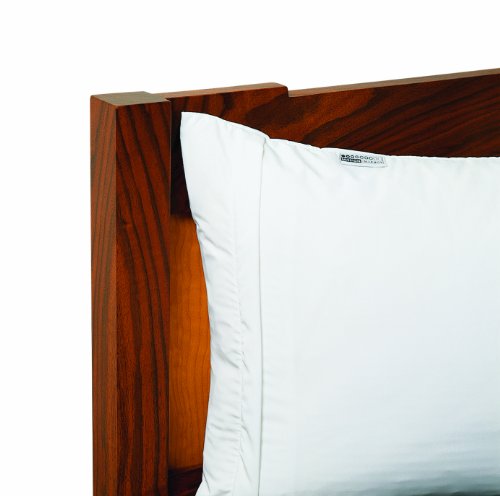
It is the only encasing here with a named third-party allergen test behind it, it is the woven construction the practice parameter endorses rather than the non-woven kind it warns against, and the stated warranty runs ten years.
The 100% blocking figure is the manufacturer's own commissioned result with no mean pore size published on the listing, and at $24.95 for a single standard encasing, covering a bed properly costs real money.
Of everything on this page, encasing the pillow is the measure the 2013 AAAAI/ACAAI practice parameter grades highest for the bedroom — a strong recommendation on B evidence, alongside the mattress and box spring. The parameter also specifies what the fabric has to do: woven microfiber with a mean pore size smaller than 10 micrometers blocks Der p 1, and non-woven encasings are not recommended because they accumulate allergen and cannot be washed. This is a woven microfiber encasing, which puts it on the right side of that line.
It is also the only cover we have put on this site with a named third-party test attached. Mission: Allergy states the encasing is medical grade, blocks 100% of dust mite and animal dander allergens, and was third-party tested by Indoor Biotechnologies, Inc. The rest of the maker-stated detail is unusually specific: soft, tightly woven, breathable 100% microfiber polyester that is air- and water-vapor-permeable yet water repellant; bound seams with interior and exterior zipper flaps; a ten-year warranty; made in USA; designed by a board-certified allergist and, the listing says, recommended by leading allergy specialists and university allergy departments.
Two honest limits. "Blocks 100%" is a manufacturer claim resting on testing the manufacturer commissioned, and the listing does not publish the mean pore size the practice parameter actually cares about — so we can report the named test without treating the number as independent. And $24.95 as of October 2026 buys one standard encasing. Doing the whole bed, as the parameter recommends, means the mattress and box spring too, which is a different order of spend.
AllerEase Premier Zipper Pillow Protector, Standard/Queen, 4 Pack

The care label says machine wash hot, which is what makes this cover compatible with the weekly-washing recommendation, and four of them covers a whole house in a single load.
Wash hot but dry on the lowest setting is genuinely easy to get backwards, and the allergy framing has no named test or pore-size figure behind it.
The weekly wash is the other strong, B-evidence recommendation in the practice parameter, and it has a practical precondition nobody states: something in the bed has to actually be washable every week. Most pillows are not. AllerEase's care instruction is the reason this one is here — machine wash HOT, with non-chlorine bleach when needed. That is a cover that can keep up with a weekly routine instead of quietly opting out of it.
Read the drying instruction before the first wash, because it reverses. AllerEase says to tumble dry on the LOWEST setting, separately, and to remove the cover when it is dry rather than when the dryer stops, and not to iron. Hot water, cool dryer. The maker describes the fabric as tightly woven and says it fully encases the pillow, claims a temperature-balancing fabric technology of the sort used in high-performance athletic clothing, and states a lifetime warranty.
Four protectors at $21.49 as of October 2026, down from a $27.99 list price, is the cheapest way we know to put a washable layer on every pillow in the house at once — which matters, because a routine that only reaches one bed has a hole in it. What you do not get is a number. "Tightly woven" is a description, not a mean pore size, and there is no named third-party allergen test on the listing, so we will not call this one allergy-proof.
Sleep On Latex Natural Latex Shredded Foam Pillow, Standard Size

The fill, its origin and the certification are all named on the listing — Fair Trade Sri Lankan natural latex, Oeko-Tex Standard 100 Class 1 — and the cotton cover is machine washable.
No firmness, loft or weight figure is published, so the feel is unpredictable from the listing, and only the cover is stated to be washable.
Start from what the practice parameter says about pillows, because it removes the usual reason for buying one: "Nonallergenic pillows are not a substitute for covering them with allergy-proof encasements," and "foam pillows are not less prone to dust mite allergens than are feather pillows." So the pillow is not the allergen measure. The cover over it is. That frees you to pick a pillow on sleep quality and disclosure rather than on allergy marketing.
On disclosure this one does well. Sleep On Latex states the fill is Fair Trade, Sri Lankan natural latex foam, that the cover is machine washable organic cotton, and that the pillow is Oeko-Tex Standard 100 Class 1 certified. At $49 as of October 2026 that is a named material, a named origin and a named certification, which is more than most pillows at this price disclose.
The gaps are worth stating. The listing gives no firmness rating, no loft measurement and no weight, so there is no way to predict from the page how it will sit under a given head — which is why we have left those fields out of the spec box rather than guess at them. And the washable part named on the listing is the organic cotton cover; it says nothing about washing the latex itself.
The Layered Routine, in Evidence Order
The 2013 AAAAI/ACAAI dust mite practice parameter grades its own advice. This is that advice reordered by what the grades actually support — cheapest and best-evidenced first.
Dust Mite Allergy Prevention FAQ
Can you stop a dust mite allergy from developing in the first place? Usually not, if you live where mites live. Summary statement 1 of the 2013 practice parameter advises minimizing exposure of susceptible children to decrease their risk of developing mite-specific IgE, but adds that "because intermittent exposure to mite allergens can lead to sensitization, primary prevention might not be possible to achieve in regions where mite exposure is prevalent." The parameter's own narrative is blunter still: "most attempts at primary prevention have been unsuccessful."
What humidity level stops dust mites? The practice parameter's recommendation is 35% to 50% relative humidity. The EPA separately states that "a relative humidity of 30-50 percent is generally recommended for homes" and that "maintaining the relative humidity between 30% - 60% will help control mold, dust mites and cockroaches." Complete prevention is stricter than either figure: the parameter cites a study in which RH had to be held below 35% for at least 22 hours per day to completely prevent the growth of Dermatophagoides farinae.
Will a dehumidifier do it? Not reliably on its own. The parameter reports that studies of humidity control using portable and central dehumidifiers "have failed to decrease mite exposure", partly because brief periods of elevated humidity are enough to sustain a mite population. It describes one trial in northwest England where portable dehumidifiers in six homes did not lower humidity enough to retard mite growth, with no difference in mite counts or Der p 1 at one, two and three months. Its conclusion is about consistency: homes where RH is held at 35% to 50% continuously have lower mite allergen than homes where RH fluctuates.
Do I have to wash at 130°F? Two credible bodies differ. AAFA says water at least 130°F or hotter, weekly. The practice parameter says weekly washing is what matters and high temperature is not necessary, and it gives a safety reason: it notes the US Consumer Product Safety Commission has recommended domestic hot water be set at 120°F, and that exposure to water at 131°F "will lead to a second-degree burn within 17 seconds". Both agree on weekly.
Are mite sprays and powders worth buying? The parameter says no. Summary statement 11: "Do not recommend the use of acaricides to eliminate mite populations because of their limited efficacy at lowering allergen levels and concerns about the use of chemical agents in the home" — moderate recommendation, B evidence. Summary statement 19 separately advises against tannic acid for carpet dust "because it is only marginally effective" — moderate, C evidence.
Does freezing or heating things kill the mites? In theory. Summary statement 12 tells clinicians to say that physical measures such as heating, freezing and desiccation "theoretically should be effective; however, controlled trials have not been performed to demonstrate clinical benefit when they are used" — a weak recommendation on D evidence.
How quickly does the benefit of a wash wear off? The parameter's stated reason for weekly rather than monthly laundering is that allergen removed from blankets by washing "generally reappears within 1 month".
Is a new pillow a prevention measure? Not by itself. The parameter states that "nonallergenic pillows are not a substitute for covering them with allergy-proof encasements" and that "foam pillows are not less prone to dust mite allergens than are feather pillows". AAFA suggests replacing pillows every 2 years and mattresses every 10 — a rule of thumb rather than a measurement.
I am doing all of this and still have symptoms. Then the next step is a clinician, not another purchase. The practice parameter is explicit that mite-proof bedding as a single avoidance measure "does not lead to a significant alleviation of clinical symptoms in patients with allergic rhinitis", and AAFA says it may not be possible to rid your home entirely of these creatures. Allergy and asthma are medical conditions and belong with someone who can test and treat you.
Why you can trust us

Aimee Cannon
Sleep & bedding writer
Aimee Cannon is a sleep and bedding writer who has spent years testing pillows of every kind — memory foam, down, wool, bamboo, buckwheat, and specialty support pillows. She focuses on matching the right pillow to each sleeping position and need, and reports what actually holds up after months of nightly use. When she is not testing pillows, Aimee is usually with her husband and her dog.