Can Your Pillow Cause Allergies?
Can your pillow cause allergies? Almost never in the way the question implies. A pillow is far more often a reservoir than a cause: the thing you react to is not usually the pillow but what has collected inside it — dust mite allergen above all, sometimes pet dander or mould, occasionally feather protein — sitting six inches from your face for eight hours a night. We may earn a commission from links on this page, at no extra cost to you.
That distinction is the whole page, because it changes what you do next. What follows is a differential, most likely to least, including the explanations that are not allergy and the ones that are not bedding. It is not a diagnosis: we can describe what has been measured, not examine you. If you are shopping rather than investigating, our guide to the best pillow for allergies runs the same filter over a set of picks.
Most likely by a distance: dust mite allergen
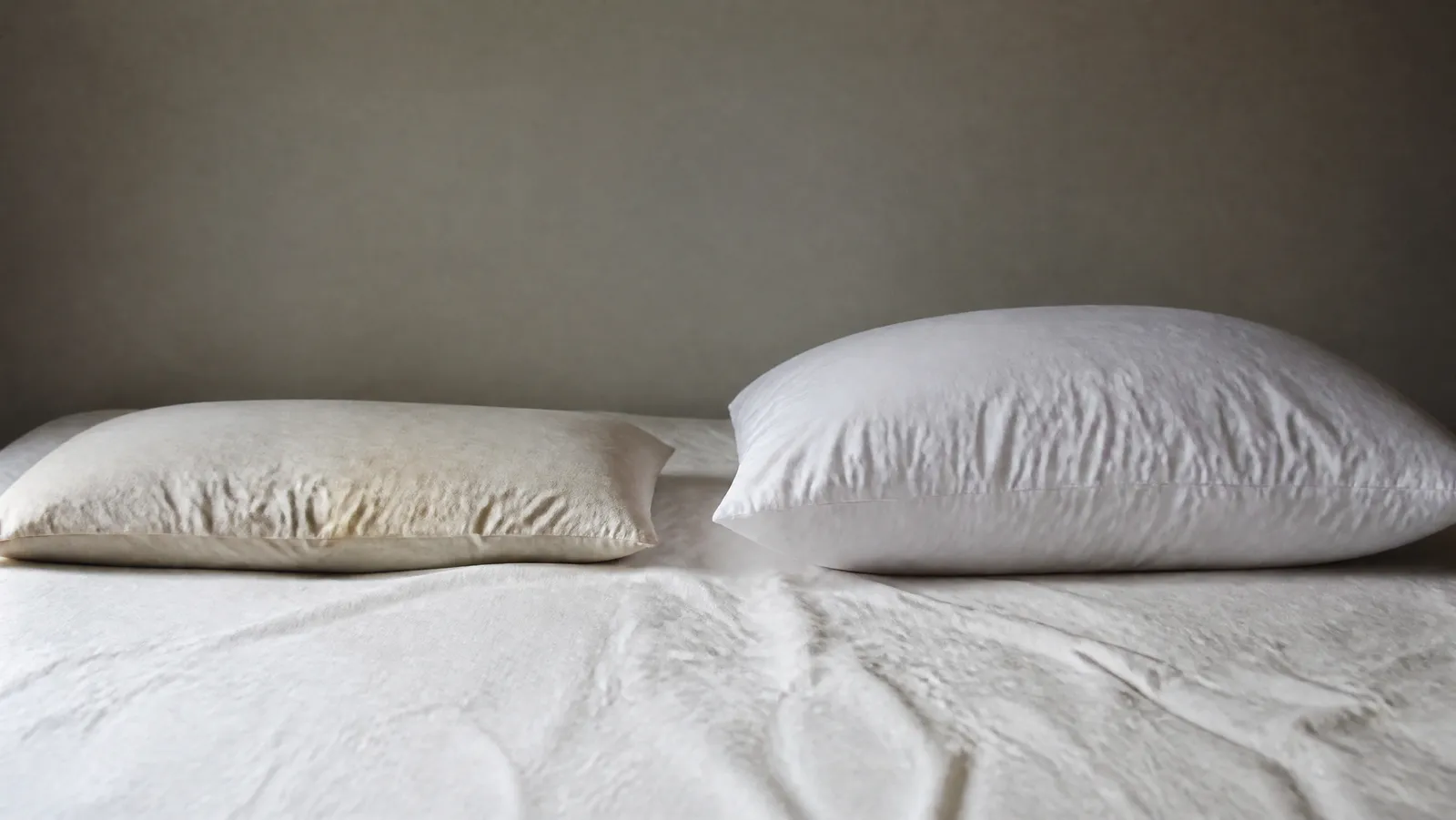
A pillow is a warm, humid, food-rich habitat that nobody ever cleans out. The 2013 practice parameter Environmental Assessment and Exposure Control of Dust Mites, published by Portnoy and colleagues in Annals of Allergy, Asthma and Immunology for the AAAAI and ACAAI, states that mattresses, box springs and pillows are major sources of mites and mite allergen. So "am I allergic to my pillow" usually resolves into two better questions: what has accumulated in the bedding, and am I sensitised to any of it.
The StatPearls clinical review of dust mite allergy by Aggarwal and Senthilkumaran, updated in 2023, calls it "a prevalent form of allergy" affecting 20 million people in the United States, and reports that around 5% to 30% of the general population show house dust mite reactivity on skin testing. The ACAAI describes dust mites as one of the most common indoor allergens, with symptoms of sneezing, runny nose, irritated eyes, scratchy throat, coughing, wheezing and shortness of breath.
Nothing in that list separates mite allergen from pollen, a cold or dry air, which is why the pattern matters more than the symptoms. We take the mite question apart in dust mites in pillows, including the popular pillow-weight statistic we could not source.
Next: pet dander, and the cover that may not stop it
If a cat or dog sleeps on the bed, a second reservoir shares the pillow, and the barrier that handles mite allergen may not handle this one. Woven microfiber encasings with a mean pore size smaller than 10 micrometres can effectively block the mite allergen Der p 1, the dust mite parameter states, "whereas a mean pore size smaller than 6 micrometres is necessary to block cat allergen Fel d 1" — and many commercially available woven microfiber encasings, it notes, block Der p 1 but not Fel d 1. Only Mission: Allergy publishes a figure — a maker-stated mean pore size of 2 microns on its own site, below that 6-micrometre threshold; the other two publish none.
Mould: one real study, heavily oversold
There is a genuine published study of used pillows, and it is about fungi rather than mites.
Woodcock and colleagues published "Fungal contamination of bedding" in Allergy in 2006. They collected ten pillows in regular use, aged from 18 months to more than 20 years, feather and synthetic, and cultured them quantitatively. Aspergillus fumigatus was isolated from all ten, Aureobasidium pullulans and Rhodotorula mucilaginosa from six each, and another 47 species appeared across the pillows and their vacuum dust.
Be clear about what ten pillows support: that fungi colonise used pillows. The study measured nobody's symptoms and cannot say what share of pillows anywhere are contaminated.
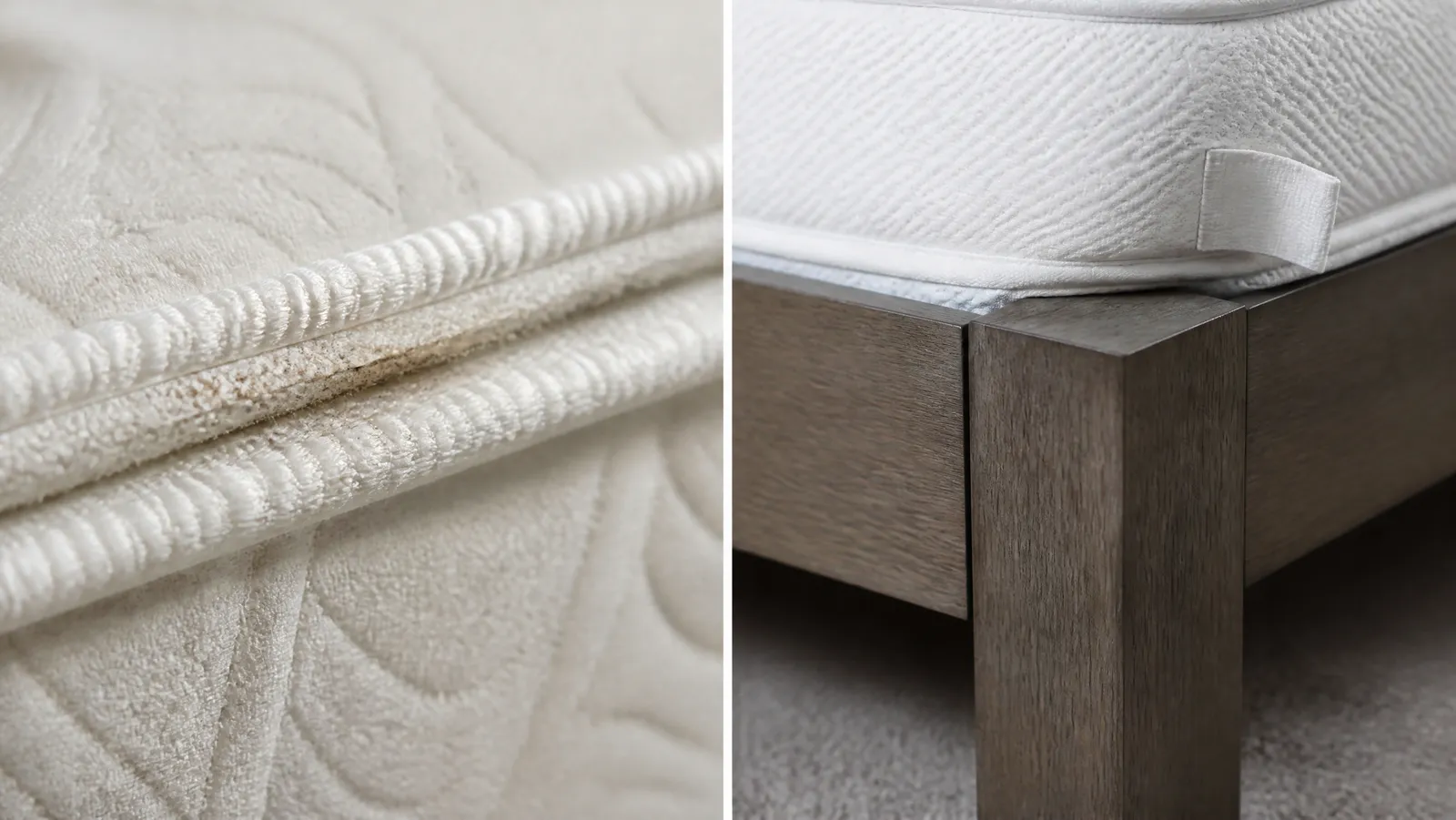
What it does justify is attention to moisture. The EPA states that mould "may cause allergic reactions in sensitive individuals", that those responses include hay-fever-type symptoms, and that none of it "will grow without water or moisture"; its guidance is to keep indoor humidity below 60%, ideally 30% to 50%. The dust mite parameter lands in the same place from the other direction: homes holding relative humidity continuously at 35% to 50% carry lower mite allergen than homes where it swings. A pillow that never dries out is the version of this thread worth taking seriously.
Feather and down: real, uncommon, often mistaken for mites
True feather allergy exists, it is rarer than the internet assumes, and the reaction blamed on it is frequently something else in the same pillow.
A 2019 paper in the International Journal of Molecular Sciences by Kawada and colleagues, on the biological safety of down and feather materials, reports that "a Finnish study has shown that true down and feather allergies are rare (less than 0.5% of adult patients with suspected allergic cutaneous or respiratory symptoms)", and attributes most problems to dust mites and bacteria accumulating through long use rather than to the feathers. Read the scope: that is a rarity figure within a clinic population, not a population prevalence. The fill question has its own page — see whether down pillows are bad for allergies — and swapping fill is not the lever people expect: the dust mite parameter states that "nonallergenic pillows are not a substitute for covering them with allergy-proof encasements" and that "foam pillows are not less prone to dust mite allergens than are feather pillows."
One paragraph on a separate condition, real and not what "allergy" usually means here. Feather duvet lung is a rare form of hypersensitivity pneumonitis caused, in the words of a 2019 BMJ Case Reports paper by Liu-Shiu-Cheong, Kuo, Wilkie and Dempsey, by "inhalation of organic dust from duck or goose feathers found in duvets and pillows". Their patient, a 43-year-old non-smoker with three months of malaise, fatigue and breathlessness who had recently switched to feather bedding, improved after the bedding was removed and treatment began. The mechanism is a delayed, cell-mediated reaction, not the IgE-mediated response behind hay fever. The authors' own point is about history-taking: "history taking does not usually extend to asking about feather exposure in duvets and pillows", so they judge it "entirely probable that cases of FDL are missed". Mention feather bedding to a doctor investigating unexplained breathlessness; do not go and fear your duvet.
The category that is not allergy at all: a new pillow's smell
A new foam pillow can produce symptoms a reader will reasonably call an allergy. Mechanistically it is usually something else. The EPA lists building materials and furnishings among indoor sources of volatile organic compounds, and lists eye, nose and throat irritation and headaches among effects some people have reported soon after exposure to some organics. It also says plainly that "at present, not much is known about what health effects occur from the levels of organics usually found in homes".
The distinction is mechanistic. An allergic response in the sense this article means involves allergen-specific IgE recognising a protein; an irritant response involves no immune memory at all. The AAAAI describes nonallergic rhinitis as chronic sneezing, congestion or runny nose that, "unlike an allergy, doesn't involve the same mechanisms of the immune system". The Joint Task Force's Rhinitis 2020: A Practice Parameter Update adds that vasomotor rhinitis, a subtype, is "often activated by temperature and humidity changes, especially cold dry air, airborne irritants, strong odors, including tobacco smoke, and/or exercise". A new pillow in a closed bedroom fits that without any allergy being present. Airing the room and the pillow is cheap to try; symptoms that persist deserve a clinician's opinion.
Often it is not the bedding
Rhinitis 2020 reports that allergic rhinitis "affects up to 60 million people in the U.S. annually", with self-reported rates of 10% to 30% of adults and as many as 40% of children in the United States. Seasonal allergy explains a bad fortnight at least as often as bedding does, and pollen does not care what your pillow is made of.
Then there is rhinitis without allergy. The same parameter states that the prevalence of nonallergic rhinitis "is unknown, but some estimates suggest that worldwide up to 200 million people have NAR", and recognises mixed rhinitis, "when both allergic and non-allergic components contribute to rhinitis symptoms". Cold, dry indoor air is on the vasomotor trigger list, and a heated bedroom in winter supplies it nightly.
Why symptoms are worse in the morning — and what that does not prove
This is the observation that sends people looking at their pillow, so it deserves precision. Three claims get blended: that you have lain in an allergen reservoir all night, that allergic inflammation follows a daily rhythm peaking near dawn, and that noses congest when you lie down. They are not the same claim and not equally evidenced.
The circadian one is best documented. In a 2020 review in Frontiers in Immunology, Atsuhito Nakao writes that in allergic rhinitis and asthma, "symptoms, nasal or bronchial reactivity, and inflammatory activity become more pronounced in the early morning and at midnight". The StatPearls dust mite review likewise describes symptoms as more likely to occur while sleeping at night and early in the morning. A morning peak is therefore expected in allergic rhinitis generally, whatever the trigger and wherever you slept, and we found no controlled study isolating overnight pillow exposure as the cause of morning symptoms.
So "worse in the morning" tells you little on its own. The informative pattern is comparative: what changes when the bedding does.
The symptom pattern that actually points at bedding
None of it is diagnostic. Each item is a reason to investigate, with the way it can mislead you attached.
- Worst on waking and in the first hour up. Consistent with a bedroom reservoir, and equally consistent with the circadian pattern above. A prompt, not evidence.
- Better when you sleep elsewhere, more than once. The strongest informal signal available, and confounded by everything else about the other room: humidity, pets, carpet, air conditioning.
- Unchanged by season and pollen count. A year-round pattern fits a perennial indoor trigger, of which dust mite is the standard example. It does not name the allergen.
- Itch as well as congestion. Nonallergic rhinitis, per the AAAAI, rarely causes an itchy nose, eyes or throat, so itch makes an allergic mechanism more plausible — but not a specific one.
- Symptoms that began with a specific new item. Write it down with a date. A new foam pillow points at irritation; a first-ever feather duvet is worth mentioning to a doctor.
Not on that list: bites. The American Lung Association states that dust mites "are not parasites that bite, sting or burrow into our bodies"; the reaction is to inhaled proteins from mite faeces, urine or decaying bodies.
The cover-it-and-see test
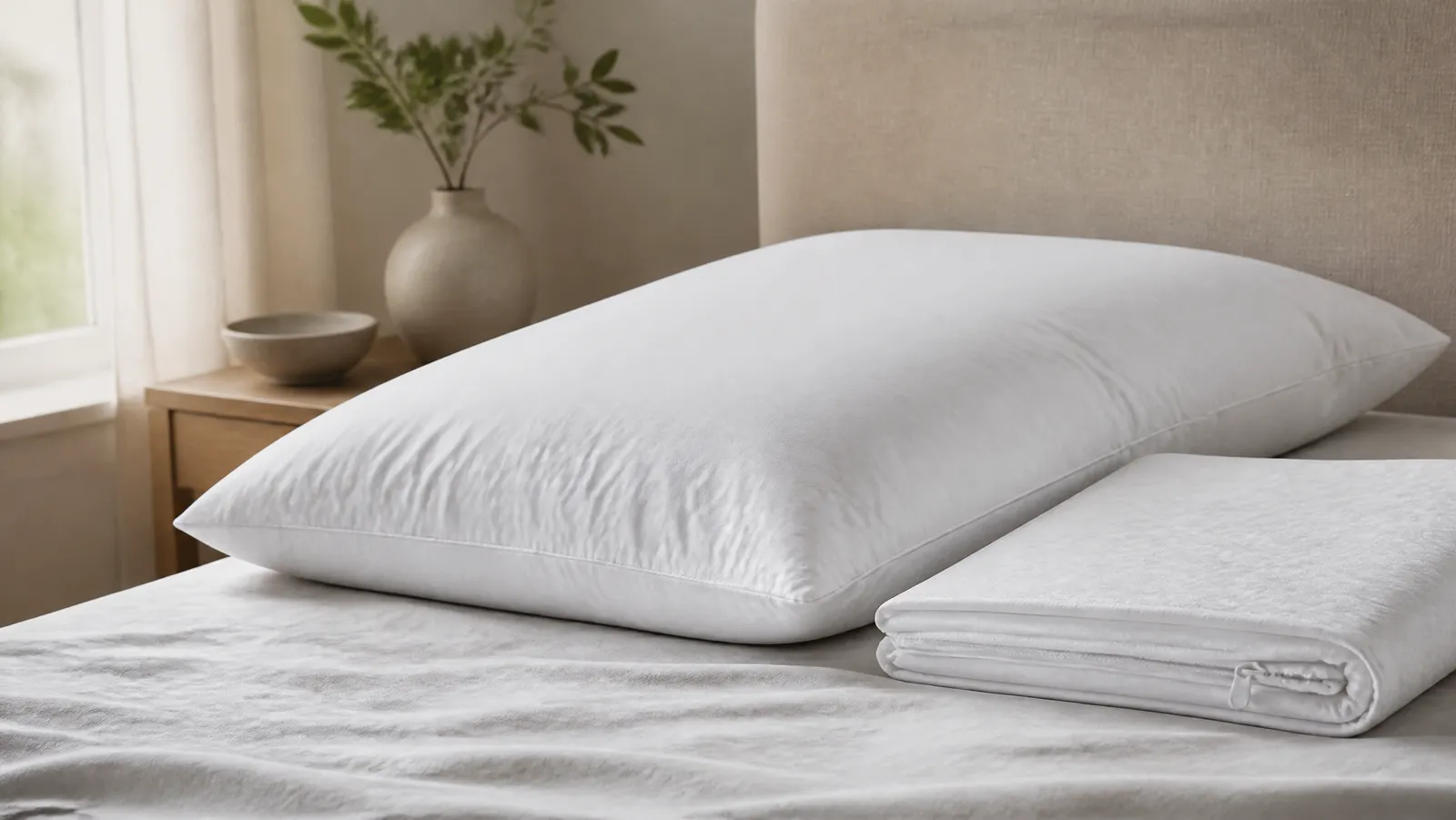
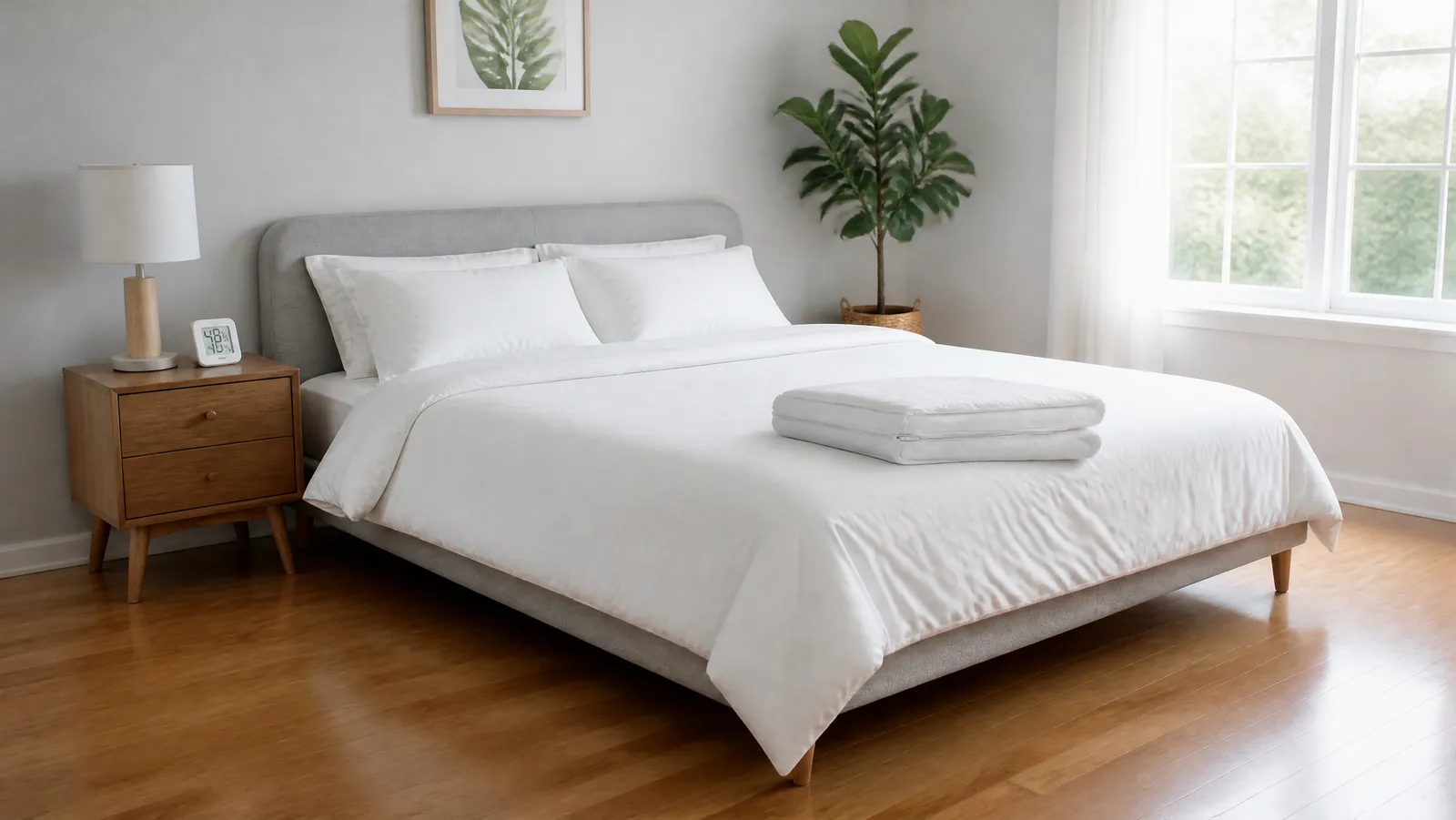
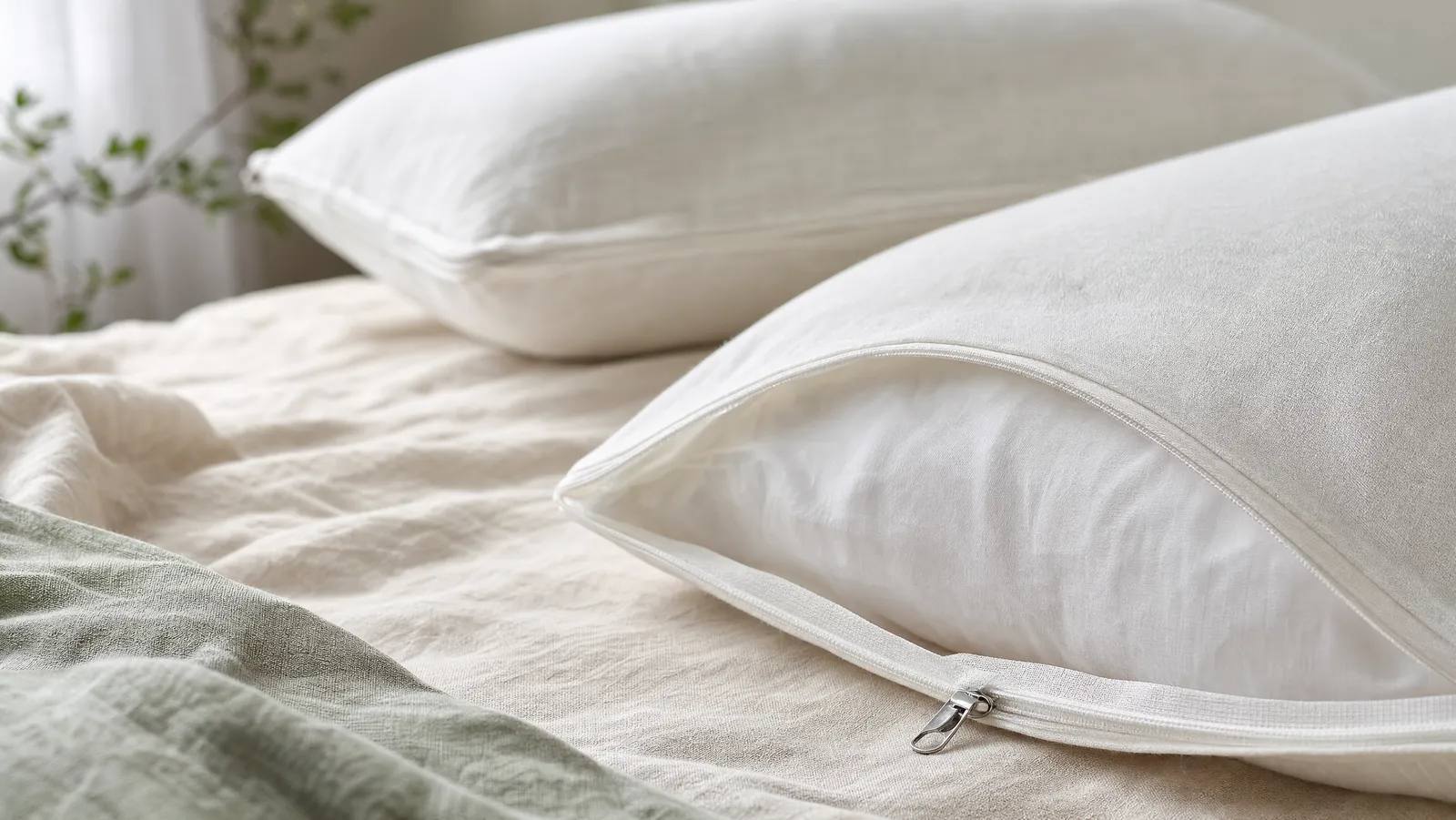
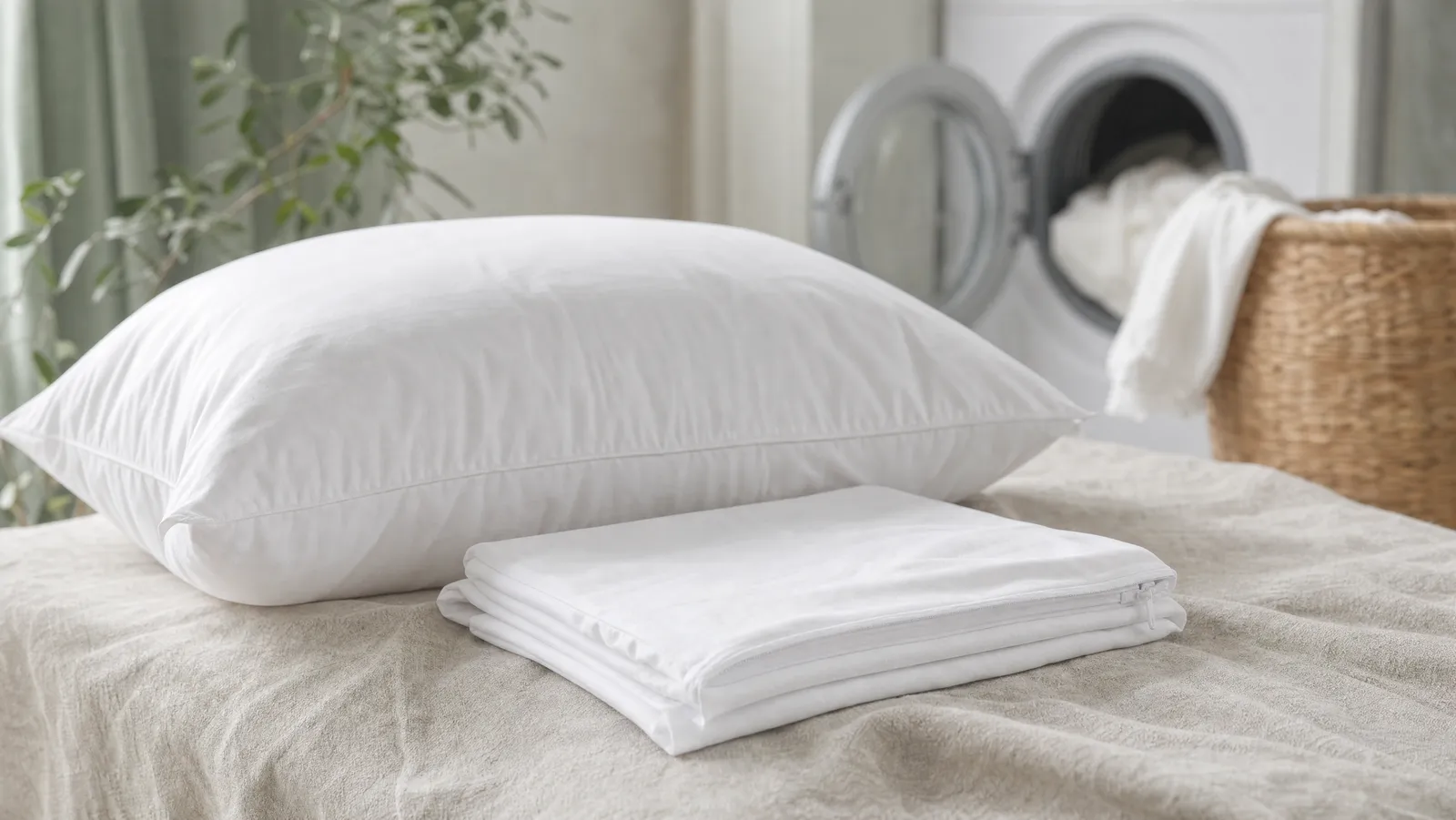
If you change one variable for two weeks, change the barrier: it has a mechanism behind it, and it does not require throwing out a pillow you like. The dust mite parameter states that "the most effective way to prevent mite colonization is to encase a mattress, box spring, or pillow in a mite allergen-impermeable encasing", and that existing pillows can be kept if encased. The caveat arrives in the same breath: mite-proof covers, as part of a structured allergen-control programme, reduce exposure, but "this single avoidance measure does not lead to a significant alleviation of clinical symptoms in patients with allergic rhinitis". We go through the barrier fabrics themselves in our write-up of a tested dust mite pillow protector.
Three covers, most checkable claim first:
- The Mission: Allergy Premium Microfiber Pillow Encasing, $37.95 for one Queen as of September 2026: the maker states it blocks 100% of dust mite and animal dander allergens, third-party tested by Indoor Biotechnologies, Inc. — its claim and its lab's, not our measurement.
- The HOSPITOLOGY Sleep Defense System encasements, $24 for two as of September 2026, cover both pillows; the maker claims waterproofing with a breathable membrane rather than an allergen test, and a waterproof membrane may sleep warmer than a plain woven cover.
- The AllerEase Allergy Pillow Protectors, $10.99 for two as of September 2026, cost about five dollars a pillow; Aller-Ease states they are machine washable and allergist recommended, naming no allergist, organisation or pore size.
Run it for a fortnight, write it down, and do not run it instead of seeing someone. Nothing here justifies delaying care for symptoms that are worsening, disturbing your sleep, or involving wheeze or breathlessness.
How allergy is actually established
This is the part a pillow cannot do, and it is the real answer to the question in the title. The ACAAI describes skin testing as using "a small, sterile probe to prick the skin with extracts from common allergens", and notes that an allergist may order a blood test as well. In the ACAAI/AAAAI monograph Pearls and pitfalls of allergy diagnostic testing (Cox and colleagues, Annals of Allergy, Asthma & Immunology, 2008), the authors quote the allergy diagnostic practice parameter that "skin prick/puncture tests generally have better overall predictability and are the preferred initial diagnostic approach", and note that blood tests for specific IgE can be used where skin testing cannot be, as when a patient has an extensive rash or is taking antihistamines, which can suppress skin test reactivity — a clinician's call, and not a cue to stop anything you have been prescribed.
The monograph's key message is that "a positive allergy test result (skin or blood) indicates only the presence of allergen specific IgE (called sensitization). It does not necessarily mean clinical allergy (ie, allergic symptoms with exposure)", and that "neither skin tests nor in vitro IgE tests should be either requested or interpreted outside the context of the clinical history and physical examination".
Sensitisation is not the same as allergy, and neither is the same as your pillow being at fault — and only the last of those three is something you can shop for.
The bottom line
- A pillow is a reservoir far more often than a cause. In order of likelihood: dust mite allergen, pet dander, mould in a pillow that never dries out, and — uncommonly — feather protein.
- Morning-worst symptoms are a weak pointer at bedding. Allergic rhinitis peaks in the early morning anyway; the informative pattern is what changes when the bedding does.
- A new pillow's smell is usually irritation, not IgE. And sometimes it is not bedding at all: nonallergic and mixed rhinitis are common.
- The barrier test answers a narrow question. Covers reduce measured exposure; a single avoidance measure does not reliably relieve rhinitis symptoms.
If you want the shopping version, how we ranked pillows for allergies is the next page, and it applies the same standard: a claim counts when it names an allergen, a number and a lab.
And if you came here because you wake up congested and want to know why, a pillow page cannot tell you. Allergy and asthma are medical conditions with real tests behind them. Take the symptom diary to a clinician; none of this is medical advice, and no pillow cover is a diagnosis or a treatment.
The shortlist
3 pillows compared — firmness, loft, and temperature side by side. The top pick is highlighted.
| Pillow | Firmness | Loft | Sleeps | Best for | Price |
|---|---|---|---|---|---|
| — | — | Neutral | Isolating the pillow as a variable behind a third-party-tested barrier | $37.95 Check | |
Best Waterproof EncasementHOSPITOLOGY PRODUCTS Sleep Defense System Zippered Pillow Encasement, Standard 20x26, Set of 2 | — | — | Neutral | Covering both pillows so the test is not undone by the spare | $24 Check |
Cheapest Way to Try ItAllerEase Allergy Pillow Protector, Standard/Queen, 2 Pack | — | — | Neutral | Running the cover-it-and-see test for about five dollars a pillow | $10.99 Check |
Mission: Allergy Dust Mite and Allergen Proof Pillow Encasing, Premium Microfiber, Queen
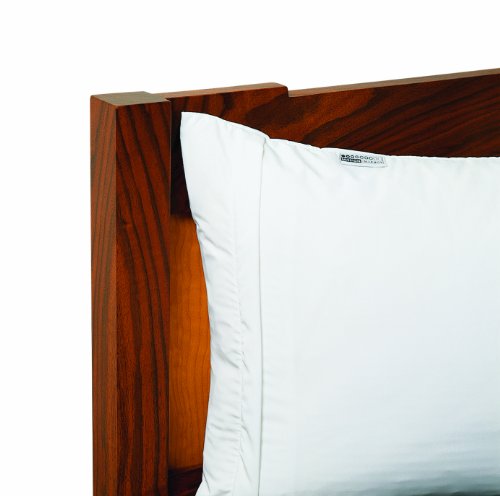
It names a lab, a test and a number, which is the first time I have been able to check anything in this aisle, and the zipper flap means the fabric is doing the work rather than the zip.
It is the priciest single cover here, and covering one pillow while the mattress and duvet stay bare tells you less than you would like.
This article asks whether the pillow is the culprit, and this is the cheapest honest way to find out: seal the pillow behind a barrier that has been tested by someone other than the person selling it, change nothing else, and watch the mornings. Mission: Allergy states that this encasing blocks 100% of dust mite and animal dander allergens, third-party tested by Indoor Biotechnologies, Inc., and describes it as medical grade and certified bedbug-proof. That is the maker's claim and its named laboratory's, not our measurement — and no cover is a diagnosis.
The construction is the kind the allergy literature discusses. The maker states a tightly woven 100% microfiber polyester that is air- and water-vapour-permeable yet water repellant, with bound seams and interior and exterior zipper flaps, a lifetime warranty, and manufacture in the USA. What makes it useful here is not the number but the shape of the claim: an allergen, an outcome, a named lab.
One Queen encasing is $37.95 as of September 2026, which buys one covered pillow. Keep the limit of that in view. A single sealed pillow on an uncovered mattress under an uncovered duvet is a partial test, which is exactly why a fortnight with no change does not clear the bedroom.
HOSPITOLOGY PRODUCTS Sleep Defense System Zippered Pillow Encasement, Standard 20x26, Set of 2

Two fully zippered washable encasements for the price of one premium single, and it covered both the pillow I sleep on and the one I end up hugging at three in the morning.
The maker claims waterproofing rather than a named allergen test, and a waterproof membrane may sleep warmer than a plain woven cover, which could confuse a symptom diary.
This is the practical version of the same experiment. Most people sleep with two pillows and swap between them through the night, so sealing one and leaving the other bare proves very little. A pair of fully zippered encasements for $24 as of September 2026 covers the surface you actually sleep on, in standard 20 x 26 inches.
Read the maker's claims precisely, because they are not the claims the first pick makes. HOSPITOLOGY states the fabric is 100% waterproof with a breathable membrane, describes it as an extra-soft polyester knit that will not retain heat, says it is machine washable and tumble dry low, and states a 5-year limited manufacturer's warranty. Waterproofing is a real property; it is not an allergen test, and there is no pore-size figure on the listing.
There is a second reason to note the membrane on this page in particular. "I wake up hot and stuffy" is one of the symptoms readers of this article are trying to explain, and a warmer cover can muddy exactly the signal you are trying to read. If your diary gets noisier rather than clearer in week two, the cover is a candidate for why.
AllerEase Allergy Pillow Protector, Standard/Queen, 2 Pack

About five dollars a pillow to test a theory that would otherwise cost me a new pillow, and they zip shut and wash without fuss.
With no named test or pore size behind the fabric, a result that shows nothing is harder to trust than it looks.
This pick exists to remove cost as a reason not to run the test at all. Two zippered standard/queen protectors are $10.99 as of September 2026, against a $13.10 list price — roughly five dollars a pillow, which is less than the article you are reading will cost you in decision fatigue. Aller-Ease describes a tightly woven fabric intended to keep household particles out of the pillow, says it is breathable and will not alter the feel of the pillow, and states the covers are machine washable.
Two caveats, stated plainly and without sneering. The maker states these are allergist recommended and carry a lifetime limited warranty; "allergist recommended" names no allergist and no organisation, so there is nothing in it to check. And there is no pore-size figure and no third-party test behind the fabric.
That matters more for an experiment than for a purchase. If two weeks with these on your pillows changes nothing, you cannot tell whether the pillow was innocent or the cover was never a real barrier. It is the honest limit of a cheap test, and it is still better than replacing a pillow on a hunch.
Is It the Pillow? A Two-Week Test
This is an experiment, not a diagnosis. It cannot tell you what you are allergic to, and it is not a reason to postpone seeing a clinician about allergy or asthma symptoms. What it can do is stop you guessing in the dark for the price of a pillow cover.
Pillow Allergy FAQ
Can you be allergic to a pillow? To the pillow itself, rarely. Feather and down protein is a genuine allergen and a rare one; a synthetic pillow is mostly polyester. What people usually react to is what has accumulated inside the pillow — dust mite allergen above all. Reservoir, not cause.
Why am I worse in the morning? Possibly bedding, possibly not. According to a 2020 review by Atsuhito Nakao in Frontiers in Immunology, symptoms, nasal reactivity and inflammatory activity in allergic rhinitis and asthma "become more pronounced in the early morning and at midnight" — a circadian pattern that exists whatever your pillow is stuffed with. Morning-worst symptoms are a weak pointer at the bed.
Is it the feathers? Usually not. A 2019 paper in the International Journal of Molecular Sciences reports that a Finnish study found true down and feather allergies to be rare — under 0.5% of adult patients with suspected allergic skin or respiratory symptoms — and attributes most problems to contamination of the fill over long use rather than to the feathers.
Could it be mould? Fungi do live in used pillows: Woodcock and colleagues cultured ten pillows in Allergy in 2006 and found Aspergillus fumigatus in all ten. That study measured what grows, not who gets ill from it. The EPA says mould "may cause allergic reactions in sensitive individuals" and that none of it grows without moisture.
Is a new-pillow smell an allergy? Different mechanism. The EPA lists building materials and furnishings among sources of volatile organic compounds and lists eye, nose and throat irritation and headaches among effects reported after exposure to some organics. Irritation is not an IgE-mediated allergic response, even though it can feel like one.
When should I see a doctor? If symptoms are persistent, disturb your sleep, involve wheeze or breathlessness, or you are about to spend money guessing. A positive allergy test shows sensitisation rather than clinical allergy, which is exactly why the interpretation belongs with a clinician rather than with a shopping page.
Why you can trust us

Aimee Cannon
Sleep & bedding writer
Aimee Cannon is a sleep and bedding writer who has spent years testing pillows of every kind — memory foam, down, wool, bamboo, buckwheat, and specialty support pillows. She focuses on matching the right pillow to each sleeping position and need, and reports what actually holds up after months of nightly use. When she is not testing pillows, Aimee is usually with her husband and her dog.