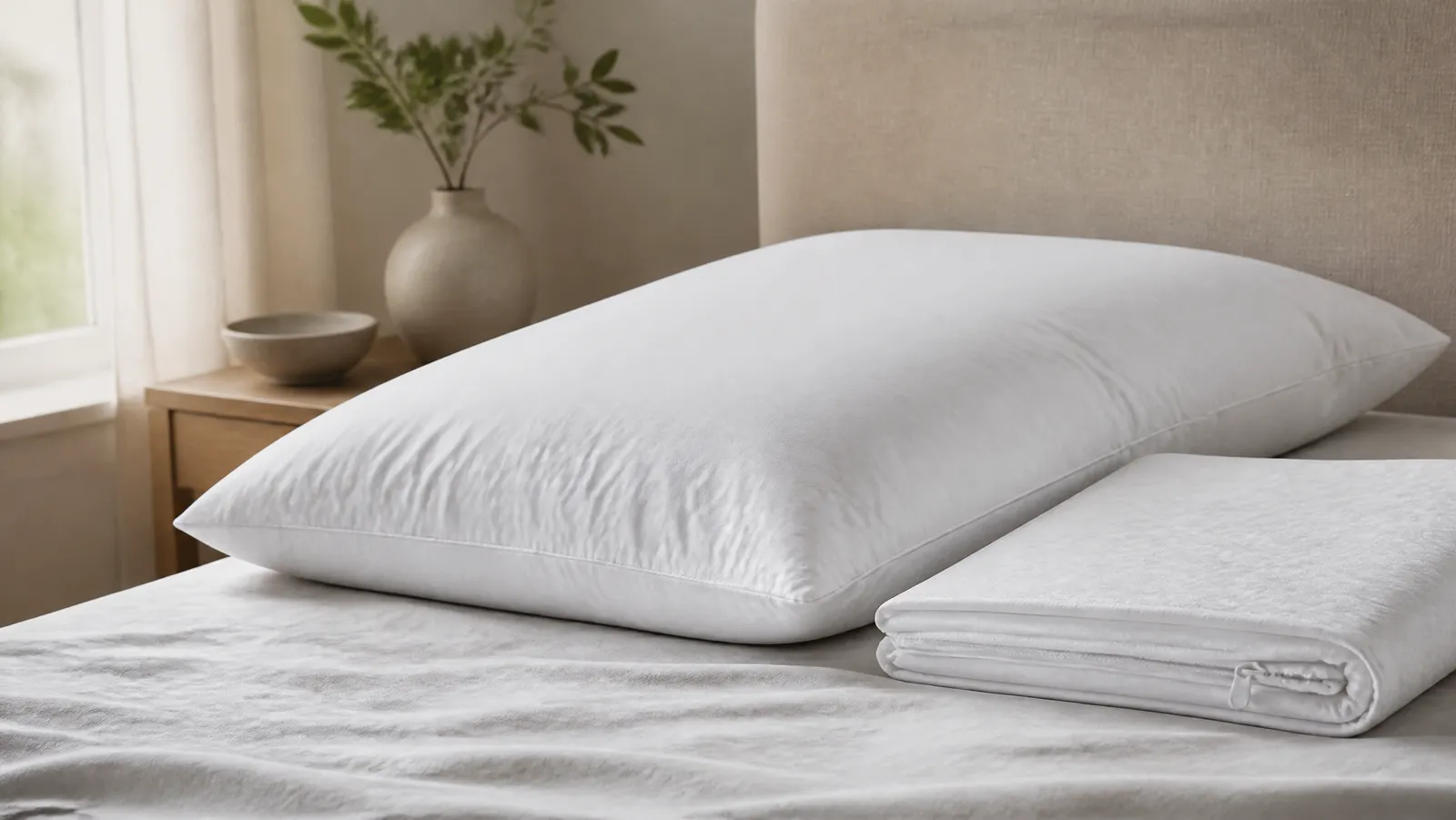
Dust Mite Pillow Protectors: What to Look For
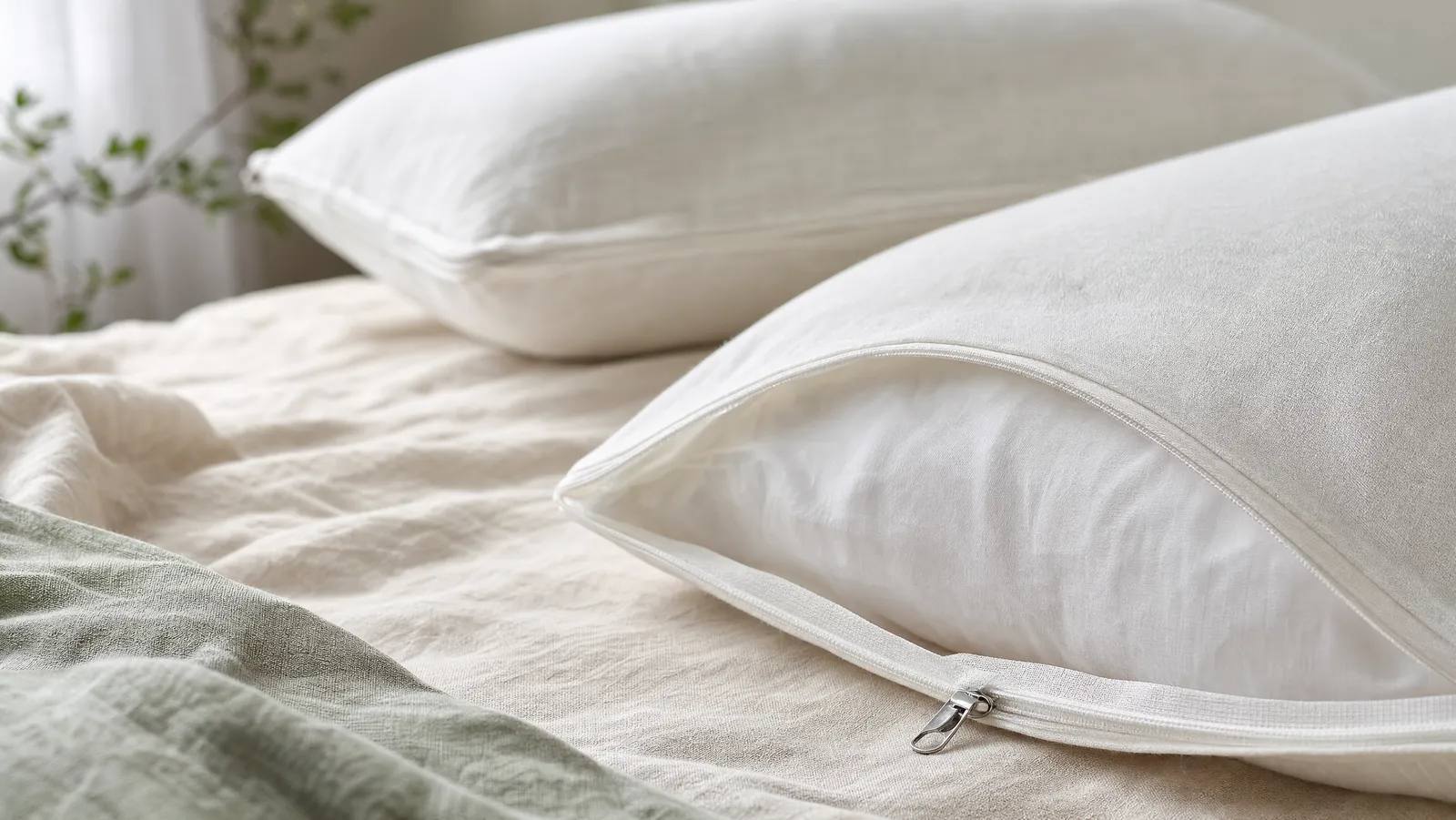
What should you look for in a dust mite pillow protector? Five things, in this order: a named allergen test with a number attached, a woven fabric rather than a nonwoven one, a full-length zip with a flap over the teeth, sewn seams you can inspect, and a wash instruction you will actually follow. Everything else on the listing is adjectives. We may earn a commission from links on this page, at no extra cost to you.
Two products a search engine puts side by side can differ in price by a factor of four and in language by almost nothing. One is a tested allergen barrier. The other keeps coffee off your pillow. Both say "tightly woven microfiber". Our set below runs that spectrum on purpose, from a cover with a named laboratory and a percentage to one whose maker is honestly selling pillow longevity instead. If you want a shortlist rather than a specification lesson, our guide to the best pillow for allergies applies this same filter to pillows themselves.
What an allergen encasement is actually for
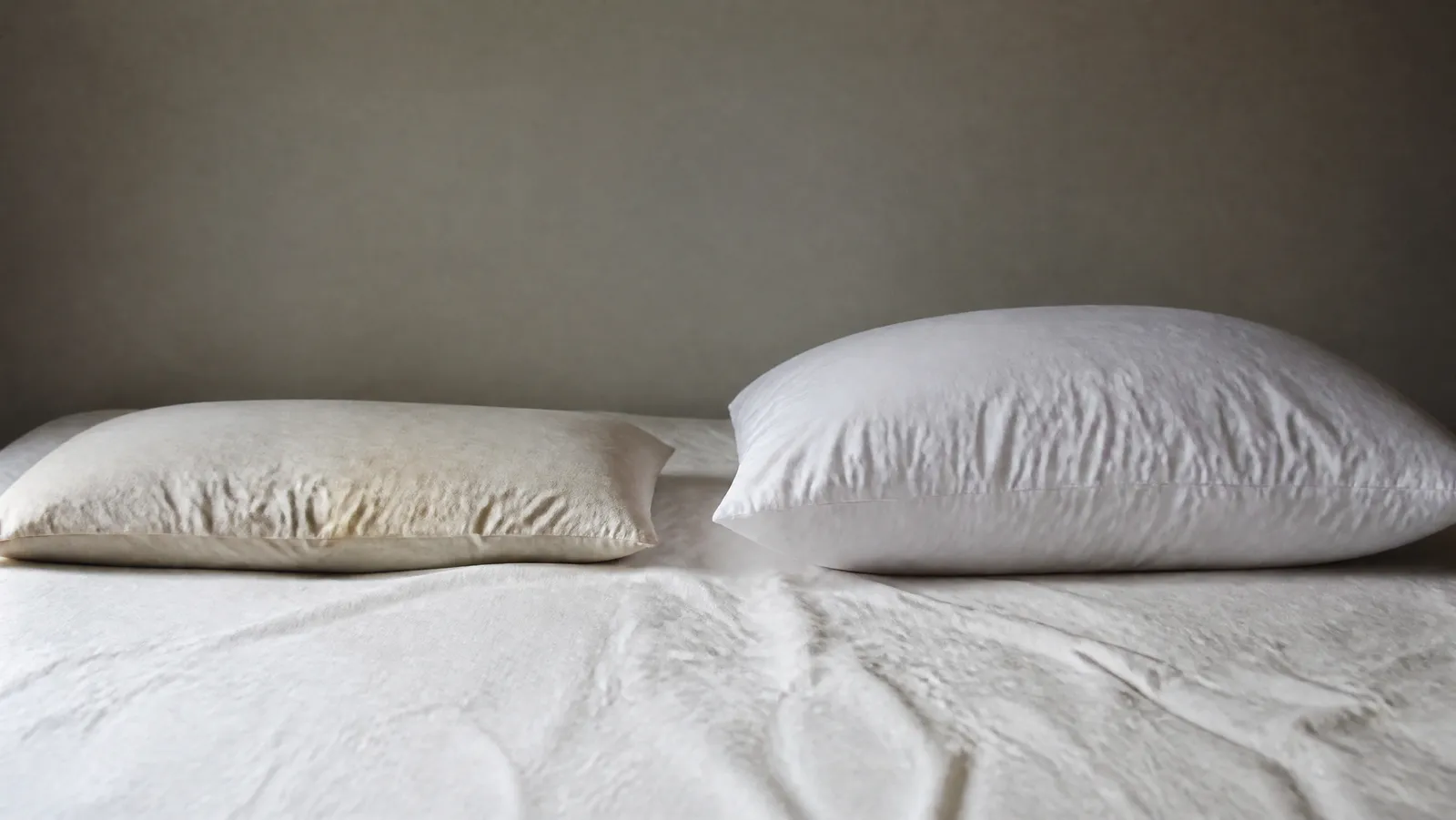
The job is containment, not cleaning. Mattresses and pillows are the reservoir; the cover is meant to keep what is already inside from getting out and — theoretically, which is the practice parameter's own hedge — to stop a new pillow becoming a reservoir at all.
The 2013 practice parameter Environmental Assessment and Exposure Control of Dust Mites, developed by Portnoy and colleagues for the AAAAI, ACAAI and JCAAI and published in Annals of Allergy, Asthma & Immunology, is direct about the mechanism: the most effective way to prevent mite colonisation is to encase a mattress, box spring or pillow in a mite allergen-impermeable encasing, and existing mattresses, box springs and pillows can be kept if they are encased, entrapping the mites and allergen already present.
Its recommendation 17 is the sentence the whole category rests on: "Recommend that patients should use mite allergen-proof mattress, box spring, and pillow encasings to decrease exposure to mite allergens. (Strength of recommendation: strong, B evidence)"
Note what is being encased in that sentence. Mattress, box spring and pillow. The parameter's own cost table lists pillow encasings at $13 to $20 and mattress encasings at $62 to $220, which is why the pillow cover is the sensible place to start and a poor place to stop. For what the allergen actually is and where it lives, we went through the biology in dust mites in pillows.
The counter-evidence, stated before you spend anything
Here is the part most pages selling these covers leave out. The document that recommends encasings also says this: "Although encasings effectively contain mite allergens, in many cases mite covers alone are unlikely to achieve a clinical benefit unless they are used as part of a more comprehensive multifaceted avoidance plan."
And elsewhere, on rhinitis specifically: mite-proof bedding covers as part of a structured allergen-control programme do decrease exposure to mite allergens, but "this single avoidance measure does not lead to a significant alleviation of clinical symptoms in patients with allergic rhinitis." The parameter attributes that finding to Terreehorst and colleagues in the New England Journal of Medicine in 2003.
The strongest counter-evidence is a Cochrane review. Gøtzsche and Johansen's House dust mite control measures for asthma, published in the Cochrane Database of Systematic Reviews in 2008, pooled more than fifty randomised trials of mite-reduction measures in mite-sensitive people with asthma. As the AAAAI/ACAAI parameter quotes it, the reviewers found "there were no statistically significant differences either in number of patients improved, asthma symptom scores, or in medication usage" and concluded that "chemical and physical methods aimed at reducing exposure to house dust mite allergens cannot be recommended."
A recent analysis reaches a similar verdict on covers used with little else. Van Boven and colleagues, writing in the World Allergy Organization Journal in 2024, meta-analysed 35 randomised controlled trials covering 2,419 patients and grouped impermeable bed covers under what they call partial bedroom control — defined as at most two interventions: mite-impermeable covers on all bedding elements and/or monthly hot laundering at 60°C or above. For that group, symptom scores, questionnaire scores, FEV1, bronchial responsiveness and medication use were all non-significant, with p values from 0.31 to 1.0. Their conclusion for that arm is one line: "Partial bedroom control is not recommended."
Two things are true at once, and the distinction is the whole argument. Reducing measured allergen in dust and reducing a person's symptoms are different outcomes, measured differently, and the encasement literature is much stronger on the first than the second. The parameter's own defence of the barrier is worth hearing too: it notes the criticism that two thirds of the studies in the Cochrane meta-analysis used measures that actually failed to lower allergen levels, that measures which fail to lower allergen can hardly be expected to improve clinical outcomes, and that a reanalysis separating the two groups found an improvement in clinical parameters where allergen did fall.
Our position, and we will not dress it up: an encasement is a low-cost, low-risk, high-plausibility step with a real mechanism and a strong guideline recommendation behind it for exposure — and it is not a treatment. If you buy one expecting symptoms to resolve, the published trials say you may be disappointed, and the person to talk to is a clinician who can find out whether you are sensitised to dust mite at all.
Pore size: the number is real, but it is not a standard
Every allergy bedding page repeats a micron figure. It turns out to have a traceable origin and a much narrower meaning than the repetition implies.
The practice parameter states that woven microfiber fabrics with a mean pore size smaller than 10 micrometres block Der p 1, and that only those with a mean pore size smaller than 6 micrometres block the cat allergen Fel d 1. It attributes those thresholds to Vaughan and colleagues in the Journal of Allergy and Clinical Immunology in 1999, a laboratory evaluation of encasement materials that tested pore size against allergen passage.
So the number is not folklore. But read the caveat the parameter attaches, which almost nobody quoting the figure does:
"The mean pore size is only a surrogate measurement of allergen impermeability, because the mean does not indicate the total number of pores, the distribution of pore sizes around that mean, or the 'tortuosity' of the pores. Although pore size can be a useful rule of thumb, in the final analysis the issue is simply whether a particular allergen, measurable with an ELISA, can be suctioned through a given fabric."
Three consequences for a shopper. First, a mean is not a maximum — a fabric can average under 10 micrometres and still have larger holes in it. Second, the parameter adds that many commercially available woven microfiber encasings block Der p 1 but not Fel d 1, so a cover chosen for mites is not automatically a cover for cat allergen. Third, and most usefully: we found no consumer-facing standard requiring a pore size to be disclosed on a package, and only one of the five covers here publishes a figure anywhere — Mission: Allergy states a mean pore size of 2 micrometres on its own site, though not on its Amazon listing. The other four give no number at all. The figure is a laboratory rule of thumb that leaked into marketing, not a threshold anyone must meet or print.
For scale, the parameter describes adult house dust mites as 0.2 to 0.4 mm across and their faecal pellets — produced at about 20 a day and a rich source of digestive enzyme-derived allergens — as 20 to 40 micrometres. A whole pellet is several times larger than a 10-micrometre pore; the margin exists because allergen also travels on broken fragments and fine dust.
Woven, not nonwoven — the specification that outranks the micron number
If you take one fabric fact from this page, take this one. The parameter lists four basic types of allergen-barrier encasing: vinyl, laminates, woven microfiber fabric and nonwoven microfiber fabric. Vinyl and laminates block all allergens including Fel d 1, but are not permeable to air or water vapour and are therefore uncomfortable, which is why breathable microfiber has largely replaced them.
Between the two microfiber types, the guidance is unusually blunt. Nonwoven fabrics are made by fusing overlain short filaments with heat, glue and pressure, and the parameter reports that the interstices between their randomly crisscrossing fibres are deep enough to accumulate Der p 1, Der f 1 and Fel d 1 over time, so that the sleeper eventually lies on a layer of allergen on the surface of the encasing — and that unlike woven encasings, nonwoven ones are not washable. Its conclusion: nonwoven microfibers do not succeed in decreasing allergen exposure and should not be used for allergen avoidance. It attributes that finding to Miller and colleagues in the Journal of Allergy and Clinical Immunology in 2007.
That is a rare thing in this aisle: a construction detail with a stated direction and a citation behind it. It also means "tightly woven" on a label is doing more useful work than the adjectives around it.
One disclosure, because it runs through this whole page. Jeffrey D. Miller, MD — first author of that 2007 nonwoven paper and a chief editor of the practice parameter itself — is the founder of Mission: Allergy, the brand of our top pick, and the parameter's encasing illustration is reproduced by permission of his company. The 2007 finding has stood in the literature since, and the parameter is a Joint Task Force document rather than one man's opinion. But a reader weighing a $37.95 encasing against a $10.99 one is entitled to know that the specification and the product share an author.
The zipper and the seams are where a good fabric fails
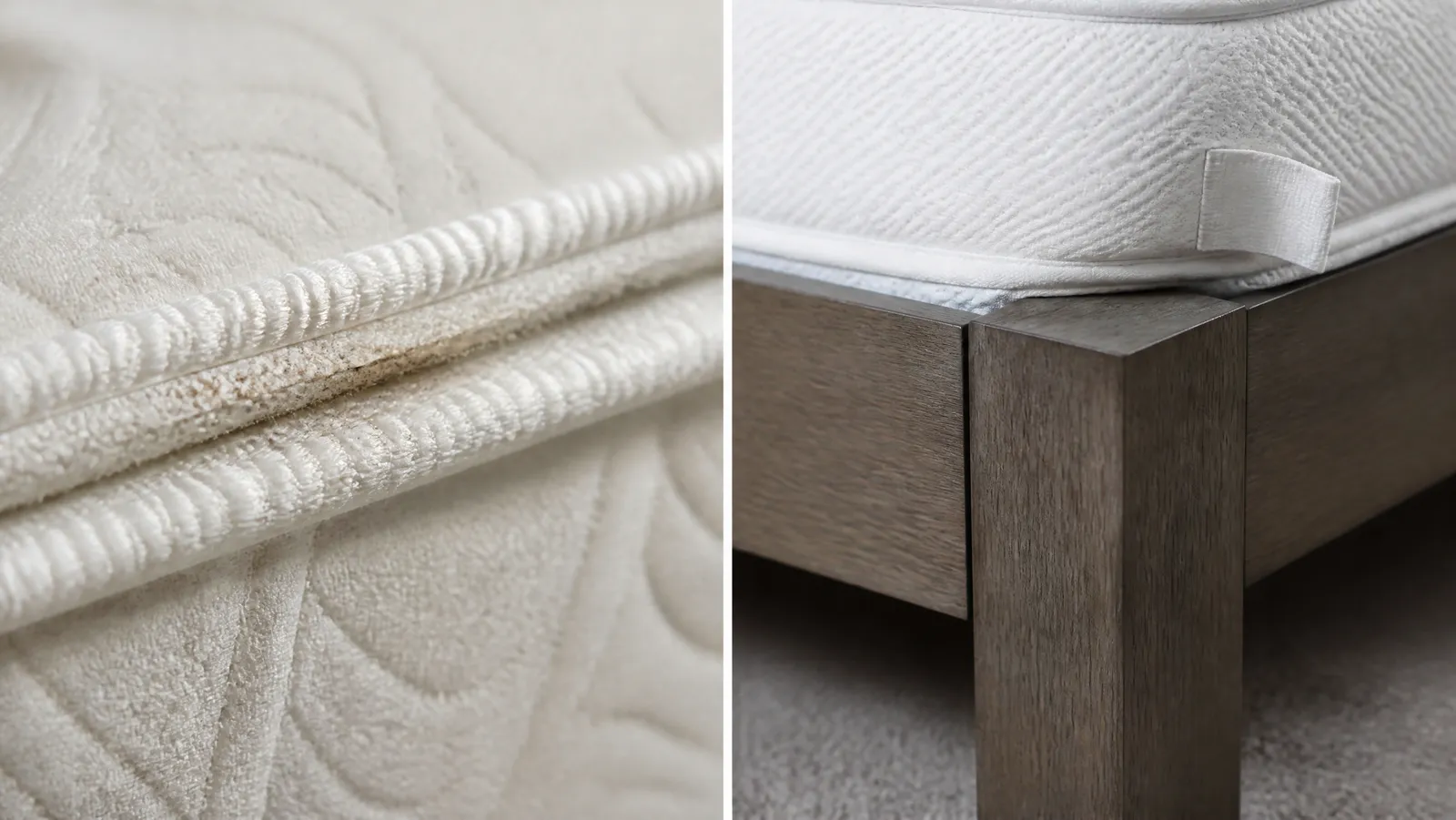
A fine weave with a gappy closure is the failure mode nobody photographs, and the 2013 practice parameter is silent on it: we searched it for any discussion of zipper flaps, closures or seam construction and found none. It covers pore size at length and the closure not at all.
The textile literature does cover it. Höfer, Berner-Dannenmann, Marquardt and Hammer published Resistance of Commercial Bed Covers against Faecal Pellets of House Dust Mites: Behaviour of Seams and Zippers in the Journal of Textile Science and Technology in 2019, testing three commercial bed covers with a purpose-built penetration cell loaded with purified mite droppings. Their findings, in the order that matters to a buyer:
- The fabric was the strong part. Textile surfaces showed roughly 99% allergen impermeability when new, across all the samples tested.
- The seams and the zipper were the weak parts. On the weakest cover the reported penetration was 3.48% at the seams and 4.1% at the zipper before washing.
- Laundering made it worse. For that same cover, combined seam and zipper penetration rose above 6% after a single laundry cycle, while a better-built cover held about 98.6% impermeability at the seams after washing.
- A flap over the zipper helped. The paper reports that penetration through the zipper "was greatly attenuated by the presence of a cover strip". With one cover's strip flipped away to expose the zipper, penetration measured 1.78% when new and 2.49% after laundering; with the strip in its normal covering position, that cover's seams and zipper held around 99%.
Three covers is a small study and the brands are anonymised, so treat the exact percentages as indicative rather than a league table. The direction is the useful part. Mission: Allergy states bound seams and interior and exterior zipper flaps on our top pick — a specification that reads like fussy detail until you see where the leakage was measured.
Washing: two credible bodies, two different instructions
This is where allergy advice openly disagrees with itself, and we would rather show the disagreement than pick a side and hide the other.
According to AAFA, you should cover mattresses and pillows in zippered allergen-barrier covers made of a material with pores too small to let dust mites and their waste through, and wash sheets, blankets and throw rugs weekly in hot water of at least 130°F to kill dust mites.
The AAAAI/ACAAI parameter's recommendation 13 says something different: "Advise patients that bedding should be washed weekly to decrease dust mite numbers and mite allergen levels, and that high temperature is not necessary. Home hot water should be kept below the temperature (120°F) that causes a scalding risk to occupants. (Strength of recommendation: strong, B evidence)"
Its reasoning is the more specific of the two. The parameter says the familiar 130°F figure comes from immersing mites in permeable capsules in water of different temperatures to find the scalding point, not from laundering bedding — and that when an item is actually washed it is immaterial whether the mites are scalded, drowned or simply rinsed down the drain alive. It cites simulated wash-cycle work finding 90% to 98% mite mortality even in cold water, and separate studies in which cold water with detergent removed 95% of mite allergen from duvets, blankets and sleeping bags. It also notes that the US Consumer Product Safety Commission has recommended domestic hot water be set at 120°F, because exposure to water at 131°F can cause a second-degree burn within 17 seconds.
They agree on the part that matters most: weekly. They disagree about temperature, and the parameter's view is that chasing a specific hot number carries a scalding risk it does not earn. Our reading is that frequency beats heat and the cover's own care label beats both, because it is the only instruction written for the fabric you own. Note the durability angle the Höfer study raises too: laundering is what compromised the seams and zippers, so a barrier is a consumable rather than a permanent installation. A cover plus a routine is one plan, not two, which is why this page pairs with how to wash a pillow properly.
The certification that exists, and which of these has it
If you want somebody other than the manufacturer to have checked, a programme exists for exactly that — and none of our five picks appears in its certified-product directory.
The asthma & allergy friendly certification programme is operated by Allergy Standards Limited in collaboration with the Asthma and Allergy Foundation of America. Its bedding scope includes dust mite-proof encasings for pillows, duvets and mattresses. According to the programme's own description, certification testing of bedding covers barrier performance — whether the cover fabric prevents dust mites and allergens passing through, with seams and zippers tested as potential weak points — plus allergen removal, in which bedding is seeded with allergen and washed to confirm washing reduces allergen content; repeated washing, to confirm the item keeps its physical integrity; chemical testing for residual substances such as azo dyes, pesticides and VOCs; and breathability.
Read that list against the marketing on a typical package and the difference is obvious: the programme tests the fabric, the wash durability and the chemistry as a set, while "advanced allergy protection" tests nothing. It is the same gap between marketing language and a tested claim that we took apart in what a hypoallergenic pillow really is.
What we would put on a bed, and the one pick that is not an allergy product
Full specifications render below. None of these appears in the certified asthma & allergy friendly product directory we searched, we have not run allergen assays on any of them, and we will not call any of them allergy-proof.
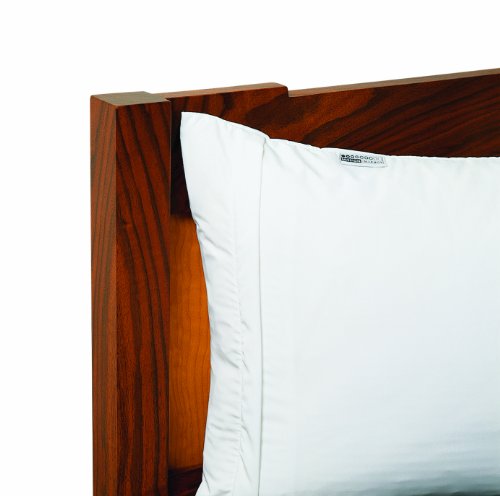
The Mission: Allergy Premium Microfiber Pillow Encasing, $37.95 for a single Queen as of September 2026, is our pick because it is the only one that names a laboratory and a number — Mission: Allergy states it blocks 100% of dust mite and animal dander allergens, third-party tested by Indoor Biotechnologies, Inc. Indoor Biotechnologies is real: its site lists dust and air allergen testing including Der p 1 and Der f 1, and states ISO/IEC 17025:2017 accreditation at its US and UK laboratories.
The HOSPITOLOGY Sleep Defense System encasements, $24 for two as of September 2026, are the value answer, because two covers is what finishes a bed rather than half of one. HOSPITOLOGY states 100% waterproof with a breathable membrane and machine washable — a different claim from an allergen test, and worth knowing you are trading away.
And then the teaching example. The Niagara Sleep Solution Ultra Soft Pillow Protectors, $8.49 for four as of September 2026, are here precisely because they are not an allergy product. Niagara describes high thread count tightly woven microfiber intended to prolong pillow life, with an auto-lock side zipper, machine washable — and frames the whole product around dirt and wear and tear rather than allergens. At the job it advertises it may be the best value on the page. But a shopper who buys it expecting mite-allergen protection has bought something else, and the phrase that misled them, "tightly woven microfiber", appears verbatim on the covers sold for allergies.
The bottom line
- The guideline recommendation is real and it is about exposure. Recommendation 17 of the 2013 AAAAI/ACAAI dust mite practice parameter is strong, on B evidence, and it names the mattress, the box spring and the pillow together.
- The symptom evidence is mixed, and the negative results are not fringe. The 2008 Cochrane review concluded that mite-reduction methods cannot be recommended; a 2024 meta-analysis found impermeable covers used with at most one other measure non-significant across every asthma outcome it tested; and the parameter itself says covers alone are in many cases unlikely to achieve a clinical benefit.
- The micron figure has a source and a ceiling. Under 10 micrometres for Der p 1, under 6 for Fel d 1 — traceable to a 1999 laboratory study, described by the guideline as a surrogate and a rule of thumb, and required by no consumer standard we could find.
- Woven beats nonwoven, and the closure beats the adjective. Nonwoven encasings are specifically not recommended. The measured leakage in commercial covers was at the seams and the zipper, not across the fabric, and it got worse after a wash.
- Weekly is the part everyone agrees on. AAFA says hot, at least 130°F. The allergy practice parameter says high temperature is not necessary and warns about scalding above 120°F. Follow your cover's care label and wash often.
- Cheap is the strongest argument in the category. At $8.49 to $37.95 across this page, trying a barrier costs little — which is why it belongs in a plan rather than being judged as a purchase that fixes something.
If you are choosing the pillow underneath the cover rather than the cover itself, our guide to choosing a pillow for allergies is the next page to read.
And the sentence we keep repeating on this site: allergy and asthma are medical conditions, an encasement is an exposure measure rather than a treatment, and nobody who has studied this will promise that a zippered cover resolves symptoms. If symptoms are why you are here, book the appointment before you buy the bedding.
The shortlist
5 pillows compared — firmness, loft, and temperature side by side. The top pick is highlighted.
| Pillow | Firmness | Loft | Sleeps | Best for | Price |
|---|---|---|---|---|---|
| — | — | Neutral | A third-party-tested allergen barrier where the weave and the zipper both matter | $37.95 Check | |
Best Waterproof EncasementHOSPITOLOGY PRODUCTS Sleep Defense System Zippered Pillow Encasement, Standard 20x26, Set of 2 | — | — | Neutral | Sealing two existing pillows behind a washable zippered barrier | $24 Check |
Best for Covering Every PillowAllerEase Premier Zipper Pillow Protector, Standard/Queen, 4 Pack | — | — | Neutral | Getting a zippered cover onto every pillow in the house at once | $23.25 Check |
Cheapest Allergy-Specific CoverAllerEase Allergy Pillow Protector, Standard/Queen, 2 Pack | — | — | Neutral | The cheapest zippered cover that is still sold as an allergy product | $10.99 Check |
What a Stain Protector Is InsteadNiagara Sleep Solution Ultra Soft Pillow Protectors with Zipper, Standard, Set of 4 | — | — | Cooling | Keeping a pillow clean and intact — explicitly not sold as an allergen barrier | $8.49 Check |
Mission: Allergy Dust Mite and Allergen Proof Pillow Encasing, Premium Microfiber, Queen
It names the allergen, the number and the lab, which meant I could look something up instead of trusting an adjective — and the inner and outer zipper flaps are the first construction detail I have seen on one of these that looks like it was designed rather than costed.
It is the priciest cover here and it is one cover, not a set, so sealing a whole bed gets expensive fast — and one encased pillow beside an untouched mattress is not the plan the guidelines describe.
This is the only cover on the page where a named laboratory is attached to a number. Mission: Allergy states that this encasing blocks 100% of dust mite and animal dander allergens, third-party tested by Indoor Biotechnologies, Inc., and describes it as medical grade and certified bedbug-proof. Read that as the maker's claim and its named lab's claim rather than our measurement — but read the shape of it too, because it names an allergen, an outcome and a testing house, and every one of those is something a shopper could go and check. Indoor Biotechnologies is a real allergen laboratory: its own site describes dust and air allergen testing for Der p 1 and Der f 1 among other allergens, and states ISO/IEC 17025:2017 accreditation at its US and UK facilities.
The construction is the other half of the argument, and it is the half cheap covers skip. Mission: Allergy states tightly woven 100% microfiber polyester that is air- and water-vapour-permeable yet water repellant, with bound seams and interior and exterior zipper flaps. That flap detail matters more than it sounds: the published textile work on bed covers found the fabric surface performing near 99% while the seams and zippers leaked, and found a zipper cover strip reduced that leakage. The maker also states a lifetime warranty, US manufacture, and that it was designed by a board-certified allergist.
Two things to weigh before you buy. At $37.95 as of September 2026 this is a single Queen encasing, not a pair, which makes it the most expensive cover here by a wide margin per pillow. And an encasement is an exposure measure, not a treatment: no cover on this page treats or prevents allergy or asthma, and the allergy guidance is explicit that covers used alone often do not deliver a clinical benefit.
HOSPITOLOGY PRODUCTS Sleep Defense System Zippered Pillow Encasement, Standard 20x26, Set of 2

Two covers that zip all the way round, wash without fuss and survived the first spill — for less than one of the premium singles, which is how both sides of the bed finally got done.
The claim is waterproof, not allergen-tested, and there is no lab or pore size behind it — and a membrane is a membrane, so it sleeps warmer than the plain woven covers on this page.
Two fully zippered encasements for roughly two thirds the price of one premium single, which is the arithmetic that decides whether a whole bed actually gets covered. HOSPITOLOGY sells these as encasements rather than slip-on protectors — the zip closes the pillow off on all six sides — in standard 20 x 26 inches, as a pair. The maker states the fabric is 100% waterproof with a breathable membrane, describes it as an extra-soft polyester knit that will not retain heat, states machine washable and tumble dry low, and states a 5-year limited manufacturer's warranty.
Here is the honest reason it is not our top pick. HOSPITOLOGY's listing does describe the encasement as bed bug and dust mite proof and hypoallergenic, but what it puts a measurement behind is waterproofing and breathability, not a third-party allergen-blocking test, and those are different claims measured in different ways. There is no named laboratory, no pore-size figure and no percentage attached to an allergen. That gap is precisely the gap the Mission: Allergy encasing fills, and it is worth knowing you are trading it away.
One comfort caveat we would want stated. A waterproof membrane is a layer that liquid cannot cross, and layers like that generally sleep warmer than a plain woven cover whatever the marketing says about knit softness. The maker's position is that it will not retain heat; that is the maker's position, not a measurement. At $24 as of September 2026 it is the cheapest waterproof route here to getting two pillows behind a full zip; the AllerEase two-pack below covers two for $10.99 without the membrane.
AllerEase Premier Zipper Pillow Protector, Standard/Queen, 4 Pack

Four covers for the price of one premium single meant every pillow in the house got one in an afternoon, and being told I can wash them hot is what made the routine stick.
"Advanced allergy protection" is marketing language with no pore size and no named laboratory behind it, and the hot-wash-but-lowest-heat-dry instruction is the sort of thing that gets ignored once and shortens the cover's life.
The point this article keeps making is that a bedroom has more pillows in it than the one you sleep on, and that the guest bed and the far side of the mattress are part of the same room's biology. Four zippered standard/queen protectors at $23.25 as of September 2026 is what covering all of them actually costs. Aller-Ease describes a tightly woven fabric designed to fully encase the pillow, states a temperature-balancing fabric technology of the kind used in athletic clothing, and states a lifetime warranty.
The care label is the part we would actually shop on. The maker states machine wash hot with non-chlorine bleach and tumble dry on the lowest setting. A cover you are allowed to wash hot is a cover that fits the weekly bedding routine the allergy bodies describe, and the whole value of a barrier is that it survives being laundered rather than being retired when it gets grubby. The mismatch between hot wash and lowest-heat dry is easy to get wrong, though, and a tumble dryer on high is how a fine weave or a bonded finish ages before its time.
The caveat is the same one that runs down this page. "Tightly woven" and "advanced allergy protection" are the maker's words, with no pore-size figure and no named test behind them — which is exactly the information the top pick supplies and this one does not.
AllerEase Allergy Pillow Protector, Standard/Queen, 2 Pack

About five dollars a pillow for something that zips shut and goes in the machine — it removed the only excuse I had left for leaving the pillows bare.
"Allergist recommended" names neither an allergist nor a test, and at this price the fabric is thinner and the zipper is the first part to give out.
This is the floor price for a cover that is at least sold as an allergy product: $10.99 for two standard/queen zippered protectors as of September 2026, which is about five dollars a pillow. It carries the cost argument this whole page rests on. An encasement is the cheapest single item in the dust mite playbook — the AAAAI/ACAAI practice parameter's own cost table puts pillow encasings at $13 to $20 against $62 to $220 for a mattress — and this is the cheapest version of the cheapest item.
Aller-Ease describes a tightly woven fabric intended to keep household particles out of the pillow, describes the fabric as breathable and says it will not alter the feel of the pillow, states the covers are machine washable, and states that they are allergist recommended and carry a lifetime limited warranty.
Two caveats, stated plainly and without sneering. "Allergist recommended" names no allergist and no organisation, which makes it an unverifiable phrase rather than a false one. And there is no pore-size figure and no third-party allergen test here, so nothing distinguishes the fabric claim from the identical claim on a cover sold purely to stop stains. What you do get is a zip that closes round the pillow and a cover that washes, and both of those are real. At this price, cost stops being a reason not to try one.
Niagara Sleep Solution Ultra Soft Pillow Protectors with Zipper, Standard, Set of 4

Soft enough that I forget it is on, four for the price of a sandwich, and the auto-lock zipper stays where I put it — it does the job on the label without pretending to do another one.
It is a stain-and-wear cover, so anyone buying it as an allergen barrier has misread the aisle rather than the listing — and "tightly woven microfiber" reads identically to the covers above that are sold for allergies.
This pick is the teaching example, not a recommendation dressed as one. It is also, we suspect, the product most people end up with when they search "pillow protector" and sort by price. Four zippered standard covers for $8.49 as of September 2026, and the maker is straightforwardly honest about what they are for: Niagara describes high thread count, tightly woven microfiber intended to prolong pillow life, states an auto-lock side zipper, describes the microfiber as soft and cooling, and states the covers are machine washable. Its own framing is protection from dirt and from wear and tear. It does not market these as allergen barriers.
Put that listing beside the four above and you have the distinction the whole article turns on. Every product on this page is a zippered cover. Only some are sold as allergen barriers. Exactly one names a laboratory. And the phrase "tightly woven microfiber" appears on the allergy-marketed covers and on this one alike, which is why reading the adjectives gets a shopper nowhere.
Judged against its own claim, this is a good product: soft, cheap, washable and honest. Judged against a claim it never made, it is a mismatch — and a reader who bought it expecting mite-allergen protection bought a different thing than they thought they were buying. That is not the maker's fault. It is the category's.
How to Read an Encasement Listing
Two products on the same search results page can differ by a factor of four in price and by nothing at all in adjectives. These are the six things worth finding, in the order we look for them.
Dust Mite Encasement FAQ
Do dust mite pillow protectors actually work? It depends which question you are asking. On measured allergen, the 2013 AAAAI/ACAAI practice parameter's recommendation 17 is to use mite allergen-proof mattress, box spring and pillow encasings to decrease exposure, at a strong strength of recommendation on B evidence. On symptoms, the same document says that in many cases mite covers alone are unlikely to achieve a clinical benefit unless used as part of a more comprehensive multifaceted avoidance plan — and a 2024 meta-analysis in the World Allergy Organization Journal found no significant effect on asthma outcomes for impermeable bed covers used with at most one other measure.
Do I need to cover the mattress too? The guideline recommendation covers the mattress, the box spring and the pillow together, not the pillow alone. The practice parameter's own cost table lists pillow encasings at $13 to $20 and mattress encasings at $62 to $220, so the pillow is the cheap end of a larger job rather than the whole job.
How often should I wash the cover? Follow the care label, which is the only instruction specific to your cover. On bedding generally, AAFA advises washing sheets, blankets and throw rugs weekly in hot water of at least 130°F to kill dust mites, while the AAAAI/ACAAI parameter's recommendation 13 is to wash bedding weekly and states that high temperature is not necessary, noting that domestic hot water above 120°F is a scalding risk. Those two are in genuine tension, and we say so in the article.
Will an encasement make the bed hot? It can. The practice parameter notes that vinyl and laminate encasings block all allergens including Fel d 1 but are not permeable to air or water vapour, and are therefore uncomfortable, which is why breathable microfiber has largely replaced them. A waterproof membrane sits somewhere between the two.
Will a dust mite cover stop bed bugs? Those are separate claims tested in separate ways, and two products on this page make the bed bug one. Mission: Allergy states its encasing is certified bedbug-proof, and HOSPITOLOGY's listing title describes its encasement as bed bug and dust mite proof; the other three makers do not claim it, and we have not tested any of them.
What about the duvet and the pillowcase? The barrier goes under the pillowcase, and the pillowcase still gets washed. AAFA's advice is to cover mattresses and pillows in zippered allergen-barrier covers, and it adds that even if you cover your mattress and pillows dust mites can still live in your bedding — which is why it asks for weekly hot washing of sheets, blankets and throw rugs.
I have allergy or asthma symptoms I think my bedding is causing. Please see a clinician. Allergy and asthma are medical conditions, a zippered cover is not a treatment, and nothing on this page can tell you whether you are sensitised to dust mite at all.
Why you can trust us

Aimee Cannon
Sleep & bedding writer
Aimee Cannon is a sleep and bedding writer who has spent years testing pillows of every kind — memory foam, down, wool, bamboo, buckwheat, and specialty support pillows. She focuses on matching the right pillow to each sleeping position and need, and reports what actually holds up after months of nightly use. When she is not testing pillows, Aimee is usually with her husband and her dog.