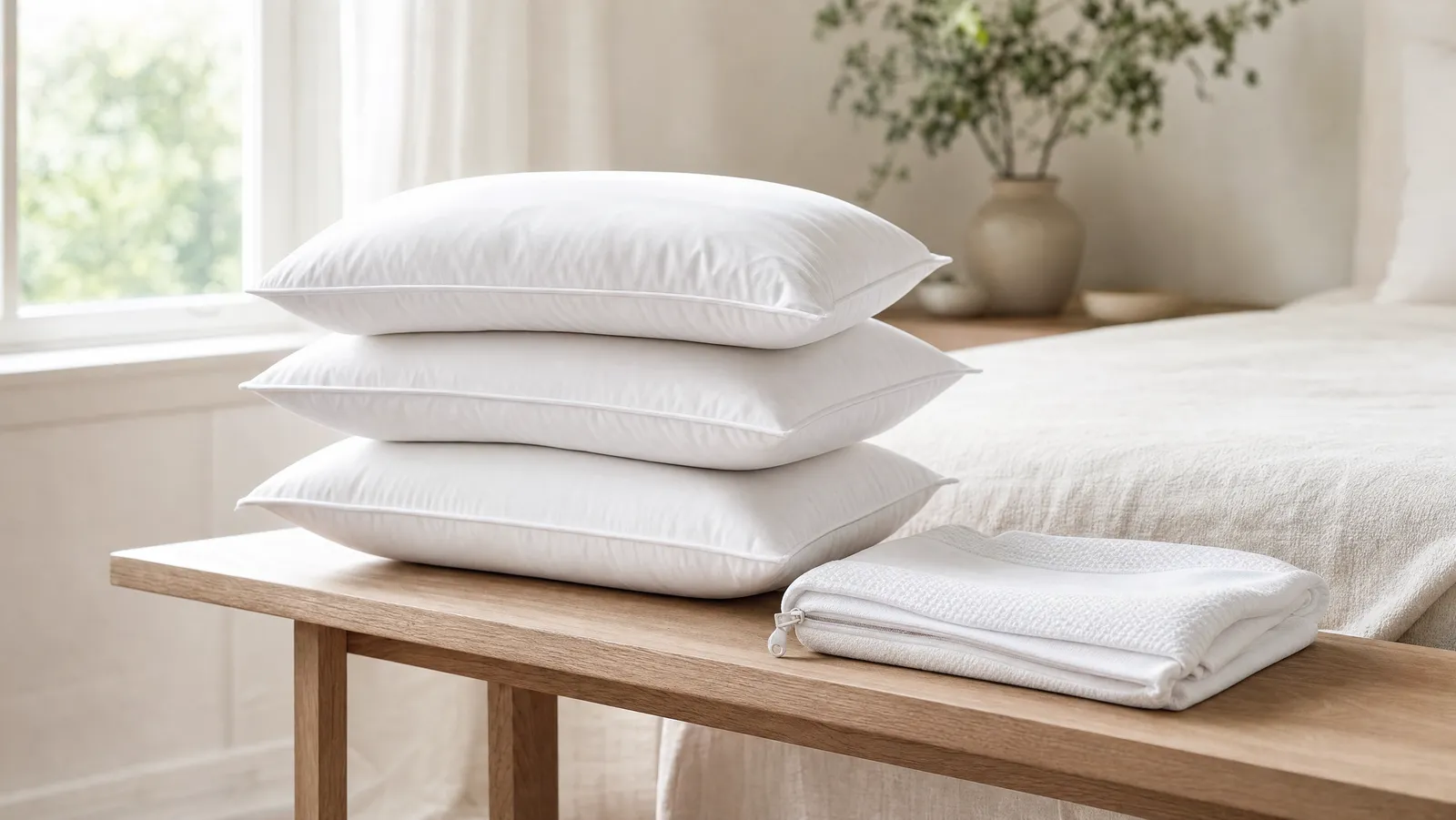
What "Hypoallergenic" Actually Means on a Pillow
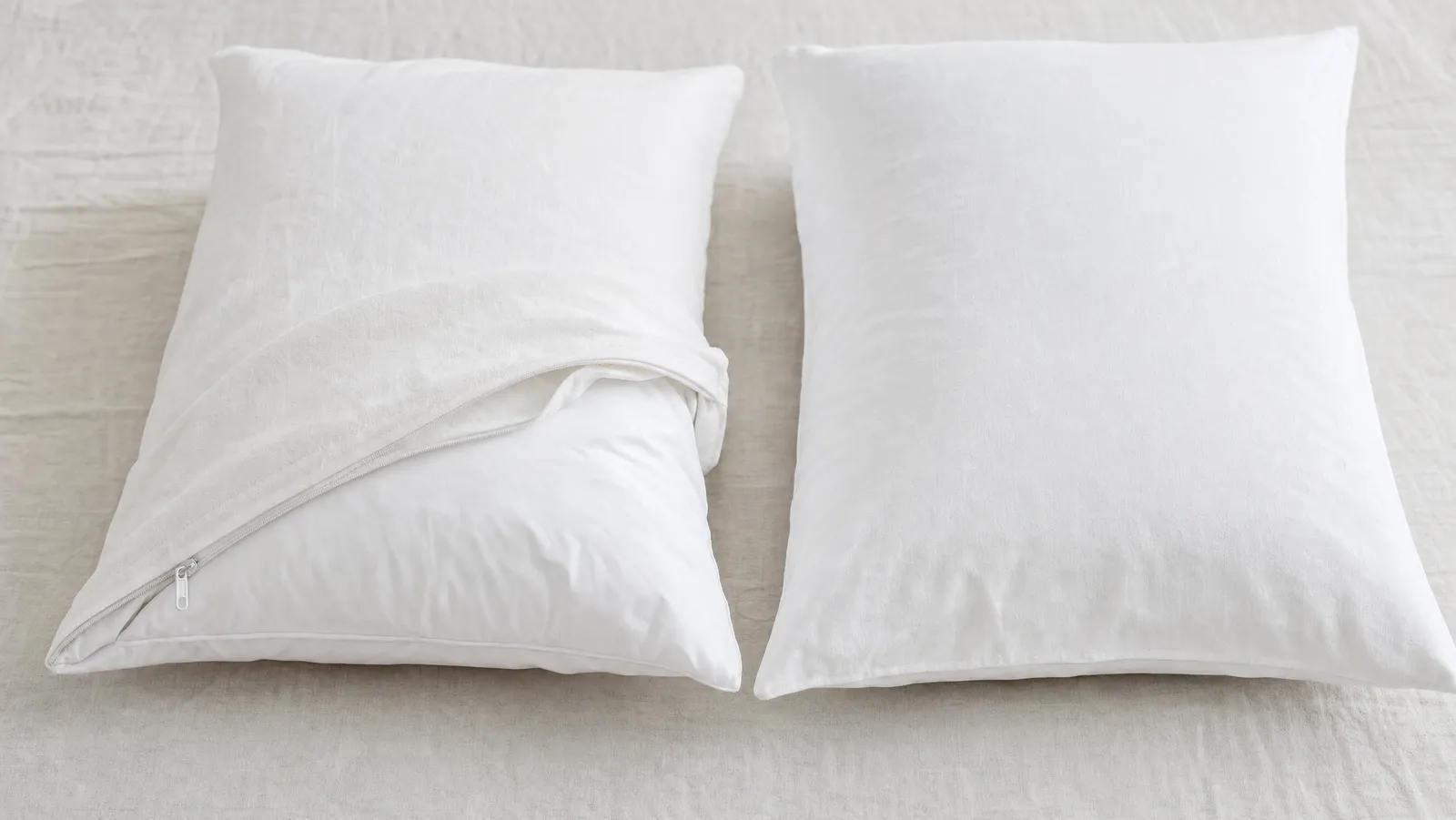
What is a hypoallergenic pillow? In practice, it is a pillow filled with polyester instead of feathers. We could find no federal rule that defines the word for bedding, no test that sits behind it, and nothing in it that addresses dust mite allergen — the bedroom allergen the allergy bodies actually write bedding advice about. We may earn a commission from links on this page, at no extra cost to you.
That is the whole argument, and the rest of this page earns it: what the law actually requires on a pillow label, what the word reliably denotes, what published research found when it compared synthetic and feather pillows, and which phrases on a listing do carry a measured claim. If you would rather have a shortlist than a schooling, our guide to pillows for allergy sufferers runs this same filter over a set of picks.
Hypoallergenic pillow meaning: a word with no standard behind it
We went looking for the rule that defines "hypoallergenic" for a textile. We did not find one.
Here is what federal law does require on a pillow label. According to the FTC's guidance on the Textile and Wool Acts, a covered product must disclose three things: the generic fibre names and percentages by weight, listed "in descending order of predominance"; the country of origin; and either the company name or the Registered Identification Number of the manufacturer, importer or other firm handling the product. Everything beyond that is optional, and the FTC's rule for the optional part is one line: "Other non-required information may appear on the label with the required disclosures. Additional information cannot be deceptive or misleading."
So "hypoallergenic" lives in that optional space. It is still subject to the general prohibition on deceptive advertising — but there is no published definition, threshold or test method on the textile side for anyone to measure it against.
The clearest official description of how the word behaves comes from a different product category, and it is worth quoting precisely rather than stretching. Writing about cosmetics, the FDA states: "There are no Federal standards or definitions that govern the use of the term 'hypoallergenic'", that "the term means whatever a particular company wants it to mean", and that manufacturers are not required to submit substantiation of hypoallergenicity claims to the agency. That is a cosmetics position from the cosmetics regulator. It does not govern pillows, and anyone who tells you it does has skipped a step. We quote it because it is the most candid account any US agency has published of a word that behaves the same way on bedding.
What does hypoallergenic mean on a pillow? Usually "polyester"
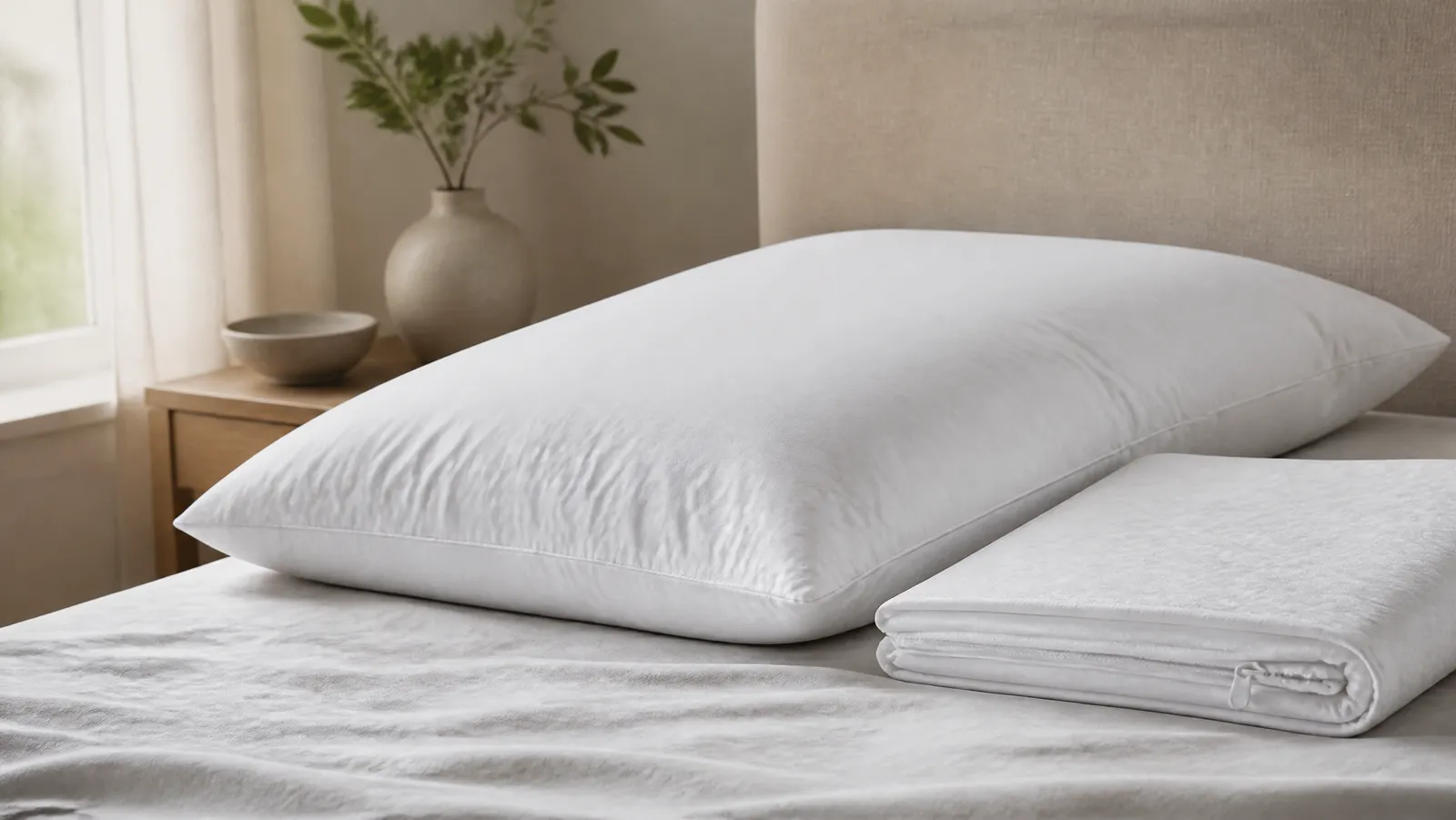
Strip the adjective off and you nearly always find the same object underneath: a down alternative.
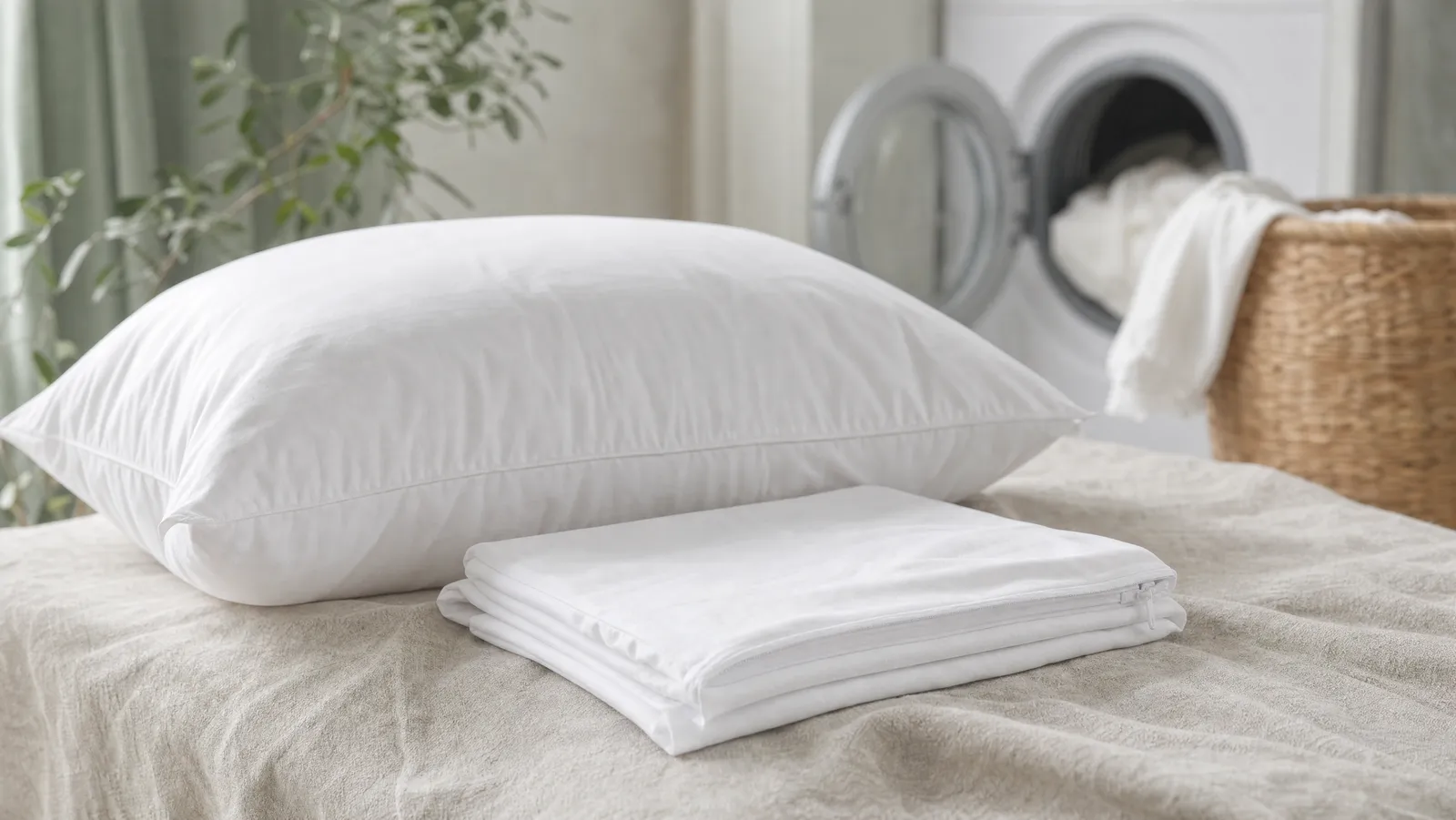
The JOLLYVOGUE Cooling Down Alternative Pillows, $20.99 for a standard pair as of September 2026, are on this page as the worked example rather than as a recommendation. JOLLYVOGUE fills them with micro polyester fibre and says they are breathable and machine washable. That is the honest content of the category: no feather, no down, polyester, washable, cheap.
One phrase on that listing deserves a slow read. JOLLYVOGUE states the pillows are made in an OEKO-TEX Standard certified factory. A certified factory is not a certified product. It describes where something was made, not what was tested. And even a full product certification would not get you where a shopper assumes: OEKO-TEX describes STANDARD 100 as a label for textiles in which "every thread, button and accessory have been tested against a list of over 1,000 harmful substances", graded into four classes by intensity of skin contact. That is a chemistry test against a restricted-substance list. OEKO-TEX makes no allergen claim for it, and none of its published material we read uses the word hypoallergenic.
The allergy in question is usually mites, not fill
Here is the substitution the label invites. It implies protection from allergens, delivers the removal of exactly one — feather and down protein — and lets the shopper assume those are the same thing.
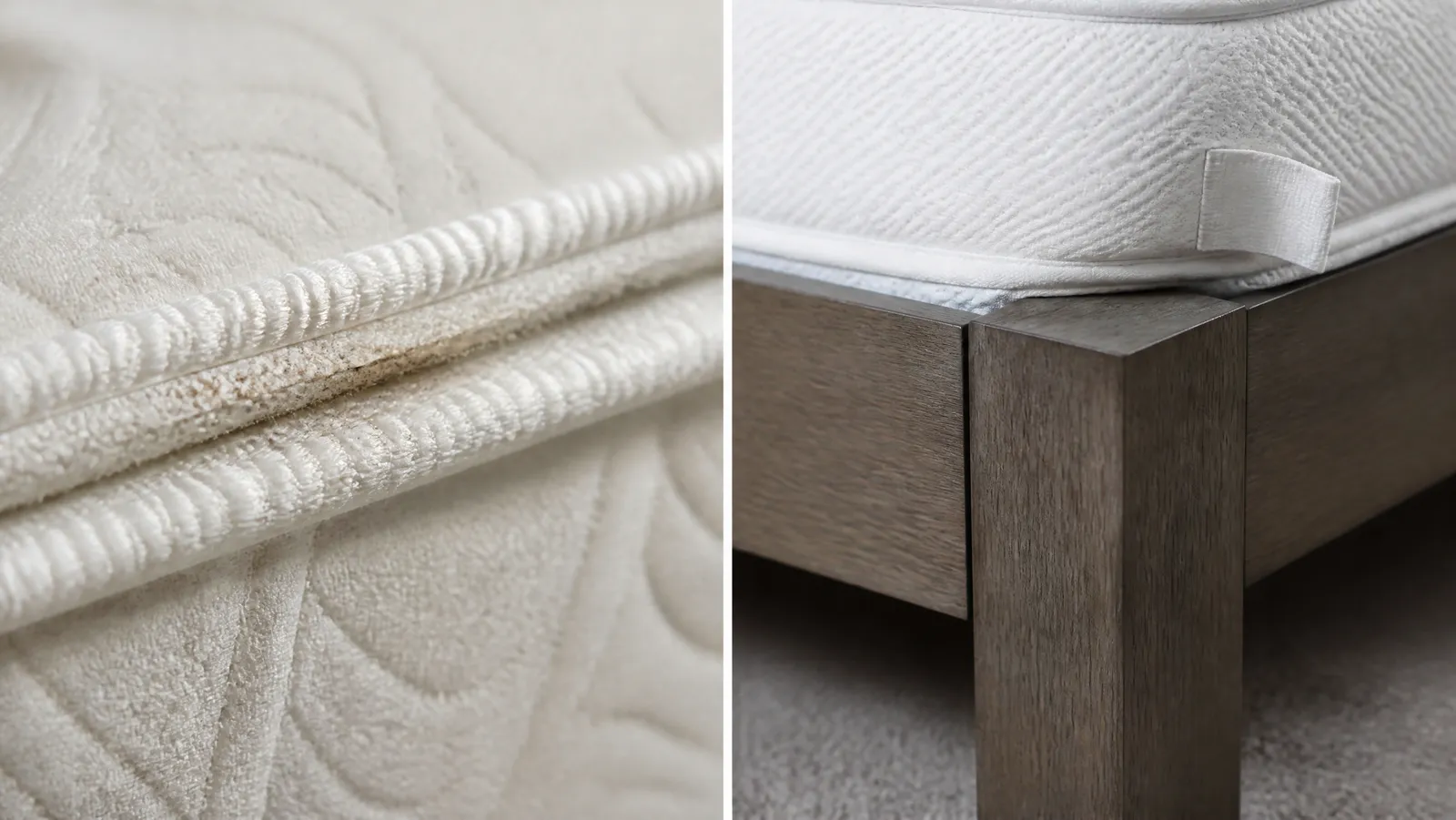
Often it is not the same allergen. According to the Asthma and Allergy Foundation of America, 20 million people in the US have a dust mite allergy, and both the body parts and the waste of dust mites are the allergens. AAFA lists pillows and mattresses among the fabric reservoirs where mites feed on shed skin, which is why its bedding advice is about barriers and laundry rather than fill type: zippered allergen-barrier covers, and washing bedding weekly in water of at least 130°F. We go deeper into that reservoir in our piece on dust mites in pillows.
The clinical literature is blunter than any listing. The 2013 practice parameter Environmental Assessment and Exposure Control of Dust Mites, developed by the Joint Task Force on Practice Parameters representing the AAAAI and the ACAAI and published in Annals of Allergy, Asthma & Immunology, puts it in two consecutive sentences: "Nonallergenic pillows are not a substitute for covering them with allergy-proof encasements. Foam pillows are not less prone to dust mite allergens than are feather pillows."
Are hypoallergenic pillows worth it? What the pillow studies found
This is where the label stops being merely vague and starts pointing the wrong way.
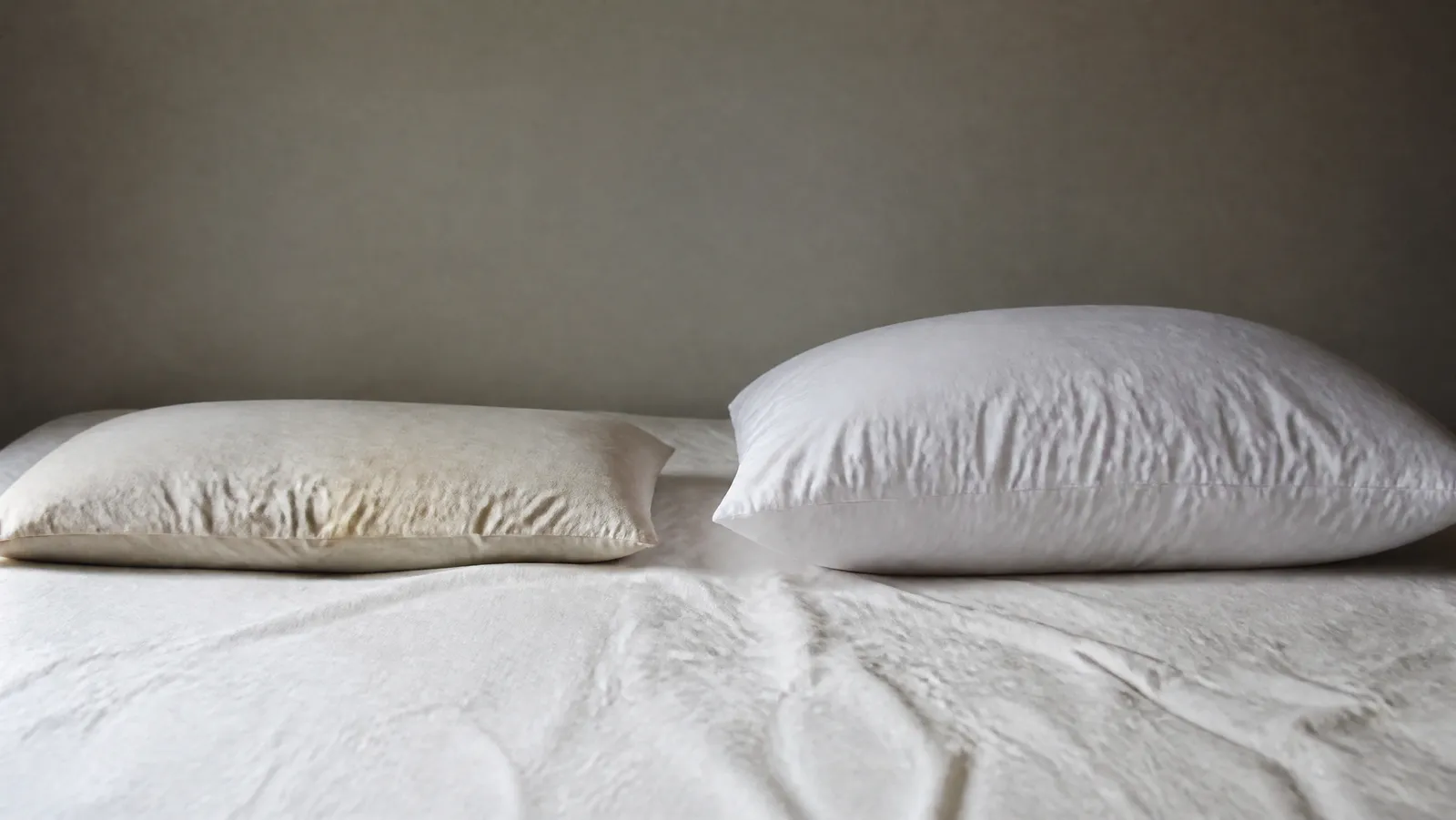
- Synthetic pillows accumulated more mite allergen, not less. In Clinical & Experimental Allergy in 1999, Rains and colleagues at the Wellington Asthma Research Group put pairs of new synthetic and new feather pillows on the same 12 beds for 12 months. After a year the synthetic pillows held more Der p 1 — 19.28 micrograms per gram, with a 95% confidence interval of 9.76 to 38.07 — than the feather pillows at 6.45 (2.96 to 14.05). They concluded that synthetic pillows accumulate the allergen faster, at a rate governed by how much Der p 1 is already in the room.
- The likely mechanism is the ticking, not the stuffing. Siebers and colleagues tested this directly in Clinical & Experimental Allergy in 2004. Twenty live house dust mites were seeded on pillow coverings with food below. After 24 hours all 20 had penetrated the standard synthetic covering; none had penetrated the feather pillow covering, or a newer polyester-cotton one, after 48 hours. Fine dust passed through the standard synthetic covering at 0.88%, against 0.07% for both the feather and the newer synthetic covering, and 0.02% for a commercial occlusive pillow cover.
- The same pattern showed up for pet allergen. Custovic and colleagues reported in Pediatric Allergy and Immunology in 2000 that synthetic pillows held significantly more cat and dog allergen than feather pillows from the same beds, and read that as support for the view that tightly woven feather-proof casings act as a barrier.
- It is not unanimous, and we will not pretend it is. A 2005 letter in Annals of Allergy, Asthma & Immunology from Purohit and colleagues is titled "Evaluation of group 1 mite allergen levels in synthetic and feather pillows: absence of difference". One contradicting result does not erase the others, but it does mean the honest claim is "the assumption behind the label is unsupported", not "feather pillows are better".
Population data points the same way, with the caveat its own authors attached. In Journal of Clinical Epidemiology in 2002, Ponsonby and colleagues analysed 498 Tasmanian children and found feather quilt use associated with reduced mite sensitisation (adjusted rate ratio 0.60) and with fewer frequent wheeze episodes (0.24). That is a cross-sectional association, and the authors wrote that prospective studies are required to fully exclude selection bias. Read it as a reason to distrust the label, not as advice to change your bedding.
Being fair to the word: what synthetic fill genuinely removes
The criticism above is narrow and deserves a limit.
A polyester pillow really does contain no feather or down protein. For someone whose reaction is to that protein, that is not marketing; it is the material fact. We could not find a solid modern prevalence figure for true feather or down allergy; the clearest signal we found was a 1995 Finnish review indexed under the translated title "Feather allergy — rarer than formerly thought". Feather bedding also carries a distinct and separately documented respiratory risk: feather duvet lung, a form of hypersensitivity pneumonitis. A 2019 case report in BMJ Case Reports describes a 43-year-old non-smoker whose breathlessness, imaging and lung function improved after all feather bedding was removed, and whose authors urge clinicians to ask about domestic bedding in unexplained breathlessness. A 2021 study in Archivos de Bronconeumología describes feather duvet lung as an underestimated form of acute and chronic hypersensitivity pneumonitis. That is an immune response to bird protein rather than to mites, and it is not what "hypoallergenic" is sold to prevent — but it is a real reason some people are told to leave feathers behind.
So the fair verdict is not that the word is a lie. It is that the word answers a question most buyers are not asking, while implying an answer to the one they are. If you have symptoms you associate with your bedding, that is a conversation for a clinician, not a purchase decision.
What a materials argument looks like — and the latex irony
Compare the label with a claim built out of the material itself.
The Sleep On Latex Natural Latex Shredded Foam Pillow, $49 as of September 2026, argues from construction: shredded Fair Trade Sri Lankan natural latex under a machine washable organic cotton cover. Treat the fill half of that argument carefully — the practice parameter quoted above found foam pillows no less prone to dust mite allergens than feather ones, and we found no clinical evidence that latex is different. The washable cover is the checkable part. The maker states Oeko-Tex Standard 100 Class 1, the tier OEKO-TEX applies to articles for babies and toddlers and describes as its strictest. That is still a chemistry certificate rather than an allergen one — the scope discipline we apply across our non-toxic pillow guide — but it is a named standard with a defined scope, which "hypoallergenic" never is. Certified fibre content works the same way on the cover side, which is the subject of the best organic cotton pillows.
Now the irony, stated plainly. Natural rubber latex is itself a well-documented allergen. According to the ACAAI, reactions develop in people sensitised to proteins contained in natural rubber latex, and symptoms may include hives, itching and nasal symptoms as well as asthma symptoms such as wheezing and chest tightness. It names healthcare workers who often wear latex gloves, people who have had many surgeries and rubber industry workers among the higher-risk groups. A pillow with a cotton cover is not a pair of examination gloves, and we are not going to inflate the risk. But it is worth noticing that the pillow on this page whose material sounds the most allergy-friendly is also the one a specific allergy rules out — which is exactly what happens when "allergy" is treated as one thing.
What a tested claim reads like
The only product in this aisle that routinely carries a measured allergen claim is not a pillow.
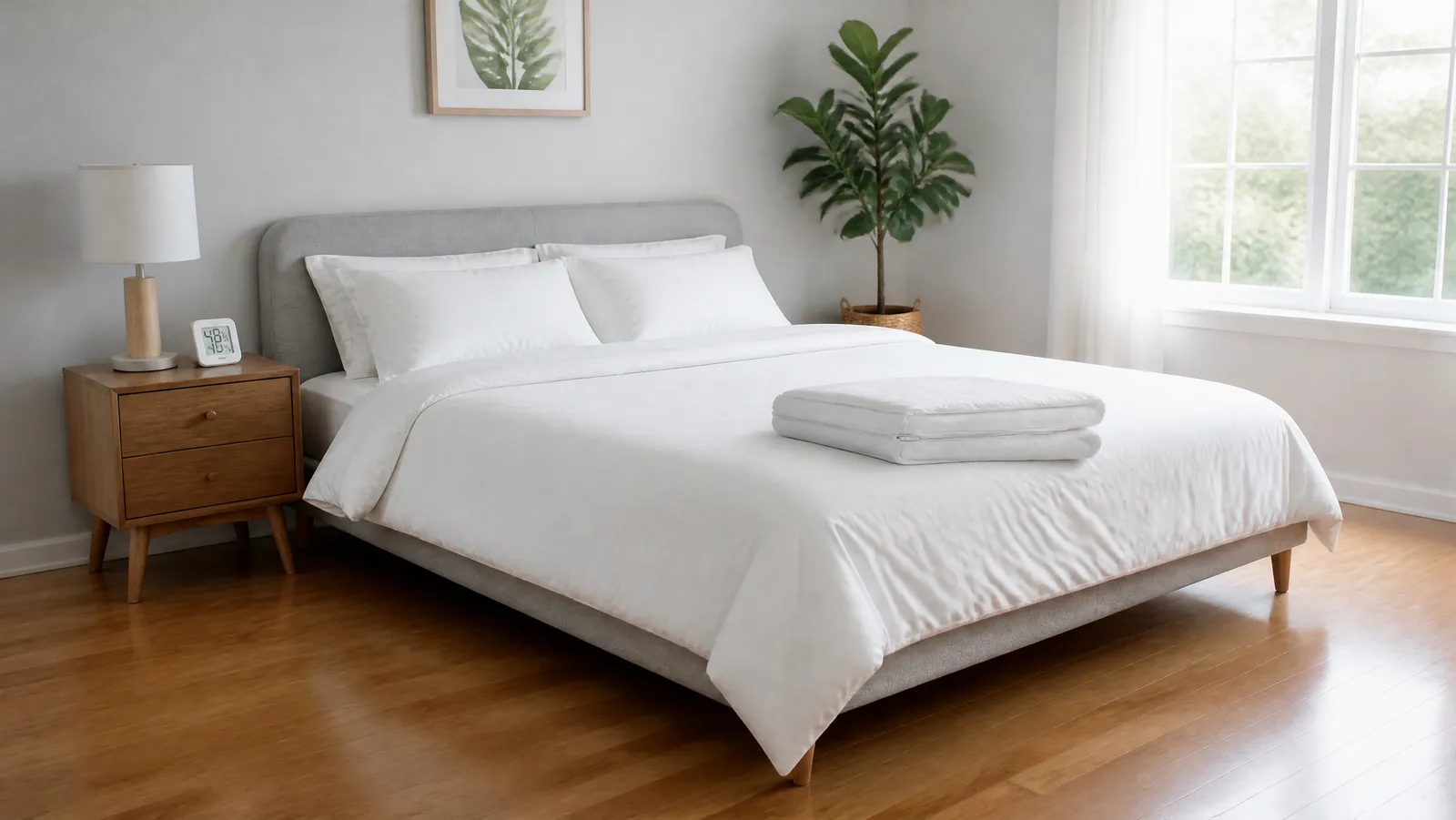
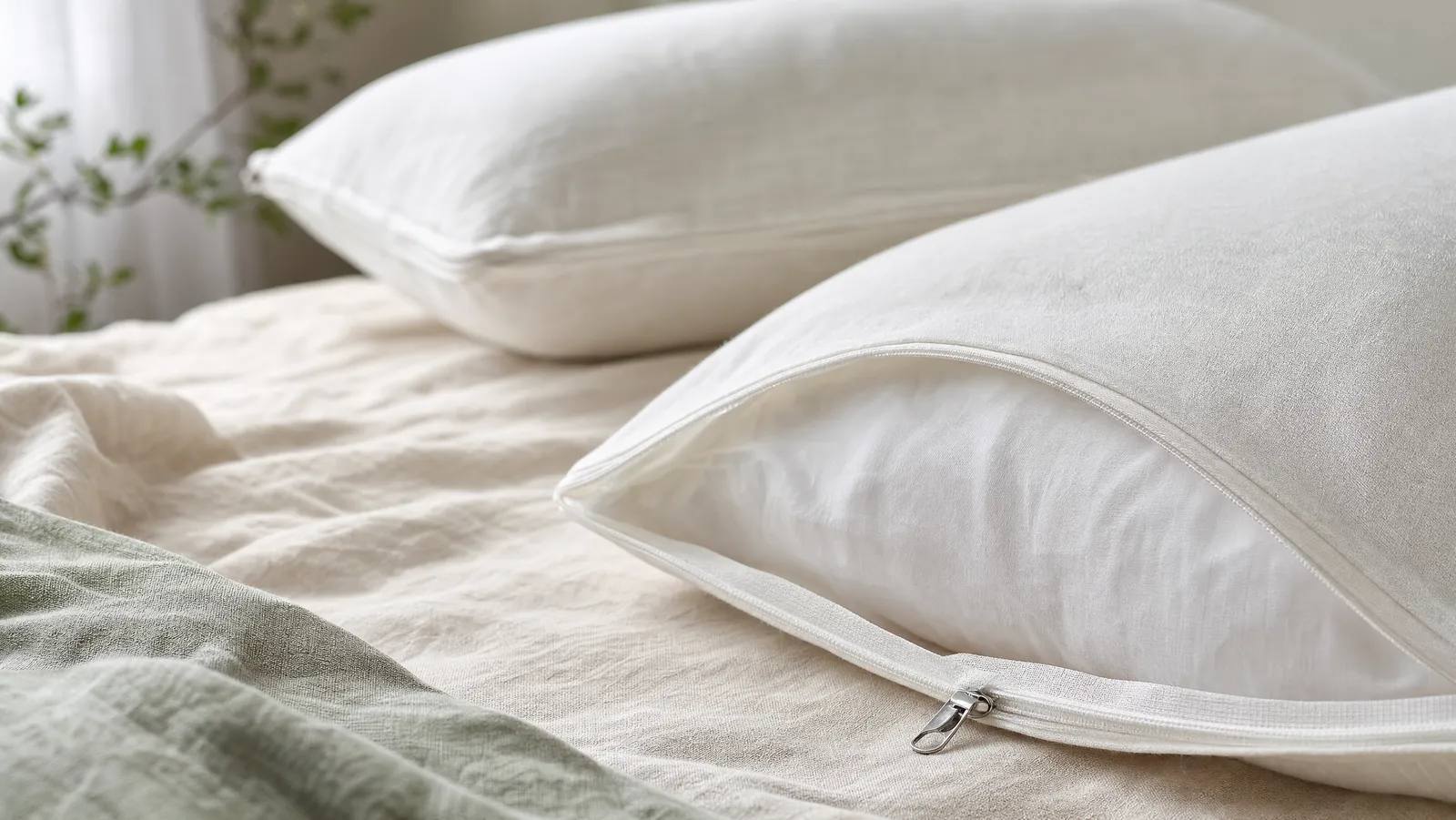
The Mission: Allergy Dust Mite and Allergen Proof Pillow Encasing, $31.95 as of September 2026, states that it blocks 100% of dust mite and animal dander allergens, third-party tested by Indoor Biotechnologies, Inc. Indoor Biotechnologies is a real allergen laboratory, whose own site lists dust and air allergen testing among its services. Read the shape of the sentence rather than the number: it names the allergen, the outcome and the lab. That is a claim that could be checked, and falsified. "Hypoallergenic" cannot be either.
The dust mite practice parameter explains why the animal dander half of that claim is the harder half. Woven microfiber fabrics with a mean pore size smaller than 10 micrometres block the mite allergen Der p 1, but a pore size smaller than 6 micrometres is needed to block the cat allergen Fel d 1, and the parameter notes that many commercially available woven encasings block Der p 1 but not Fel d 1. Its recommendation 17 is to use mite allergen-proof mattress, box spring and pillow encasings to decrease exposure — strength of recommendation strong, B evidence — while warning that covers alone are in many cases unlikely to achieve a clinical benefit unless used within a broader avoidance plan. No cover is a cure, and we are not selling one as such.
If you want an allergy claim tested by someone other than the maker, there is a programme for that. AAFA runs the CERTIFIED asthma & allergy friendly programme with Allergy Standards Limited; AAFA says products must pass every test in the standard, that testing is done by independent laboratories, and that each certified product has a certificate, a unique certification code and the certification mark. Allergy Standards publishes the bedding criteria, ASP-02, with real thresholds: outer fabric blocking more than 99% of Der p 1 before washing and more than 95% after, a domestic wash achieving at least a 90% reduction in recoverable house dust mite allergen, plus breathability, durability and chemical limits. None of the three listings here claims that mark — which is the point of showing you where it lives.
The bottom line
- "Hypoallergenic" on a pillow is not a tested claim. We found no binding definition for textiles. US textile labelling law requires fibre content, country of origin and a responsible company — nothing else.
- It usually means polyester. That removes feather and down protein, which matters to the people allergic to it, and does nothing about mites.
- The mite assumption behind the word may be backwards. Multiple published comparisons found more mite and pet allergen in synthetic pillows than feather ones, with tightly woven ticking the likely reason — though one study found no difference.
- The claims that mean something name things. An allergen, a percentage, a lab, a standard number, a pore size. Those you can check.
- Certification is where the tested version lives. AAFA and Allergy Standards publish thresholds for bedding; OEKO-TEX tests chemistry, not allergens.
Buy the synthetic pillow if you want a cheap, washable, feather-free pillow; buy the encasing if what you want is the measured claim. And read the noun, not the adjective: the useful information on a listing is the fill, the fabric and the certificate number. For the picks that come out of applying exactly that filter, Home Pillow Review's allergy pillow guide is the next thing to read.
If allergy or asthma symptoms are what brought you here, take them to a clinician. We can tell you what a pillow is made of and who measured what; no pillow is a diagnosis, and none of this is medical advice.
The shortlist
3 pillows compared — firmness, loft, and temperature side by side. The top pick is highlighted.
| Pillow | Firmness | Loft | Sleeps | Best for | Price |
|---|---|---|---|---|---|
What the Label Usually MeansJOLLYVOGUE Cooling Down Alternative Pillows, Standard, Set of 2 | Medium | High | Cooling | Showing what the hypoallergenic label actually denotes | $20.99 Check |
What a Materials Argument Looks LikeSleep On Latex Natural Latex Shredded Foam Pillow, Standard | Medium | Adjustable | Neutral | A construction argument plus a certification with a defined scope | $49 Check |
What Actually Gets TestedMission: Allergy Dust Mite and Allergen Proof Pillow Encasing, Premium Microfiber, Standard | — | — | Neutral | Seeing what a specific, tested allergen claim reads like | $31.95 Check |
JOLLYVOGUE Cooling Down Alternative Pillows, Standard, Set of 2

Cheap, washable, and there is not a feather in sight — which is exactly what I wanted and, it turns out, exactly what the label promised.
"Hypoallergenic" here means synthetic and nothing more, and polyester fibrefill compacts with use, which leaves plenty of interior for dust and mite debris to settle into.
This pick is the lesson rather than a recommendation dressed as one. When a pillow listing says "hypoallergenic", this is overwhelmingly the product underneath the word: a down alternative. JOLLYVOGUE fills these with micro polyester fibre, describes them as breathable and machine washable, air or tumble dry, and sells them as a high-loft standard pair that ships vacuum-sealed with 24 hours suggested to fluff out fully.
One phrase on the listing is worth slowing down for. JOLLYVOGUE states the pillows are made in an OEKO-TEX Standard certified factory. A certified factory is not a certified product — it describes where something was made rather than what was tested, and OEKO-TEX STANDARD 100 is in any case a restricted-substance test of a finished textile, not an allergen test.
Taken for what it is, it is a lot of pillow for the money: two standard pillows at $20.99 as of September 2026, with no feather or down protein in them and a wash cycle they survive. Taken as allergy protection, the word on the front is doing work the fill cannot do.
Sleep On Latex Natural Latex Shredded Foam Pillow, Standard

It springs back instead of sinking, the cotton cover washes like a pillowcase, and I could look the certification up rather than take a badge on faith.
It is the most expensive single pillow on this page, and anyone with a natural rubber latex allergy has to skip it outright.
If "hypoallergenic" is mostly a synonym for synthetic, this is what a materials argument looks like instead. Sleep On Latex fills this pillow with Fair Trade Sri Lankan natural latex, shredded rather than moulded, so the loft can be adjusted by removing fill, under a machine washable organic cotton cover. The materials argument usually made for foam is that it has less of the fibrous interior dust works its way into — though the 2013 AAAAI/ACAAI dust mite practice parameter states that foam pillows are not less prone to dust mite allergens than feather pillows, and shredded fill is not a solid block. The washable cover is the part of any allergy routine that actually gets done.
It also names a certification with a defined scope: the maker states Oeko-Tex Standard 100 Class 1, the class OEKO-TEX applies to articles for babies and toddlers and describes as carrying its strictest requirements. That is a statement about tested chemistry, not about allergens — but it is checkable, which is more than the word this article is about.
Keep the claim honest in both directions. We found no clinical evidence that latex fill lowers mite allergen, and the practice parameter points the other way for foam generally. And here is the irony a page about allergy labels has to say out loud: at $49 as of September 2026 this is the one pillow here that a specific, well-documented allergy rules out entirely.
Mission: Allergy Dust Mite and Allergen Proof Pillow Encasing, Premium Microfiber, Standard
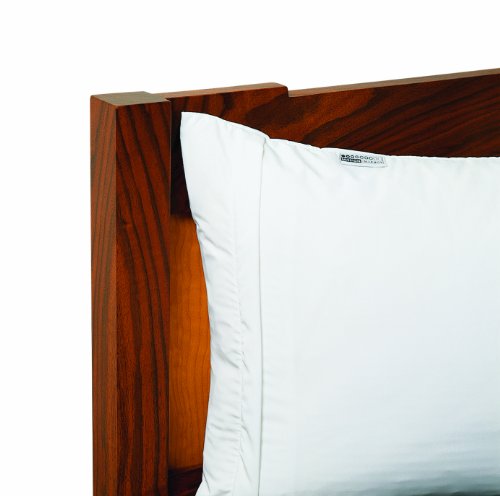
It names an allergen, a percentage and a testing lab, which is the first time I have been able to check anything in this aisle, and it zips shut over the pillow I already liked.
It is a cover rather than a pillow, so it is an addition to the budget, and it is priced above the down alternative pair by a wide margin.
The closing lesson of this page is that the only product in the category routinely carrying a measured allergen claim is not a pillow at all. Mission: Allergy states that this encasing blocks 100% of dust mite and animal dander allergens, third-party tested by Indoor Biotechnologies, Inc., and that it is certified bedbug-proof. Put that sentence next to "hypoallergenic" and the difference is the whole article: one names the allergen, the outcome and the laboratory, and the other names nothing.
The construction is the kind the allergy literature actually discusses: tightly woven 100% microfiber polyester, which the maker describes as air- and water-vapour-permeable yet water repellent, with bound seams and interior and exterior zipper flaps. Mission: Allergy says it was designed by a board-certified allergist, is made in the USA, and carries a lifetime warranty.
Two caveats we would want stated. The claims above are the maker's and its named lab's, not our measurements. And this is a cover, not a pillow: at $31.95 as of September 2026 it costs more than either pillow here except the latex, and it still needs something inside it.
How to Read an Allergy Claim on Bedding
You cannot verify the word "hypoallergenic" because there is nothing to verify it against. You can verify almost everything else on the listing. This is the five-minute version.
Hypoallergenic Pillow FAQ
Is "hypoallergenic" regulated on bedding? We could not find a binding definition for textiles. The FTC's Textile Act guidance requires a label to disclose fibre content, country of origin and the responsible company, and says other information "cannot be deceptive or misleading" — but it sets no test for this word. The FDA, writing about cosmetics rather than bedding, puts the same situation plainly: "There are no Federal standards or definitions that govern the use of the term 'hypoallergenic.'"
Are hypoallergenic pillows worth it? It depends what you need them to do. Synthetic fill genuinely removes feather and down protein. On dust mite allergen, the 2013 AAAAI/ACAAI dust mite practice parameter states that "Foam pillows are not less prone to dust mite allergens than are feather pillows" and that "Nonallergenic pillows are not a substitute for covering them with allergy-proof encasements."
Do feather pillows hold more dust mite allergen than synthetic ones? Several studies found the opposite. In Clinical & Experimental Allergy in 1999, Rains and colleagues followed 12 pairs of new pillows on the same beds for a year and measured more Der p 1 in the synthetic pillows (19.28 micrograms per gram) than the feather ones (6.45). The evidence is not unanimous — a 2005 letter in Annals of Allergy, Asthma & Immunology by Purohit and colleagues is titled "absence of difference" — but the popular assumption is on shakier ground than the label suggests.
Why would a feather pillow hold less? The ticking. Siebers and colleagues reported in 2004 that all 20 live house dust mites seeded on a standard synthetic pillow covering had penetrated it within 24 hours, while none had crossed the feather pillow covering after 48 hours.
Is latex hypoallergenic? No, and it is the clearest counterexample on this page. ACAAI describes latex allergy as a reaction to proteins in natural rubber latex, with healthcare workers, people who have had many surgeries and rubber industry workers among the higher-risk groups. A natural latex pillow may suit many people, and is one that anyone with a known natural rubber latex allergy would need to rule out.
Do allergen-proof encasings work? The 2013 practice parameter's recommendation 17 is to use mite allergen-proof mattress, box spring and pillow encasings to decrease exposure, at a strong strength of recommendation on B evidence. The same document cautions that covers alone are, in many cases, unlikely to achieve a clinical benefit unless they are part of a broader avoidance plan.
I have symptoms I think my bedding is causing. What should I do? See a clinician. Allergy and asthma are medical conditions, and a pillow is not a diagnosis or a treatment. We can tell you what a product is made of and what a named third party measured; we cannot examine you.
Why you can trust us

Aimee Cannon
Sleep & bedding writer
Aimee Cannon is a sleep and bedding writer who has spent years testing pillows of every kind — memory foam, down, wool, bamboo, buckwheat, and specialty support pillows. She focuses on matching the right pillow to each sleeping position and need, and reports what actually holds up after months of nightly use. When she is not testing pillows, Aimee is usually with her husband and her dog.