How to Remove Dust Mites From Pillows
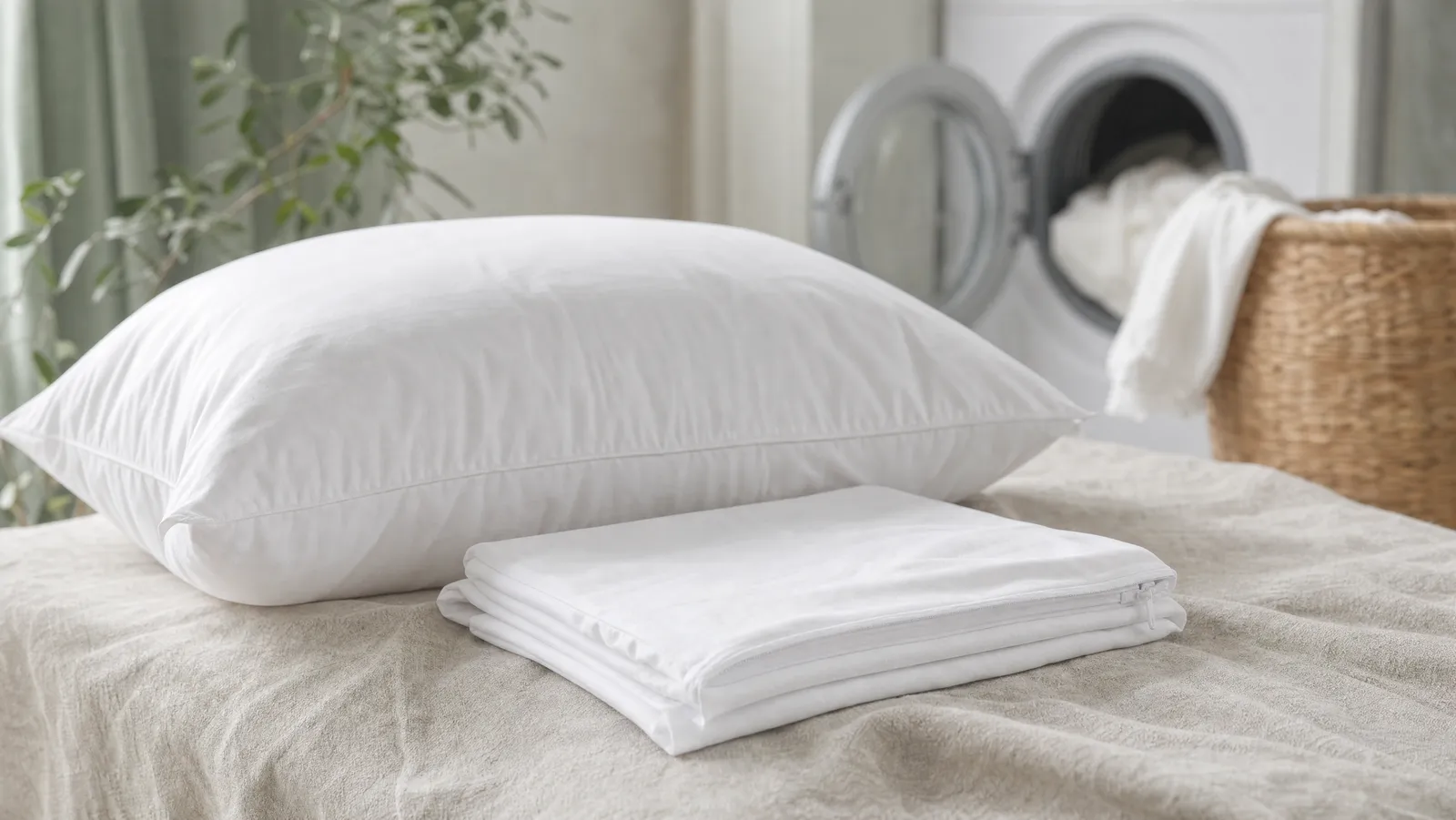
You cannot sterilise a pillow, and you do not need to. The job is lowering the allergen load: strip the bed, wash the pillowcase and the zippered cover, dry both completely, treat the pillow itself only by the route its own care label allows, and seal it back up. We may earn a commission from links on this page, at no extra cost to you.
That is the procedure. The rest of this page is why it works, because most advice on this query collapses two jobs into one. Killing mites and removing allergen are two different jobs. Heat kills the animal. The thing people react to is a protein in mite droppings, and it comes out in the wash at temperatures that kill nothing at all. If you would rather shop than launder, our guide to pillows made for allergy sufferers runs this evidence over a set of picks.
What you are actually trying to remove
Not the animal. According to the 2013 practice parameter Environmental Assessment and Exposure Control of Dust Mites, published by Portnoy and colleagues in Annals of Allergy, Asthma and Immunology on behalf of the AAAAI and the ACAAI, house dust mites produce faecal pellets at a rate of 20 per day, the pellets vary in size from 20 to 40 micrometres, and they are "considered a rich source of digestive enzyme-derived allergens." The same document notes they are light enough to become airborne when the substrate is disturbed — "by making a bed, walking on a carpet, or moving on a pillow" — and to settle again within 20 to 30 minutes. We take that reservoir apart in dust mites in pillows.
Two consequences, pointing opposite ways.
- The allergen comes out in water. The practice parameter describes a study that placed samples of extracted dust into 11 different detergents — not an actual wash — and found no difference between them: all extracted all the mite allergen within five minutes in cold water.
- Heat does not destroy the allergen. The same document reports that Der p 1 denatures within 30 minutes at 120°C, while the more heat-stable Der p 2 needs 140°C for 30 to 60 minutes. No domestic dryer runs near those temperatures. Dryer heat kills mites; it leaves their droppings intact.
So a wash can carry allergen away at a temperature that kills nothing, and a hot dry cycle can kill plenty and leave the allergen where it was.
What temperature kills dust mites in pillows?
Two credible sources give different answers.
According to the Asthma and Allergy Foundation of America, you should "Wash your bedding, uncovered pillows and stuffed toys in water 130 degrees Fahrenheit or hotter each week. Dry them in a hot dryer cycle to kill dust mites."
That 130°F has a real paper behind it. In the Journal of Allergy and Clinical Immunology in 1992, McDonald and Tovey reported that all mites were killed by water temperatures of 55°C or greater — 131°F — and that killing at lower temperatures was not improved by any detergent or laundry product they tested.
The same paper is where the two-jobs distinction becomes concrete. A cold cycle, with or without laundry powder, "did not remove most live mites from bedding, however, the allergen concentration (Der p I/gm fine dust) was reduced by more than 90%." Dry cleaning did the reverse: most if not all mites were killed, and the allergen concentration of the dust did not fall.
The allergy specialists' own practice parameter then argues the hot figure is being over-read. It notes the 130°F recommendation "is based not on washing blankets or clothing but on immersing mites placed in permeable capsules into water of different temperatures to determine the temperature needed to scald the mites to death", and that in a real wash, "as long as the mites are removed, it is immaterial whether the mites are scalded to death, drowned, or simply washed down the drain still alive." It cites mite cultures in dialysis bags put through a 17-minute simulated wash cycle: 96% to 100% mortality at 50°C, 88% to 96% at 40°C, and 90% to 98% in cold water. Its recommendation is that bedding "should be washed weekly to decrease dust mite numbers and mite allergen levels, and that high temperature is not necessary", with home hot water kept below 120°F because of the scalding risk to occupants.
On the allergen half, the numbers hold up across the range. Arlian, Vyszenski-Moher and Morgan washed clothing and bedding in residential machines in warm (36°C to 38°C) or cold (22°C to 27°C) water for the same journal in 2003: 60% to 83% of live mites were removed, and 84% of Der f 1 came out in water alone or with detergent, rising to 98% with detergent plus bleach. The practice parameter adds that cold water with detergent removed 95% of mite allergen from duvets, blankets and sleeping bags.
The two positions are less contradictory than they look. Hot water is the only temperature shown to kill mites outright on immersion, but in a real wash cycle most mites are removed or drowned at any temperature, and warm or cold water still removes most of the allergen.
Which pillows can actually be washed
All of the above assumes an item you can put in a machine. Most dust mite advice quietly assumes a polyester pillow.
- Polyester and down alternative fills are usually the washable case — but the pillow's own care label decides, not this article.
- Down and feather varies by maker and price; some are spot-clean or professional-clean only.
- Memory foam: do not put it in the washing machine. According to Tempur-Pedic's product care guidance, "You should never wash TEMPUR-material®." The covers on most of its pillows can be removed and washed — it recommends a cold machine wash and a cool drying setting, with air-drying best.
- Latex: the same answer. Organic Textiles' care instructions for its latex pillows state "Do not wash or submerge the latex core", allow spot cleaning with a damp cloth and mild detergent followed by flat air drying, and add "Do not place latex in direct sunlight or high heat."
This is not a footnote: for a foam or latex pillow, the maker's own instruction removes the entire laundering route dust mite advice is built on, leaving the cover and the encasement — which is why the products on this page are covers rather than pillows.
Drying is not the afterthought
Drying does a job of its own: the killing half.
The practice parameter reports that "All mites seeded into blankets were killed when the blankets were dried in a clothes dryer for 10 minutes", and that "99% of mites naturally present in used duvets ('comforters') were killed after 1 hour in a clothes dryer" — the duvet figure citing Mason and colleagues in the Journal of Allergy and Clinical Immunology in 1999, the blanket figure a separate study. Its own suggestion for blankets is 10 minutes in a dryer before washing; comforters, it says, need an hour to kill all mites.
So a dryer is a recognised route for killing mites, including in items that cannot be washed. What it is not is a route for the allergen: nothing has rinsed the droppings out.
Then the part a pillow makes serious: it has to be dried all the way through, not until the outside feels dry. According to the US Environmental Protection Agency, "If wet or damp materials or areas are dried 24-48 hours after a leak or spill happens, in most cases mold will not grow." The EPA also notes that absorbent or porous materials may have to be thrown away once they are mouldy, because mould penetrates the empty spaces inside them. A pillow is absorbent and porous, and trading a mite problem for a damp interior is a bad trade.
Does freezing kill dust mites in pillows?
It is the most-repeated tip on this query, and the weakest.
The practice parameter's own recommendation is worth quoting, because it argues against confidence rather than against freezing: "Tell patients that the use of physical measures to kill mites, such as heating, freezing, and desiccation, theoretically should be effective; however, controlled trials have not been performed to demonstrate clinical benefit when they are used." It grades that weak, on D evidence.
The eggs are the harder problem. Mahakittikun and colleagues exposed Dermatophagoides pteronyssinus eggs to temperatures from −70°C to +70°C in Experimental and Applied Acarology in 2011, then watched for hatching over 15 days. Of the cold treatments — a refrigerator at 4°C, a freezer compartment at −10°C, and deep freezers at −20°C, −40°C and −70°C — "only the deep freezer at −70°C was effective in preventing hatching". The practice parameter reads that as mite eggs being highly resistant to cold.
And the thing the freezer tip never mentions: a freezer removes nothing. No water moves through the pillow, so every faecal pellet that was in it before is in it afterwards. A night in a household freezer is at best a partial job on the mites and no job at all on the allergen.
Sunlight, vacuuming and steam
Sunlight: thin evidence. The same 2011 egg study put the thermal death point under direct sunlight at 3 hours, and found that at 40°C, wet or dry, about 80% of eggs survived. Those were eggs on laboratory slides, fully exposed; an egg three inches inside a pillow is in neither condition. We found no controlled trial showing that sunning a pillow lowers measured allergen inside it — and at least one latex maker tells owners to keep the material out of direct sunlight, so the folk remedy and the care label can conflict.
Vacuuming: modest, and genuinely recognised. The practice parameter recommends regular vacuuming with high-efficiency particulate air filtration to decrease exposure to mite allergen-containing particles — a strong recommendation on B evidence — and says bedding and furniture can also be vacuumed. It is candid: "Although vacuuming does not remove all live mites, mite allergens in the form of fecal particles can be removed." Given that 20-to-30-minute settling window, vacuuming stirs up before it takes away.
Steam: not a pillow study. The practice parameter describes one study in which active heat and steam treatment of homes produced a sustained decrease in Der p 1 and Der p 2 for up to 12 months and alleviated bronchial hyper-responsiveness in asthmatic residents there — home furnishings, not a pillow, and steam is still water going into something you then have to dry.
The step that makes the wash hold
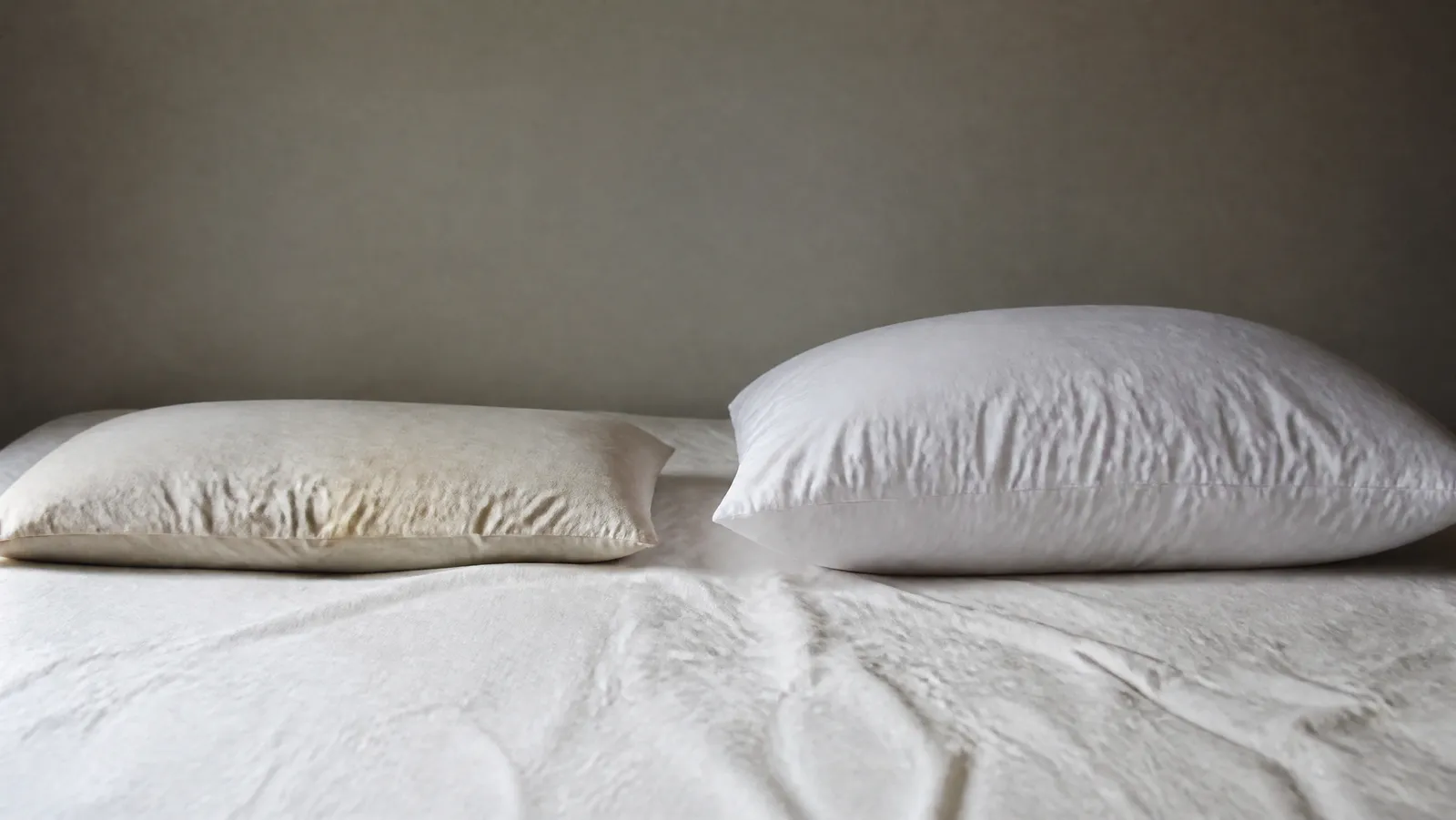
Washing removes what is there; a barrier keeps it from accumulating again.
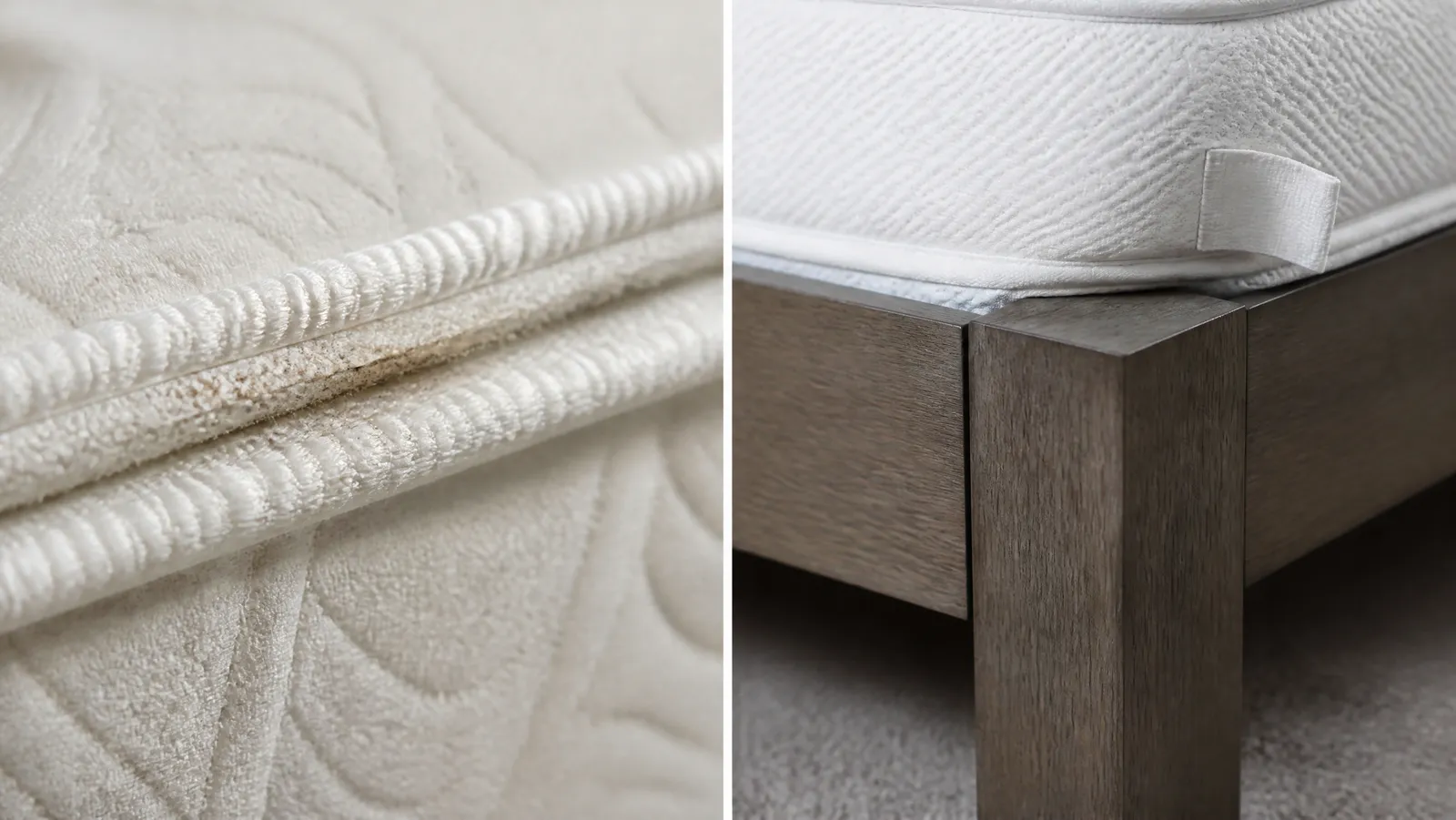
The practice parameter is unusually direct here: "The most effective way to prevent mite colonization is to encase a mattress, box spring, or pillow in a mite allergen-impermeable encasing", and says existing mattresses, box springs and pillows "can be kept if they are encased in allergen-impermeable covers to entrap already-present mites and mite allergens." Fabric specification does the work, not the marketing: it states that woven microfibre fabrics with a mean pore size smaller than 10 micrometres can effectively block Der p 1, and that non-woven encasings "are not recommended because they trap mite allergens and are not washable, leading to allergen accumulation."
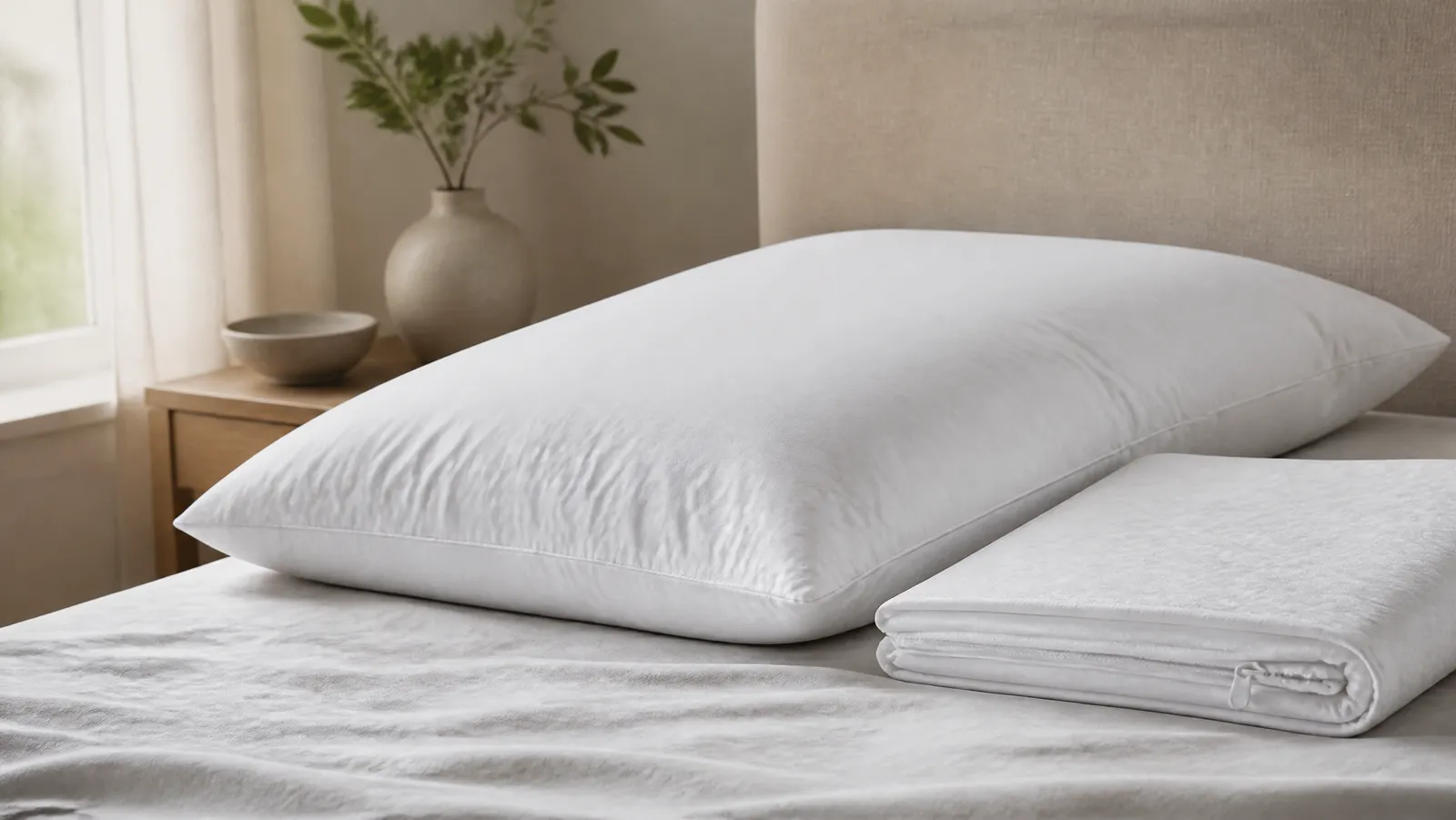
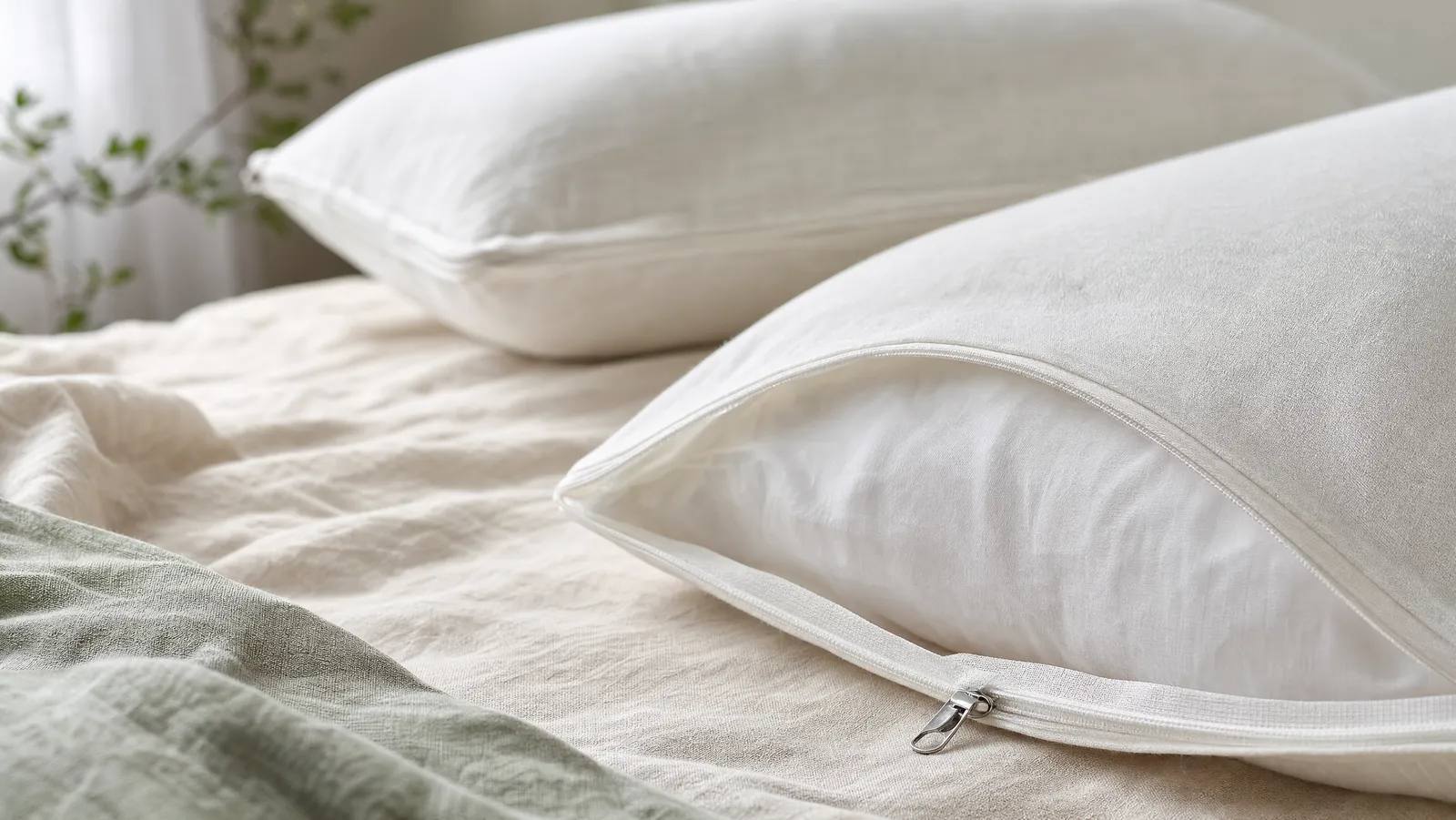
That is the step a zippered dust mite pillow protector exists for, and the reason every product here is a cover. None carries a published mean pore size or a named third-party allergen test, so we will not call any of them allergy-proof.
- The AllerEase Premier zipper protectors, four for $23.25 as of September 2026, are our pick for one reason: Aller-Ease states machine wash hot. It also states tumble dry on the lowest setting and remove the cover when dry, which is easy to get backwards.
- The HOSPITOLOGY Sleep Defense System encasements, $24 for two as of September 2026, are the value pick for sealing a pillow you have just washed: the maker states a fully zippered pair, 100% waterproof with a breathable membrane, machine washable, tumble dry low. Waterproof is a liquid claim, not an allergen test.
- The Niagara Sleep Solution protectors, four for $8.49 as of September 2026, are the cheapest washable layer here — sold for dirt and wear, not as an allergen barrier.
How often, realistically
AAFA's answer is weekly for bedding and uncovered pillows. The practice parameter gives the reason weekly beats monthly: allergen removed by washing "generally reappears within 1 month". AAFA also suggests replacing pillows every 2 years and mattresses every 10 — a rule of thumb rather than a measurement, and a new pillow resets the pillow's age, not the room's humidity.
The scheduling point nobody writes down: a routine you will not keep is worth less than a barrier that asks nothing of you. If the weekly wash realistically lasts three weeks, the encasement is where the money goes first.
Will any of this change how you feel?
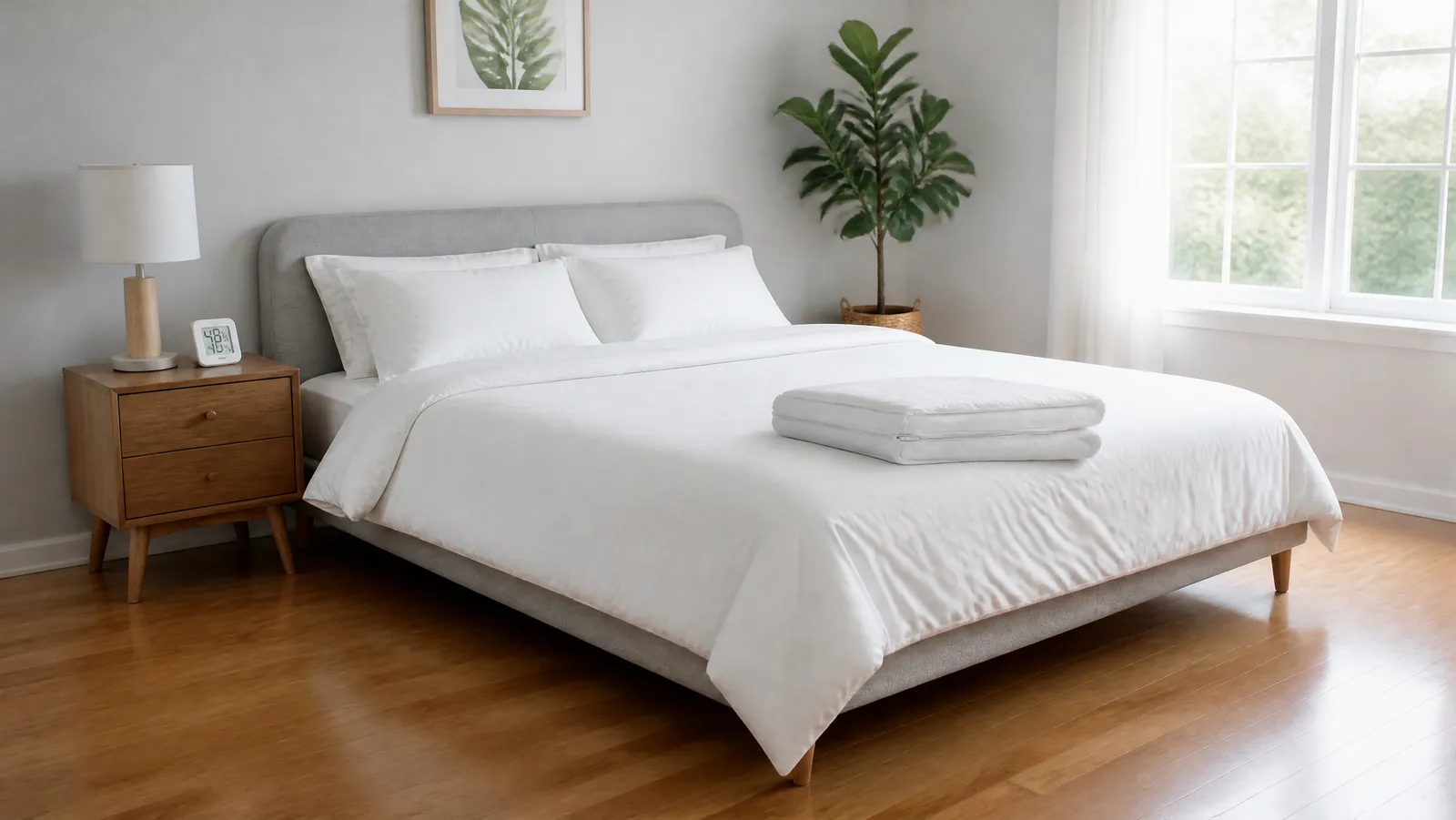
Here is the limit. Encasings used as part of a structured allergen-control programme do reduce measured exposure, the practice parameter says — and then: "Even so, this single avoidance measure does not lead to a significant alleviation of clinical symptoms in patients with allergic rhinitis." It adds that "in many cases mite covers alone are unlikely to achieve a clinical benefit unless they are used as part of a more comprehensive multifaceted avoidance plan." The combination it calls most effective pairs humidity held at 35% to 50% with regular washing of bedding, regular vacuuming with a high-efficiency vacuum, encasings, and HEPA filtration if deemed necessary.
So: measured allergen reduction is well established; symptom relief from any single measure is not. Whether the programme is worth running depends on whether you are sensitised to mites, which no pillow and no article can tell you — and not every morning symptom is a mite problem, which is the subject of whether your pillow is causing your allergies. Allergy and asthma are medical conditions; anyone with ongoing symptoms should speak to a clinician who can test them.
The bottom line
You cannot remove every dust mite from a pillow, and that was never the useful goal. Wash the case and the zippered cover weekly, because water removes the allergen at any temperature and hot water also kills the mites. Dry everything completely, because a damp pillow interior is worse than the problem you were solving. Read the pillow's own care label before you wash the pillow itself, because memory foam and latex makers tell you not to. Skip the freezer, which kills part of the population and removes nothing. Treat sunlight as unproven. And seal the pillow afterwards, because the barrier carries the strongest recommendation of anything here.
If you would rather start with a pillow chosen for this problem than a routine built around the one you own, Home Pillow Review's allergy pillow guide is the next page — and if you are reading this at 3am because you wake up congested, the more useful appointment is with a clinician.
The shortlist
3 pillows compared — firmness, loft, and temperature side by side. The top pick is highlighted.
| Pillow | Firmness | Loft | Sleeps | Best for | Price |
|---|---|---|---|---|---|
| — | — | Neutral | A zippered cover the maker says you can wash hot every week | $23.25 Check | |
Best Waterproof EncasementHOSPITOLOGY PRODUCTS Sleep Defense System Zippered Pillow Encasement, Standard 20x26, Set of 2 | — | — | Neutral | Sealing a pillow after you have washed and fully dried it | $24 Check |
Cheapest Washable CoverNiagara Sleep Solution Ultra Soft Pillow Protectors with Zipper, Standard, Set of 4 | — | — | Cooling | A cheap washable cover for a laundry routine, not an allergen barrier | $8.49 Check |
AllerEase Premier Zipper Pillow Protector, Standard/Queen, 4 Pack

The care label says wash hot, which is the first time I have owned bedding that agrees with the advice I was given — and four of them meant the whole house got done in one load.
Wash hot but dry cool is a genuinely easy thing to get wrong, and the allergy language on the packaging has no named test or pore-size figure behind it.
On a page about laundering, the laundering instruction is the whole point. Aller-Ease states that these protectors are machine washable HOT, with non-chlorine bleach when needed. That single line is what makes this cover compatible with the temperature advice the allergy bodies actually publish — and it is an instruction almost no pillow carries. The cover is the thing you can wash hot every week. The pillow underneath it usually is not.
There is a wrinkle the maker states plainly and most owners skip: wash hot, but tumble dry on the lowest setting, separately, and remove the cover when it is dry rather than when the cycle ends. Hot water, cool dryer. It is easy to get backwards, and the dryer is the half that damages a technical fabric. Aller-Ease describes the fabric as tightly woven and says it fully encases the pillow, and states a lifetime warranty.
Four protectors at $23.25 as of September 2026 covers a double bed plus the guest room, which matters more than it sounds: a routine that only reaches one pillow is a routine with a gap in it. What you do not get is a number. "Tightly woven" is a description, not a mean pore size, and there is no named third-party allergen test in the listing — so we will not call it allergy-proof.
HOSPITOLOGY PRODUCTS Sleep Defense System Zippered Pillow Encasement, Standard 20x26, Set of 2

Two fully zippered encasements for the price of a takeaway, they go through the machine with everything else, and the pillow inside has stopped being something I think about.
The claim is waterproofing rather than a tested allergen barrier, and a waterproof membrane may sleep warmer than an ordinary woven protector.
This is step two of the routine rather than an alternative to it. Washing removes what is already in the pillow; a fully zippered encasement is what stops it accumulating again. The AAAAI/ACAAI dust mite practice parameter makes the same pairing — wash bedding weekly, and encase the mattress, box spring and pillow — which is why we treat these two steps as one job done in order.
The maker-stated facts are a pair of fully zippered standard encasements at 20 by 26 inches, 100% waterproof with a breathable membrane, machine washable and tumble dry low, under a 5-year limited manufacturer's warranty. At $24 for two as of September 2026 it is the cheapest waterproof way we know to make a wash actually hold, and being washable itself matters: the practice parameter specifically does not recommend non-washable non-woven encasings, because allergen builds up in them.
Two honest caveats. HOSPITOLOGY claims waterproofing, which is a liquid barrier and not the same thing as a named allergen test or a stated mean pore size. And a waterproof membrane may sleep warmer than plain woven fabric — HOSPITOLOGY says its knit is breathable and will not retain heat, and we have no independent measurement either way.
Niagara Sleep Solution Ultra Soft Pillow Protectors with Zipper, Standard, Set of 4

Four washable zippered covers for the price of a sandwich, and the maker is refreshingly straight that the job is keeping the pillow clean rather than fixing my nose.
It is not sold as an allergen barrier, so it should not be bought as one, and a thin microfibre zipper is the first part of a cover like this to fail.
Four zippered, machine washable covers for $8.49 as of September 2026. For the laundry routine this article describes, that is most of what the job needs: something removable that goes in the wash weekly so the pillow does not have to. Niagara Sleep Solution states the covers are machine washable and have an auto-lock side zipper, and describes the fabric as high-thread-count, tightly woven microfibre intended to prolong pillow life.
Then the distinction this site keeps insisting on. Niagara's own framing is protection from dirt, wear and tear. It does not market these as allergen barriers, and there is no allergy claim, no named test and no pore-size figure on the listing. That is the maker describing its product accurately, which is more than several competitors manage — and it is also the reason not to buy this one as a barrier. If you want a tested allergen encasement, the two picks above at least make the barrier claim explicitly.
Read it for what it is: the cheapest way to put a washable layer between a head and a pillow, on every bed in the house at once.
The Weekly Routine, Start to Finish
Two jobs, one evening. Heat kills mites; water carries the allergen away. This is the order that does both without wrecking a pillow.
Dust Mite Removal FAQ
What temperature kills dust mites? McDonald and Tovey reported in the Journal of Allergy and Clinical Immunology in 1992 that all mites were killed by water at 55°C (131°F) or greater, and that no detergent improved killing at lower temperatures. The same paper found a cold cycle failed to remove most live mites but still cut Der p 1 concentration by more than 90%.
Can I wash a memory foam pillow? Not by its maker's instructions. Tempur-Pedic's product care guidance states "You should never wash TEMPUR-material®", and says the covers on most of its pillows and cushions can be removed and washed cold, dried cool, with air-drying best.
Can I wash a latex pillow? Organic Textiles' care instructions for its latex pillows say "Do not wash or submerge the latex core", allow spot cleaning with a damp cloth and mild detergent, and add "Do not place latex in direct sunlight or high heat". The cover is the washable part.
Does freezing a pillow work? Partly, and not for the thing you care about. The 2013 practice parameter's own recommendation is that physical measures such as heating, freezing and desiccation theoretically should be effective, but that controlled trials demonstrating clinical benefit have not been performed — a weak recommendation on D evidence. Mahakittikun and colleagues found in Experimental and Applied Acarology in 2011 that of the cold treatments they tested, only a −70°C deep freezer prevented mite eggs from hatching. And a freezer removes nothing: every faecal pellet stays where it was.
Does sunlight kill dust mites? The same 2011 egg study put the thermal death point for direct sunlight at 3 hours — for eggs on microscope slides, fully exposed. We found no controlled trial showing that sunning a pillow lowers measured allergen inside it.
How often should I do this? AAFA says to wash bedding, uncovered pillows and stuffed toys weekly in water 130°F or hotter and dry them in a hot dryer cycle.
Should I just replace the pillow? AAFA suggests replacing pillows every 2 years and mattresses every 10. Treat that as a rule of thumb rather than a measurement — and note that a new pillow resets the pillow's age, not the room's humidity.
What about the mattress? The practice parameter groups mattresses, box springs and pillows together as major sources of mites and mite allergen, and recommends allergen-impermeable encasings for all three at a strong strength of recommendation on B evidence.
I have symptoms and want them to stop. That is a clinician's question, not a laundry question. The practice parameter is explicit that mite covers used as the single avoidance measure do not significantly relieve symptoms in allergic rhinitis.
Why you can trust us

Aimee Cannon
Sleep & bedding writer
Aimee Cannon is a sleep and bedding writer who has spent years testing pillows of every kind — memory foam, down, wool, bamboo, buckwheat, and specialty support pillows. She focuses on matching the right pillow to each sleeping position and need, and reports what actually holds up after months of nightly use. When she is not testing pillows, Aimee is usually with her husband and her dog.