The Best Pillows for Allergies (2026 Review)
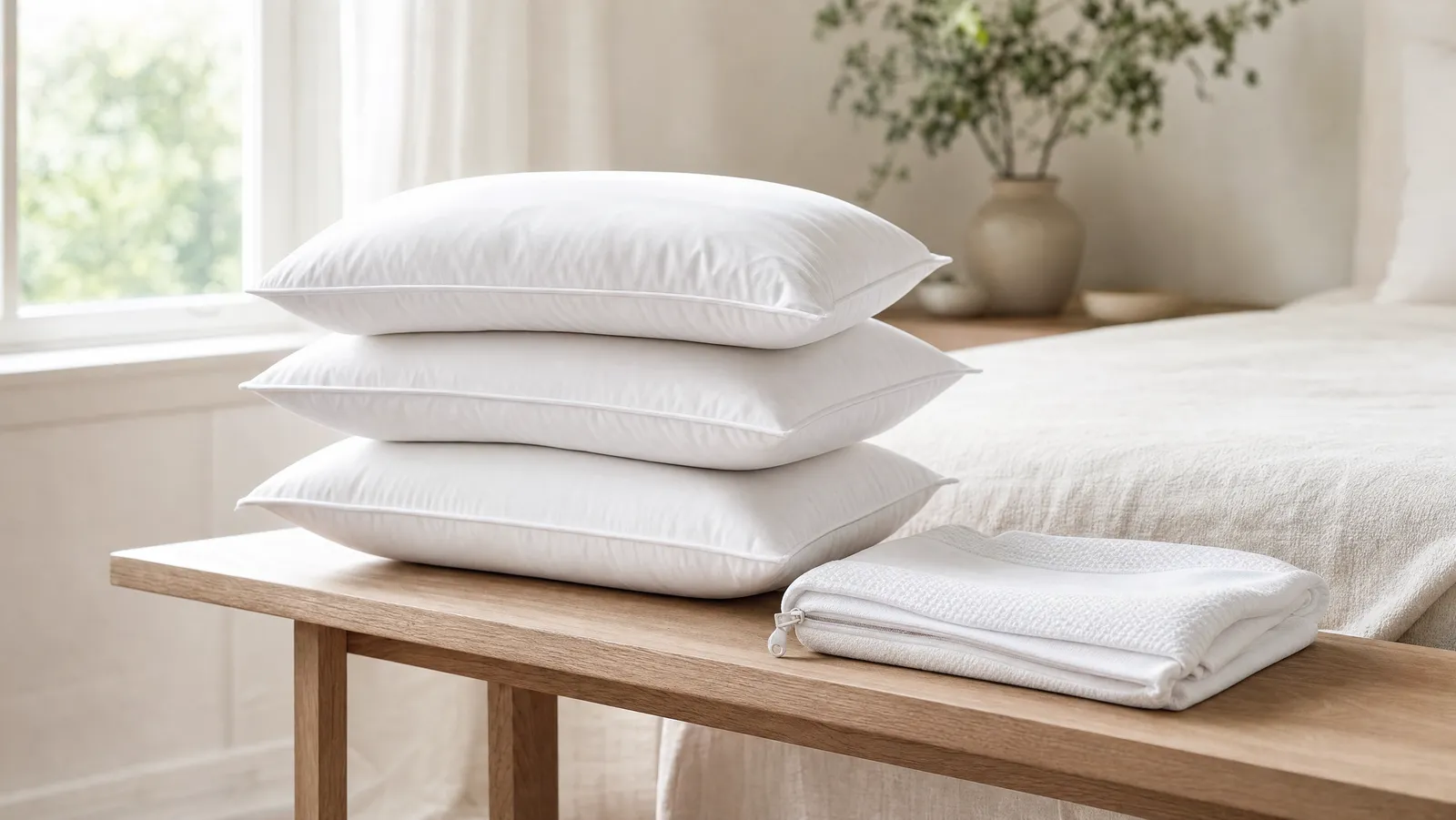
The best pillow for allergies is the one you can seal inside a tested, tightly woven encasement, wash weekly, and keep in a room at the 35% to 50% humidity the allergy guidelines point to. For house dust mite allergy — the overwhelmingly common case — what reaches your airway is mite faecal allergen, and the fill inside the pillow ranks below all three of those levers. We may earn a commission from links on this page, at no extra cost to you.
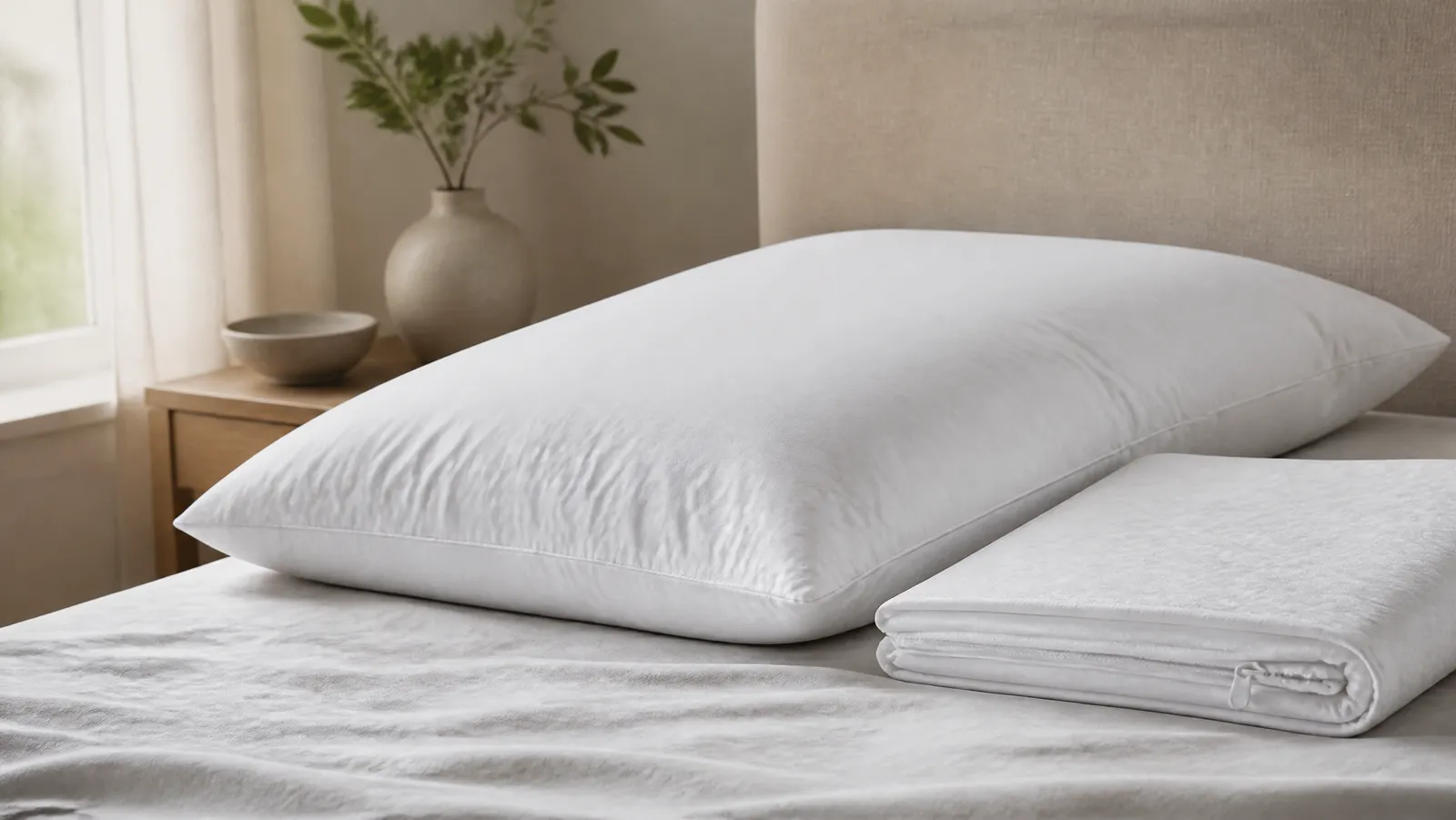
That is why our top pick is a cover rather than a pillow: the Mission: Allergy allergen-proof pillow encasing at $31.95 as of September 2026, which the maker states blocks 100% of dust mite and animal dander allergens and was third-party tested by Indoor Biotechnologies, Inc. It is also the cheapest thing here.
This is not a "don't buy a pillow" article. Washability, fill density and a shell that breathes are real distinctions, and four pillows below earn their place on them — we would just rather rank the interventions first.
What works for allergy sufferers, ranked honestly
The 2013 AAAAI/ACAAI joint practice parameter on dust mites, published in Annals of Allergy, Asthma and Immunology, grades its own recommendations. Reading them in order shows where a pillow sits.
- An allergen-impermeable encasement on the pillow and mattress. The parameter recommends mite allergen-proof mattress, box spring and pillow encasings to decrease exposure, graded strong, with B-level evidence.
- Bedroom humidity. It advises keeping relative humidity in the home at 35% to 50% to decrease mite growth — again strong, B-level evidence — and tells mite-allergic patients to buy a hygrometer and measure it.
- Weekly washing of bedding. Also strong, B-level evidence. The temperature advice is more surprising than you would expect, and we come back to it below.
- All of it at once. Its most effective combination: humidity at 35% to 50%, regular washing, regular vacuuming with a high-efficiency vacuum, mattress and pillow encasings, and HEPA filtration if needed.
- The fill inside the pillow. Last, and the parameter is blunt: "foam pillows are not less prone to dust mite allergens than are feather pillows," and "nonallergenic pillows are not a substitute for covering them with allergy-proof encasements."
Three things do not make the list: acaricides and tannic acid are both recommended against on efficacy grounds, and HEPA filtration alone is described as of uncertain benefit.
If your worry is the chemistry of the pillow rather than the allergen in it, that is a different subject, and our non-toxic pillow buying guide is the place to start.
How we picked these hypoallergenic pillows
We ranked on what a buyer can check from a listing, in the order the evidence ranks it.
- A named, tested allergen barrier first. Only one product here has one, and it is the top pick. Everything else is judged on how well it supports the routine around it.
- Washability, because a weekly bedding routine has to include the pillow to matter. Three of the five are described by their makers as machine washable.
- Third-party textile testing where it exists. Three picks name OEKO-TEX in some form, one at Class 1 — a substance test, not an allergen barrier test, and we say so each time.
- Live pricing. Every price and availability figure came from the Amazon Creators API on 23 September 2026.
Two limits to hold us to. If you searched for top rated hypoallergenic pillows expecting a crowd score, we cannot give you one: the Creators API does not return star ratings or review counts. And we have not physically tested these products — we recommend on materials, published specifications and the allergy literature, and attribute every maker claim to its maker.
What actually lives in your pillow
The animal at the centre of this subject is small, blind and extremely particular about water. According to the 2013 practice parameter, the species most common in homes in temperate regions of the United States are Dermatophagoides farinae and Dermatophagoides pteronyssinus, with Blomia tropicalis in tropical and subtropical regions.
They feed on organic material including skin scales, fungi, yeasts and bacteria. They are about 75% water by weight, they do not drink, and they hold their water balance by pulling vapour out of the air through glands at the base of their front legs — which only work when the air is humid enough. Being photophobic, they live deep inside soft substrates such as pillows, mattresses and carpets. The parameter notes it is "not uncommon to find thousands of mites in a single gram of house dust."
The mites themselves are not really the problem; their waste is. The parameter reports that dust mites produce about 20 faecal pellets a day, each 10 to 24 micrometres in diameter, and that more than 95% of the allergen accumulating in mite cultures is associated with faecal particles. An adult lives four to six weeks; a full life cycle runs about 60 to 120 days depending on temperature and humidity.
What we cannot tell you is how many are in your pillow. We found no published count for modern pillows that we would repeat, and any number quoted confidently deserves suspicion. That question gets a dedicated piece on dust mites in pillows.
What "hypoallergenic" does and does not mean
It means whatever the company printing it wants it to mean. That is not cynicism; it is the regulatory position.
The clearest official statement we could find comes from the US Food and Drug Administration: there are no federal standards or definitions that govern the use of the term "hypoallergenic." FDA issued a regulation in 1975 requiring comparative tests to support the claim; cosmetics makers challenged it, the US Court of Appeals for the DC Circuit struck it down, and since then, in FDA's words, manufacturers may continue to label and advertise products as "hypoallergenic" without supporting evidence. That statement is about cosmetics — and we could find no federal standard defining the word for a textile either.
Textile labelling law does not fill the gap. The FTC's guidance on the Textile Fiber Products Identification Act describes three required disclosures: generic fibre names and percentages by weight, the country of processing or manufacture, and the identity of the manufacturer or dealer. Nothing about allergens.
There is one real programme, and it is a test rather than a word. AAFA's asthma & allergy friendly Certification Program is run by the Asthma and Allergy Foundation of America with Allergy Standards Limited, across nine product categories including bedding. Its published bedding criteria require an outer fabric that blocks allergens such as dust mites from passing through, breathability, easy cleaning, durability under the recommended cleaning method, and no chemicals known to trigger asthma and allergy symptoms.
That is a different claim from OEKO-TEX, which tests a finished textile against a substance list and says nothing about whether allergen can pass through it. Neither is interchangeable with the unregulated word. We take the marks apart in our guide to what pillow certifications actually cover, and what a hypoallergenic pillow really is gets its own article.
Encasements: the cheapest thing that works
This is the one place in the subject with actual physics in it rather than adjectives.
Mite allergen mostly travels on faecal pellets, which the practice parameter puts at 10 to 24 micrometres across. A barrier fabric therefore does not need to be airtight; it needs a weave finer than the particle. The parameter reports that woven microfibre fabrics with a mean pore size smaller than 10 micrometres can effectively block passage of Der p 1, the major mite allergen, while smaller than 6 micrometres is needed for the cat allergen Fel d 1 — which is why many commercial encasings block one and not the other.
It warns against reading too much into that number, though: mean pore size is "only a surrogate measurement of allergen impermeability," because a mean says nothing about how many pores there are, how they are distributed, or how twisted the path through the fabric is. The real test is whether allergen can be suctioned through the fabric and detected.
Woven, not nonwoven. The parameter is unusually direct: nonwoven microfibre encasings accumulate allergen in the deep interstices between their randomly crossing fibres and are not washable, so "the patient is eventually sleeping on a layer of allergen on the surface." Woven encasings have a smooth surface that does not collect allergen. If a listing does not say which it is, ask.
The honest ceiling: the same document states that "in many cases mite covers alone are unlikely to achieve a clinical benefit unless they are used as part of a more comprehensive multifaceted avoidance plan." A barrier reduces exposure; whether it changes how you feel depends on the rest of the room. Choosing between dust mite pillow protectors on the specifics — zip design, fabric weight, noise under a pillowcase — is an article of its own.
Washing, drying, and the temperature that matters
Here we have to report a disagreement rather than a tidy number, because the tidy number you have read everywhere is contested by the people who wrote the practice parameter.
The circulated figure is 130°F (54.4°C). The American College of Allergy, Asthma and Immunology tells consumers to "wash your bedding frequently, using hot water (at least 130 degrees Fahrenheit)," and AAFA's certification programme recommends washing sheets and pillowcases weekly in 130°F or hotter water.
The 2013 joint practice parameter — written by a task force representing AAAAI, ACAAI and the Joint Council — advises something different. Bedding should be washed weekly to decrease dust mite numbers and allergen levels, it says, "and that high temperature is not necessary. Home hot water should be kept below the temperature (120°F) that causes a scalding risk to occupants." It grades that strong, with B-level evidence. The reasoning is mechanical: most mites killed in a wash "die by drowning," and while higher temperatures kill slightly more, the gain comes with scalding risk if domestic hot water sits at 130°F or above.
So: frequency is the strong part of the recommendation; temperature is the contested part. Both agree on weekly. And a home machine’s "hot" cycle is only as hot as the water fed into it: the parameter notes that several manufacturers sell machines that boost water internally to at least 131°F for three minutes, precisely because domestic hot water is usually set lower.
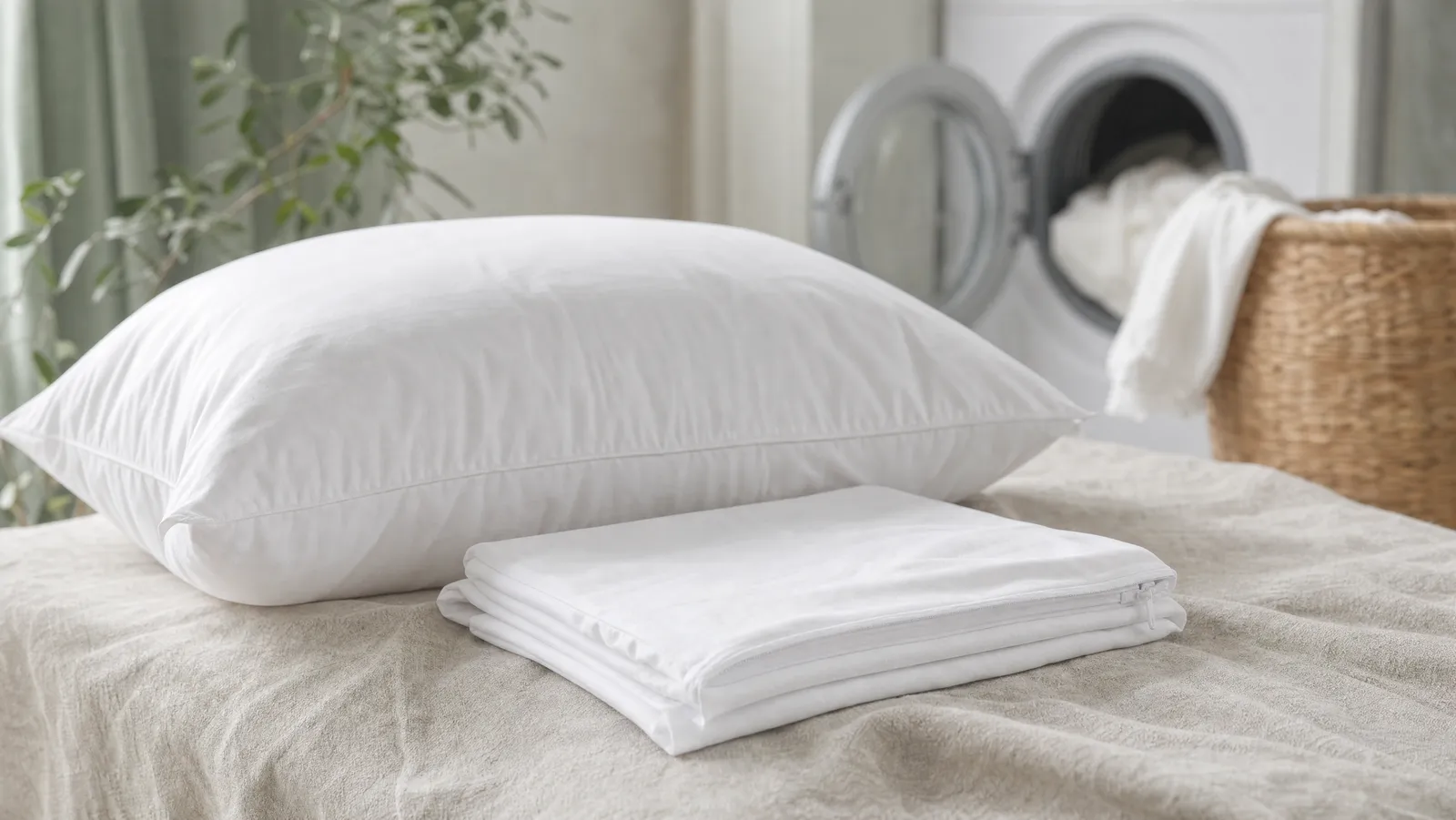
For a pillow, that means one the maker says you can wash is worth more than one that only claims to be hypoallergenic. If your clinician has told you to wash at a particular temperature, follow that rather than us. The step-by-step version — how to remove dust mites from pillows, what to do with one that cannot go in the machine, and what the dryer achieves — is its own article.
Is it the pillow, or is it the room?
Usually the room. The practice parameter describes mattresses, box springs and pillows as major sources, along with carpets, upholstered furniture and clothing, "particularly if the clothing is washed infrequently." Mite allergens are generally not found on hard surfaces at all.
The airborne behaviour reframes the problem. Very little mite allergen can be detected in the air of an undisturbed room; during activities that disturb dust, the parameter reports 1 to 30 nanograms. Allergen goes airborne when something disturbs it — making a bed, crossing a carpet, rolling over on a pillow — then falls fast, most of it settling within 15 minutes because of the size and weight of the particles carrying it.
Two consequences follow. Your own movement is the delivery mechanism, which is why the surface six inches from your face is worth encasing. And a pillow in a room with carpet, an unencased mattress and 60% humidity is one reservoir among several, so swapping it changes the smallest variable in the set.
The parameter also notes that anyone moving on an unencased mattress or pillow "can create a plume of allergen that could potentially affect others in the room." Working out whether your pillow is causing your allergies, as against the rest of the room, is a diagnostic question rather than a shopping one, and we will treat it as such.
Down, feather, and the allergy question
The received wisdom is that down and feather are bad for allergies and synthetics are safe. The practice parameter does not support that division.
Its flat statement: "Foam pillows are not less prone to dust mite allergens than are feather pillows." It also reports a study in which a feather quilt and pillow plus a mattress encasing did not decrease asthma symptoms in mite-allergic children after a year, noting that it did not measure exposure, "so it is hard to tell why the intervention failed to be effective." That is the level of certainty available: not "feather is fine," not "feather is dangerous," but "fill type is not the lever people think it is."
The allergy bodies are not silent on materials, though. ACAAI's environmental avoidance page tells people to avoid bedding stuffed with foam rubber or kapok, alongside putting special dust-proof covers on pillows, mattresses and box springs.
Two things get confused here. One is mite allergen, which accumulates in any pillow that is slept on and is addressed by a barrier and a wash routine. The other is an allergy to feathers or down themselves — a distinct sensitisation, and a question for an allergist rather than a review site. If chemistry is your concern, we look at are down pillows non-toxic separately. The full version of whether down pillows are bad for allergies is one of the articles in this series.
When asthma is in the picture
Read this one slowly: the stakes are real and the evidence is genuinely mixed.
The sceptical case is Cochrane. In the 2008 update of House dust mite control measures for asthma, Gøtzsche and Johansen reviewed 55 trials covering 3,121 people with asthma and concluded, verbatim: "Chemical and physical methods aimed at reducing exposure to house dust mite allergens cannot be recommended." That is a stronger negative than the bedding industry acknowledges, and anyone selling a cover on a promise of symptom relief is selling past it.
The practice parameter contests that reading rather than ignoring it. Two thirds of the studies in the Cochrane meta-analysis, it notes, used measures that actually failed to lower allergen levels — and measures that fail to lower allergen can hardly improve outcomes — citing a reanalysis which found clinical improvement in the trials that did. It applies the same scrutiny to a widely reported 1,122-patient trial that called impermeable bed covers "clinically ineffective" as a single intervention, noting that 23% of those patients were active smokers, another 22% former smokers, and 55% owned a cat or dog.
A later trial points the other way. Murray and colleagues randomised mite-sensitised children with asthma who had recently been in hospital with an exacerbation to mite-impermeable or placebo bedcovers for a year. As summarised by American Family Physician, 29% of the active group had an exacerbation requiring a hospital visit against 42% of controls, a number needed to treat of 9 — though roughly half of both groups still needed oral corticosteroids, and about a quarter of children found the covers uncomfortable.
Our reading, offered as a reading and not as advice: single-intervention studies in unselected populations tend to find nothing; studies in carefully selected, mite-sensitised patients using measures that verifiably lower allergen tend to find something. That is why the parameter's recommendation is multifaceted, and why it advises mite-sensitised patients with asthma or rhinitis to minimise exposure — a strong recommendation, graded B evidence for asthma and C for rhinitis.
None of this is a reason to change a treatment. If you or your child has asthma, bedding is an adjunct at best and the plan belongs to your clinician. We go deeper into pillows for asthma and allergies separately.
Dust mites are not bed bugs
People arrive at this topic having found bites, and bites are not a mite problem.
Dust mites, per the practice parameter, feed on organic material including skin scales, fungi, yeasts and bacteria. They live inside soft furnishings, they are microscopic, and the complaint they cause is respiratory rather than cutaneous.
Bed bugs are a different order of problem. According to the US Environmental Protection Agency, the common bed bug Cimex lectularius feeds on blood, and EPA describes adults as about the size of an apple seed, 5 to 7 mm long, with a flat oval body that becomes "balloon-like, reddish-brown, and more elongated" after feeding. EPA states plainly that "unlike most public health pests, bed bugs are not known to transmit or spread disease," while listing real consequences: allergic reactions to bites ranging from none to, rarely, anaphylaxis; secondary skin infections; and mental health impacts including anxiety and insomnia.
An allergen encasement is not a pest treatment, although some are sold as both — Mission: Allergy states its encasing is certified bedbug-proof, a separate claim from its allergen claim. If you are being bitten, that is a pest-control and clinical question. The full comparison is the subject of a dedicated article on the difference between dust mites and bed bugs.
How old is the pillow under your head?
Pillow age is one of the very few variables in this subject entirely under your control, and it is cheap to fix.
According to the Sleep Foundation, most experts recommend replacing pillows every one to two years, with lifespans varying by fill: roughly six months to two years for polyester, one to two for down alternative, one to three for down and feather, two to three for memory foam, two to four for latex, and around three for buckwheat.
One thing the lifespan tables do not capture: the practice parameter observes that items washed less frequently tend to carry more allergen. A five-year-old pillow that has never been washed and never been encased has an accumulation problem, not just a support problem.
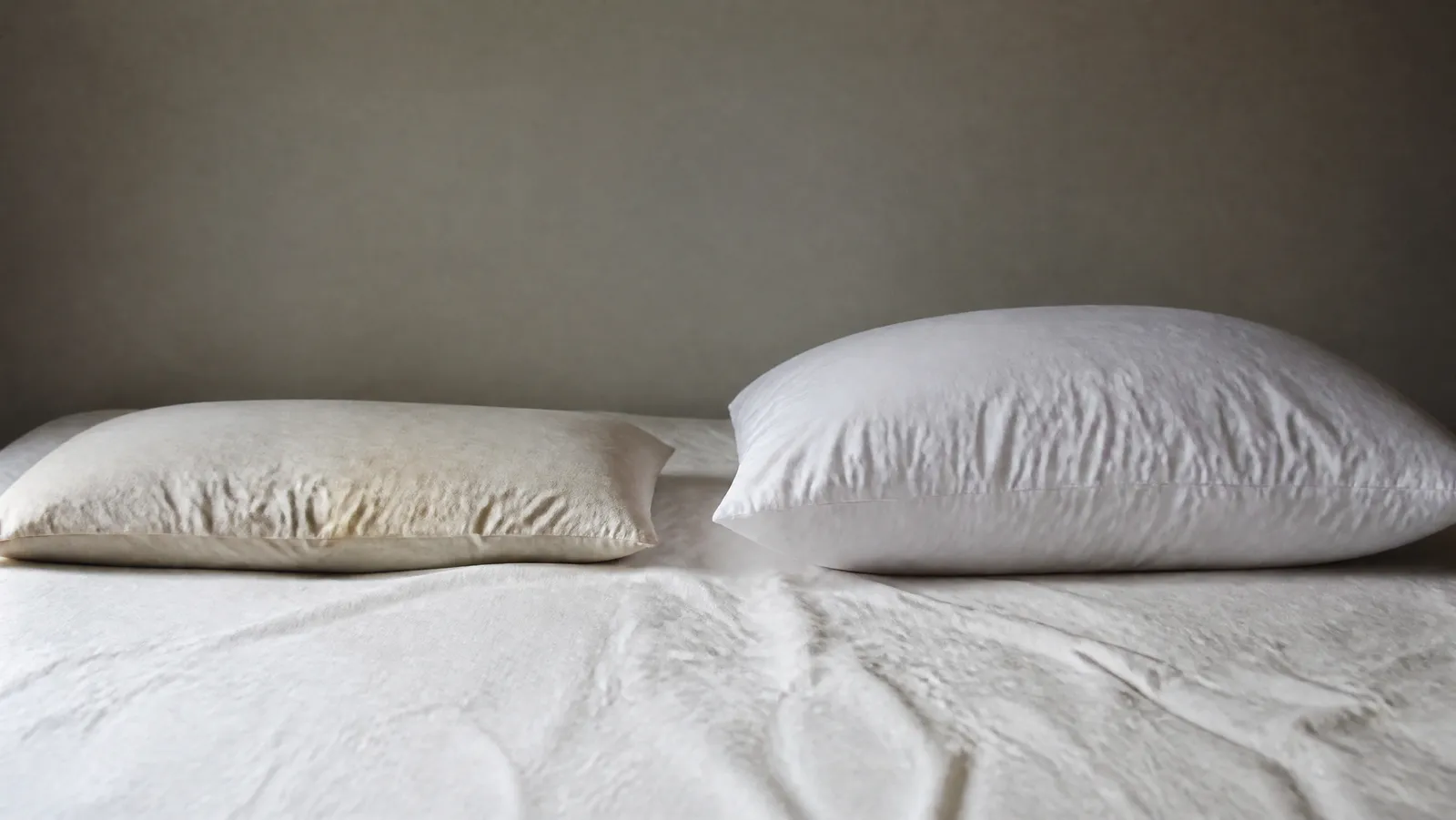
Replacing a pillow is not itself an allergy intervention — a new one in a humid, carpeted, unencased bedroom starts accumulating again. But a cheap pair you will replace annually, like the budget pick below at $21.99 as of September 2026 for two, makes the schedule realistic. The longer answer on how often to replace your pillow is its own article.
Building a lower-allergen bedroom
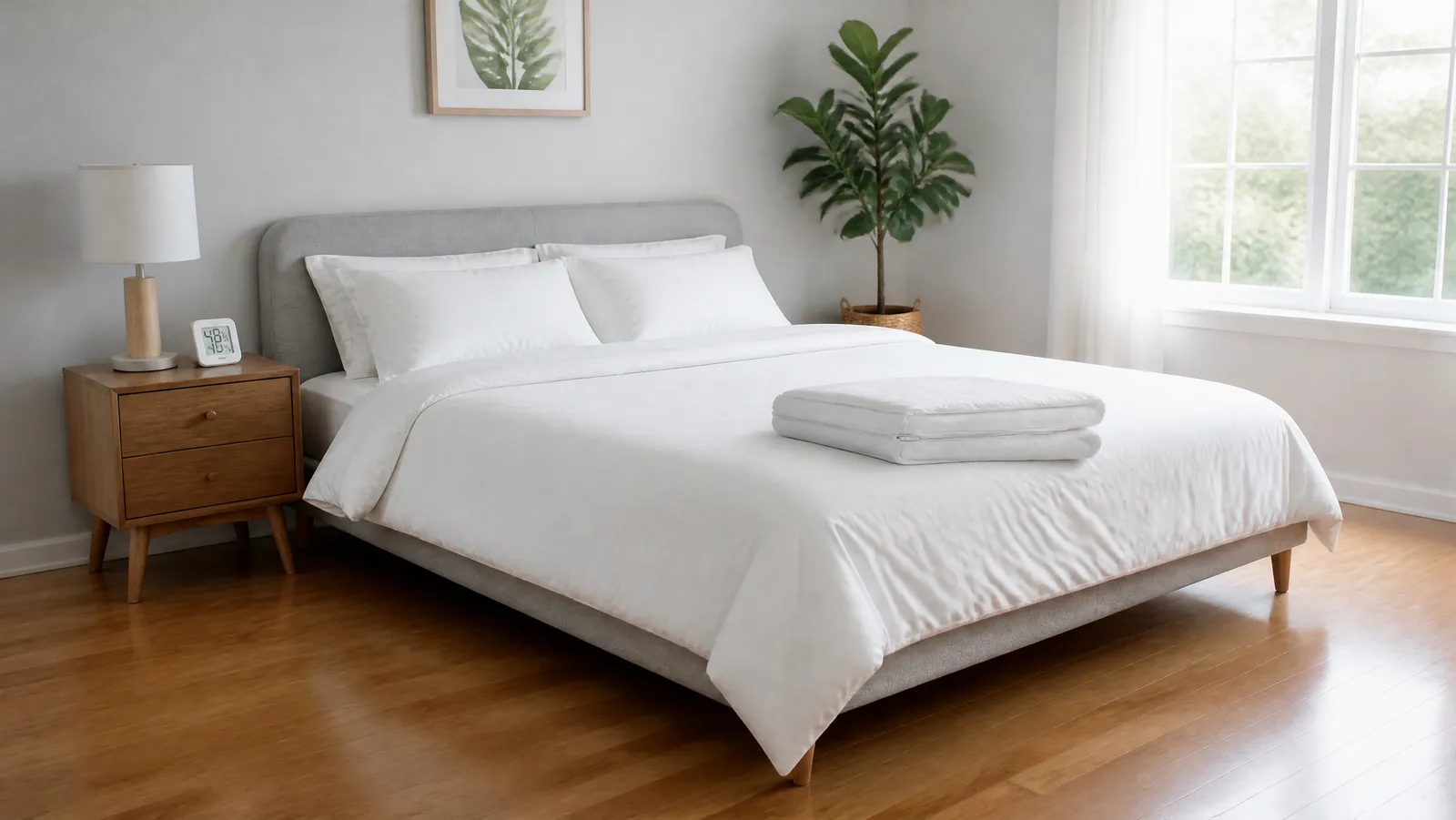
If you are going to do this, the evidence says do it all at once rather than one purchase at a time. The parameter's recommended combination: humidity at 35% to 50%, regular washing, regular vacuuming with a high-efficiency vacuum, mattress and pillow encasings, and HEPA filtration if deemed necessary.
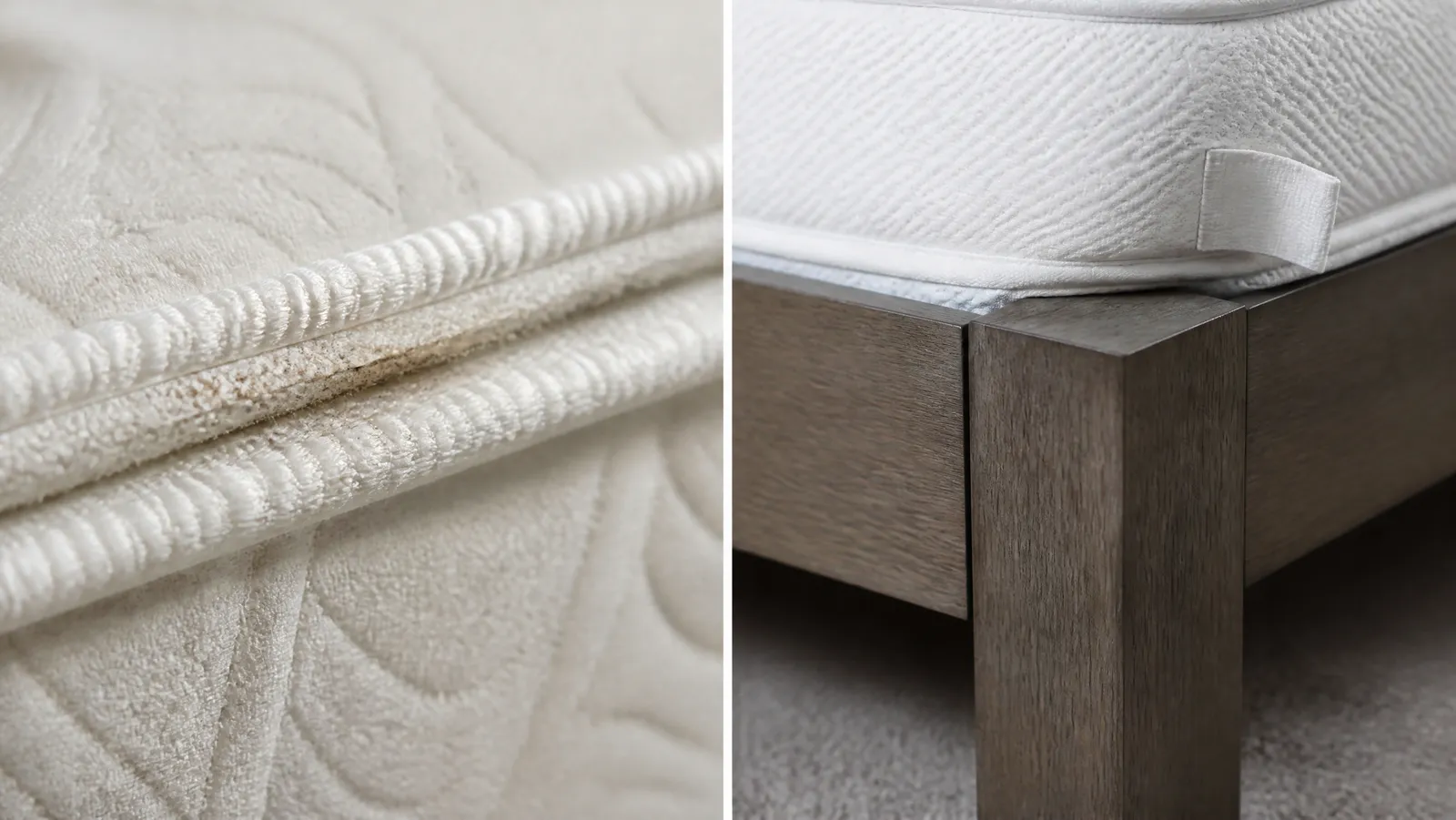
- Encase the mattress, box spring and pillow, not just the pillow. The parameter treats existing mattresses and pillows as keepable if they are encased to trap what is already inside them.
- Vacuum with a machine that holds what it picks up. It specifies adequate filtration, or venting outside, to avoid redispersing allergen-carrying particles, and calls at least weekly vacuuming essential in carpeted homes.
- Measure the humidity. The parameter recommends mite-allergic patients obtain and use a hygrometer. A cheap one removes the guesswork.
- Check the bunk beds. The parameter discourages atopic families from using bunks, and says that if bunks are necessary the sensitised person ideally sleeps on top, with both mattresses and any fabric-covered bunky-board encased.
One caution before you buy a dehumidifier. The parameter describes studies in Manchester, England in which free-standing dehumidifiers were ineffective, whole-house dehumidification lowered mite allergen but not clinical symptoms, and more extensive US measures significantly decreased live mites and allergen exposure. Lowering humidity is well supported as a way to lower mite populations; a plug-in unit in one room is the weakest version of it. The full checklist — including how to prevent a dust mite allergy developing in the first place, which is a question about children and early exposure rather than shopping — is a separate article.
Humidity: the control that costs nothing
If you take one number away from this page, take this one. Dust mites cannot drink. According to the practice parameter, they take up water vapour when relative humidity is at least approximately 65%, lose water by evaporation below roughly 55%, and show decreased survival and reproduction below 50%.
Hence the recommendation to keep home relative humidity at 35% to 50%. EPA, writing about moisture and mould rather than mites, separately advises keeping indoor humidity below 60 percent and ideally between 30 and 50 percent — the ranges overlap almost exactly, so one dehumidifier setting serves both problems.
Now the complication. The parameter reports that if humidity rises for as little as 1.5 hours a day — cooking, bathing — mites survive, and that elevated humidity for as briefly as three hours a day lets them produce eggs. Homes held at 35% to 50% continuously have lower mite allergen concentrations than homes where it fluctuates. Mites also live deep inside soft substrates precisely because moisture is retained there, so room air is not the same as pillow-interior air.
So "costs nothing" is true of the habits, not the hardware: run the extractor fan, open a window after a shower, keep drying laundry out of the bedroom, and buy a hygrometer before you buy a dehumidifier. The relationship between humidity and dust mites, including what actually works in a damp flat, gets the longer treatment it deserves in this series.
Our pick: Mission: Allergy Allergen-Proof Pillow Encasing
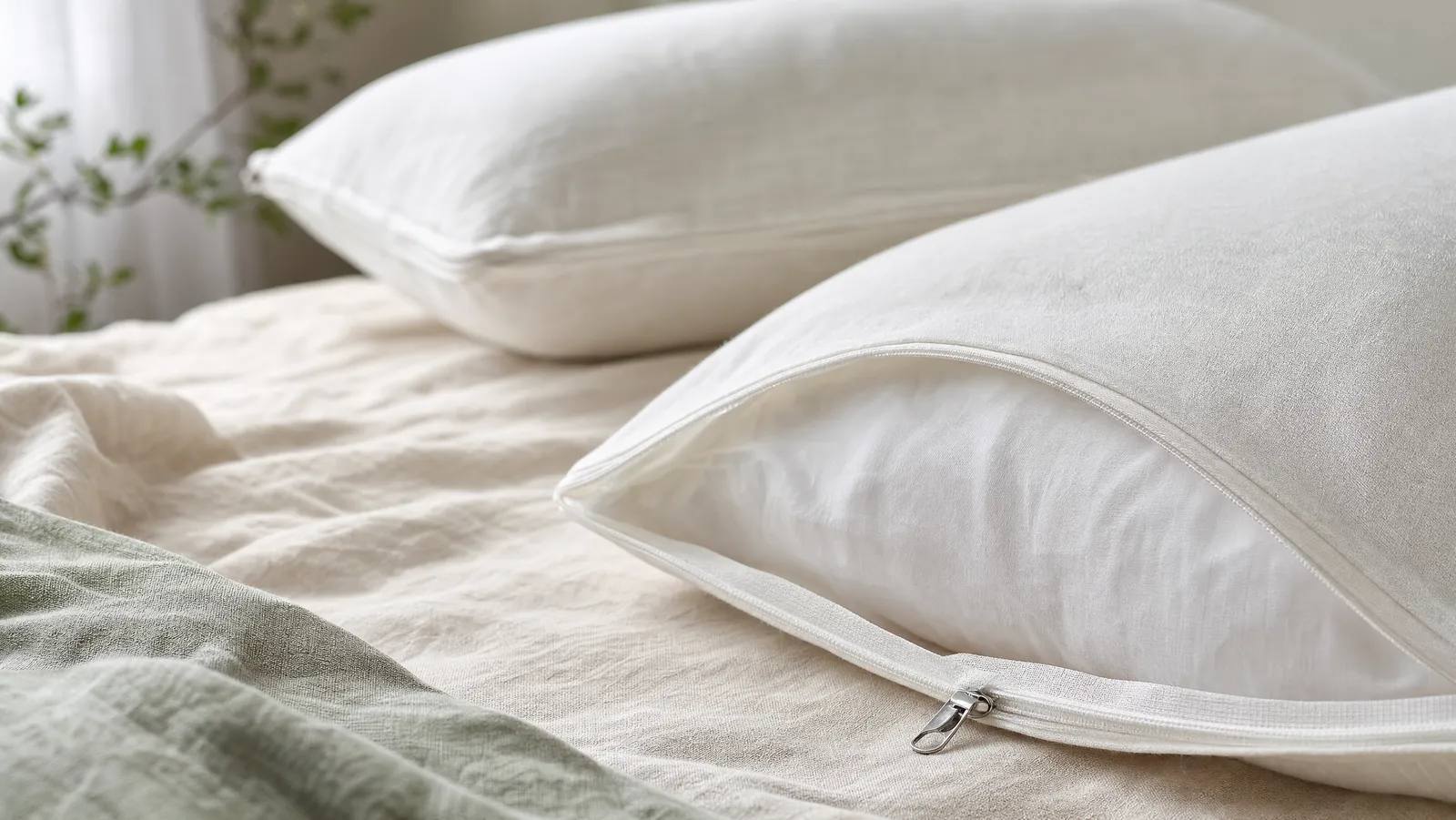
It takes the top slot because it addresses the mechanism the literature talks about, and because somebody outside the company measured it. Mission: Allergy states that the encasing blocks 100% of dust mite and animal dander allergens, third-party tested by Indoor Biotechnologies, Inc.; that the fabric is tightly woven 100% microfiber polyester, air- and water-vapour-permeable yet water repellent; that it has bound seams with interior and exterior zipper flaps; and that it carries a lifetime warranty. The maker also states it was designed by a board-certified allergist, is made in the USA, and is certified bedbug-proof.
Buy this if you have a mite allergy and came here shopping for a pillow. Buy this first; it goes over the pillow you already own.
The limitation: $31.95 as of September 2026 buys one standard encasing — about what a pair of budget pillows costs — and you still need a pillowcase over it. The 100% figure is a maker's claim supported by a named lab, not a clinical outcome.
Best washable pillow: downluxe Down Alternative
The second lever after a barrier is a pillow that goes in the machine on the same schedule as your sheets. downluxe states these are machine washable, with a polyester blend down alternative fill and no feather or down content, standard size at 20 x 26 inches, sold as a pair for $29.99 as of September 2026 against a $36.99 list price.
We are not claiming a wash eliminates mites — the parameter's account is that washing removes allergen rather than sterilising anything. The claim here is narrower: this is a pillow whose maker says you can keep it in the routine.
Buy this if you want a cheap, genuinely washable pair that takes the down question off the table.
The limitation: soft, with modest support, so side sleepers who need height should look at the Beckham or the latex pick. downluxe roll-packs them and asks for 24 hours for the loft to return, which catches people out on day one.
Best natural materials: Sleep On Latex Shredded Natural Latex
Latex is dense, and the argument made for it is that there is no fibrous interior for skin flakes and debris to work into — that reasoning, rather than any published measurement we could find, is the basis of its reputation here. Read that as less hospitable, not mite proof — the parameter's line about nonallergenic pillows not substituting for encasements applies to latex too.
Sleep On Latex says the fill is Fair Trade Sri Lankan natural latex, shredded rather than moulded so loft is adjustable by the handful, under a machine washable organic cotton cover, and that it carries Oeko-Tex Standard 100 Class 1 — the class used for articles for babies and toddlers. It is $49 as of September 2026.
Buy this if you want the densest fill on the page, an adjustable loft and a short, checkable materials list.
The limitation: the most expensive single pillow here, and categorically the wrong choice for anyone with a natural rubber latex allergy, which is a separate condition from a mite allergy and a question for an allergist.
Best for hot sleepers: Beckham Hotel Collection
Sleeping cooler and drier is indirect allergy work, given how completely mite populations depend on moisture. Beckham states a 250 thread count 100% cotton cover over 1,050g of hollow fibre down alternative fill, a plush 8-inch loft, a medium-firm feel, no feathers, OEKO-TEX certification, machine washable and air dried. Two for $59.99 as of September 2026.
One word to discount: Beckham describes these as allergy-friendly. That is the maker's phrase with no test behind it that we could find — exactly the distinction this page exists to draw.
Buy this if you wake up warm and want a breathable cotton shell over a deep fill, at side-sleeper height.
The limitation: the priciest set here, an 8-inch loft that will be far too much for some sleepers, and an "allergy-friendly" claim with nothing published behind it.
Budget pick: Sasttie Firm Standard Pillows
Two washable, OEKO-TEX Standard 100 tested pillows for $21.99 as of September 2026, down from a $25.99 list price — less than one encasing. Sasttie describes the fill in its own words as 40% 3D fibre and 60% 7D fibre, says they are machine washable, wash cold and tumble dry low, under an embossed cover with satin piping.
The argument for these is a calendar argument: at this price, annual replacement is the default rather than a decision.
Buy this if you want pillows on a replacement schedule and would rather spend the saved money on an encasement.
The limitation: firm and tall, which will not suit stomach sleepers, and no allergen-barrier claim of any kind.
The bottom line on the best pillows for allergy sufferers
Buy the barrier first, the routine second, the pillow third. The allergy literature grades mattress and pillow encasements, bedroom humidity of 35% to 50%, and weekly bedding washing as the strong recommendations, and says plainly that a pillow's fill is not a substitute for a cover. A tightly woven encasement is $31.95 as of September 2026; the parameter’s own cost table puts a temperature/hygrometer at $7.50 to $33.00.
Then spend well inside that ranking. A pillow you can wash beats one that only says "hypoallergenic," because the word has no federal definition and the routine is where the evidence is. And if the reason you are reading this is symptoms — congestion most mornings, a wheeze, a child with asthma — start with a clinician, not a cart.
Explore the full series
- Dust Mites in Pillows: What Is Actually Living in There — What is actually living in a used pillow, and what the viral weight statistic is worth.
- What "Hypoallergenic" Actually Means on a Pillow — The word has no federal definition — here is what it denotes and what to read instead.
- Dust Mite Pillow Protectors: What to Look For — What separates a tested allergen barrier from a stain cover — and what the evidence says either can do.
- How to Remove Dust Mites From Pillows — Killing mites and removing allergen are two different jobs. The routine that does both.
- Can Your Pillow Cause Allergies? — Usually the pillow is a reservoir rather than a cause. How to tell, and the two-week test.
- Are Down Pillows Bad for Allergies? — The received wisdom is shakier than it looks — the barrier is the ticking, not the fill.
- The Best Pillows for Asthma and Allergies — The encasing has the trial evidence; the pillow decides what you can wash. What that means when asthma is in the picture.
- Dust Mites vs Bed Bugs: How to Tell Them Apart — One bites and one does not. How to tell which problem you actually have before you spend anything.
- How Often Should You Replace Your Pillow? — The common intervals are rules of thumb, not findings. The tests that beat a calendar.
- How to Prevent a Dust Mite Allergy Flare-Up — Single measures mostly fail. What a layered lower-allergen bedroom looks like, with the evidence grades.
More articles in this series are added as they publish.
The shortlist
5 pillows compared — firmness, loft, and temperature side by side. The top pick is highlighted.
| Pillow | Firmness | Loft | Sleeps | Best for | Price |
|---|---|---|---|---|---|
| — | — | Neutral | Putting a tested allergen barrier on the pillow you already own | $31.95 Check | |
Best Washable Pillowdownluxe Down Alternative Pillows, Standard 20x26, Set of 2 | Medium Soft | Medium | Neutral | A washable synthetic pillow you can replace often | $29.99 Check |
Best Natural MaterialsSleep On Latex Natural Latex Shredded Foam Pillow, Standard | Medium | Adjustable | Neutral | A short, checkable materials list under a washable cover | $49 Check |
Best for Hot SleepersBeckham Hotel Collection Bed Pillows, Standard/Queen, Set of 2 | Medium Firm | High | Cooling | Hot sleepers who want a breathable cotton shell | $59.99 Check |
Budget PickSasttie Firm Standard Pillows, Set of 2 | Firm | High | Neutral | Replacing pillows on a schedule without thinking about cost | $21.99 Check |
Mission: Allergy Dust Mite and Allergen Proof Pillow Encasing, Premium Microfiber, Standard
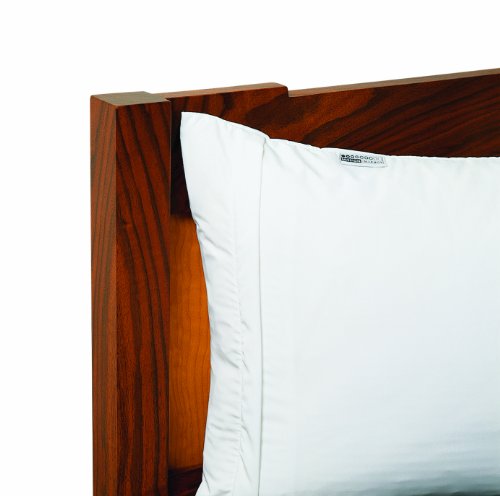
A named third-party test, an allergist behind the design and a lifetime warranty — it is the only thing I bought in this category where somebody other than the seller had measured anything.
One standard-size cover costs about what a pair of budget pillows does, and you still need a pillowcase over the top of it.
This is the pick that matches what the evidence actually talks about. For a house dust mite allergy, the question is not what your pillow is stuffed with but whether mite allergen can reach your face — and an encasement is the thing standing in the way. It is also the reason this slot is not a pillow at all.
What separates it from a generic "hypoallergenic" cover is that somebody outside the company measured it. Mission: Allergy states that the encasing blocks 100% of dust mite and animal dander allergens, and that this was third-party tested by Indoor Biotechnologies, Inc. The maker also states it is certified bedbug-proof, that the fabric is tightly woven 100% microfiber polyester which is air- and water-vapour-permeable yet water repellent, and that it was designed by a board-certified allergist and made in the USA. Those are the maker's claims and the lab's, attributed as such.
Practically: it goes over the pillow you already own, it has bound seams and interior and exterior zipper flaps, and Mission: Allergy states a lifetime warranty. At $31.95 as of September 2026 for one standard encasing, it is the cheapest intervention on this page and the only one with a named testing laboratory behind it.
downluxe Down Alternative Pillows, Standard 20x26, Set of 2
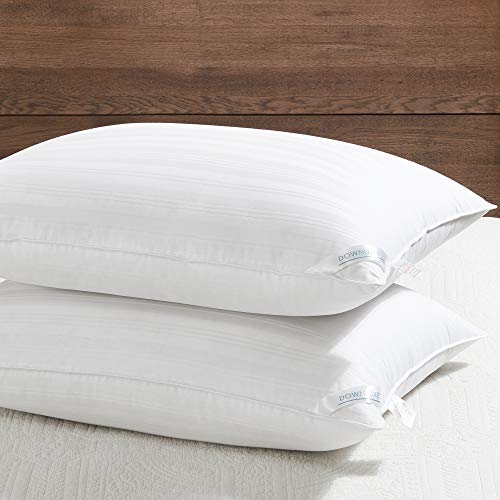
Genuinely washable, sold in pairs, and the synthetic fill takes the whole down-versus-feather argument off the table.
It is soft and fairly low on support — side sleepers who need real loft should look elsewhere — and it arrives flat enough that you will doubt it for the first day.
After an encasement, the second-best lever is a pillow you will actually put in the machine. That is the whole argument for this pair. The fill is a polyester blend down alternative with no feather or down content, the pillows are standard size at 20 x 26 inches, and downluxe states they are machine washable.
We are deliberately not claiming that washing a pillow eliminates mites — that is a longer question and it gets its own article. What we will say is that a pillow the maker says you can wash is a pillow you can keep on a weekly bedding routine instead of treating as a sealed unit. At $29.99 as of September 2026 for two, down from a $36.99 list price, replacing them on schedule is a small decision rather than a purchase.
One practical note from the listing, because it is the thing people complain about: downluxe roll-packs these and asks for 24 hours for the loft to come back after unpacking. The cover is a soft stripe with a piped edge.
Sleep On Latex Natural Latex Shredded Foam Pillow, Standard

A two-line materials list, a shredded fill I could tune by the handful, a washable cotton cover and the strictest Oeko-Tex class — there is very little here to take on trust.
It is the priciest pillow on the page for a single standard size, and it is exactly the wrong choice for anyone with a natural rubber latex allergy.
This is the materials argument, stated carefully. The case usually made for latex is that a dense fill has less of the fibrous interior skin flakes and debris work into, which is why allergy roundups reach for it. Treat that as the argument rather than a measured property: the 2013 AAAAI/ACAAI practice parameter states that foam pillows are not less prone to dust mite allergens than feather pillows, and is explicit that a pillow's fill is not a substitute for an allergen-proof encasement.
The maker facts are unusually short and unusually checkable. Sleep On Latex says the fill is Fair Trade Sri Lankan natural latex foam, shredded rather than moulded so you can remove some to set the loft, under a machine washable organic cotton cover, and that the pillow carries Oeko-Tex Standard 100 Class 1 — the class used for articles for babies and toddlers, which is the strictest tier. It is $49 as of September 2026, the most expensive single pillow here.
One caveat that is not a nuance: a natural rubber latex allergy is a real and entirely separate condition from a dust mite allergy. If you have one, this is the wrong pillow, and that is a conversation for your allergist rather than a bedding review.
Beckham Hotel Collection Bed Pillows, Standard/Queen, Set of 2

A breathable cotton shell, a lot of fill for the money, and a medium-firm loft that works for both side and back sleeping.
The priciest set on the page, a stated 8-inch loft that is far too much for some sleepers, and "allergy-friendly" is the maker's word with no test behind it.
Humidity is the variable that decides whether mites thrive, so a pillow that sleeps cooler and drier is doing allergy work indirectly rather than by any claim on the box. That connection is worth understanding on its own terms, which is why humidity and dust mites gets its own article in this series.
The build is a 250 thread count 100% cotton cover over 1,050g of hollow fibre down alternative fill. Beckham states a plush 8-inch loft and a medium-firm feel, no feathers, no fluffing required, OEKO-TEX certification, and that the pillows are machine washable and should be air dried. The maker also describes them as allergy-friendly: that is Beckham's phrase, not a tested barrier claim, and there is no published test behind it that we could find.
At $59.99 as of September 2026 for two, this is the most expensive set here, and the cotton shell is the reason to pick it — a breathable cover over a deep synthetic fill for people who wake up warm.
Sasttie Firm Standard Pillows, Set of 2

OEKO-TEX Standard 100 tested, washable, and cheap enough that putting a yearly reminder in the calendar felt reasonable rather than extravagant.
Firm and high-lofted in a way that will not suit stomach sleepers, and no allergen-barrier claim of any kind.
The cheapest honest entry point on the page: a pair of washable, synthetic-fill standard pillows for less than the price of one encasement. Sasttie describes the fill in its own words as 40% 3D fibre and 60% 7D fibre — a down-alternative blend — states testing to OEKO-TEX Standard 100, and says the pillows are machine washable, wash cold and tumble dry low. The cover is embossed with satin piping.
The point of this pick is scheduling, not performance. At $21.99 as of September 2026 for two, down from a $25.99 list price, replacing pillows every year stops being a splurge and becomes the default — and pillow age is one of the few variables in this whole subject that is entirely under your control.
Be clear about what you are not getting. There is no allergen-barrier claim of any kind here, and a firm, tall pillow is a specific feel rather than a neutral one.
How to Read an Allergy Claim on Bedding in Five Minutes
Almost every product in this category is sold on one word. Five minutes of reading tells you whether anything was measured.
Allergy Pillow FAQ
Will a new pillow fix my dust mite allergy? On its own, probably not. The 2013 AAAAI/ACAAI practice parameter on dust mites states that "nonallergenic pillows are not a substitute for covering them with allergy-proof encasements," and that "foam pillows are not less prone to dust mite allergens than are feather pillows." The barrier, the wash routine and the room's humidity are the levers the evidence talks about.
Do dust mite covers actually work? They reduce exposure; whether that changes symptoms is where the evidence gets argumentative. The practice parameter gives a strong recommendation with B-level evidence for mite allergen-proof mattress, box spring and pillow encasings, while also stating that "in many cases mite covers alone are unlikely to achieve a clinical benefit unless they are used as part of a more comprehensive multifaceted avoidance plan."
What temperature should I wash bedding at? Sources disagree, and we would rather show you that than pick one. The American College of Allergy, Asthma and Immunology tells consumers to "wash your bedding frequently, using hot water (at least 130 degrees Fahrenheit)," and AAFA's certification programme recommends the same. The 2013 joint practice parameter, by contrast, advises weekly washing and says "high temperature is not necessary," recommending home hot water be kept no higher than 120°F because of scalding risk. Follow whatever your own clinician has told you.
What humidity should the bedroom be? The practice parameter advises that relative humidity in the home be kept at 35% to 50% to decrease the growth of dust mites, a strong recommendation with B-level evidence. The US Environmental Protection Agency separately advises keeping indoor relative humidity below 60 percent and ideally between 30 and 50 percent.
Are dust mites biting me? That is a different animal. Per the practice parameter, dust mites feed on organic material including skin scales, fungi, yeasts and bacteria. EPA describes bed bugs, by contrast, as feeding on blood and causing itchy bites, while noting they "are not known to transmit or spread disease." If something is biting you, that is a question for a clinician or a pest professional, not a pillow review.
How often should I replace a pillow? The Sleep Foundation says most experts recommend every one to two years, and gives roughly six months to two years for polyester, one to two years for down alternative, one to three years for down and feather, two to three for memory foam and two to four for latex.
When should I see a clinician? If you wake congested, wheezing or with itchy eyes most mornings, or if you have asthma, see one before you buy anything. Allergy and asthma are medical conditions. We can tell you what a product is made of and what has been measured; we cannot examine you, and nothing on this page is a substitute for treatment you have been prescribed.
Why you can trust us

Aimee Cannon
Sleep & bedding writer
Aimee Cannon is a sleep and bedding writer who has spent years testing pillows of every kind — memory foam, down, wool, bamboo, buckwheat, and specialty support pillows. She focuses on matching the right pillow to each sleeping position and need, and reports what actually holds up after months of nightly use. When she is not testing pillows, Aimee is usually with her husband and her dog.