The Best Pillows for Asthma and Allergies
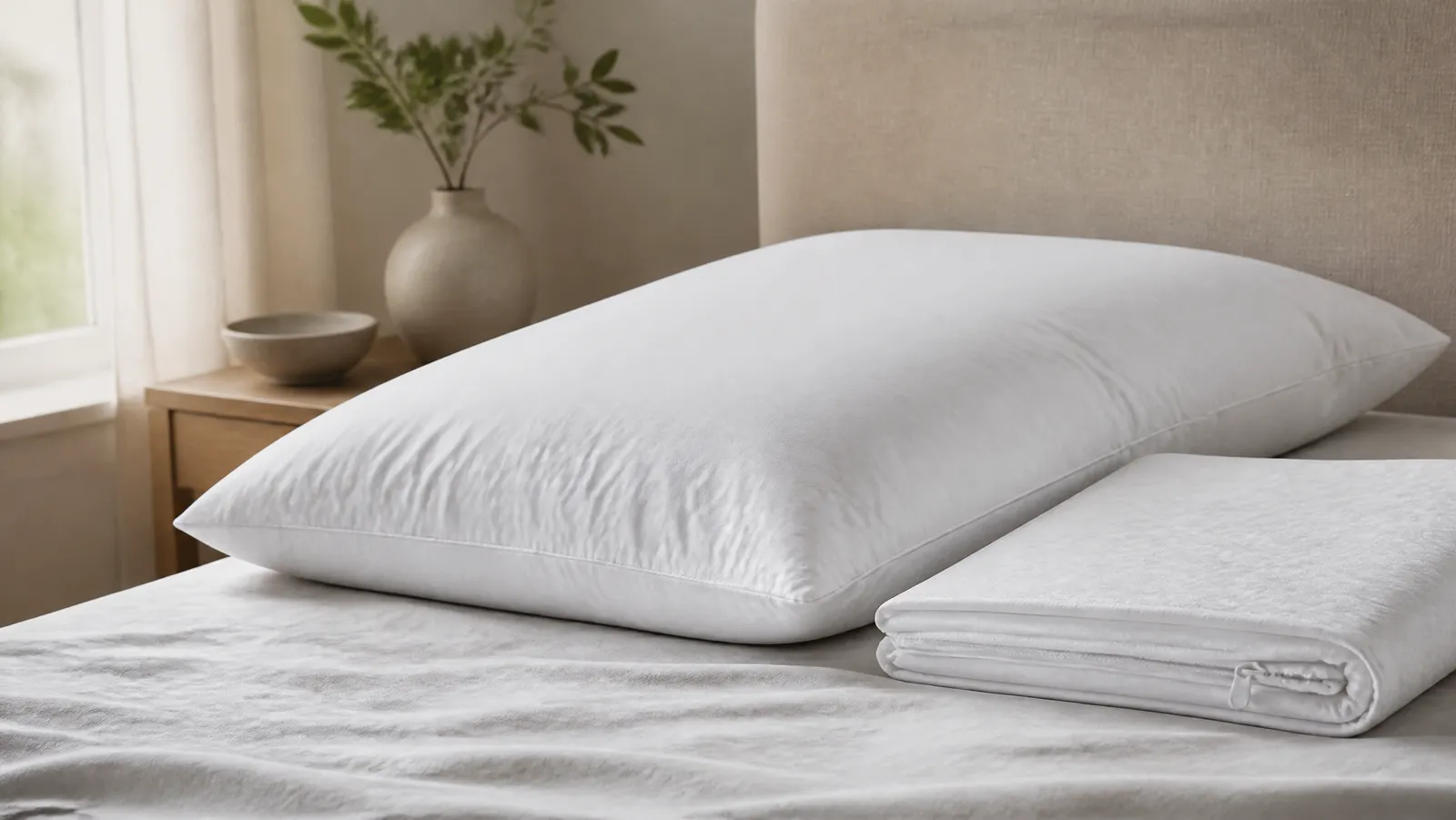
The best pillow for asthma and allergies is a washable pillow you can seal inside a tested allergen-impermeable encasing, because the encasing is the part with randomized trial evidence behind it and the pillow is not a treatment for anything. We may earn a commission from links on this page, at no extra cost to you.
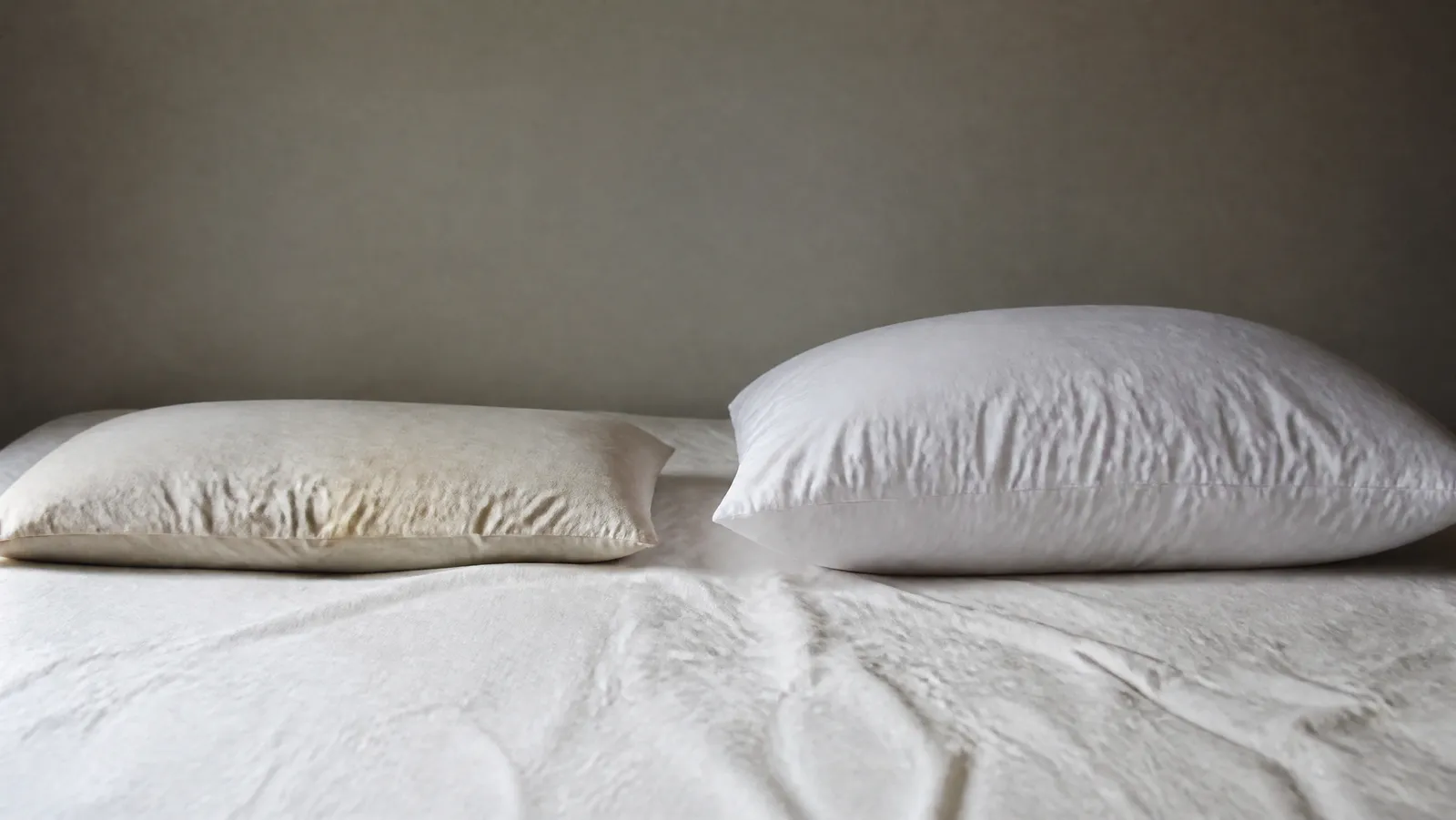
That ordering is not ours. The 2013 practice parameter Environmental Assessment and Exposure Control of Dust Mites, published by Portnoy and colleagues in Annals of Allergy, Asthma and Immunology on behalf of the AAAAI and the ACAAI, recommends mite allergen-proof mattress, box spring and pillow encasings at a strong strength of recommendation on B evidence. In the same passage it says plainly: "Nonallergenic pillows are not a substitute for covering them with allergy-proof encasements."
Asthma changes the stakes, so one line before anything else: asthma management is a clinician's call, and bedding is an adjunct to an asthma plan rather than a part of it you can swap in. With that said, below are five products — four pillows and one encasing — with an honest account of what each label earns. If you want the wider set of picks for sensitized sleepers, our guide to the best pillow for allergies runs this same filter over a longer list.
What the asthma bedding trials actually found
This is the part most roundups skip, and it is the only part that would change a decision.
In adults, covers alone did nothing measurable. Woodcock and colleagues ran a double-blind, randomized, placebo-controlled trial of allergen-impermeable bed covers in 1,122 adults with asthma, published in the New England Journal of Medicine in 2003. Mite allergen in mattress dust was significantly lower in the active group at six months — a geometric mean of 0.58 micrograms per gram of Der p 1 against 1.71 in the control group — but the difference was no longer significant at twelve months. Morning peak expiratory flow improved in both groups, and after adjustment there was no significant difference between them. The authors' conclusion was that allergen-impermeable bed covers, as a single intervention, are ineffective for managing asthma in adults.
The Cochrane review went further. Gøtzsche and Johansen's Cochrane review of house dust mite control measures for asthma, last updated in 2008, included 55 randomized trials on 3,121 people with asthma, covering both chemical methods and physical ones such as mattress encasings. Its conclusion: "Chemical and physical methods aimed at reducing exposure to house dust mite allergens cannot be recommended."
In mite-sensitized children, one trial found something different. Murray and colleagues randomized 284 mite-sensitized children with asthma — 146 to active covers, 138 to placebo — after an emergency hospital attendance for an exacerbation, and reported the results in the American Journal of Respiratory and Critical Care Medicine in 2017. At twelve months, 29.3% of the active group had attended hospital with an exacerbation against 41.5% of the placebo group, and the risk of emergency hospital attendance was 45% lower in the active group, with a hazard ratio of 0.55 and a 95% confidence interval of 0.36 to 0.85.
Three results, one pattern. The adult single-measure trials selected broadly; the 2017 trial selected hard, for children who were both sensitized to mites and had just been in hospital, and gave the covers to that group. Encasings look like an exposure measure whose clinical payoff depends almost entirely on who is sleeping under them — which is why the general guideline advice is cautious while the dust mite parameter still writes a strong recommendation for encasing a sensitized patient's pillow.
The current guideline position reflects that caution. The Australian Asthma Handbook, a national asthma guideline, tells clinicians "Do not routinely advise allergen avoidance or reduction measures for people with asthma", and states that "the use of impermeable mattress and pillow covers as a single intervention has been shown to be ineffective in improving asthma symptom control". Zuiani and Custovic, reviewing the guidelines in Current Allergy and Asthma Reports in 2020, record the Global Initiative for Asthma's position in the same terms: "Allergen avoidance is not recommended as a general strategy in asthma. For sensitized patients, there is limited evidence of clinical benefit for asthma in most circumstances with single-strategy indoor allergen avoidance."
Why the encasing is the part with the evidence
Every trial above tested a barrier. None of them tested a fill.
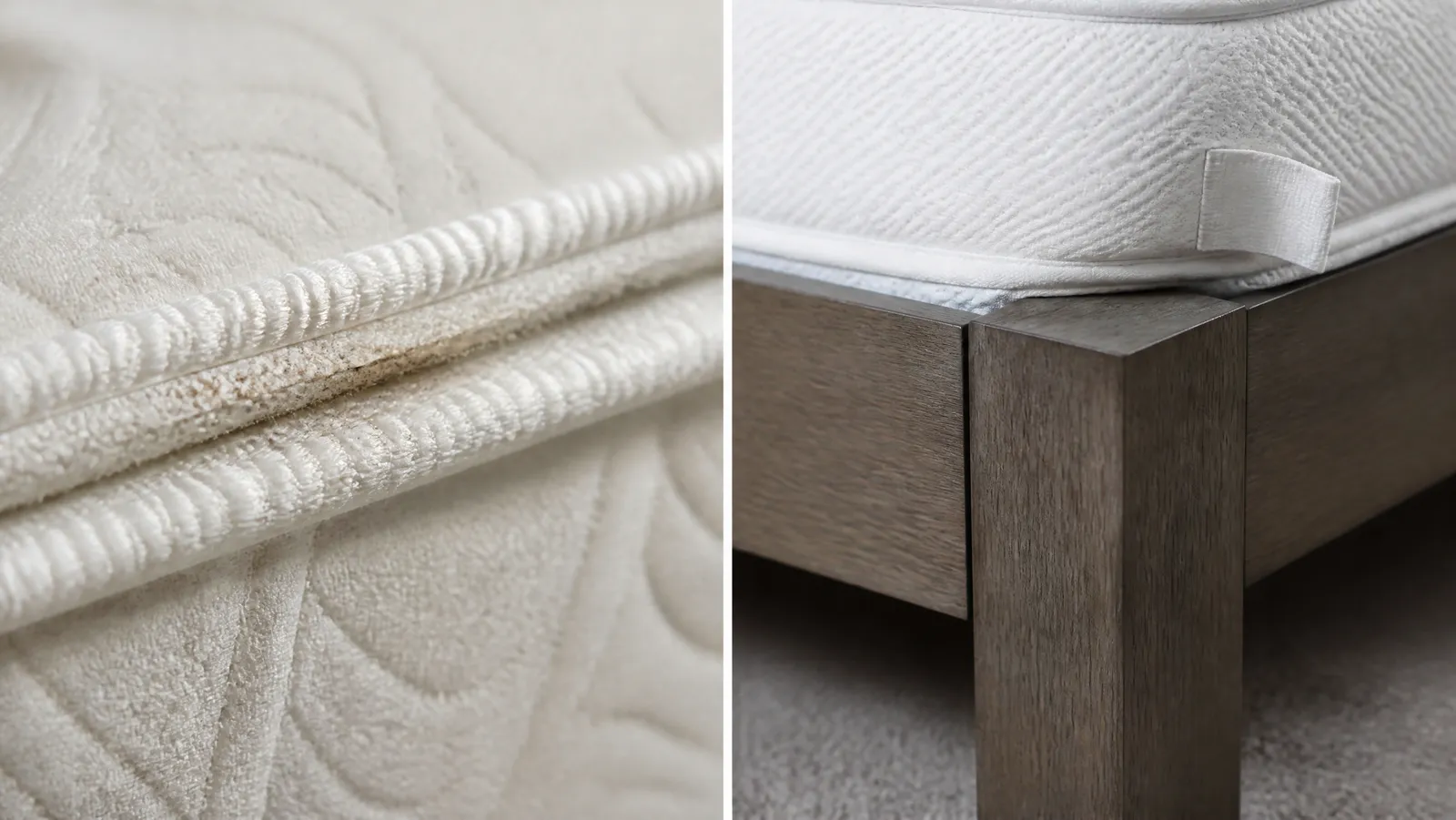
The practice parameter's reasoning is physical rather than clinical. Mattresses, box springs and pillows are, it says, major sources of mites and mite allergen, and "The most effective way to prevent mite colonization is to encase a mattress, box spring, or pillow in a mite allergen-impermeable encasing." It also says existing pillows can be kept if they are encased, which quietly removes the need to buy a pillow at all.
Then the specification, which is where most products fail quietly:
- Woven, not nonwoven. The parameter states that nonwoven encasings "are not recommended because they trap mite allergens and are not washable, leading to allergen accumulation", and reports that the interstices of nonwoven fabrics are deep enough to accumulate Der p 1, Der f 1 and Fel d 1 over time, so the sleeper ends up on a layer of allergen sitting on the surface.
- Pore size as a rule of thumb. Woven microfiber fabrics with a mean pore size smaller than 10 micrometers block Der p 1, the parameter says, while blocking the cat allergen Fel d 1 needs a mean under 6 micrometers.
- But a test beats a number. The same passage calls mean pore size "only a surrogate measurement of allergen impermeability" and says that "in the final analysis the issue is simply whether a particular allergen, measurable with an ELISA, can be suctioned through a given fabric."
That is the whole specification for a zippered dust mite pillow protector, and it is also why one product on this page costs $24.95 as of October 2026 and does more of the work than the pillows do. For the record, the practice parameter's own illustration of encasing types, Figure 7, carries the credit "Copyright © Mission: Allergy, Inc. Used with permission." That is a figure permission, not an endorsement, and we are not going to present it as one.
Does the fill of a pillow for asthma matter?
Less than the marketing implies, and not in the direction people assume.
The practice parameter's sentence is one line long and it ends the fill debate for mites: "Foam pillows are not less prone to dust mite allergens than are feather pillows."
The measurement most often cited points the same way, and it surprised people when it landed. Kemp and colleagues took dust samples from nine pairs of pillows, each pair being one feather pillow and one polyester pillow that had been used together on the same adult bed for more than six months, and reported in the BMJ in 1996 that the polyester pillows held significantly more Der p 1 than the feather ones. Nine pairs is a small study and we would not build a purchase on it alone, but it is more evidence than the folk ranking has ever produced in the other direction, and it is why this site is skeptical about what a hypoallergenic pillow really is.
Two qualifications, because the fill is not irrelevant:
- Washability is a fill property. A polyester or down-alternative pillow usually has a care label that permits a machine wash; latex and memory foam makers often forbid submerging the core. That difference decides whether a pillow can join a weekly bedding routine or has to be treated as a sealed unit under a cover.
- Allergy is not the only reason people change pillows. Fill density, loft and off-gassing are real distinctions. They are just not mite distinctions.
No pillow is asthma-safe, and OEKO-TEX does not say otherwise
Four of the five products here carry an OEKO-TEX reference, so it is worth being exact about what that reference is.
OEKO-TEX STANDARD 100 is a test for harmful substances. According to the scheme's own STANDARD 100 FAQ, certification assures that "certified products meet the strict limit values for harmful substances of STANDARD 100 and that these substances are not present in critical concentrations", and the tests take into account regulations such as banned azo dyes, formaldehyde, pentachlorophenol, cadmium, nickel and the lead requirements of the US Consumer Product Safety Improvement Act. The FAQ also notes that the scheme originally tested for about 100 chemicals and today covers several hundred.
Two consequences for this page. First, "free from 100+ harmful substances" — the phrasing on one listing here — reads stronger than OEKO-TEX's own framing, which is compliance with limit values rather than proven absence. Second, and more important for anyone with asthma: a harmful-substances test says nothing about dust mite allergen, nothing about airway inflammation and nothing about asthma. The product classes are built around skin contact. The FAQ defines product class I as textiles and materials for babies and toddlers up to three years of age, including bedding, held to the strictest criteria for sensitive baby skin — which is a meaningful tier, and still not an allergy claim.
So: no pillow on this page is asthma-safe, allergen-free or anti-asthma, and we have not used those words anywhere except to rule them out.
What to check before you buy
Five things, in the order they matter for the best pillow for allergies and asthma:
- Is there a named allergen test on the barrier? A laboratory and a percentage, not an adjective.
- Is the barrier fabric woven? The parameter recommends woven microfiber and recommends against nonwoven.
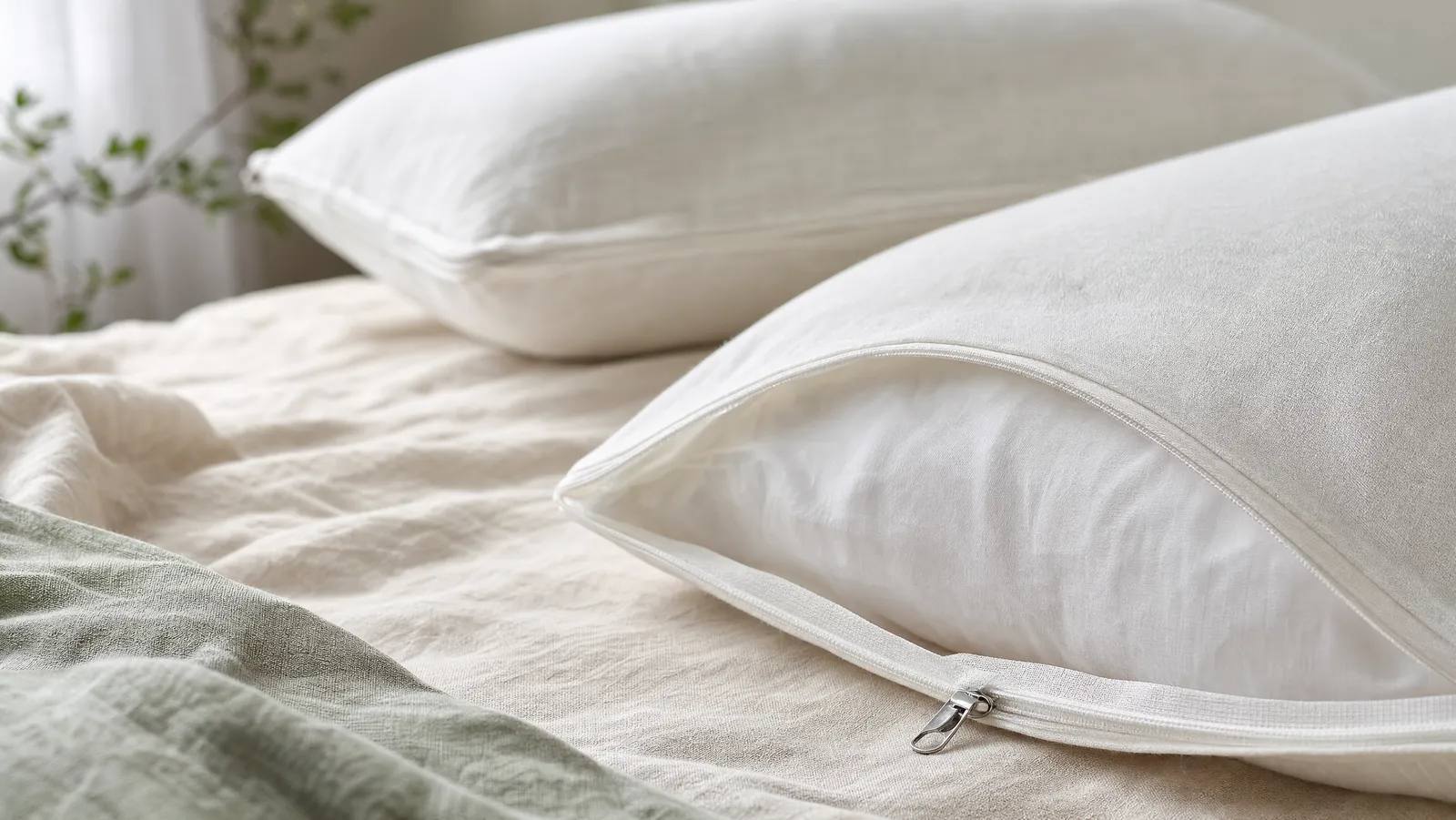
- Does the zip have a flap? Seams and the zipper are the likeliest escape route in an encasing, so bound seams and an interior flap over the teeth are worth checking for.
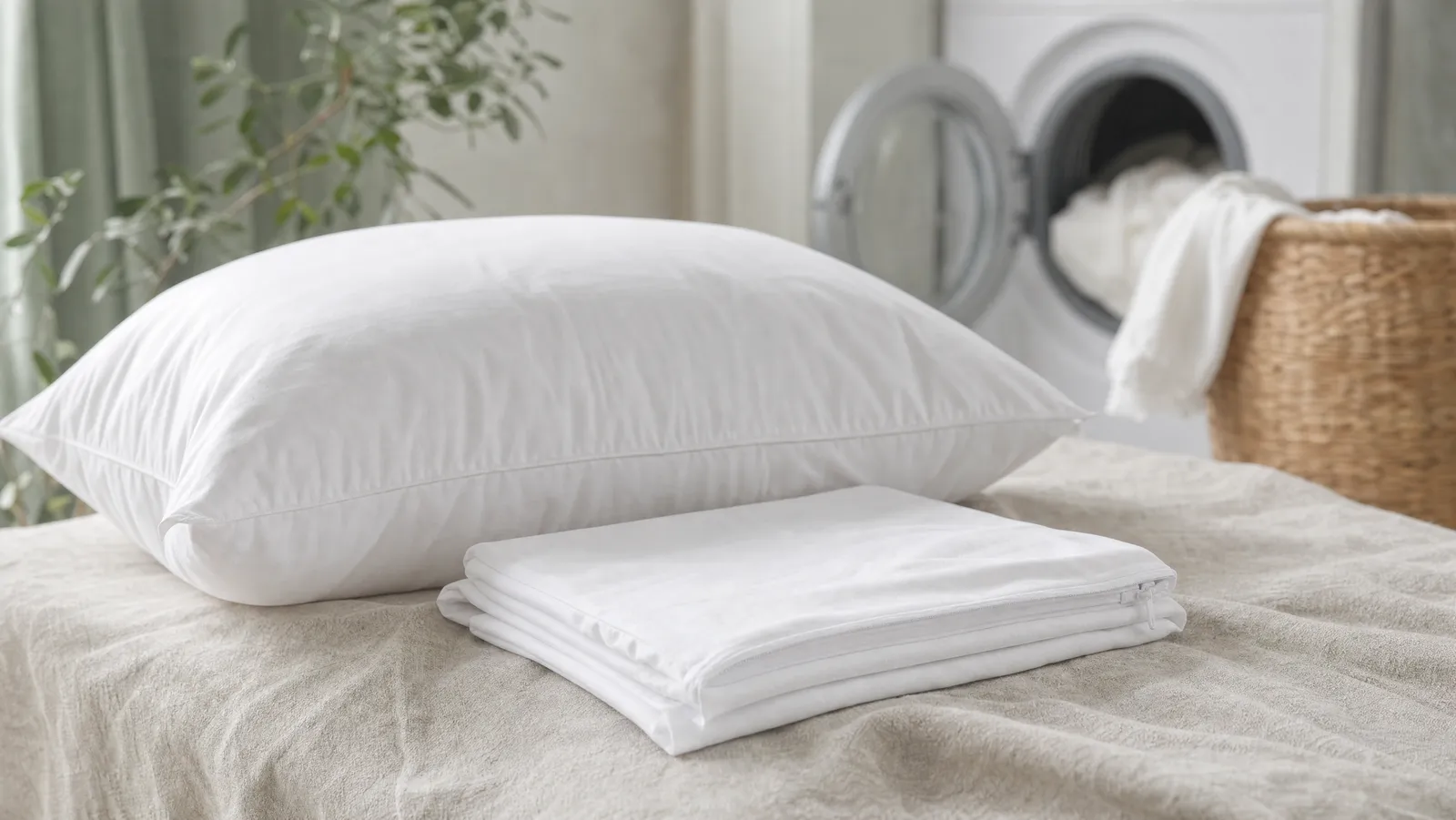
- Does the pillow's own care label permit a wash? Recommendation 13 of the parameter asks for weekly bedding washing and explicitly says high temperature is not necessary, with home hot water kept below 120°F because of the scalding risk to occupants.
- Does the loft suit your sleeping position? An 8-inch pillow and a flat one are different purchases, and no allergy consideration decides between them.
Our picks, and what each label actually earns
Five products below: four pillows and one encasing. The page orders the encasing last, which is backwards from the argument, so take it first.
- The encasing: Mission: Allergy's Barrier II pillow encasing, $24.95 as of October 2026. The only product here with somebody outside the company attached to a number. Mission: Allergy states that it blocks 100% of dust mite and animal dander allergens, third-party tested by Indoor Biotechnologies, Inc., in a tightly woven 100% microfiber polyester that is air- and water-vapor-permeable yet water repellent, with bound seams, interior and exterior zipper flaps, a ten-year warranty and design by a board-certified allergist. Woven is the type the parameter recommends. No mean pore size is published, and the dander half of the claim is broader than most woven encasings manage.
- Our pick among the pillows: the Beckham Hotel Collection set of two, $39.86 as of October 2026, down from a $59.99 list price. A 250 thread count cotton cover over 1,050g of hollow fiber down alternative, a stated 8-inch loft, medium-firm, machine washable and air dry. It earns the slot on the washable care label and the breathable shell, not on the word "allergy-friendly", which is Beckham's and carries no test we could find.
- The natural-materials option: the Sleep On Latex shredded latex pillow, $49 as of October 2026. Three stated facts — Fair Trade Sri Lankan natural latex, a machine washable organic cotton cover, Oeko-Tex Standard 100 Class 1 — and a shredded fill the maker says you can adjust to set the loft. For mites it is not an upgrade: the parameter says foam pillows are no less prone to mite allergen than feather ones. Anyone with a natural rubber latex allergy should skip it entirely.
- The cheapest pair: JOLLYVOGUE's standard set, $19.94 as of October 2026, down from a $24.99 list price. Two washable pillows with reinforced seams, a high loft, a down alternative micro polyester fiber fill and 24 hours to expand. The product's own name says cooling, but that rests on the word "breathable" with nothing measured behind it — the honest reason to buy this set is that it is the cheapest pillow purchase here, which leaves the most of your budget for an encasing.
- The firm option: Sasttie's set of two, $21.99 as of October 2026, down from a $25.99 list price. A stated 40% 3D and 60% 7D fiber down-alternative blend, OEKO-TEX Standard 100 tested, machine wash cold and tumble dry low. It carries no allergy claim at all, which is the correct thing for a pillow listing to say.
The routine the guidelines pair with the encasing
A pillow and a cover are two items in a program the parameter describes as one thing.
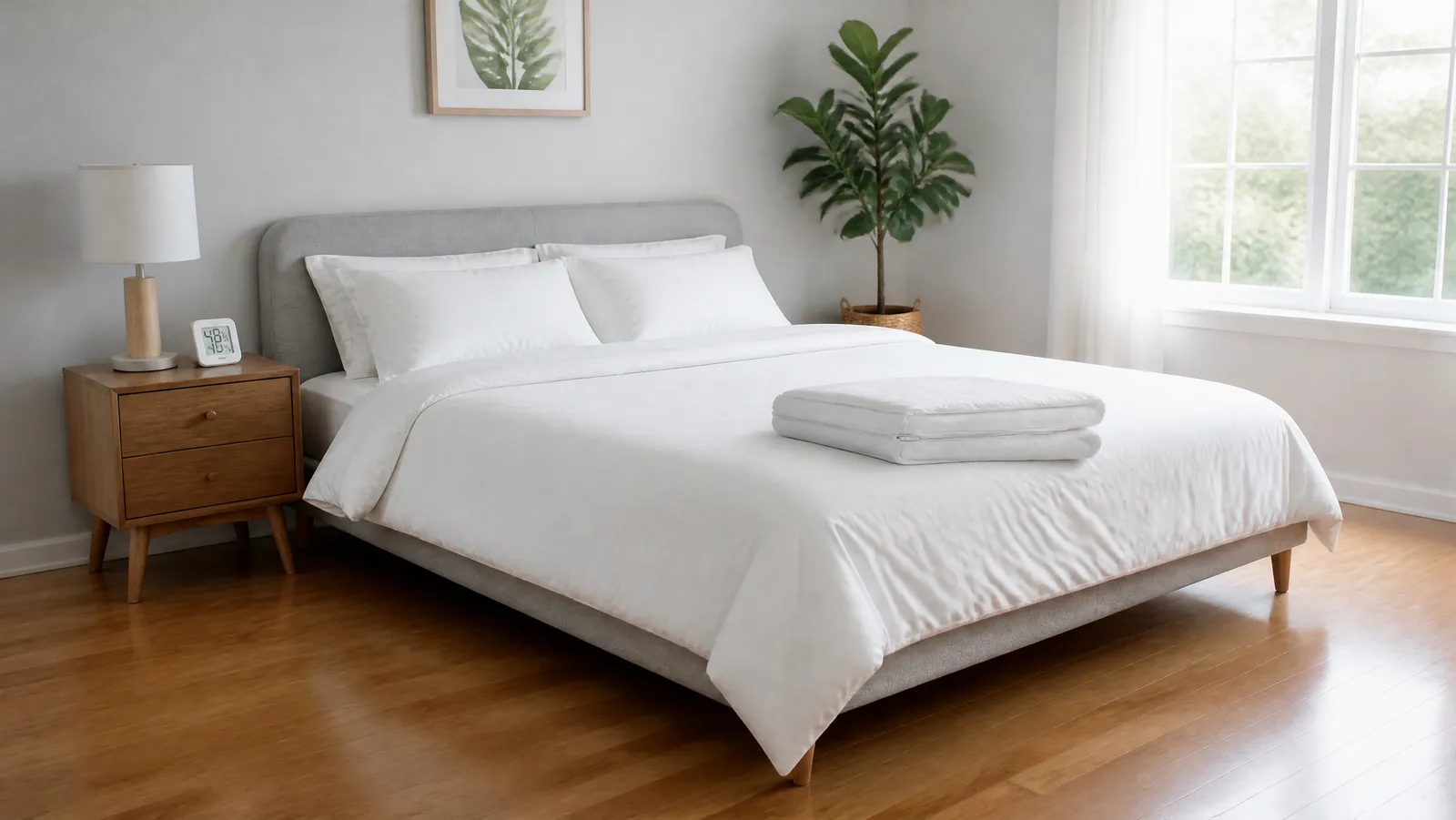
Its stated most effective combination is maintaining relative humidity at 35% to 50%, regular washing of bedding to remove mites and mite allergen, regular vacuuming with a high-efficiency vacuum, mattress and pillow encasings, and HEPA filtration if deemed necessary. The warning attached is the one to remember before spending: "in many cases mite covers alone are unlikely to achieve a clinical benefit unless they are used as part of a more comprehensive multifaceted avoidance plan."
The frequency question has a plain answer. Recommendation 13 of the parameter is that bedding should be washed weekly, that high temperature is not necessary, and that home hot water should be kept below 120°F because of the scalding risk to occupants. The US Environmental Protection Agency's asthma guidance gives the same step in two sentences — "Wash bedding in hot water once a week. Dry completely." — and adds "Use dust proof covers on pillows and mattresses." The two differ on temperature and agree on everything that matters.
If you are assembling that program rather than shopping, how to prevent a dust mite allergy is the page that sequences it, humidity first.
Where a pillow stops and a clinician starts
Twice in this article the evidence turned on a single word: sensitized.
The parameter's advice to minimize mite exposure is written for mite-sensitized patients, at a strong strength of recommendation on B evidence for asthma. The 2017 children's trial enrolled mite-sensitized children. The adult trials that found nothing enrolled people with asthma more broadly. Whether you are sensitized to dust mites is a test result, and no article and no pillow can supply it.
So the useful order is: if you have asthma, the asthma plan and the clinician who wrote it come first, and bedding is an adjunct to it. If symptoms are not controlled, that is an appointment rather than a purchase. The parameter is also candid about the ceiling here — mite-proof covers as part of a structured allergen-control program reduce measured exposure, and "Even so, this single avoidance measure does not lead to a significant alleviation of clinical symptoms in patients with allergic rhinitis."
The bottom line
A pillow is not a treatment, and the best pillow for asthma and allergies is the one that lets you do the two things the guidelines actually ask for: seal it, and wash the bedding around it weekly.
Buy the barrier first, because it is the intervention with randomized trials behind it and, at $24.95 as of October 2026, it costs less than two of the four pillows here. Buy the pillow on washability, loft and the shell — not on the fill, since the practice parameter says foam is no less prone to mite allergen than feathers and the one published pillow comparison found more Der p 1 in polyester than in feathers. Read OEKO-TEX as a harmful-substances test, because that is what it is. Set the bedroom humidity to 35% to 50%, which costs nothing and is on every version of this advice.
And keep the expectation honest. Cochrane found no benefit across 55 trials; the adult single-measure trials found none; the one trial that found a clear benefit gave mite-impermeable covers to mite-sensitized children who had just been in hospital. That is who the evidence is strongest for, and it is a clinician who tells you whether you are in that group.
If you would rather start from a ranked shortlist than from the evidence, our full allergy pillow rankings apply the same test to a wider set — and if asthma is the reason you are reading at all, the more useful next step is the appointment, not the cart.
The shortlist
5 pillows compared — firmness, loft, and temperature side by side. The top pick is highlighted.
| Pillow | Firmness | Loft | Sleeps | Best for | Price |
|---|---|---|---|---|---|
Medium Firm | High | Cooling | A washable, breathable pillow to seal inside an encasing | $39.86 Check | |
Best Natural Latex PickSleep On Latex Natural Latex Shredded Foam Pillow, Standard Size | Medium | Adjustable | Neutral | A short, checkable materials list under a washable cover | $49 Check |
Medium Firm | High | Neutral | Spending as little as possible on the pillow so the encasing gets bought | $19.94 Check | |
Best Firm PickSasttie Firm Standard Pillows, Set of 2 | Firm | High | Neutral | Side and back sleepers who want support, not an allergy claim | $21.99 Check |
Best Allergen EncasingMission: Allergy Dust Mite and Allergen Proof Pillow Encasing, Barrier II, Standard Size | — | — | Neutral | Putting a third-party-tested allergen barrier on the pillow you own | $24.95 Check |
Beckham Hotel Collection Bed Pillows, Standard/Queen, Set of 2

A cotton shell the maker says is breathable, 1,050g of fill for under $40 a pair, and a care label that actually says machine washable — which is what puts a pillow on a weekly bedding routine.
A stated 8-inch loft is far too much pillow for some sleepers, and "allergy-friendly" and "free from 100+ harmful substances" are the maker's phrasings rather than an allergen test or OEKO-TEX's own wording.
This is our pick for the pillow half of the job, and the job is narrower than the category implies. The encasing is the part the allergy guidelines write recommendations about. The pillow decides whether you can put it in a machine every so often, whether it holds your head where you want it, and what its cover has been tested for. This set answers all three in the maker's own words.
Beckham states a 250 thread count 100% cotton cover over 1,050g of hollow fiber down alternative fill, a stated 8-inch loft, a medium-firm even-fill feel with no feathers and no fluffing required, a cotton cover for breathable airflow, and that the pillows are machine washable and should be air dried. Two standard/queen pillows are $39.86 as of October 2026, down from a $59.99 list price, which makes the pair cheaper than two encasings.
Now the language on the listing. Beckham describes the pillows as OEKO-TEX certified and allergy-friendly, and as tested and verified free from 100+ harmful substances. OEKO-TEX's own FAQ frames STANDARD 100 more carefully than that: certified products meet strict limit values and the substances tested for "are not present in critical concentrations", and the scheme today covers several hundred substances rather than a hundred. That is a chemical-content test, assessed against limits. It is not an allergen barrier, and "allergy-friendly" is Beckham's adjective with no test behind it that we could find.
Sleep On Latex Natural Latex Shredded Foam Pillow, Standard Size

A three-line materials list, a shredded fill Sleep On Latex says you can adjust to set the loft, a washable cotton cover, and the strictest Oeko-Tex product class.
The priciest pillow here for a single standard size, only the cover is stated washable, and it is exactly the wrong choice for anyone with a natural rubber latex allergy.
The label on this pick is "natural latex", and what it honestly earns is a materials list short enough to verify. Sleep On Latex states three things: the fill is Fair Trade Sri Lankan natural latex foam, shredded rather than molded, under a machine washable organic cotton cover, and the pillow is Oeko-Tex Standard 100 Class 1 certified. Three claims, all checkable, is rare in this category.
Class 1 is worth stating accurately, because it is the strictest tier and it still is not an allergy claim. OEKO-TEX's FAQ defines product class I as textiles and materials for babies and toddlers up to three years of age, including bed linen and bedding, and says baby articles in that class are held to the strictest criteria in line with sensitive baby skin. The principle behind the classes is skin contact, and the subject is harmful substances. At $49 as of October 2026 this is the most expensive single pillow here.
Two caveats, one of them not a nuance. For dust mites, latex is not a shortcut: the 2013 AAAAI/ACAAI practice parameter states that foam pillows are not less prone to dust mite allergens than are feather pillows, and that nonallergenic pillows are not a substitute for an allergy-proof encasement. And natural rubber latex allergy is a real, separate condition — the AAAAI describes it as the immune system overreacting to proteins found in natural rubber latex, and notes it can cause anaphylaxis in some people. If that applies to you, this is the wrong pillow and the right conversation is with your allergist.
JOLLYVOGUE Pillows, Standard Size, Set of 2 (Cooling and Firm)

Two washable standard pillows for under $20, with reinforced seams and a stated high loft, which JOLLYVOGUE says takes 24 hours to reach after unpacking.
The cooling claim is a product name and the word "breathable" with nothing measured behind it, and the OEKO-TEX statement describes the factory rather than a certificate for these pillows.
We will take the label apart before we defend it. The cooling claim here rests on the product's own name and on one line in the feature list, "breathable shell". There is no stated fabric technology, no measured surface temperature and no third-party test, and by that standard the cotton-covered Beckham set has an equally good claim. If you are buying for temperature specifically, treat "cooling" as the maker's description rather than a measurement.
What the set genuinely is: the cheapest pair here. JOLLYVOGUE states two standard pillows with reinforced seams and a high loft, a down alternative micro polyester fiber fill that balances softness with plump firmness, a breathable shell, machine washable with air dry or tumble dry, and asks for 24 hours for the pillows to expand fully after unpacking. Two pillows are $19.94 as of October 2026, down from a $24.99 list price. The maker also states they are made in an OEKO-TEX Standard certified factory — a factory statement, which is a weaker thing than a certificate for the finished article.
Read it as the budget line that keeps your money where the evidence is. For the price of this pair plus change you can also have a third-party-tested encasing, which is the order the allergy guidelines would put those two purchases in.
Sasttie Firm Standard Pillows, Set of 2

A firm, plump pair for $21.99 as of October 2026 with a stated fiber blend, OEKO-TEX Standard 100 testing, and a wash-cold care label that matches what the allergy guidelines actually ask for.
Firm and plump in a way that will not suit everyone, and there is no allergen claim of any kind on the listing — by design.
This is the pick where the label is honest and the allergy angle is deliberately absent. Sasttie sells firmness, and firmness is a comfort variable: nothing in the dust mite literature prefers a firm pillow to a soft one. If you have asthma and you also want a pillow that does not collapse under a shoulder, this is that pillow, and the two facts are unrelated.
The maker-stated build is a down-alternative fill blending 40% 3D fiber with 60% 7D fiber for a plump, firm feel, pillows that stay plump overnight, suitability for side, back and stomach sleepers, testing to OEKO-TEX Standard 100, and a care instruction of machine wash cold with tumble dry on low heat. The cover is embossed with a geometric pattern and satin piping. Two standard pillows are $21.99 as of October 2026, down from a $25.99 list price.
The cold-wash instruction is worth a note rather than a complaint. The 2013 AAAAI/ACAAI practice parameter's position on laundering is that bedding should be washed weekly and that high temperature is not necessary, with home hot water kept below 120 degrees F for scalding safety — so a cold cycle and the guideline are not in conflict. There is no allergen-barrier claim here of any kind, which is the correct thing for a pillow listing to say.
Mission: Allergy Dust Mite and Allergen Proof Pillow Encasing, Barrier II, Standard Size
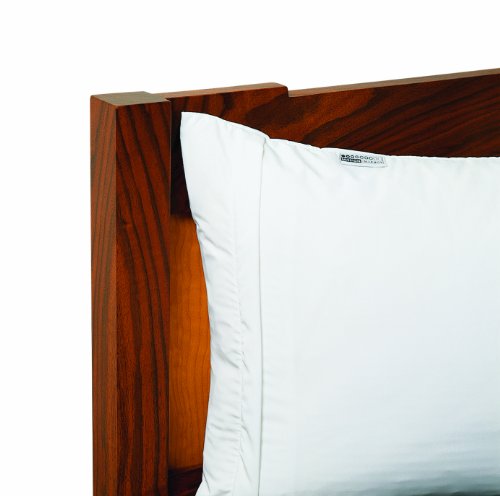
A named third-party laboratory, a woven fabric of the type the allergy guidelines recommend, zipper flaps inside and out, and a ten-year warranty for $24.95 as of October 2026.
No published mean pore size, a dander claim broader than most woven encasings achieve, and it covers one pillow — a double bed needs two.
Last on the page, first in the argument. Every randomized trial discussed in this article tested a barrier, not a fill, and the 2013 AAAAI/ACAAI practice parameter's recommendation 17 is to use mite allergen-proof mattress, box spring and pillow encasings at a strong strength of recommendation on B evidence. This is the product that does that job on the pillow you already own.
It is also the only thing here with someone outside the company attached to a measurement. Mission: Allergy states that the encasing blocks 100% of dust mite and animal dander allergens and that this was third-party tested by Indoor Biotechnologies, Inc. The maker further states medical grade construction, certification as bedbug-proof, a soft, tightly woven, breathable 100% microfiber polyester that is air- and water-vapor-permeable yet water repellent, bound seams with interior and exterior zipper flaps, a ten-year warranty, manufacture in the USA, and design by a board-certified allergist. Tightly woven matters: the practice parameter recommends woven microfiber encasings and explicitly does not recommend nonwoven ones, because nonwovens accumulate surface allergen and are not washable. One standard encasing is $24.95 as of October 2026.
Two things we will not inflate. The listing publishes no mean pore size, and a claim to block animal dander is broader than a mite claim — the parameter notes that many commercially available woven microfiber encasings block Der p 1 but not the cat allergen Fel d 1, and that blocking Fel d 1 needs a mean pore size under 6 micrometers rather than 10. We would still take a named laboratory over a pore-size figure, because the parameter says the same thing: pore size is a surrogate, and the real test is whether the allergen can be suctioned through the fabric. And a barrier is an exposure measure, not a treatment for asthma.
Choosing a Pillow for Asthma, Step by Step
A pillow cannot treat asthma, and nothing below is a reason to change an asthma plan. What these steps do is put the money where the trial evidence is, and keep the comfort decisions separate from the medical ones.
Pillows, Asthma and Allergies: FAQ
Is there a best pillow for asthma? Not in the sense of a pillow that treats asthma. The 2013 AAAAI/ACAAI practice parameter states that "Nonallergenic pillows are not a substitute for covering them with allergy-proof encasements." The interventions carrying randomized evidence are encasings and multifaceted avoidance programs, not fill types.
Do mite-proof bed covers help asthma? It depends sharply on who is using them. Woodcock and colleagues randomized 1,122 adults with asthma to allergen-impermeable or control bed covers in the New England Journal of Medicine in 2003 and concluded that the covers, as a single intervention, are ineffective for managing asthma in adults. Murray and colleagues randomized 284 mite-sensitized children who had attended hospital with an exacerbation, in the American Journal of Respiratory and Critical Care Medicine in 2017, and reported that the risk of emergency hospital attendance was 45% lower in the active group (hazard ratio 0.55, 95% CI 0.36–0.85).
What does the Cochrane review conclude? Gøtzsche and Johansen's Cochrane review of house dust mite control measures for asthma included 55 randomized trials on 3,121 people with asthma and concluded that "Chemical and physical methods aimed at reducing exposure to house dust mite allergens cannot be recommended."
Are feather pillows worse than synthetic ones for asthma? The folk ranking does not survive measurement. Kemp and colleagues sampled nine pairs of pillows that had been used together on the same adult bed for more than six months and reported in the BMJ in 1996 that the polyester-filled pillow of each pair held significantly more Der p 1 than the feather-filled one. Nine pairs is a small study — it is still more evidence than the opposite claim has.
Does "hypoallergenic" mean anything on a pillow? Nothing measured that we could find. The practice parameter's version is blunter: "Foam pillows are not less prone to dust mite allergens than are feather pillows."
How often should asthma bedding be washed? Weekly, on the parameter's recommendation 13, which adds that high temperature is not necessary and that home hot water should stay below 120°F for scalding safety. The US Environmental Protection Agency's asthma guidance puts the same step more simply: "Wash bedding in hot water once a week. Dry completely."
Can a pillow be asthma-safe? No, and nothing here is sold to you as one. The Australian Asthma Handbook, a national asthma guideline, advises clinicians "Do not routinely advise allergen avoidance or reduction measures for people with asthma", and states that "the use of impermeable mattress and pillow covers as a single intervention has been shown to be ineffective in improving asthma symptom control."
What humidity should the bedroom be at? The parameter's most effective avoidance combination starts with maintaining relative humidity at 35% to 50%. Mites need ambient moisture, and a hygrometer is doing allergy work that no pillow can.
My asthma is not well controlled. Should I buy new bedding? That is a clinician's question before it is a shopping question. Bedding is an adjunct to an asthma plan, never a substitute for one, and nothing on this page should delay an appointment.
Why you can trust us

Aimee Cannon
Sleep & bedding writer
Aimee Cannon is a sleep and bedding writer who has spent years testing pillows of every kind — memory foam, down, wool, bamboo, buckwheat, and specialty support pillows. She focuses on matching the right pillow to each sleeping position and need, and reports what actually holds up after months of nightly use. When she is not testing pillows, Aimee is usually with her husband and her dog.