Do Air Purifiers Help With Dust Mites?
Do air purifiers help with dust mites? Not on their own, no. The 2013 AAAAI/ACAAI dust mite practice parameter states that "HEPA filtration alone is of uncertain benefit for patients with mite allergy, although it can decrease local exposure to airborne mite allergens and to some irritants" — and grades that a weak recommendation on C evidence. We may earn a commission from links on this page, at no extra cost to you.
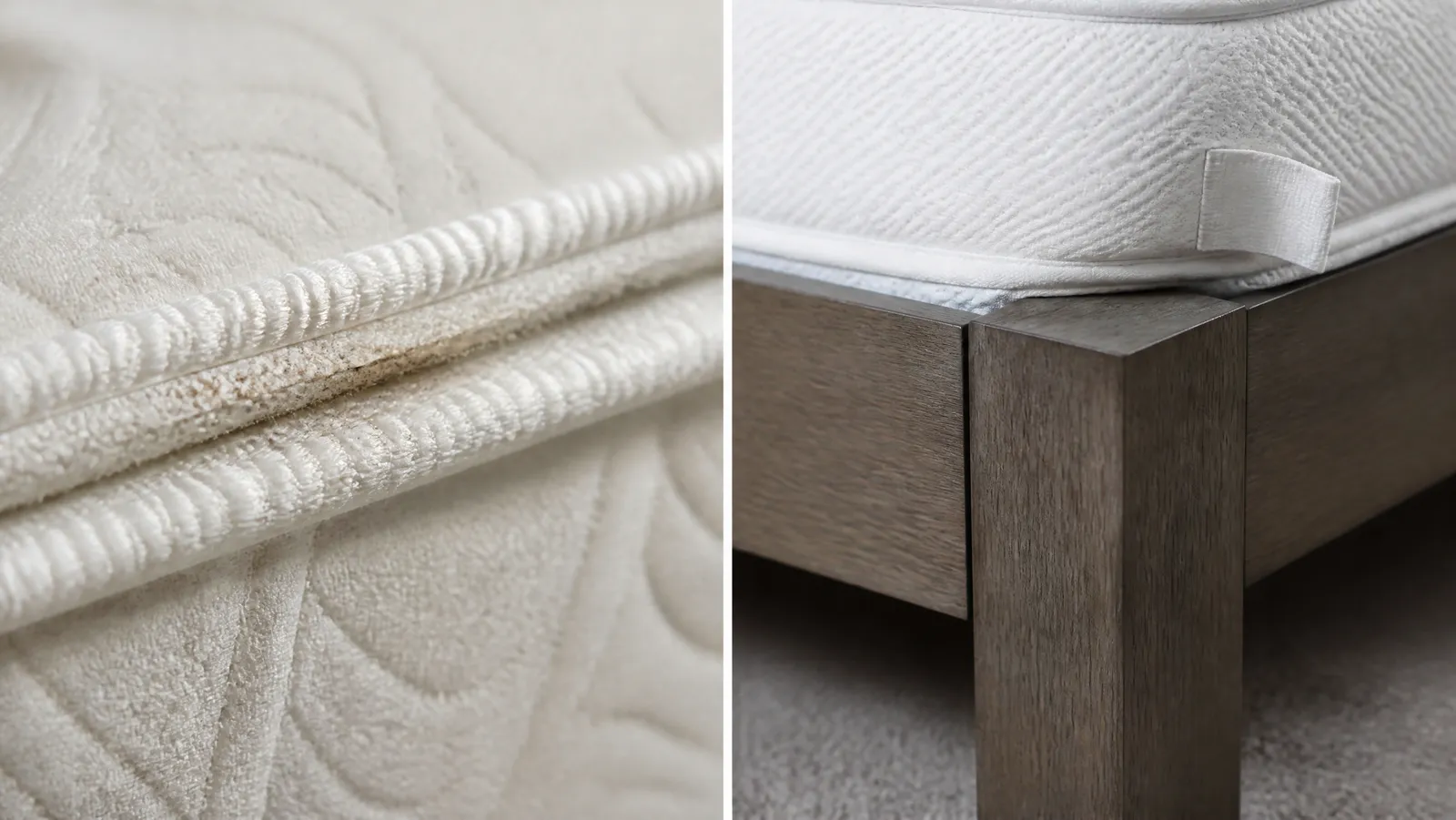
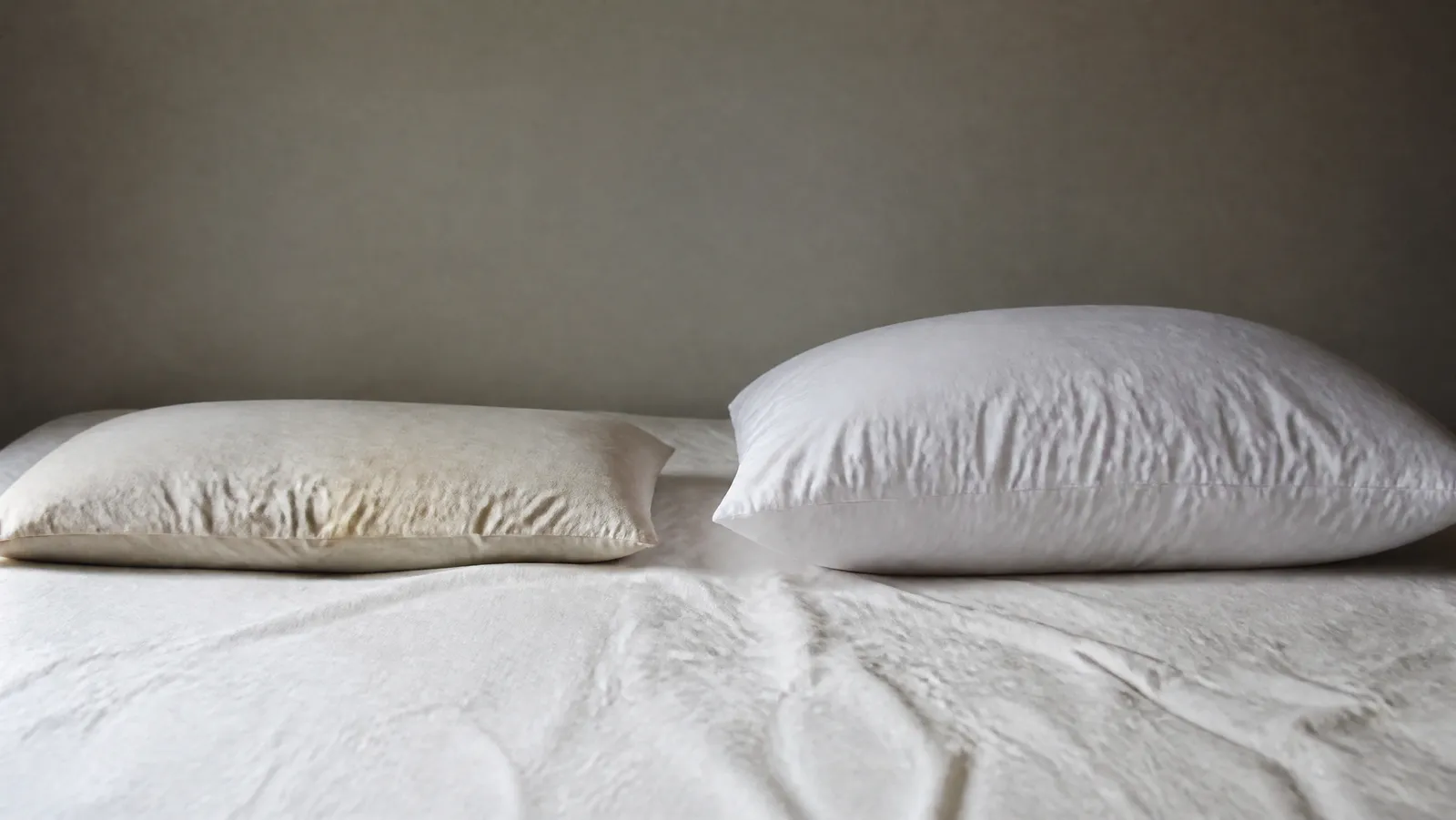
The reason is particle physics, not brand quality. Mite allergen rides particles heavy enough to fall back out of the air within half an hour of being disturbed, so an air cleaner spends its life scrubbing the one compartment the allergen barely occupies. The reservoir is the mattress, the pillow and the carpet, which is where our allergy pillow guide starts.
This page does not rank air purifier models. Home Pillow Review covers pillows and bedding; we have never tested an air cleaner. What follows is enough of the category — true HEPA, CADR, room sizing, placement, ozone — to judge a purchase you make elsewhere.
Do air purifiers help with dust mites? What the guidelines actually say
That opening quote is summary statement 20 of Environmental Assessment and Exposure Control of Dust Mites, published by Portnoy and colleagues in Annals of Allergy, Asthma and Immunology in 2013 for the AAAAI and the ACAAI. Its second half is the practical part: "If used, recommend that HEPA cleaners should be placed in areas of mite contamination where air disturbance is likely to suspend particles so that they are available for removal."
Read against the rest of the document, the grade is the story. The same parameter gives strong recommendations on B evidence to relative humidity at 35% to 50%, weekly bedding washes, vacuuming with HEPA filtration, and mite allergen-proof mattress, box spring and pillow encasings. Room-air filtration is the weakest-graded item in a layered lower-allergen bedroom.
Its narrative says it plainly: "Although there is evidence that air filtration decreases levels of particles associated with dust mite allergens, filtration alone is unlikely to provide sufficiently decreased exposure to improve health."
One inconsistency we will print rather than resolve: Table 4 of the same document costs a portable air filter for an 18 by 20 foot room at $182 to $849 and marks its recommendation column "Moderate", while summary statement 20 grades HEPA filtration alone weak on C evidence. We would rather print both than quote the flattering one.
Does an air purifier remove dust mites? Not the animal
No air cleaner removes dust mites, because dust mites are not in the air. According to the parameter, mites are photophobic and "live deep within soft substrates, such as pillows, mattresses, and carpets, where moisture is retained and humidity fluctuations are minimized." They do not fly. What you inhale is their waste.
The parameter reports that house dust mites produce about 20 faecal pellets a day and that more than 95% of the allergen accumulating in mite cultures is associated with faecal particles. It adds that mites "rarely survive in forced-air systems" and that the pellets are "generally too heavy to stay airborne even if expelled through a supply vent."
So a purifier reaches neither the population nor the reservoir — the subject of our piece on dust mites in pillows. It can only intercept the fraction of allergen in flight while the fan runs.
The settling physics: 20 to 30 minutes, then gone
This is the number the question turns on. The parameter says the density of the faecal pellets "allows them to become airborne and easily inhaled when the substrate in which they were deposited is disturbed (eg, by making a bed, walking on a carpet, or moving on a pillow)", "followed by settling within 20 to 30 minutes."
How large are those particles? The document gives two figures in two places and we are not going to average them: the biology section says faecal pellets vary in size from 20 to 40 micrometres, the exposure section says each measures 10 to 24 micrometres in diameter. It separately cites an analysis of vacuumed dust in which mite allergens "were associated with relatively large particles, with a mean aerodynamic diameter of 28" micrometres. Three numbers, one conclusion: large and dense.
The air sampling agrees. The parameter states that "very little dust mite allergen can be detected in the air of an undisturbed room", and that 1 to 30 nanograms turns up during domestic activities that disturb dust. Summary statement 15 tells clinicians not to sample room air at all — moderate recommendation, C evidence — because most studies of dust and air in the same room "have found no measurable airborne Der p 1" even where reservoir dust ran as high as 127 micrograms per gram.
Here is the irony. Filtration is physically good at particles this size — EPA puts a mechanical filter's worst case at 0.3 micrometres, with larger particles captured more efficiently, and the parameter notes a MERV12 filter is at least 90% efficient in the 3 to 10 micrometre range. Capture is not the problem; residence time is. The parameter attributes the shortfall to exactly that: "the intermittent nature of airborne mite exposure."
Why the same machine has a better reputation for cat allergy
The companion document describes a different aerodynamic situation entirely. Environmental Assessment and Exposure Control: A Practice Parameter — Furry Animals, published by Portnoy, Kennedy, Sublett and colleagues in the same journal in 2012, reports that cat allergen-containing particles "range in size from 1 to more than 20" micrometres, with a quarter of airborne Fel d 1 in one survey of British homes carried on respirable particles smaller than 5 micrometres.
Then the sentence that explains the reputation gap: "Approximately 60% of airborne Fel d 1 settles out within 2 days of disturbance, leaving smaller particles that can remain airborne for up to 14 days or longer." It adds that "this duration can be reduced using HEPA filtration."
Twenty minutes against fourteen days. Same appliance, same filter, wildly different odds of it ever meeting the particle.
Better is not proven, though. Summary statement 25 of the furry-animal parameter reads "HEPA air cleaners run continuously over time can reduce exposure to dog and cat allergen concentrations, but the clinical benefits are unknown", graded B.
Where an air purifier for dust mite allergy does earn its place
It is not useless; it is aimed at a different problem, and plenty of bedrooms have that problem too.
- Co-existing triggers. A cat or dog, pollen tracked in, smoke, cooking and combustion irritants. Summary statement 20 itself credits HEPA filtration with decreasing "local exposure to airborne mite allergens and to some irritants".
- Placement. If the machine is staying, put it where air gets stirred up rather than in a quiet corner, as summary statement 20 instructs.
- The breathing zone. The parameter notes an alternative to cleaning a whole room: cleaning "a smaller area of air surrounding the patient, particularly during sleep", which needs a low, non-turbulent (laminar) airflow. It reports three such studies that showed clinical benefit, and concludes that portable HEPA cleaners "particularly if they filter the breathing zone during sleep, appear to be the most beneficial type of filtration."
EPA pitches its summary at the same confidence: multiple studies with portable HEPA air cleaners "have found improvements in one or more allergy and/or asthma symptom(s)", while not showing improvements in all symptoms. EPA also states the limit: "Filtration does not replace the need to control pollutants and ventilate." If asthma is in the picture the ordering question belongs with a clinician, and our notes on pillows for asthma and allergies stop at the same line.
Air purifier or dehumidifier for dust mite allergy?
Direct answer: the dehumidifier is attacking something the guidelines grade strongly, and the purifier is not.
Dust mites are a water problem. The parameter states they are about 75% water by weight, do not drink or urinate, and hold their water balance by taking up water vapour when relative humidity is at least approximately 65%, losing water by evaporation below about 55%. Summary statement 10 — keep relative humidity at 35% to 50% — is strong on B evidence. Summary statement 20 is weak on C.
A dehumidifier is no magic answer either, and the same document says so: studies of humidity control using portable and central dehumidifiers "have failed to decrease mite exposure", partly because relative humidity need only exceed 50% for one hour a day for mites to survive. Continuity is the whole trick, and there is more to say about humidity and dust mites than fits here.
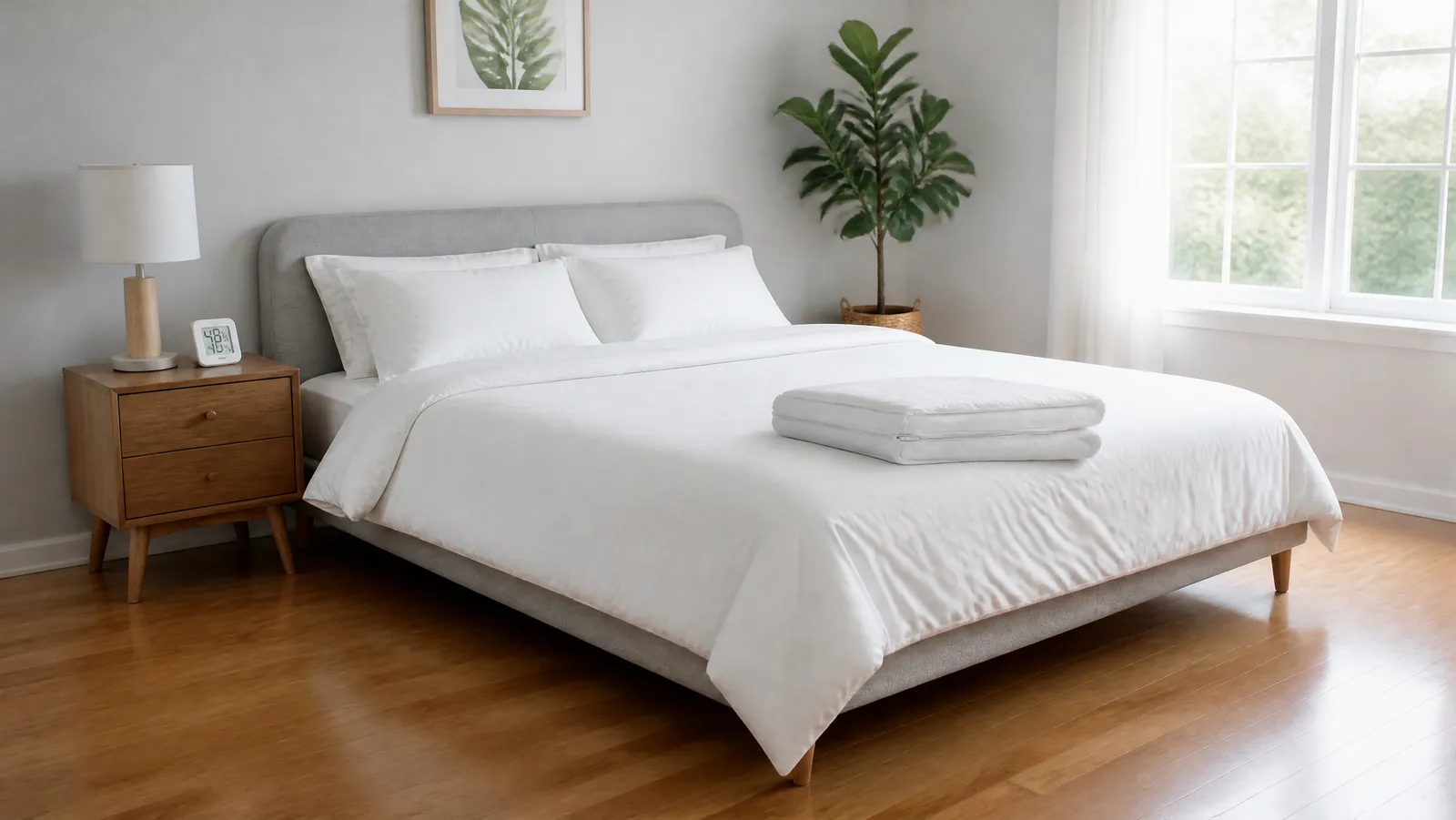
The cheap move is neither appliance. In the parameter's cost table a hygrometer runs $7.50 to $33.00 against the dehumidifier's $204 to $414 and the air filter's $182 to $849 — and it carries a strong recommendation, on candidly D-grade evidence, because it tells you whether humidity is your problem at all. Neither appliance replaces the encasement.
Is there a best HEPA air purifier for dust mites? We are not ranking machines
We are not going to name one. Ranking appliances we have never tested, on specs we cannot verify, is how affiliate pages stop being worth reading. The vocabulary, though, is yours.
- True HEPA. EPA describes HEPA as "a type of pleated mechanical air filter that is common in portable air cleaners, also known as air purifiers", credits the acronym to the US Department of Energy, and says such a filter can theoretically remove at least 99.97% of airborne particles 0.3 micrometres across — the most penetrating particle size, with larger and smaller ones captured more efficiently.
- "HEPA-type" and "HEPA-like". We looked for a federal rule policing those phrases and found none we would repeat. EPA's definition is the definition; a label that stops short of claiming it is not covered by it.
- CADR. Clean Air Delivery Rate combines filter efficiency with how much air actually moves through the filter. EPA: "The higher the CADR, the more particles the air cleaner will remove and the larger the area it can serve." The dust mite parameter notes CADR is rated under an Association of Home Appliance Manufacturers standard test method. EPA adds the caveat that matters at 2am — the rating is usually measured at the highest fan speed.
- Room sizing. EPA's instruction is to multiply the room's length by its width in feet and compare the result with the maximum room size on the packaging; with ceilings above 8 feet you "should consider using an air cleaner that is sized for a larger area."
The ozone problem: ionisers, "activated oxygen" and ozone generators
On an asthma-adjacent page this is a duty, not an aside. EPA's guidance on ozone generators sold as air cleaners is blunt: "NO agency of the federal government has approved these devices for use in occupied spaces." The specifics, all EPA's:
- "When inhaled, ozone can damage the lungs." Relatively low amounts can cause "chest pain, coughing, shortness of breath and throat irritation."
- At concentrations that do not exceed public health standards, "ozone has little potential to remove indoor air contaminants".
- "Ozone does not remove particles (e.g., dust and pollen) from the air." Mite allergen is a particle, which makes that line decisive here.
- "Some studies show that ozone concentrations produced by ozone generators can exceed health standards even when one follows manufacturer's instructions."
The allergists arrive from the other direction. The dust mite parameter states that ioniser cleaners "are not recommended because of their tendency to produce ozone, which can trigger asthma symptoms", and that non-HEPA cleaners "do not remove enough particles to provide clinical benefit." EPA's air cleaner guide notes that some electrostatic precipitator, ioniser and plasma devices can emit ozone, and points to the AHAM list of air cleaners "tested and shown to emit little or no ozone."
What to spend on first instead
If the search that brought you here was really "how do I breathe better at night", the money goes to the barrier. Summary statement 17 recommends mite allergen-proof mattress, box spring and pillow encasings — strong, B evidence — and the parameter calls encasing "the most effective way to prevent mite colonization."
The arithmetic is not close. The cheapest portable air filter in the parameter's cost table is $182. Our lowest cost per cover here, the AllerEase Premier four-pack at $21.49 as of October 2026 against a $27.99 list price, works out at $5.37 a cover — so $182 is roughly thirty-four covers. To try one pillow first, the AllerEase two-pack at $10.99 as of October 2026 is the smallest outlay here, though at $5.50 a cover it is dearer per unit.
Neither names a laboratory. Our pick when the test matters more than the pack size is the Mission: Allergy Barrier II pillow encasing at $24.95 as of October 2026, which the maker states is medical grade, blocks 100% of dust mite and animal dander allergens, and was third-party tested by Indoor Biotechnologies, Inc. That is a manufacturer claim on testing the manufacturer commissioned, and the listing publishes no mean pore size — which the parameter calls "only a surrogate measurement of allergen impermeability" anyway. What to check on any cover is in dust mite pillow protectors.
We are not claiming a cover will fix you. The parameter is explicit that "in many cases mite covers alone are unlikely to achieve a clinical benefit unless they are used as part of a more comprehensive multifaceted avoidance plan." The claim is duller: at $10.99 to $24.95 a pack as of October 2026, a woven cover sits between you and the reservoir all night.
The bottom line
Do air purifiers help with dust mites? Marginally, conditionally, and last. The allergy specialists grade HEPA filtration alone weak on C evidence, because the allergen rides faecal particles tens of micrometres across that settle within 20 to 30 minutes and otherwise sit in your bedding. If you also have a cat, pollen or smoke to deal with, a true HEPA cleaner sized to the room and placed where the air gets stirred up is doing real work on those — avoid anything that makes ozone, and expect exposure reduction rather than a symptom promise.
Spend first on what the same document grades strong: a hygrometer, humidity at 35% to 50%, weekly washing, HEPA vacuuming, and woven encasings on the mattress, box spring and pillow. Then notice the wording of summary statement 21, its best-evidenced recommendation at moderate on A evidence — the most effective combination is humidity, washing, high-efficiency vacuuming, mattress and pillow encasings, "and HEPA filtration if deemed necessary." Filtration sits in a conditional clause at the end of the sentence — roughly where it belongs in a budget, too.
If you would rather start from a shortlist than a stack of evidence grades, Home Pillow Review's allergy pillow rankings are the next page. And if you are reading this at 3am because you wake up congested: allergy and asthma are medical conditions, no air cleaner or cover is a substitute for prescribed treatment, and a clinician is the better appointment.
The shortlist
3 pillows compared — firmness, loft, and temperature side by side. The top pick is highlighted.
| Pillow | Firmness | Loft | Sleeps | Best for | Price |
|---|---|---|---|---|---|
| — | — | Neutral | Putting a tightly woven encasing on the pillow you already own | $24.95 Check | |
Lowest Cost Per CoverAllerEase Premier Zipper Pillow Protector, Standard/Queen, 4 Pack | — | — | Neutral | Getting a zippered cover onto every pillow in the house at once | $21.49 Check |
Lowest Total OutlayAllerEase Allergy Pillow Protector, Standard/Queen, 2 Pack | — | — | Neutral | The lowest total price of the covers on this page | $10.99 Check |
Mission: Allergy Dust Mite and Allergen Proof Pillow Encasing (Cover); Barrier II (Standard Size)
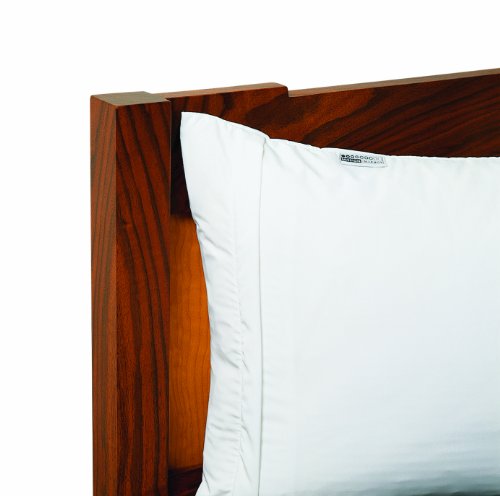
It is the woven construction the practice parameter endorses rather than the non-woven kind it warns against, it is the only cover here with a named third-party allergen test on the listing, and the stated warranty runs ten years.
"Blocks 100%" is the manufacturer's own commissioned result with no mean pore size published, and at $24.95 as of October 2026 this is one standard encasing, not a bed.
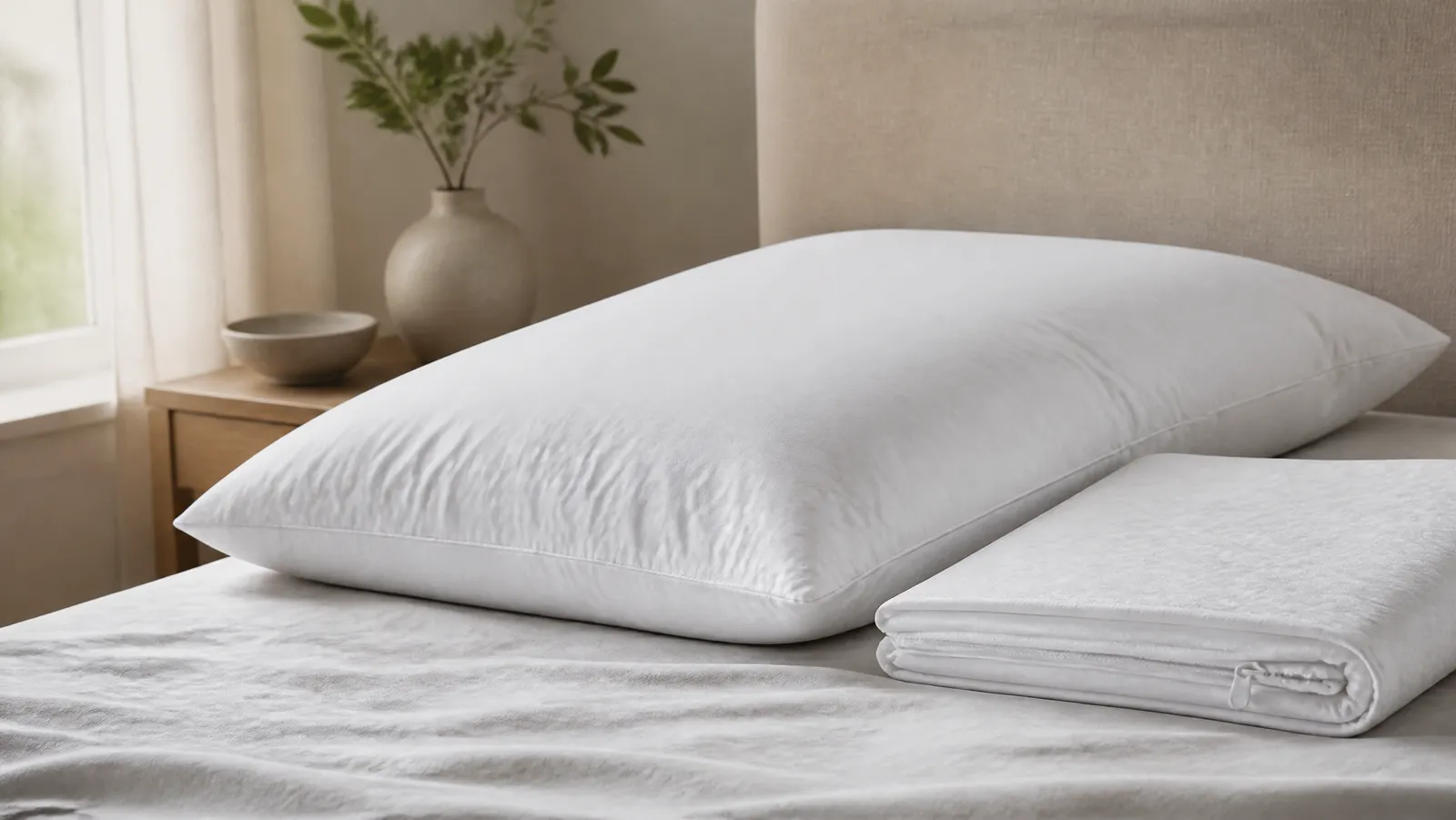
If an air cleaner is working on the compartment mite allergen barely occupies, this is the compartment it never leaves. The 2013 AAAAI/ACAAI dust mite practice parameter gives a strong recommendation on B evidence to mite allergen-proof mattress, box spring and pillow encasings, and calls encasing "the most effective way to prevent mite colonization" — two grades above the weak, C-evidence statement it gives HEPA filtration alone. It also specifies the fabric: woven microfibre with a mean pore size smaller than 10 micrometres blocks Der p 1, while non-woven encasings are not recommended because allergen accumulates in them and they are not washable. This is a woven microfibre encasing.
It is also the only cover on this page with a named third-party test attached. Mission: Allergy states it is medical grade, blocks 100% of dust mite and animal dander allergens, was third-party tested by Indoor Biotechnologies, Inc., and is certified bedbug-proof. The maker describes the fabric as soft, tightly woven, breathable 100% microfibre polyester that is air- and water-vapour-permeable yet water repellant, with bound seams, interior and exterior zipper flaps, a ten-year warranty and made in USA.
AllerEase Premier Zipper Pillow Protector, Standard/Queen, 4 Pack

At $5.37 per cover it is the cheapest way here to get a zippered, washable layer onto every pillow in the house at once, and the maker says it can be washed hot.
"Tightly woven" is a description rather than a mean pore size, no third-party lab is named anywhere on the listing, and four covers is more than a single-pillow household needs.
This is the arithmetic that makes the purifier question awkward. Four covers at $21.49 as of October 2026, down from a $27.99 list price, works out at $5.37 each — cheaper per cover than the two-pack further down this page, which lands at $5.50. The parameter's own cost table puts a portable air filter for an 18 by 20 foot room at $182 to $849. The bottom of that range is roughly thirty-four of these covers.
The maker's claims are modest and we will keep them that way. AllerEase states a "tightly woven, expertly designed fabric to fully protect your pillow", a temperature-balancing fabric finish borrowed from athletic clothing, and a lifetime warranty. The care instruction is the useful part for a weekly routine: machine wash hot with non-chlorine bleach when needed, tumble dry on the lowest setting, do not iron.
AllerEase Allergy Pillow Protector, Standard/Queen, 2 Pack

At $10.99 as of October 2026 it is the lowest-risk way to put the best-graded bedroom measure on one pillow and see whether you notice anything before committing further.
Per cover it is dearer than the four-pack, and the allergy framing rests on the phrase "tightly woven" with no named test or pore-size figure behind it.
Two covers for $10.99 as of October 2026 is the smallest total outlay on this page, which is the honest answer to anyone who arrived here about to spend a few hundred pounds or dollars on an appliance. Keep the distinction exact, though: $10.99 for two is $5.50 per cover, which is slightly more per unit than the four-pack above at $5.37. This is the cheapest way to try one, not the cheapest cover.
AllerEase states a "tightly woven, expertly-designed fabric to prevent unhealthy household particles from collecting in your pillow", says the fabric is breathable, will not alter the feel of the pillow and does not retain heat, and that the cover is machine washable under a lifetime limited warranty. As with the four-pack, no pore size and no laboratory are named, so we report the construction and not an allergen-blocking figure.
Already Own One? Eight Ways to Make It Earn Its Place
Nothing here asks you to throw a machine away. If a purifier is already in the room, these are the steps that follow from what the allergy guidelines actually say — in the order we would do them.
Air Purifiers and Dust Mites FAQ
Do air purifiers kill dust mites? No, and they are not built to try. According to the 2013 dust mite practice parameter, mites are photophobic and "live deep within soft substrates, such as pillows, mattresses, and carpets, where moisture is retained and humidity fluctuations are minimized." A fan cannot reach a population living inside a mattress.
Will a purifier stop me waking up congested? Nobody can promise that, and the guideline wording is deliberately cautious. Summary statement 20 calls HEPA filtration alone "of uncertain benefit for patients with mite allergy" — a weak recommendation on C evidence. EPA's own summary of the research is similarly hedged: it says multiple studies with portable HEPA air cleaners "have found improvements in one or more allergy and/or asthma symptom(s)", while adding that the studies do not show improvements in all symptoms.
Air purifier or dehumidifier for a dust mite allergy? They attack different things, and humidity control has the better grade. The parameter's summary statement 10 — keep relative humidity at 35% to 50% — is a strong recommendation on B evidence, because mites are about 75% water by weight, do not drink, and take up water vapour from the air. But the same document reports that studies of humidity control using portable and central dehumidifiers "have failed to decrease mite exposure", partly because the relative humidity need only exceed 50% for 1 hour a day for mites to survive. Buy the hygrometer first: at $7.50 to $33.00 in the parameter's cost table it is the cheapest item on the list and it tells you whether humidity is your problem at all.
Does a purifier replace a pillow protector? No. Summary statement 17 recommends mite allergen-proof mattress, box spring and pillow encasings — strong recommendation, B evidence — and the parameter calls encasing "the most effective way to prevent mite colonization". The filtration statement is two grades weaker.
Are ionisers and ozone generators safe to run in a bedroom? EPA's position on ozone generators sold as air cleaners is unusually direct: "NO agency of the federal government has approved these devices for use in occupied spaces." It states that "when inhaled, ozone can damage the lungs", that relatively low amounts can cause "chest pain, coughing, shortness of breath and throat irritation", and that ozone "does not remove particles (e.g., dust and pollen) from the air" — which is exactly what mite allergen is. If you have asthma, raise this with your clinician rather than a retailer.
What is a true HEPA filter? EPA describes HEPA as "a type of pleated mechanical air filter that is common in portable air cleaners, also known as air purifiers", attributes the acronym to the US Department of Energy, and says such a filter can theoretically remove at least 99.97% of airborne particles 0.3 micrometres in size — the hardest size to catch, with larger and smaller particles captured more efficiently. We looked for a federal rule policing the marketing phrase "HEPA-type" and found none we would repeat; what we can say is that a label which does not claim the definition is not covered by it.
Should I measure the air in my bedroom to see whether it is working? The parameter says not to bother. Summary statement 15: "Measurement of airborne mite allergens offers no benefit over their measurement in settled dust and therefore should not be recommended" — moderate recommendation, C evidence. Its reason is that most studies sampling dust and air in the same room "have found no measurable airborne Der p 1" even at very high reservoir dust levels.
So is a purifier a waste of money? Not necessarily — it is aimed at a different problem. The parameter credits filtration with decreasing "local exposure to airborne mite allergens and to some irritants", and in a household with a cat, pollen or smoke that is real work. For mite allergen it is the last item in the stack, not the first.
Why you can trust us

Aimee Cannon
Sleep & bedding writer
Aimee Cannon is a sleep and bedding writer who has spent years testing pillows of every kind — memory foam, down, wool, bamboo, buckwheat, and specialty support pillows. She focuses on matching the right pillow to each sleeping position and need, and reports what actually holds up after months of nightly use. When she is not testing pillows, Aimee is usually with her husband and her dog.