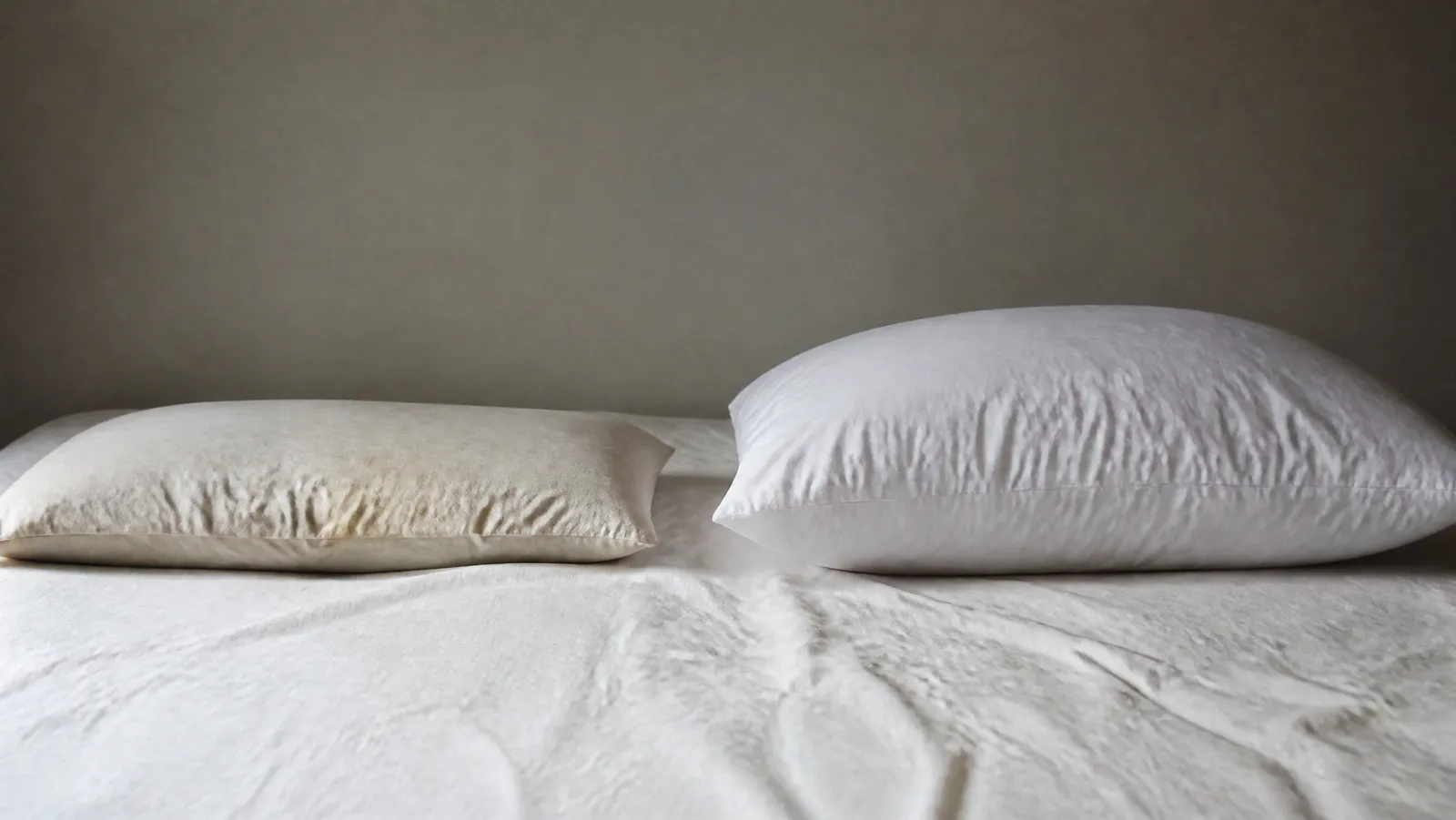
How Do Cooling Pillows Work? Gel, Phase Change, and Airflow Explained
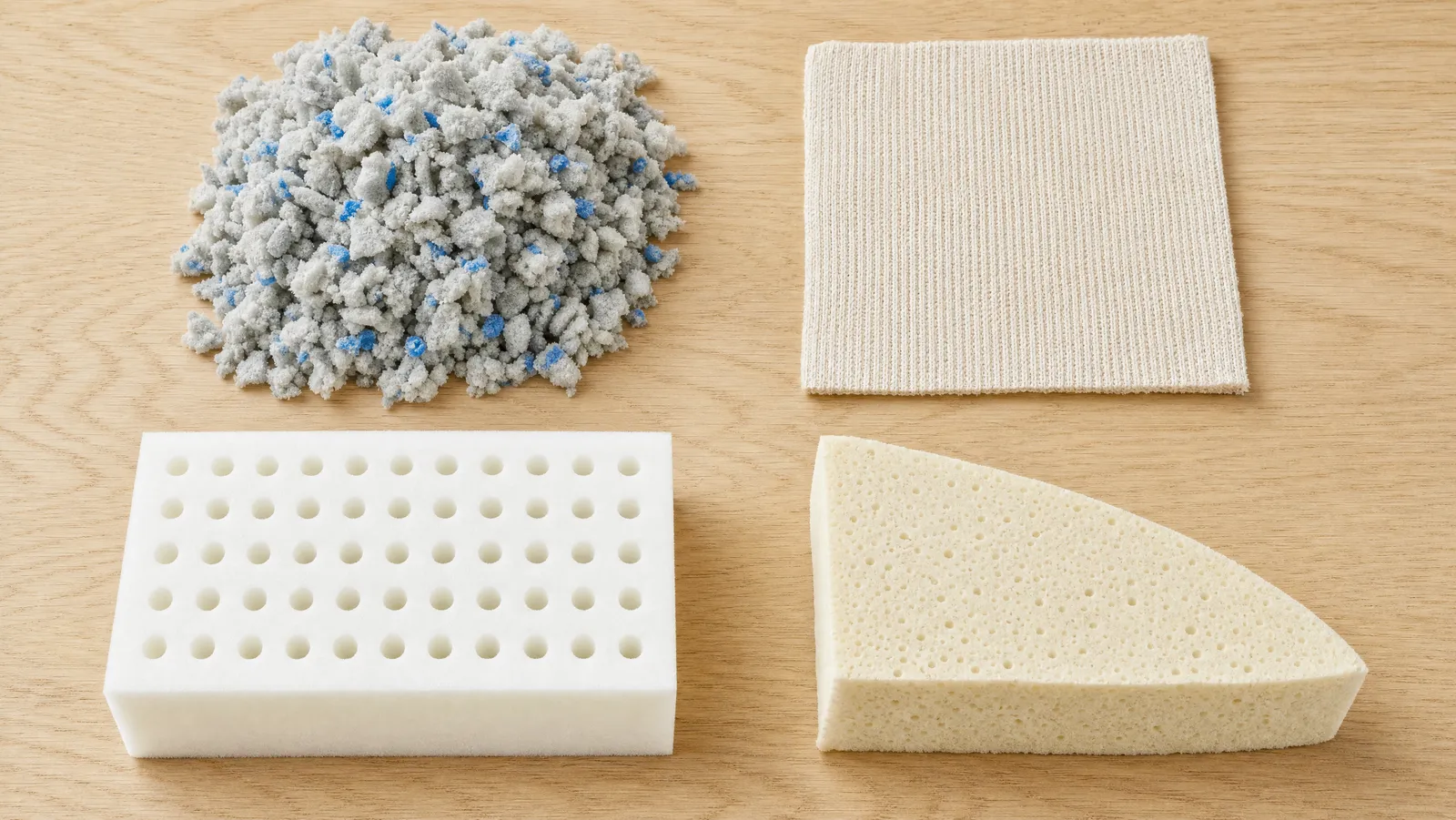
A cooling pillow moves heat away from your head faster than an ordinary pillow does, by one of three physical routes: conduction into a material that carries heat better than foam, convection through moving air, or evaporation of moisture from the cover. Every product sold as a cooling pillow is one of those three, or a stack of them. We earn a commission from links on this page, at no cost to you.
The useful question is narrower than the physics: which mechanism is in the pillow, and whether it keeps working for seven hours or is spent in twenty minutes. The difference between a heat sink and a transport pathway is the thing to understand before choosing a cooling pillow. How well any of it works is a separate question on a separate page.
The Short Answer
How do cooling pillows work? Not by making cold. There is no refrigerant and no compressor, so nothing removes energy from the room. A cooling pillow lowers the resistance between your skin and somewhere cooler, so the heat your head is already making leaves faster.
Six design families do that, and every product is one of them or a mix:
- Gel infusions and gel layers. Conduction: heat leaves your skin faster because the material carries it away better.
- Phase-change materials. A coating that absorbs heat by melting at a set temperature.
- Ventilated, perforated, cross-cut and shredded fill. Convection: warm, humid air moves instead of sitting there.
- Latex with pinholes. A more open, more resilient foam than viscoelastic memory foam.
- Cover fabrics. Two effects worth separating: the cool-to-the-touch moment, and wicking all night.
- Actively cooled pillows. Circulating water or air, with a bedside unit.
Gel, phase change and the cool-to-the-touch finish are finite. Airflow, wicking and powered circulation are not.
The Three Ways a Pillow Can Move Heat
The body loses heat four ways: radiation, convection, conduction and evaporation. A pillow works on three of them; radiation is traded with the room's surfaces, not with the object pressed against your head.
Conduction is heat flowing into something you touch. Gale's "Temperature Regulation" entry notes that "conduction, convection, and radiation can cause both heat loss and heat gain to the body", while "evaporation is a mechanism of heat loss only". That asymmetry is the weakness of gel.
Conduction also carries the best clinical evidence, though for mattresses rather than pillows. In Scientific Reports in 2024, Herberger, Kräuchi and colleagues ran 72 adults through a blinded crossover of two mattresses, one with a top layer of about 94.0 kJ/°C heat capacity against about 10.8 kJ/°C for a memory foam control. Slow-wave sleep rose by 7.5 minutes per 7.5 hours, and their conclusion is quotable: "Conductive body cooling during sleep is a reliable method for promoting N3 and reducing heart rate."
Convection is heat carried off by moving air. It scales with the skin-to-air temperature difference and with air speed, which is why a fan works and a sealed foam core does not.
Evaporation is heat spent turning sweat into vapour, and bedding underrates it. A whole-body calorimeter study of 59 adults by Garby and colleagues, published in Human Nutrition: Clinical Nutrition in 1987 as "Energy expenditure during sleep in men and women: evaporative and sensible heat losses", found the increase in heat loss during sleep over resting-awake levels "could largely be attributed to an increase in the evaporative heat loss". Convection and evaporation both keep running all night. Conduction does not.
Gel Infusions and Gel Layers
Gel is the commonest mechanism and the most misread. Gel particles do not contain cold; they raise the material's thermal conductivity, so the same temperature difference moves more heat.
The measurement is modest. A US patent filing for thermal-storage gel particles in flexible polyurethane foams reports ASTM E1225 testing of a gel-containing foam at 0.0292 Btu per hour-foot-°F against 0.0226 for a non-gel control, a 29.2% improvement in its own words. One sample pair in a patent is a direction, not a size, and nobody has published the equivalent for pillow foam.
The limit is arithmetic. Conduction needs a gradient and a heat sink has a fixed capacity, so once the gel reaches skin temperature the effect is over, and it recharges only while you are off it. The familiar figures, 30 to 90 minutes of coolness and a 2 to 5 degree drop in surface temperature, trace back to retailers' own content with no test behind them. Comparing gel versus phase-change cooling deserves its own page, and we will publish one.
The DORMANOVA adjustable pillow at $64.80 as of October 2026 is the mechanism in plain form: shredded memory foam with cooling gel particles the maker says help regulate temperature and reduce heat build-up. Note the verb: regulate claims direction, not duration. New foam also smells, which we cover in pillow off-gassing.
Phase-Change Materials
Phase change is the cleverest passive idea in bedding and the one most often sold without numbers. The physics is latent heat: a melting solid absorbs a lot of energy without getting warmer, because the energy breaks structure instead of raising temperature. Encapsulate a wax that melts near skin temperature, bond the capsules into a coating, and the surface holds nearly steady while they melt.
The temperatures are real and sit in the high twenties Celsius. A 2019 study in the Annals of the University of Oradea treated cotton-elastane denim with microcapsules made by in-situ polymerisation and measured the capsules storing 111 J/g of latent heat of melting at a peak of 28.1 °C. The sobering half of the result: the treated fabric held only 0.7 to 0.8 J/g. Impressive material, tiny dose.
Dose is the whole game. In Molecules in 2019, Nejman and colleagues coated fabrics with 20% or 40% microcapsule pastes: the 20% versions' melting and crystallisation enthalpies ran about 45% lower for the wovens and 35% lower for the knits, and they heated up faster.
So a phase-change pillow is a buffer of undisclosed capacity. It holds its surface temperature until the capsules have melted, then behaves like the fabric underneath, and recharges only when you roll off. It may help if your problem is falling asleep; it is not a seven-hour solution.
Ventilated, Perforated and Shredded Foam
This is the unglamorous mechanism with the best claim to lasting all night, because it is not a heat sink at all. Punched channels, perforations, cross-cut chunks and shredded fill leave air that moves when you move, carrying warm, humid air out instead of trapping it. Nothing fills up: while the room is cooler and drier than the pillow, the pathway works at hour seven as it did at minute one.
The weakness is that nobody quantifies it. Airflow through flexible foam is measured in cubic feet per minute under ASTM D3574, Standard Test Methods for Flexible Cellular Materials: Slab, Bonded, and Molded Polyurethane Foams, and we have never seen a pillow listing publish a cfm figure. You buy a structure you can see rather than a number.
Solid viscoelastic foam is the opposite case, and the reason most people arrive here. The longer story of why memory foam pillows sleep hot belongs on another page; the short version is a dense structure that resists air movement. For the support argument rather than the temperature one, see what a memory foam pillow is for.
The IWS SnowTouch adjustable pillow at $87.30 as of October 2026 stacks both: IWS describes gel-infused cross-cut TitanPro memory foam, conduction in the material and convection in the gaps between the pieces, under a cover it says promotes airflow around the pillow.
Latex and Open-Cell Fills
Latex earns its reputation structurally rather than chemically: it is a high-resilience foam with a more open cell structure than viscoelastic memory foam, and latex pillows are often pinholed as well, which adds channels through the core.
The sharpest definitions we found are in a mattress patent, which treats latex foam as any high-resilience foam with rebound above 40%, airflow above 3.5 cfm and recovery under half a second, and memory foam as polyurethane foam with low rebound and a temperature-sensitive response. Those are working definitions rather than a test standard, but they capture the difference: one material springs back and passes air, the other slumps and holds it.
We found no published airflow or surface-temperature comparison of latex against viscoelastic foam in pillow form, the measurement a claim this convenient should come with. If latex is where you are heading, the material questions worth more attention are in our guide to non-toxic latex pillows.
Cooling Covers and Fabrics
A cover does two jobs on different timescales, and conflating them disappoints shoppers.
Contact coolness is job one, and it is genuinely measurable. The industry test presses a plate heated to 30 °C onto the fabric for one second, over a base held at 20 °C, and records the peak heat flow as q-max; a textile patent repeats it ten times and averages. Kato Tech's catalogue for its cool-touch instruments names JIS L 1927, "Textiles: Measurement method of cool touch feeling property", among the standards, and a 2023 study in Applied Sciences found thermal effusivity, the physical property under the sensation, correlated with q-max at r greater than 0.82 for most of the fabrics it tested.
The catch is inside that specification: the window is one second. Cool to the touch is real and engineerable, and it describes the moment your cheek lands, not hour five.
Moisture is job two, and it is the one that matters over a night, because wicking decides whether evaporation can keep running. The Luxe Linen bamboo viscose pair is here for an unusually honest line in its own copy: the cover "wicks moisture and enhances airflow" and keeps you fresh "without artificial chilling". Two king pillows at $69.99 as of October 2026 is $35.00 each. A maker that declines a chilling claim and names the mechanism it has is copy we want more of.
Be careful with fibre names. Under the US Federal Trade Commission's textile guidance, fabric made from rayon or viscose produced using bamboo as the plant source may be labelled "rayon (or viscose) made from bamboo", and may be called bamboo only if made directly from bamboo fibre. David Vladeck, then director of the FTC's Bureau of Consumer Protection, put it this way in 2010: "Rayon is rayon, even if bamboo has been used somewhere along the line in the manufacturing process."
Then read the certifications for what they certify. OEKO-TEX STANDARD 100 tests an article's components, down to threads and buttons, for harmful substances, with stricter limits the more intimate the skin contact. CertiPUR-US certifies flexible polyurethane foam rather than a finished product, and covers formaldehyde, heavy metals, regulated phthalates and low VOC emissions. Neither is a cooling measurement, which is why we set out what each covers in pillow certifications explained.
Actively Cooled Pillows
One category escapes the finite-buffer problem, by not being only a pillow. Active systems run water or air through a pad or insert, hosed to a bedside unit. In the water versions the unit cools the returning water and sends it back out, so heat leaves the bed rather than moving around inside it. That is the only category that can sustain cooling indefinitely, for one reason: the unit is powered, so it keeps removing heat instead of storing it.
It costs three things: money, a unit and hose on the nightstand, and noise. A research abstract on water-circulating mattress systems from Kyungpook National University notes that a motor-driven pump generates noise and vibration while supplying a large water flow rate, albeit for heated beds. We found no independent decibel measurements for consumer sleep-cooling units, and we have nothing sourced in this category among our picks.
Which Mechanisms Last All Night
Rank the six by durability rather than how they feel in a shop, and the list nearly inverts.
- Airflow: all night. A pathway with nothing to use up.
- Wicking: all night, while the room's air can still take the vapour.
- Active circulation: all night, because it is powered.
- Phase change: a finite buffer, sized by how much capsule the maker paid for.
- Gel and conduction: finite, over when the material reaches skin temperature.
- Cool-to-the-touch finish: seconds, by the definition of the test that measures it.
Contact coolness is the cheapest effect to engineer, the most convincing in a shop, and the first to vanish. Airflow is dull, unquantified in every listing we have read, and, with wicking, the only passive mechanism still working at 4am. That is the reverse of the marketing emphasis.
None of it settles whether the premium is worth paying, which is the argument in the companion piece on whether cooling pillows actually work.
How to Tell Which One You Are Buying
- Find the material word, not the mood word. Gel-infused, cross-cut, perforated and phase change are mechanisms. Arctic, snow and chill are adjectives.
- Ask whether the mechanism is finite. All gel and all phase change are, so the question becomes how big the buffer is, and no maker publishes that.
- Decide which problem you have. Warmth is conduction and airflow. Clamminess is moisture, and a cover is the cheaper fix.
Frequently Asked Questions
What is a cooling pillow? Any pillow built to move heat or moisture away from your head faster than a conventional one, by conduction, airflow, evaporation, phase change or powered circulation. No standard governs the word.
Which cooling pillow materials work best? Choose the mechanism, not the brand: airflow through ventilated, cross-cut or pinholed fill, with a wicking cover over it. Gel and phase change are buffers that help early in the night.
Can a cooling pillow help with night sweats? It may make the bed more tolerable, and it cannot address a cause. Recurrent night sweats are worth raising with a clinician rather than solving with bedding.
The Bottom Line
How cooling pillows work reduces to one question: is the mechanism a heat sink or a pathway? Gel and phase change are heat sinks, absorbing a fixed amount of your heat and then stopping. Airflow, evaporation and a pump are pathways, and pathways do not fill up.
The sleep science supports the general idea: the 72-person crossover above found more slow-wave sleep when the bed conducted heat away better. What nobody has published, as far as we can find, is any of it measured in a pillow. So buy the mechanism you can see, read certifications as chemistry, and treat every quoted degree as marketing until someone names the test. Comparing specific models on those terms is the job of our guide to the best cooling pillows.
The shortlist
3 pillows compared — firmness, loft, and temperature side by side. The top pick is highlighted.
| Pillow | Firmness | Loft | Sleeps | Best for | Price |
|---|---|---|---|---|---|
Medium Soft | Adjustable | Cooling | Conduction and airflow in one adjustable pillow | $87.30 Check | |
Best Wicking CoverLuxe Linen Bamboo Viscose Gusseted Pillows (King, Set of 2) | Medium Firm | Adjustable | Cooling | Moisture-wicking surface for sweaty sleepers | $69.99 Check |
Best Gel-Infused FillDORMANOVA Adjustable Cooling Memory Foam Pillow | Medium | Adjustable | Cooling | Adjustable loft with a gel-infused shredded fill | $64.80 Check |
IWS I WANNA SLEEP Premium SnowTouch Adjustable Pillow (King)

Taking a couple of handfuls of fill out got the height right in one evening, and the loose cross-cut pieces breathe in a way the solid foam block it replaced never did.
It is the dearest pillow here at $87.30 as of October 2026, and IWS names no test or measured figure behind any of the cooling language, so the gel is a claim rather than a number.
This is the pillow on the page that stacks two of the six mechanisms instead of selling one. IWS describes the fill as gel-infused cross-cut TitanPro memory foam, which is conduction plus convection in the same handful of foam: the gel raises how fast heat leaves your skin, and the cross-cut pieces leave air gaps that let warm, humid air move rather than sit. The maker also says the cover promotes airflow around the pillow, and states OEKO-TEX certification, which is a chemical-safety test rather than a cooling one.
It suits a hot sleeper who does not yet know their loft, because the fill comes out and goes back in. The trade-off is price and honesty about limits: $87.30 as of October 2026 against a $103 list price is the most expensive option here, and the gel half of the system is still a finite buffer. What should last the night is the air between the pieces, not the gel inside them.
Luxe Linen Bamboo Viscose Gusseted Pillows (King, Set of 2)

The surface stays dry rather than clammy, which turned out to be the thing I was actually chasing, and $35.00 a pillow as of October 2026 for two kings is hard to argue with.
It never feels cold to the touch, by the maker's own admission, and the cover is only rayon on the surface layer with polyester beneath it.
One line in this listing is the reason it is on the page. Luxe Linen says its cover wicks moisture and enhances airflow and that it keeps you fresh "without artificial chilling". That is a maker declining to claim the mechanism it does not have, and it names the one that matters most over a full night: evaporation. The company describes a three-layer cover with a surface of rayon derived from bamboo over polyester, which is the correct way to describe the fibre under the Federal Trade Commission's textile guidance.
Underneath is adjustable shredded memory foam with a zip, plus gusseted edges to hold loft. Two king pillows at $69.99 as of October 2026 works out at $35.00 each, the cheapest per-pillow price here. The trade-off is that the honesty cuts both ways: nothing in this pillow produces a cool-to-the-touch moment, so if what you want is the first-minute shock of a cold surface, this is not that pillow.
DORMANOVA Adjustable Cooling Memory Foam Pillow

Being able to add fill rather than only take it out meant I could build the height back up after the pillow settled, which no other adjustable pillow I have owned allowed.
The gel phrasing is temperature regulation rather than a measured figure, and shredded fill needs reshaping by hand most mornings.
If you want to see the conduction mechanism on its own, this is the clearest example of it. DORMANOVA describes shredded memory foam with cooling gel particles that it says helps regulate temperature and reduce heat build-up, blended with fibre, in a breathable removable cover. Shredding it does the second job quietly: loose pieces trap less heat than a moulded block, which is why a shredded gel fill is a more sensible buy than a solid gel slab at the same price.
The 200g refill bag is the practical argument. Gel aside, loft is the variable most likely to fix your mornings, and this is the only pillow here that ships with spare fill to add, rather than only letting you take fill out and put it back. At $64.80 as of October 2026 it is the middle price. The honest caveat is the same one that applies to every gel pillow: the gel is a heat sink with a finite capacity, and no maker including this one publishes how long it lasts.
Working Out Which Cooling Mechanism You Are Actually Buying
Six mechanisms, one listing, and the marketing word “cooling” applied to all of them. Work down this order and you will usually know which one you have within two minutes.
How Cooling Pillows Work: FAQ
How can I tell real phase-change material from a gel infusion? Language, mostly. A phase-change product describes a coating, film or treated fabric that works at a stated temperature, because that is the whole point of the material: it changes state in a narrow band. A gel-infused product describes particles or a layer mixed into the foam and quotes no temperature. If a listing says “cooling gel” and nothing else, assume conduction and a finite buffer.
Does a bamboo cover cool you down? It can move moisture, which is a real mechanism, but be precise about the fibre. The US Federal Trade Commission’s textile guidance is that a fabric made from rayon or viscose produced using bamboo as the plant source may be labelled “rayon (or viscose) made from bamboo”, and may only be called bamboo if it is made directly from bamboo fibre. One FTC official summarised the position as “Rayon is rayon, even if bamboo has been used somewhere along the line in the manufacturing process.” So judge it as a smooth viscose knit that wicks, not as a plant with special properties.
Will a cooling pillowcase do the same job? For the cool-touch part, largely yes, because contact coolness is a surface property and the case is the surface. For airflow it will not, because the case cannot open up a solid foam core. This is why we would try a $20 cover before a $120 pillow if the complaint is the first ten minutes rather than the whole night.
Why does a cooling pillow feel warm by 2am? Because conduction needs a temperature difference. Heat flows from your skin into the gel or the phase-change layer only while that layer is cooler than you are; once it has equalised, the gradient is gone and so is the effect. Nothing is broken, and no passive pillow can recharge while you are lying on it.
Does washing the cover ruin the cooling? Nobody has published the test we would want to see. The 2019 Molecules study by Nejman and colleagues measured phase-change capsule loadings in coated fabrics as made, not after laundering, and we found no wash-durability trial for a cool-touch finish on bedding. Follow the care label, and treat a finish that depends on a coating as something that may fade.
Is a cooling pillow the answer to night sweats? It may make the bed more comfortable, and it will not treat the cause. Repeated drenching night sweats have medical explanations worth investigating, so that is a conversation with a clinician rather than a bedding purchase.
Why you can trust us

Aimee Cannon
Sleep & bedding writer
Aimee Cannon is a sleep and bedding writer who has spent years testing pillows of every kind — memory foam, down, wool, bamboo, buckwheat, and specialty support pillows. She focuses on matching the right pillow to each sleeping position and need, and reports what actually holds up after months of nightly use. When she is not testing pillows, Aimee is usually with her husband and her dog.