The Best Cooling Pillows for Night Sweats and Hot Flashes
The best cooling pillow for night sweats is the one whose cover comes off and goes through a wash. A wicking surface and a launderable cover keep working all night; a gel insert feels cool for a few minutes and then matches your skin. One condition: sweats that soak the bedding on a regular basis are a clinician's question before they are a bedding one. We earn a commission from links on this page, at no cost to you.
The commercial half and the medical half of that do not conflict. They have an order. Mayo Clinic sets out when night sweats need a doctor, and no product listing changes that list. What a pillow can do is make the bed easier to live with while the cause is looked into, and that pillow is chosen for moisture rather than chill. Our best cooling pillow guide ranks the category; this page is the narrow version, for people who wake up wet.
The Short Answer
- Buy for the laundry, not for the chill. A cover that unzips and survives a weekly wash is the spec that still matters in month six. Our pick, the Luxe Linen gusseted bamboo viscose pair, is $49.23 as of October 2026, or $24.62 a pillow.
- Moisture moves more heat than a cool surface does. In Gagnon and Crandall's chapter Sweating as a heat loss thermoeffector, sweat evaporation offers far more potential heat loss than any other route, and is the only one left when air temperature exceeds skin temperature. Conduction stops once the surface reaches your temperature.
- Recurrent drenching sweats are a medical question first. Mayo Clinic advises scheduling a visit if night sweats "occur on a regular basis" or "interrupt your sleep". Its causes list runs through menopause, medications, sleep apnoea, thyroid disease and infection. No pillow treats any of them.
- Nobody has measured a cooling pillow. The nearest published trial put a cooling pad on top of a pillow, which is not the same object.
- The room beats the bedding. The Sleep Foundation puts the best bedroom temperature at "approximately 65 degrees Fahrenheit (18.3 degrees Celsius)". A thermostat moves more heat than anything you can buy for your head.
When Night Sweats Are a Medical Question First
Start with what does not count. Mayo Clinic notes that waking after sweating heavily, "particularly if you're sleeping under too many blankets or your bedroom is too warm", is unpleasant but that such episodes "aren't usually considered night sweats". That version is a bedding problem, and this page is mostly about it.
The other version has criteria. Mayo Clinic advises scheduling a visit with a health care professional if night sweats "occur on a regular basis", "interrupt your sleep", or come with "a fever, weight loss, pain in a specific area, cough or diarrhea". Its causes list includes medications such as antidepressants and hormone therapy, and conditions including menopause, hyperthyroidism, sleep apnea, HIV, tuberculosis and cancers such as lymphoma and leukemia.
Two of those deserve a paragraph, because bedding often gets bought instead of an appointment.
Sleep apnoea. In Arnardottir and colleagues' 2013 study of the Icelandic Sleep Apnoea Cohort in BMJ Open, frequent nocturnal sweating, defined as three or more times a week, was reported by "30.6% of male and 33.3% of female OSA patients" against "9.3% of men and 12.4% of women in the general population", and it fell "from 33.2% to 11.5%" among patients using full positive airway pressure treatment. Their conclusion: practitioners "should consider the possibility of OSA in their patients who complain of nocturnal sweating". The Sleep Foundation rounds the same finding to as many as a third of people with obstructive sleep apnoea.
Menopause. Night-time hot flashes are the usual mechanism, and unusually well described. In Robert Freedman's 2013 review Menopausal Hot Flashes: Mechanisms, Endocrinology, Treatment, hot flashes "are triggered by small elevations in core body temperature (Tc) acting within a greatly reduced thermoneutral zone", and he reports measuring that zone as "0.0°C in the symptomatic women and 0.4°C in the asymptomatic women". Freedman also notes that "warm, ambient temperature and peripheral body heating could provoke" hot flashes, and that peripheral cooling will "ameliorate" them. That is the strongest support on this page for a cool surface being worth anything, and note what it is about: skin, not a pillow. On duration, Avis and colleagues' 2015 analysis of the SWAN cohort in JAMA Internal Medicine reported a median 7.4 years of symptoms among women with frequent vasomotor symptoms, and 4.5 years after the final menstrual period. Not a problem you solve with one purchase.
We cannot tell you which cause applies, and neither can a product page. If you are regularly waking drenched, or sweating alongside fever or unexplained weight loss, that is an appointment.
Why a Washable Wicking Cover Beats a Gel Insert Here
Two mechanisms get sold as cooling, and they behave completely differently across a night. The step-by-step version is in our companion piece on how cooling pillows work; the short version decides this purchase.
Conduction is a transient. A gel layer or an ice-silk face pulls heat out of your skin quickly, reaches your temperature, and stops. The textile industry measures the sensation as q-max, and Japan's standard for it, JIS L 1927, is titled "Textiles - Measurement method of cool touch feeling property". North Carolina State University's Textile Protection and Comfort Center describes the value as "the instantaneous thermal feeling sensed when there is initial contact" with the skin. It is a peak at first touch, and nothing in the measurement covers hour three.
Evaporation is not a transient. It stops when the moisture stops. According to Gagnon and Crandall's chapter Sweating as a heat loss thermoeffector, sweat evaporation offers far more potential heat loss than any other avenue and is the only one available once air temperature exceeds skin temperature, which makes sweating the most powerful autonomic thermoeffector we have. Shibasaki and Crandall make the same point in Frontiers in Bioscience, where evaporative heat loss is called critical in a hot environment, particularly when the environment is warmer than the skin.
For the sleeper whose complaint is wet rather than warm, that inverts the hierarchy: a wicking face and a launderable cover beat a gel insert, because they work with what your body is already doing. The gel is a good first thirty seconds.
The cheap version of this argument is the case, not the pillow. A thin wicking pillowcase costs a fraction of a pillow and washes twice a week, and the evidence for and against them is its own article: see whether cooling pillowcases work. If fabric is where you would rather spend, our guide to pillow cases is the start.
What the Research Does and Does Not Show
The honest sentence first. We could not find a controlled trial of a cooling pillow, the same conclusion we reached in our longer look at whether cooling pillows actually work.
What exists is a trial of a pad. A 2016 phase II randomised trial by Marshall-McKenna and colleagues in Supportive Care in Cancer tested a "cool pad" pillow topper plus standard care against standard care alone in 74 women on endocrine therapy for breast cancer who had hot flushes and insomnia. Median sleep efficiency improved in both arms, but the intervention arm's increase was "almost twice that on the control arm (p = 0.024)". The hot flush endpoint came in at p = 0.09, a trend rather than a result. That is a real finding about a cooling pad, in a clinical population, measured against standard care rather than an ordinary pillow. It is not evidence about a pillow, and we will not launder it into one.
A trial of cooling pillowcases for hot flushes is registered on ClinicalTrials.gov as NCT06415162, with no published results we could find.
Notice how modest the clinical advice is. The National Cancer Institute's PDQ summary on hot flashes and night sweats, last updated in February 2025, offers two comfort measures: "wear loose-fitting clothes made of cotton" and "use fans and open windows to keep air moving". Fabric and air. No pillow.
Our Picks for Night Sweats and Hot Flashes
Four products, and only three are pillows.
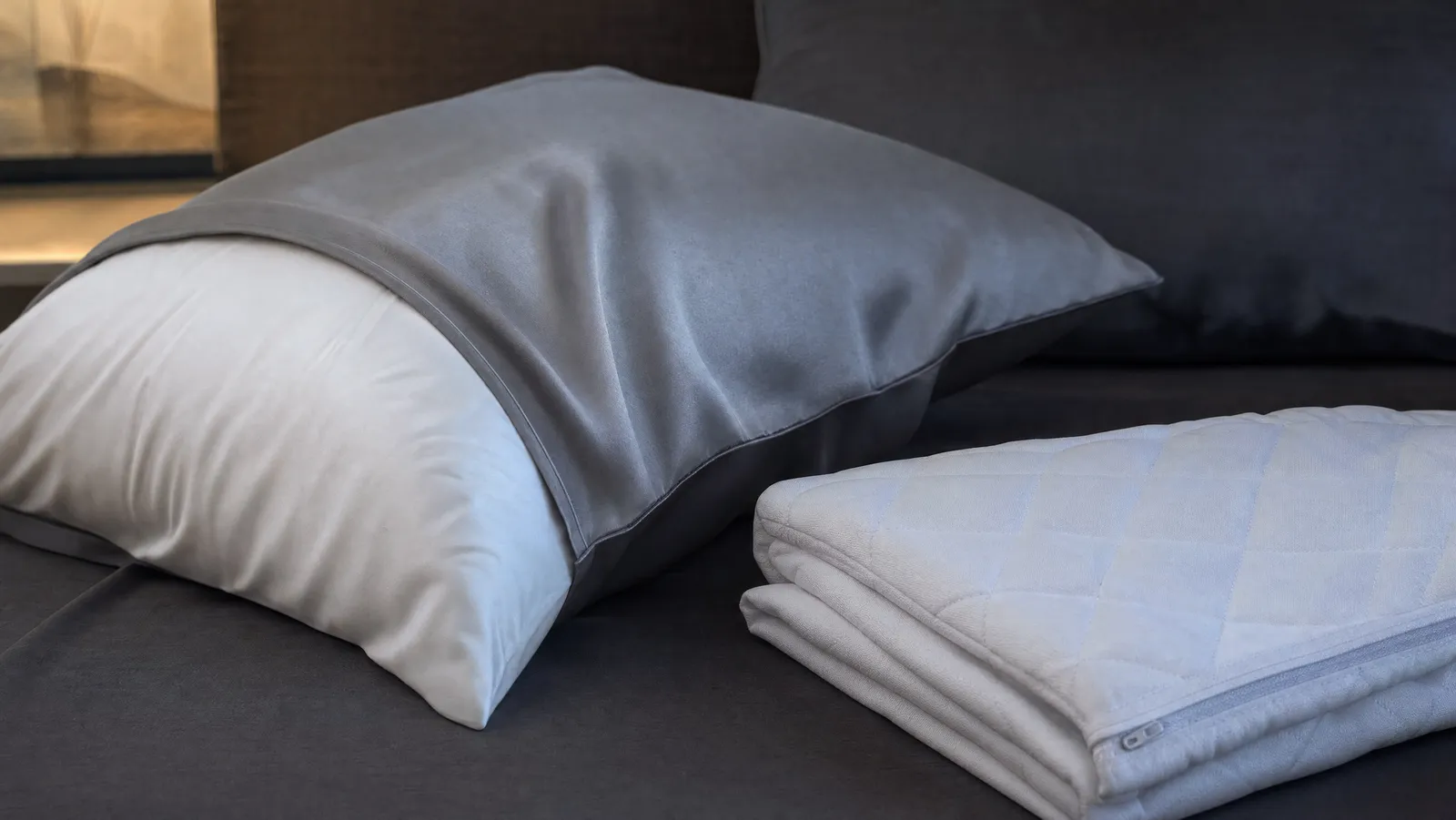
The Luxe Linen gusseted pair is our pick, at $49.23 as of October 2026 against a $69.99 list price, which is $24.62 a pillow in king size. It is not the cheapest set here; what wins it the badge is which fabric faces your head. Luxe Linen describes a three-layer cover whose "skin-contact layer is woven with bamboo viscose", backed by polyester, and says bamboo viscose "breathes better than cotton and wicks moisture away". The wicking fibre is the sleeping surface rather than one of two options, the gusseted edges hold loft, and the cover unzips for the machine. Luxe Linen also names that fibre "bamboo viscose" rather than just bamboo, which matters: the US Federal Trade Commission requires textiles made from chemically processed bamboo pulp to be labelled as rayon or viscose. The maker states OEKO-TEX STANDARD 100 and CertiPUR-US certification, both chemistry programmes rather than temperature ones, as we untangle in pillow certifications explained. The line we will not repeat is that hot sleepers "stay cool, dry, and comfortable all night": nobody has measured a pillow across a night, this one included.
The Seyfote queen pair is the lowest cost per pillow here, at $34.99 as of October 2026 against a $39.99 list price, or $17.50 a pillow against the Luxe Linen's $24.62 and the DORMANOVA's $64.80. Its cover is double-sided, which is the thing to understand before buying: Seyfote describes "ice silky fabric, which can reduce heat accumulation" on one face and "60% Polyester and 40% Rayon derived from Bamboo" on the other. Two mechanisms, one conductive and one evaporative, and you sleep on one at a time. Buy it for two launderable covers at the lowest total price of the three pillows here, not for the better surface.
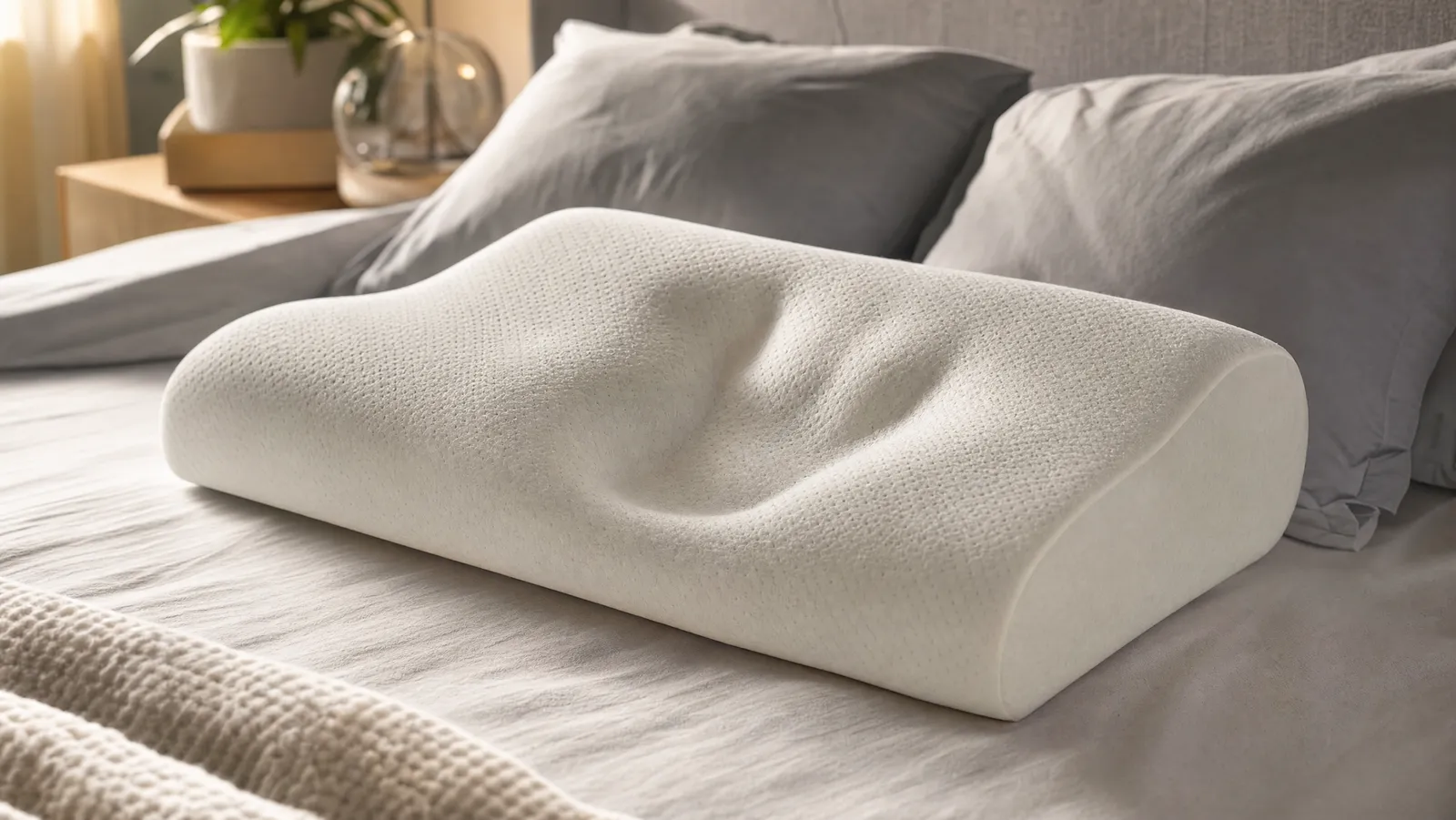
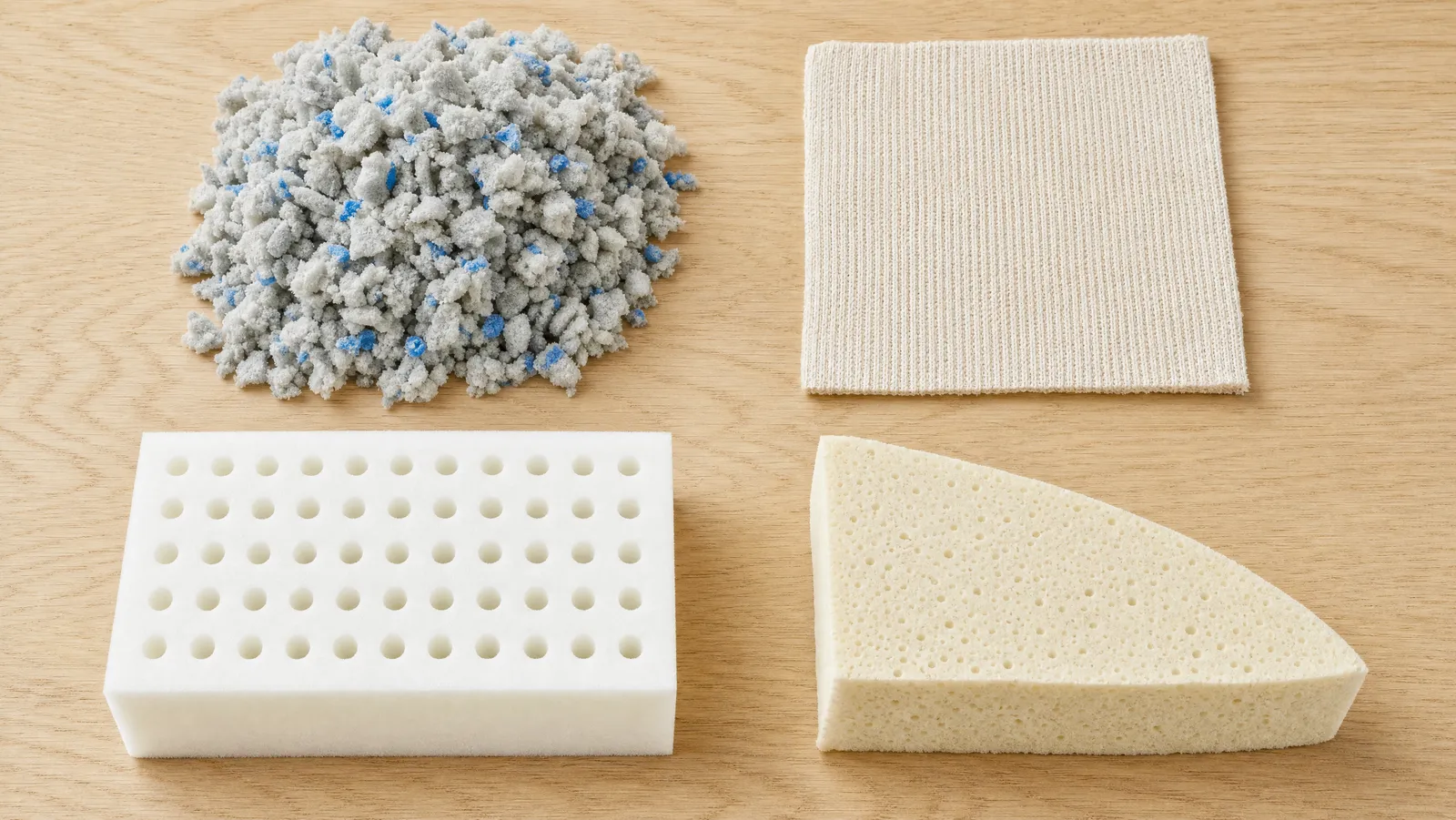
The DORMANOVA single at $64.80 as of October 2026 is the only one here that ships with spare fill, so you can add loft rather than only remove it. It is also the clearest example here of a listing becoming more careful: the copy we read in October 2026 claims only "shredded gel foam and fiber fill" and a dual-sided cover that unzips for care, and no longer claims that the gel regulates temperature or that the cover promotes airflow. We will not quote wording the maker has dropped, so we rate it cooling on the named material and the shredded structure rather than on a temperature claim. Shredded fill does let air through where a solid slab of memory foam insulates, a trade-off we work through in what memory foam actually does well.
The HI FINE CARE gel pad at $13.99 as of October 2026 is the experiment, not the answer. It is a sealed gel pad, 11.8 by 7.9 inches, and its best quality is its candour: the maker states that "cooling duration is typically 1-3 hours", where almost nothing else in this category publishes a duration at all. Lay it on the pillow you own and you learn, for the price of a pillowcase, whether a cool patch is what you wanted. What it is not is a pillow or a treatment: its listing title offers "Instant Relief for Hot Flashes, Night Sweats, Headaches & Muscle Pain", and we found nothing supporting that as more than a cool object against warm skin.
We have not tested any of them, and no maker publishes thermal data for an individual pillow, so we would rather say so than post a number we cannot defend.
What to Change Before You Change the Pillow
Ranked by how much heat or moisture each actually moves, which roughly reverses the order the bedding industry prefers.
- The room. The Sleep Foundation's figure is "approximately 65 degrees Fahrenheit (18.3 degrees Celsius)", with a reported doctors' band of 65 to 68. Nothing on the bed competes with a thermostat.
- Moving air. The National Cancer Institute's comfort measure is to "use fans and open windows to keep air moving", and air movement is what lets evaporation work. A fan costs less than every pillow here.
- Layers you can shed. The same NCI summary suggests "loose-fitting clothes made of cotton". Two thin bed layers beat one thick one, because you can throw half of it off at 3am.
- A case you wash twice a week. The only layer your skin touches, the cheapest item on the bed, and it dries in an hour.
- The conversation. The Sleep Foundation's guidance is that "persistent, severe, or unexplained night sweats", particularly alongside fever, weight loss or swollen lymph nodes, should be evaluated by your doctor. If apnoea is the cause, the Icelandic cohort above suggests treatment does more about the sweating than any surface will.
Then the pillow, one change at a time: move the thermostat and the pillow in the same week and you will never know which worked.
Keeping a Pillow You Sweat Into
A pillow you sweat into has a running cost, and it is mostly moisture.
- Dry anything wet quickly. The US Environmental Protection Agency's remediation guidance states that "in most cases, mold will not grow if wet or damp items are dried within 24-48 hours". A pillow whose cover feels dry is not necessarily dry in the middle.
- Wash the cover, not the core. Seyfote's own instruction is to "remove the inner pillow and clean only the outer cover, not the memory foam", which is the general rule for foam fills. It is also why we keep pointing at the cover: it is the only part with a laundry cycle.
- Treat a surviving smell as a verdict. Why the EPA's guidance on porous materials makes growth in a fill a replacement rather than a cleaning project is in mold in pillows.
- Budget for replacement rather than rescue. Sweat shortens the honest life of a pillow, and the intervals are in how often to replace your pillow. At $17.50 a pillow as of October 2026, replacing beats salvaging.
Two things we have not written yet and will not pretend to have: a tested method for how to wash a cooling pillow, and the long answer on why cooling pillows stop working. Until then the care label is the authority.
Frequently Asked Questions
What is the best cooling pillow for menopause? The same one, for the same reason: a washable wicking cover. Freedman's review supports peripheral cooling easing hot flashes, so a cool surface is not nothing, but Avis and colleagues put the median duration of frequent vasomotor symptoms at 7.4 years, so durability and laundering matter more than first-contact chill. Treatment is a clinician's conversation, not a product category.
Will a cooling pillow stop hot flashes? No, and we found nothing suggesting it could. The only randomised trial near this question used a cooling pad, and its hot flush endpoint missed significance at p = 0.09 while its sleep-efficiency result did not. Better sleep in spite of the flashes is the realistic hope.
Is a cooling pillowcase enough on its own? For some people, plausibly, and it is both the cheapest thing to try and the layer you can wash most often. The registered trial of cooling pillowcases for hot flushes has no published results we can find, so that is reasoning from mechanism rather than evidence.
Should I buy a pair or a single? A pair, if the covers come off, because one can be in the wash while you sleep on the other.
The Bottom Line
The best cooling pillow for night sweats is a laundry decision dressed up as a thermal one. Pick the pillow whose cover you will actually strip and wash, with a wicking fibre on the face that touches you, because evaporation keeps working long after a cool surface has given up. That is why our pick is the Luxe Linen pair at $24.62 a pillow as of October 2026 rather than the cheaper Seyfote set at $17.50, and why the $13.99 gel pad is here as a test rather than a solution.
Keep the order straight, because it is the part a product page will never tell you. Mayo Clinic's criteria for seeing a doctor are specific, the Icelandic cohort found frequent nocturnal sweating about three times as common in untreated sleep apnoea as in the general population, and Freedman measured the thermoneutral zone in symptomatic women at zero. Bedding touches none of that. Fix the room, move some air, wash the cover weekly, raise it with a clinician if it is recurrent, and then buy the pillow. For the full shortlist, our cooling pillow buying guide is the next page.
The shortlist
4 pillows compared — firmness, loft, and temperature side by side. The top pick is highlighted.
| Pillow | Firmness | Loft | Sleeps | Best for | Price |
|---|---|---|---|---|---|
Medium Firm | Adjustable | Cooling | Bamboo viscose surface, washable cover | $49.23 Check | |
Lowest Cost per PillowSeyfote Cooling Shredded Memory Foam Pillows (Queen, Set of 2) | Medium Firm | Adjustable | Cooling | Two washable covers at a low total price | $34.99 Check |
Extra Fill IncludedDORMANOVA Adjustable Shredded Memory Foam Pillow | Medium | Adjustable | Neutral | Setting your own loft | $64.80 Check |
Gel Pad, Not a PillowHI FINE CARE Cooling Gel Pad | — | — | Cooling | A cheap test before you replace a pillow | $13.99 Check |
Luxe Linen Gusseted Bamboo Viscose Pillows (King, Set of 2)

The bamboo viscose face is dry by morning in a way the polyester cases it replaced never were, and stripping the cover for a weekly wash takes a minute.
They arrived vacuum-sealed and needed the full 24 to 48 hours to expand, and medium-firm is firmer out of the bag than the gusseted look suggests.
Two gusseted king pillows for $49.23 as of October 2026, against a $69.99 list price, which works out at $24.62 a pillow. Inside is adjustable shredded memory foam, but the part that matters for a sweating sleeper is the cover. Luxe Linen describes a three-layer cover whose "skin-contact layer is woven with bamboo viscose", backed by polyester, and says that bamboo viscose "breathes better than cotton and wicks moisture away". That is the evaporative mechanism, and it is the one that keeps working after a cool surface has warmed to your skin. The gusseted edges hold loft, the cover is removable and machine washable, and the maker states OEKO-TEX STANDARD 100 and CertiPUR-US certification.
This is not the cheapest set here, and the reason it still wins is which fabric faces your head: the wicking fibre is the sleeping surface rather than one of two options on a reversible cover. Two cautions. Luxe Linen's claim that hot sleepers "stay cool, dry, and comfortable all night" is a manufacturer claim and the one piece of its copy we would not repeat, because nobody has measured a pillow across a night. And the pillows ship vacuum-sealed with a stated 24 to 48 hours needed to expand, so you cannot judge the loft on day one. If you wake soaked on a regular basis, the first step is a clinician rather than a cart.
Seyfote Cooling Shredded Memory Foam Pillows (Queen, Set of 2)

Two pillows for less than the price of one of the others, and keeping a spare cover clean means I never have to sleep on a damp one.
You have to pick a side, the slick cooling face or the softer bamboo blend, and only the cover can go in the machine.
Two queen pillows, 20 by 30 inches, for $34.99 as of October 2026 against a $39.99 list price. That is $17.50 a pillow, the lowest per-pillow figure on this page once you set aside the gel pad, which is not a pillow. The fill is cross-cut memory foam and microfiber that Seyfote says can be "added or removed to suit your size, shape, or sleep position", and the cover is double-sided: the maker describes "ice silky fabric, which can reduce heat accumulation" on one face and "60% Polyester and 40% Rayon derived from Bamboo" on the other. Seyfote states Standard 100 by OEKO-TEX and CertiPUR-US certification.
The catch is that those two faces are two different ideas and you sleep on one of them at a time. The ice-silk side is a conduction claim, which fades as the surface reaches your temperature; the bamboo-rayon side is the moisture side, and it is a 40% blend rather than a wicking face. Seyfote's care instruction is specific and worth obeying: "remove the inner pillow and clean only the outer cover, not the memory foam". Buy this set for two launderable covers at the lowest total price of the pillows here, rather than for the better sleeping surface.
DORMANOVA Adjustable Shredded Memory Foam Pillow

Adding fill from the extra bag got the height right for my shoulder, which is something no fixed pillow has ever let me do.
It is one pillow for the price of two from most makers, and the feature list now promises less about temperature than the word gel implies.
One pillow, 50 by 70 cm (19.7 by 27.6 inches), at $64.80 as of October 2026, which makes it the most expensive single pillow on this page by a wide margin. What the money buys is control: DORMANOVA includes "a separate 200 g bag of fill" for adjusting the pillow, so this is the only pick here that ships with spare fill, letting you add loft rather than only take it away. The fill is described as "shredded gel foam and fiber fill" and the outer cover is dual-sided and unzips for care.
Read the listing rather than the category, because this one has got more careful. The feature copy we read in October 2026 claims only shredded gel foam and fiber fill, two fabric surfaces with a honeycomb pattern, and a removable cover. It does not claim that the gel regulates temperature or that the cover promotes airflow, which earlier copy did. We still rate it cooling, on the strength of a named material and a shredded structure rather than any temperature claim, and we would rather tell you the maker has dropped a claim than quote wording that is no longer there. Note the package too: DORMANOVA states that it "contains one pillow, rather than a pair".
HI FINE CARE Cooling Gel Pad

For less than the price of a pillowcase I found out that I do like something cool to fall asleep against, which saved me guessing at a sixty-dollar pillow.
The maker's own one to three hours is the figure to plan around, so it helps at bedtime and does little by the small hours.
This is on the page as an experiment rather than as a pillow. It is a sealed gel pad, 11.8 by 7.9 inches, at $13.99 as of October 2026, that you lay on top of the pillow you already own in order to answer one question before you spend real money: do you want a cold patch, or do you want a dry one? HI FINE CARE says its "advanced medical-grade gel works at room temperature, absorbing body heat", with no refrigeration needed, and that you can "easily clean with mild soap and water". We found no standard behind the phrase medical-grade, and read it as marketing.
Its best feature, for our purposes, is its candour about duration. The maker states that "cooling duration is typically 1-3 hours", and that a brief 30 minutes in the fridge "can enhance performance" while prolonged freezing should be avoided. Almost nothing else in this category publishes a duration at all, and one to three hours is an honest description of what a passive cool surface does. What it is not is a treatment. The listing title offers "Instant Relief for Hot Flashes, Night Sweats, Headaches & Muscle Pain", and nothing we found supports reading that as more than a cool object against warm skin. It does not replace a pillow, and it does not replace a clinician.
Night Sweats and a New Pillow: The Order We Would Actually Do It In
Nothing in this list is a treatment, and the first step is deliberately not a purchase. The point of the order is that each step moves more heat or moisture than the one below it, so changing them one at a time tells you what is working.
Cooling Pillows for Night Sweats: FAQ
How often should I wash the cover? As often as you would wash a pillowcase, which is the point of buying a pillow whose cover comes off. Both of the pairs on this page have removable machine-washable covers, and having two covers means one can be in the wash.
Can I wash the foam itself? No, and the makers say so. Seyfote's care instruction is to "remove the inner pillow and clean only the outer cover, not the memory foam". That is the normal rule for shredded and solid foam alike, which is why the cover carries the hygiene load.
My sweating comes with snoring. Does that change anything? It may change who you ask. In Arnardottir and colleagues' 2013 BMJ Open study of the Icelandic Sleep Apnoea Cohort, frequent nocturnal sweating was reported by "30.6% of male and 33.3% of female OSA patients" against "9.3% of men and 12.4% of women in the general population", and fell "from 33.2% to 11.5%" in patients on full positive airway pressure treatment. Their conclusion was that practitioners "should consider the possibility of OSA in their patients who complain of nocturnal sweating".
Do men get night sweats from treatment too? Yes, and the National Cancer Institute's PDQ summary is explicit that "surgery to remove one or both testicles for the treatment of prostate cancer can trigger a set of symptoms that include hot flashes and night sweats". This is not only a menopause topic, and it is a clinical conversation in either case.
Will a gel pad or gel pillow stay cool all night? Not on any published figure we can find. The one maker here that quotes a number says "cooling duration is typically 1-3 hours", and the textile metric behind cool-touch claims, q-max, is a measurement of the first moment of contact rather than a duration at all.
Is a sweaty pillow a mould risk? Moisture in a porous fill is the condition mould needs, and the EPA's 24-to-48-hour drying window is the number we would work to. A cover you can strip and launder is the practical defence; a fill with growth in it is a replacement rather than a cleaning project.
Why you can trust us

Aimee Cannon
Sleep & bedding writer
Aimee Cannon is a sleep and bedding writer who has spent years testing pillows of every kind — memory foam, down, wool, bamboo, buckwheat, and specialty support pillows. She focuses on matching the right pillow to each sleeping position and need, and reports what actually holds up after months of nightly use. When she is not testing pillows, Aimee is usually with her husband and her dog.