Why Do Memory Foam Pillows Sleep Hot?
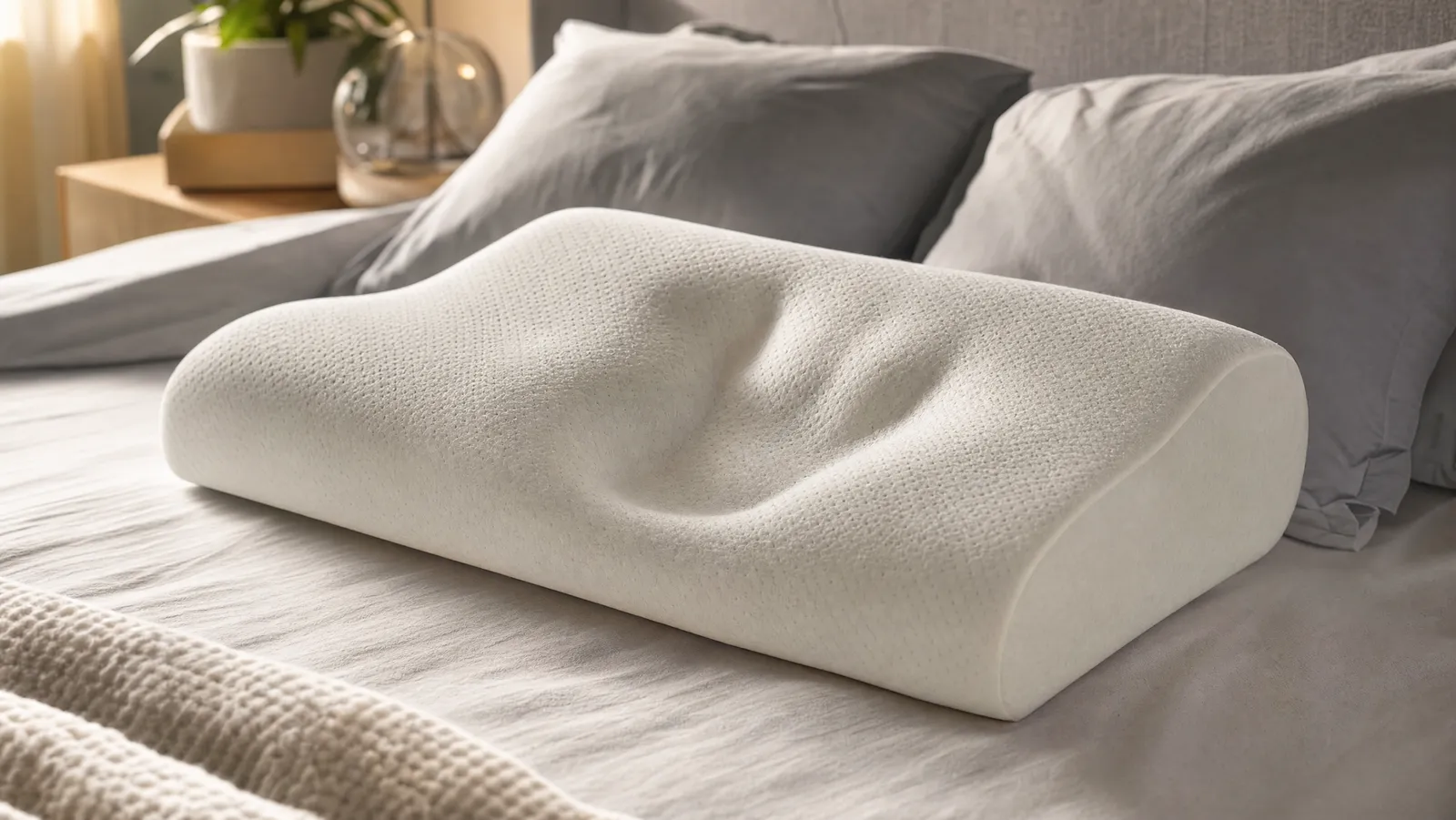
Memory foam pillows sleep hot because three properties of the material act at once: the foam is a thermal insulator, air moves through it slowly by design, and it conforms to your head so more of your skin is in contact with it. Shredding the fill and lowering the loft change the second and third. Nothing on the market changes the first cheaply. We earn a commission from links on this page, at no cost to you.
That is the whole answer, and the rest of this page is the proof plus the honest ranking of the fixes. Heat is the standing complaint about the material rather than a fault in your particular pillow: the Sleep Foundation's cooling pillow guide warns flatly that "Memory foam pillows may retain heat and restrict airflow, so look for a cooling pillow that offsets this". If you would rather have the shortlist than the physics, our guide to choosing a cooling pillow ranks what we would actually buy.
The Short Answer
- Foam is insulation. A US patent filing measured a non-gel flexible foam sample at 0.0226 Btu/(hr-ft-°F), which is 0.0391 W/(m-K), under ASTM E1225. Reference tables put glass and mineral wool building insulation at roughly 0.032 to 0.040 W/(m-K). Your pillow is in the same band as loft insulation.
- The slow sink is a low-airflow specification. The pneumatic effect that makes memory foam memory foam depends on air struggling to move in and out of the cells.
- Conforming costs you contact area. A block that cups the side of your head touches more of it than a flat pillow does, and the part not touching you is the part that could have been shedding heat.
- Gel changes conduction, briefly. Roughly 29% more conductive than non-gel foam, in the patent holder's own testing, measured on the material rather than on a sleeper.
- The fixes that work are structural or environmental: shredded or ventilated fill, less of it, a launderable wicking cover, and a cooler room.
Foam Is Insulation, and Insulation Is the Point
Start with the material rather than the pillow. Polyurethane foam is one of the things civilisation uses to stop heat moving. The background section of a US patent on gel-infused foams states that open-celled and partially open-celled polyurethane flexible foams, latex foams and melamine foams "typically have low thermal conductivities in the range of 0.02-0.04 W/m °K", and gives polyurethane foam "thermal conductivities in all directions of about 0.035-0.06 W/(m-°K)". Low conductivity is the selling point in every other industry that touches the material.
Then the measured figure. US patent 8,933,140, covering thermal storage gel particles in flexible polyurethane foam, reports a non-gel control sample at 0.0226 Btu/(hr-ft-°F), equal to 0.0391 W/(m-K), tested by ASTM E1225, the guarded comparative longitudinal heat flow method. For scale, engineering reference tables put still air at about 0.026 W/(m-K) at 20°C and glass or mineral wool insulation in the region of 0.032 to 0.040. A memory foam pillow is, thermally, a small piece of building insulation that you have been invited to put your face on.
Two caveats we would rather state than have pointed out. The patent's test compressed a two-inch sample by 75% to drive out air pockets, which is a harsher condition than a pillow under a head, though not an absurd one. And the figure is a manufacturer-side measurement of a material, not an independent test of a pillow. What it is good for is the order of magnitude, and the order of magnitude is "insulator".
None of that is an argument against the material as such. Pressure relief and the way a block spreads load are real benefits, and we set out what the stuff is good at in our guide to what memory foam actually does well. It is an argument that heat is intrinsic rather than accidental.
Why It Softens Around You, and Why That Traps Heat
Here is the part the marketing never joins up. The reason memory foam sinks slowly and moulds to you is that the polymer is working near its glass transition temperature, and that transition is deliberately set close to the temperature of the person using it.
Dow Global Technologies' patent on viscoelastic foam says the glass transition temperature "should be close to the use temperature, such as in the range of about 20 to 35° C.", and notes that foams in that range have "highly variable properties depending on the ambient temperature at any given time". That band, 68 to 95°F, straddles your bedroom and your skin. The softening you paid for is a thermal response.
The makers concede it in consumer language. Retail listings for Coop Home Goods' Original Adjustable Pillow warn that "cooler environments may cause the foam to feel firmer, so adjust accordingly". Read that backwards: warmth softens the foam, softer foam lets your head sink further, and a deeper sink means more skin wrapped in insulation. The pleasant cradling feeling and the heat are the same event.
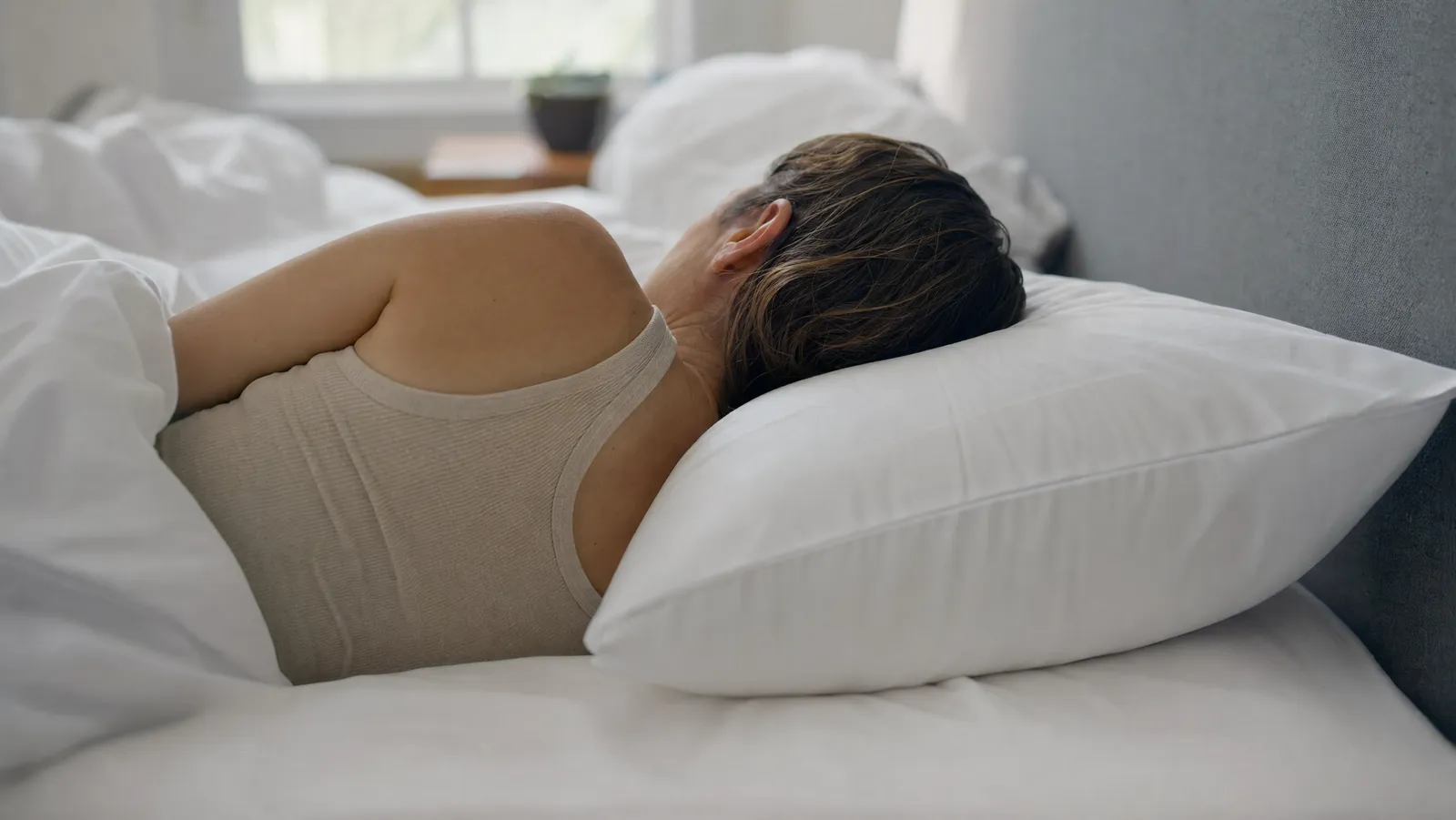
Contact area is the quiet half of this. Side sleepers feel it most, because an ear, a cheek and a jaw pressed into a conforming block is a large patch of well-insulated skin, which is part of why we treat position separately in our guide to cooling pillows for side sleepers. Loft interacts with it too: a thick pillow is more foam between you and the room, so if cooling is your goal, less height helps. Alignment comes first in that decision, and we work through the trade-off in pillow height for neck pain.
Solid Slab Versus Shredded Fill
The second mechanism is airflow, and this is the one where the evidence is both strongest and most quotable.
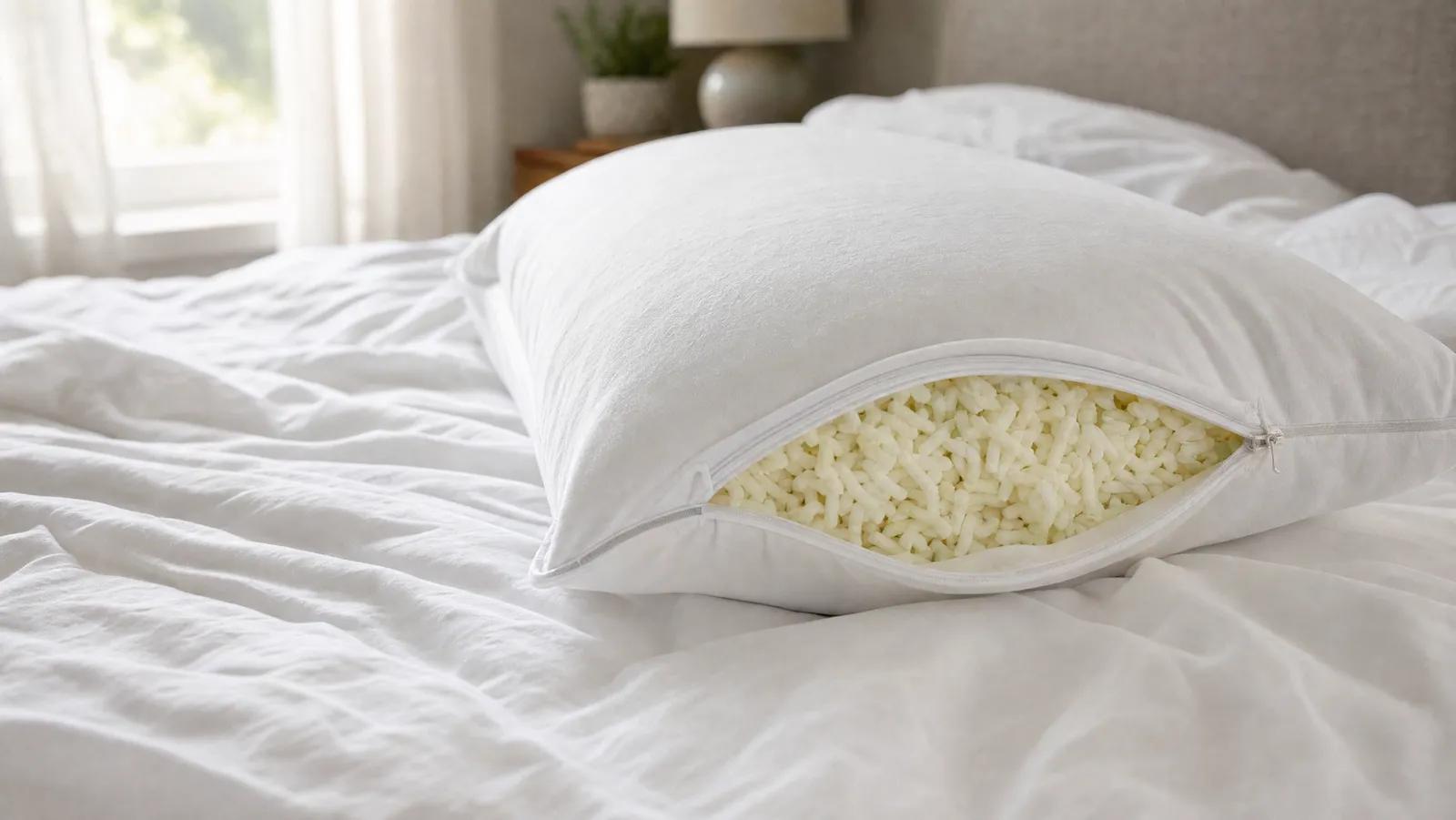
Memory foam is technically open-celled, but "open" is doing less work in that sentence than you would hope. Dow's patent describes the slow recovery as a pneumatic effect: "The closed cell windows inhibit the flow of air in and out of the foam as it is compressed and subsequently decompresses. This pneumatic effect prolongs the recovery time." Airflow in these foams is low enough that patents specify it as a target property, measured under ASTM D-3574. The restricted airflow is not a flaw in the recipe. It is part of the recipe. A foam that let air through freely would spring back fast and would not feel like memory foam at all.
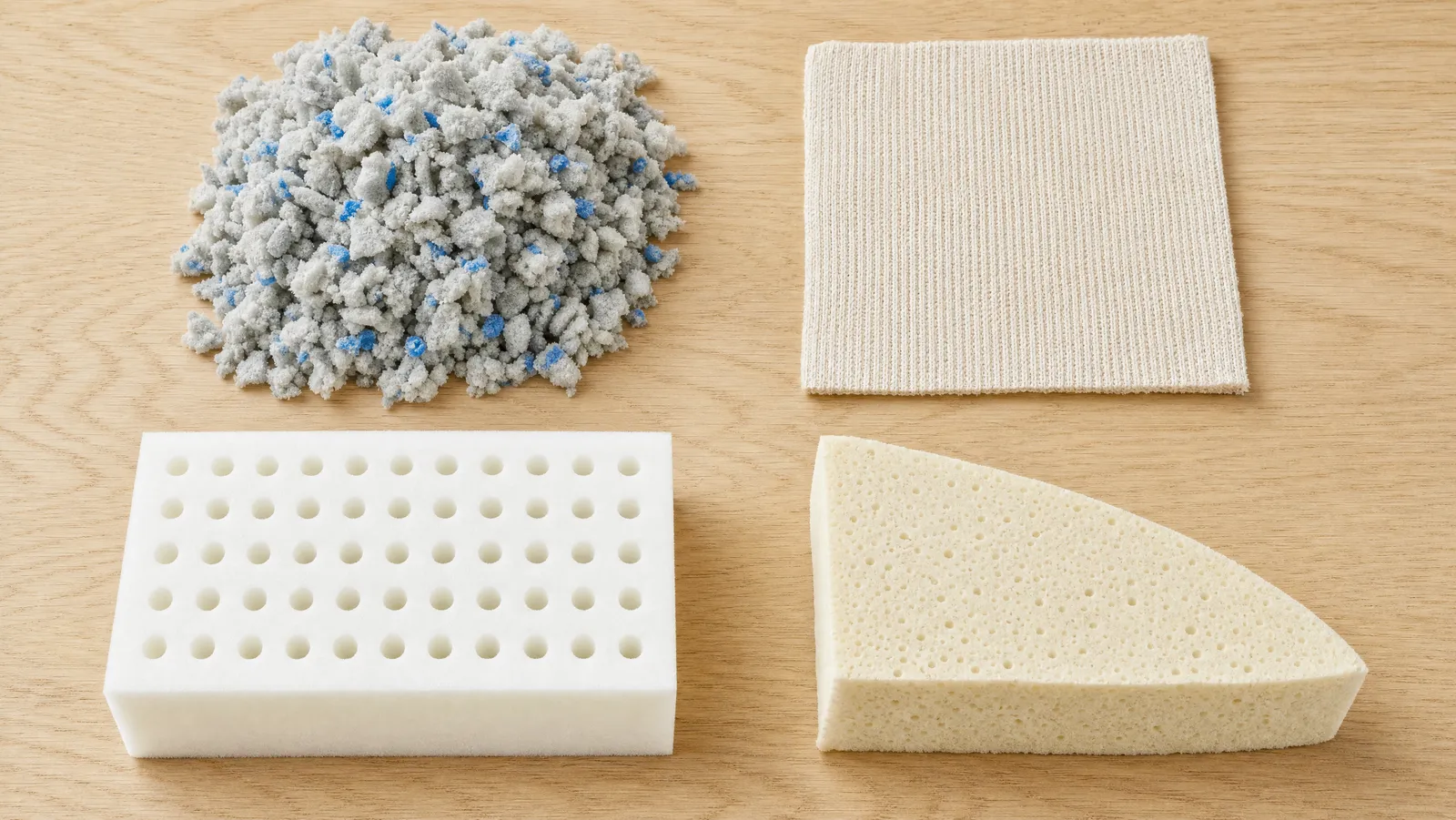
A continuous block therefore has no useful path for air between your head and the room. A shredded fill does, because it is thousands of pieces with gaps between them. The Sleep Foundation's position is direct: "a solid piece of foam will generally retain more heat than shredded foam". Its reviewers also note the halfway house, where a one-piece core is drilled or channelled instead, as in one pillow where "Pinhole perforations allow air to circulate throughout the interior".
The best citation available for this article comes from a manufacturer selling the fix. Utopia Bedding's own feature copy for its shredded pillow claims the fill "allows air to move through the fill, helping release trapped heat as you sleep", and that it does so without "the stuffy feel of solid foam". When a bedding company's marketing names solid foam as the stuffy option, the argument is settled well enough for a buying decision.
What Gel Infusion Actually Changes
Gel is the industry's answer to all of the above, and it is a real but narrow one. The mechanism is conduction: the Sleep Foundation describes gel and copper as "highly conductive materials that pull heat away from the body". Faster heat transfer out of your skin is a genuine effect, and it is also a self-limiting one, because conduction stops when the surface reaches your temperature. The step-by-step version of that physics is in our companion piece on how cooling pillows work.
Now the size of the effect, from the people who patented it. US patent 8,933,140 reports a non-gel control foam at 0.0226 Btu/(hr-ft-°F) and the gel foam at 0.0292 Btu/(hr-ft-°F) under ASTM E1225, which the document puts at about 29.2% higher conductivity for the gel. In SI units that is 0.0391 against 0.0505 W/(m-K).
Hold those two numbers next to the insulation figures above. A 29% improvement is a measurable, honestly reported gain, and it moves the material from clearly insulating to slightly less insulating. More conductive than plain foam is not the same thing as cool. This is also why we distinguish gel infusion from true phase-change materials, which absorb a fixed quantity of latent heat as they melt and then are full: gel versus phase-change cooling is a real difference in duration rather than a marketing one, and neither of them makes a block of foam breathe.
One thing gel has nothing to do with: the smell of a new foam pillow. Off-gassing is a separate complaint from heat, with separate causes and a separate fix, and we keep them apart in pillow off-gassing and in our look at whether memory foam pillows are toxic. The certifications on these listings are not temperature claims either: CertiPUR-US covers content, emissions and durability testing of the foam, and no part of it grades how warm a pillow sleeps.
What Actually Makes a Foam Pillow Sleep Cooler
Ranked by how much heat each one moves, which is close to the reverse of the order the bedding industry advertises in.
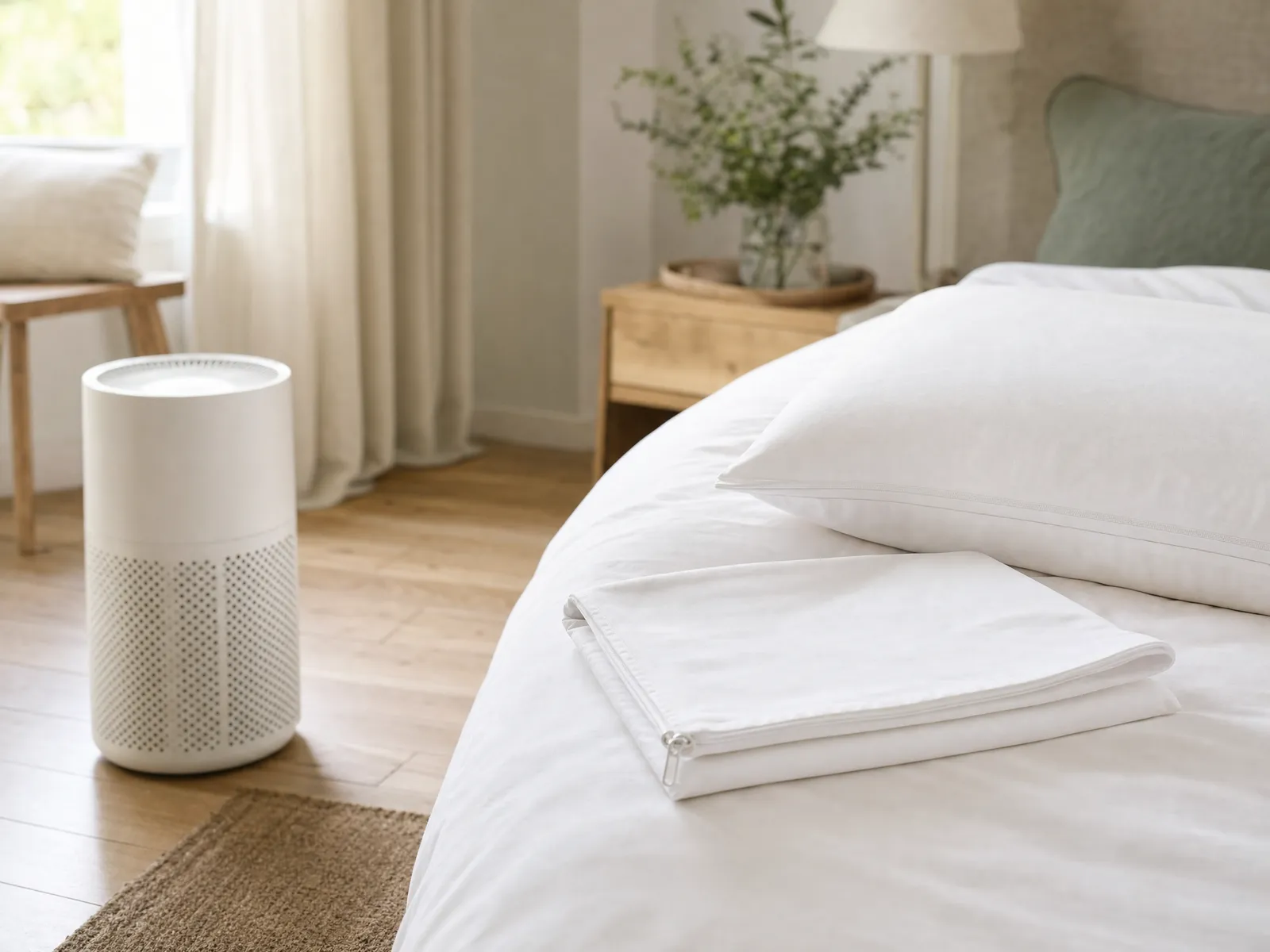
- Fix the room first. The Sleep Foundation states that "The best room temperature for sleep is approximately 65 degrees Fahrenheit (18.3 degrees Celsius)". No pillow competes with a thermostat.
- Move air. The Sleep Foundation's cooling list includes "Using a fan or air conditioner in hot climates" and "Controlling bedroom humidity".
- Change the fill structure. Shredded, or a solid core with real ventilation channels. This is the mechanism fix, and it is the only change that works all night rather than for minutes.
- Use less foam. Drop the loft, or pull fill out of an adjustable pillow, which cuts height and insulating mass in one move. Spinal alignment sets the floor on how low you can go.
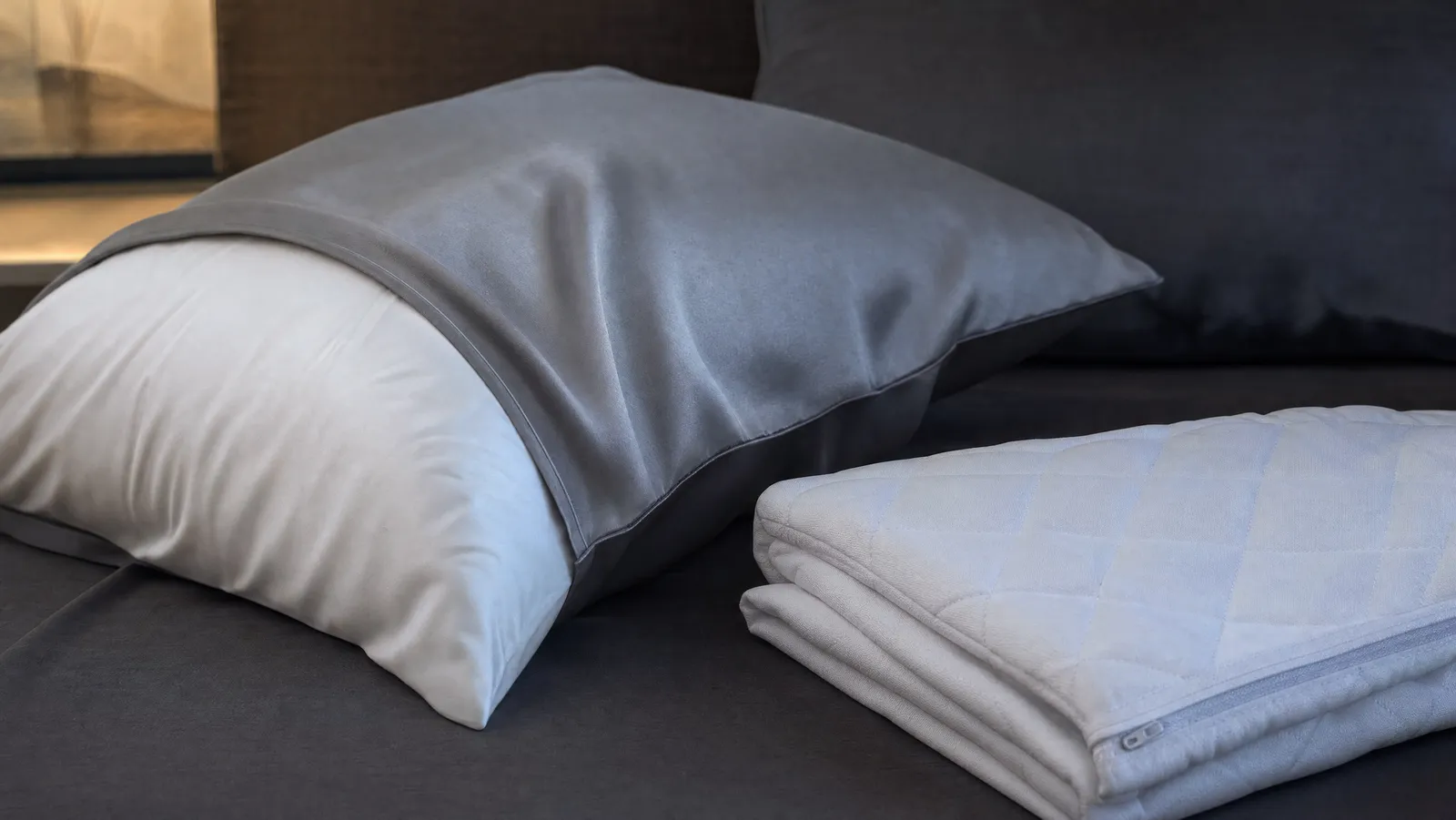
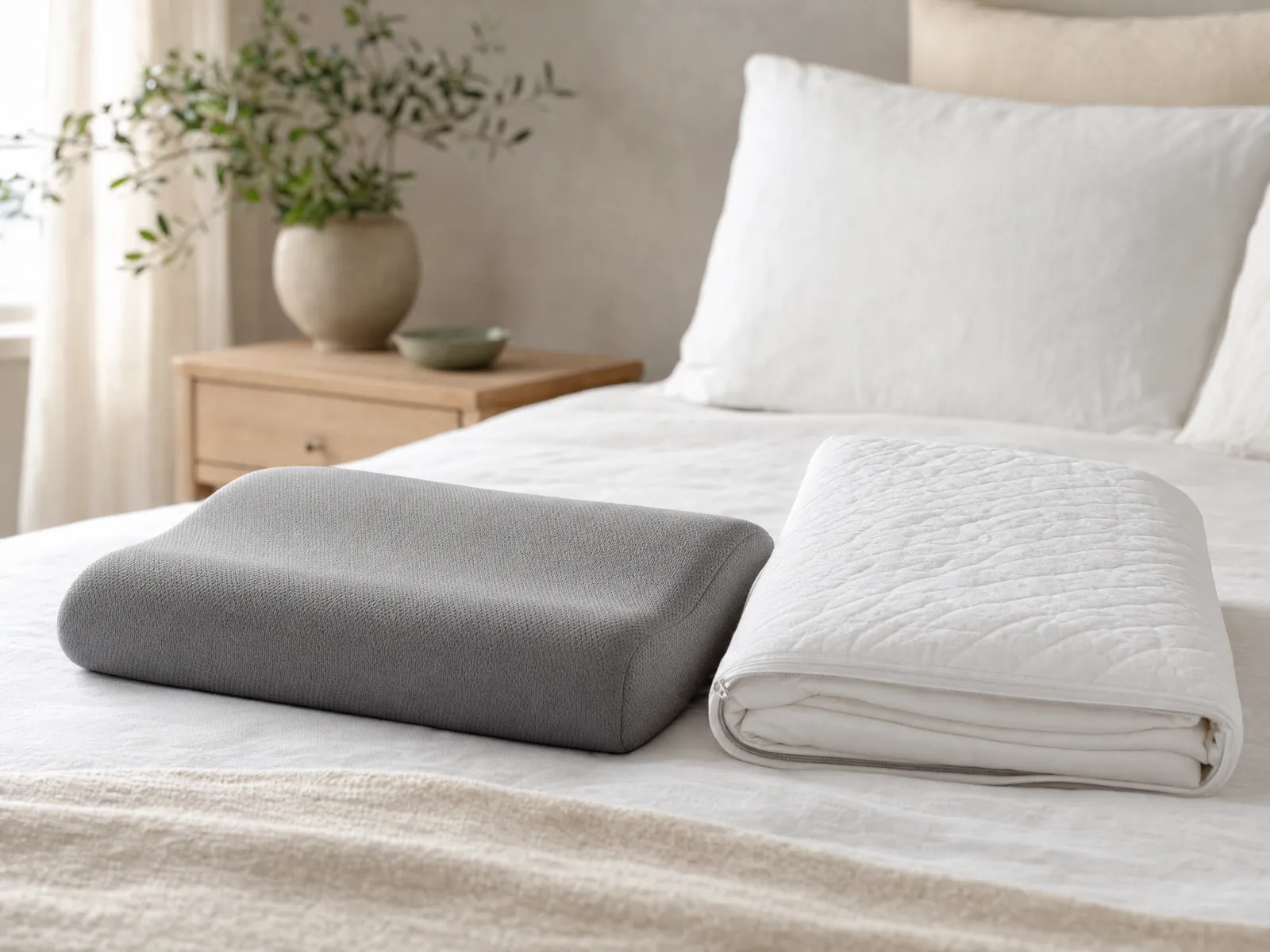
- Put a launderable wicking cover on it. The Sleep Foundation's guide says "Moisture-wicking materials like wool, cotton, and bamboo are helpful if you're prone to sweating at night". Moisture management keeps working after conduction has finished, and a case you can wash weekly beats a gel layer you cannot, which is why we take pillow cases seriously as a cooling purchase.
- Flip the pillow. Free, effective, and good for a few minutes at a time.
- Treat gel as a bonus. Worth having at the same price, not worth paying a premium for on its own.
Three Pillows That Show the Difference
These are worked examples of construction rather than a ranked shortlist, and the prices do the arithmetic for you: $21.89, $35.99 and $64.80 as of October 2026, all three single pillows, so the Utopia shredded pillow is the cheapest here by a factor of nearly three against the dearest.
The solid slab. The Vaverto firm gel-infused pillow at $35.99 as of October 2026 is the construction this whole article describes: one dense contoured block, infused with gel, under a viscose-from-bamboo cover. Vaverto claims the gel "absorbs and disperses body heat" and that "The open-cell structure of our premium foam enhances airflow". Those are manufacturer claims about a material. We rate it temperature-neutral rather than cooling, and we would buy it for firm moulded support with a washable case over it, not as a cooling pillow.
The shredded fill. The Utopia pillow at $21.89 as of October 2026 is the same material, cut up. Utopia states the blend is 85% shredded memory foam and 15% polyester fiber, with 8 oz of extra fill in the box and a cover that comes off for the machine, and its own copy makes the article's central claim for us: air moving through the fill "helping release trapped heat as you sleep", as against "the stuffy feel of solid foam".
The adjustable shredded fill. The DORMANOVA adjustable pillow at $64.80 as of October 2026 is built around the same lever: a 200 g bag of spare fill and a pillow you can empty. Taking fill out lowers loft and reduces foam mass together. It is not the only pillow here that adjusts, though: Utopia's own copy sells add-or-remove fill with 8 oz of spare foam at roughly a third of the price. Note that the listing copy we read in October 2026 is more restrained than the version we quoted earlier this month, naming only the shredded gel foam and fiber fill and a dual-sided cover, with no temperature-regulation claim attached. Its case rests on construction and adjustability, which is the honest basis anyway.
When the Heat Is Not the Pillow
Some night-time overheating is a bedding problem and some is not, and no pillow sorts the two for you.
Mayo Clinic advises scheduling a visit with a health care provider if night sweats "Occur on a regular basis" or "Interrupt your sleep", and treats sweating alongside fever, weight loss, pain in one area, cough or diarrhea as a reason to be seen. Its list of causes includes menopause, medications such as some antidepressants and hormone therapy, sleep apnea, hyperthyroidism and infections, and it notes separately that an overheated room or too many blankets can produce heavy sweating with no medical problem behind it.
We cannot tell you which of those applies to you, and neither can a product listing. If you are regularly waking drenched, that is a conversation with a clinician rather than a purchase, and a new pillow can be a comfortable way of not having it.
The Bottom Line
Memory foam pillows sleep hot because of what memory foam is, not because yours is defective. It is insulation-grade material, its signature slow sink is bought with restricted airflow, and its conforming shape increases the patch of skin wrapped in it. Gel raises conductivity by about a third in the patent holder's own testing and then equilibrates with your head. Shredding the fill and taking some out are the changes that keep working at 3am, and a cooler room beats all of them.
So buy the construction rather than the adjective, keep the loft only as high as your neck needs, wash a thin wicking case weekly, and judge the pillow after you have fixed the thermostat. When you are ready to choose, our best cooling pillow guide is the next page.
The shortlist
3 pillows compared — firmness, loft, and temperature side by side. The top pick is highlighted.
| Pillow | Firmness | Loft | Sleeps | Best for | Price |
|---|---|---|---|---|---|
Shredded Fill, Lowest PriceUtopia Bedding Shredded Memory Foam Pillow (Queen, 1 pack) | Medium | Adjustable | Cooling | Airflow through the fill at the lowest price here | $21.89 Check |
Solid Gel-Infused BlockVaverto Firm Gel-Infused Memory Foam Pillow (Standard) | Firm | Medium | Neutral | Showing what gel infusion does and does not fix | $35.99 Check |
Adjustable Shredded Gel FoamDORMANOVA Adjustable Shredded Memory Foam Pillow | Medium | Adjustable | Neutral | Removing fill to cut both loft and foam mass | $64.80 Check |
Utopia Bedding Shredded Memory Foam Pillow (Queen, 1 pack)

It does not go stuffy the way the solid foam pillow it replaced did, and being able to pull a handful of fill out to drop the height was the part I did not expect to use weekly.
It needs punching back into shape most mornings, and if you want the firm moulded contour of a one-piece memory foam pillow this is not that pillow.
This is a queen pillow filled with a blend Utopia describes as 85% shredded memory foam and 15% polyester fiber, with an extra 8 oz of shredded foam in the box so you can raise the loft, and a dual-sided jacquard-polyester cover the maker says comes off easily for machine washing. Utopia states the materials are OEKO-TEX and CertiPUR-US certified, which are chemistry and emissions programs rather than temperature ones. At $21.89 as of October 2026 it is the lowest price of the three pillows on this page, against $35.99 and $64.80 on the same date, and all three are single pillows, so that is a per-pillow comparison rather than a pack-size trick.
We have it here because of what its maker says, which is the strongest quote in this article: the shredded fill "allows air to move through the fill, helping release trapped heat as you sleep", avoiding "the stuffy feel of solid foam". That is a manufacturer naming the solid-slab problem in its own marketing copy. The trade-off is the one every shredded pillow carries: a loose fill does not hold a contour the way a moulded block does, it needs reshaping by hand, and it will not give you the slow, cupping sink that people buy solid memory foam for in the first place.
Vaverto Firm Gel-Infused Memory Foam Pillow (Standard)

Properly firm and it holds the contour all night instead of flattening out, which is what I wanted from it, and the cover zips off for the wash.
It feels cool for the first few minutes and then it is just a warm dense pillow, which is what a solid block does no matter what the gel is doing.
One firm, contoured, gel-infused slab with a removable viscose-from-bamboo cover, at $35.99 as of October 2026, and a perfectly legitimate pillow for someone who wants a dense block that holds its shape under a heavy head. Vaverto describes "advanced cooling gel infusion that absorbs and disperses body heat" and says "The open-cell structure of our premium foam enhances airflow", and states the foam is CertiPUR-US certified. Read both of the first two as manufacturer claims: they are claims about a material, not measurements of a night's sleep.
We list it as the teaching case rather than as a cooling pick, and we rate it temp neutral on purpose. A continuous block is the construction that insulates and conforms at the same time, and the largest gain we can find documented for a gel infusion is roughly 29% higher thermal conductivity than non-gel foam in a patent-holder's own ASTM E1225 testing, from one insulation-grade figure to a slightly less insulating one. If you want the firm moulded support, buy it for that, keep a washable wicking case on it, and do not expect the gel to carry you to morning.
DORMANOVA Adjustable Shredded Memory Foam Pillow

Taking fill out until it was thin got the heat down and the height right at the same time, and the 200 g bag means you can put it back if you overdo it.
It is three times the price of a basic shredded pillow and the listing no longer promises any temperature regulation, so you are paying for the adjustability rather than for cooling.
The adjustable version of the same fix, and the most expensive pillow here at $64.80 as of October 2026, roughly three times the Utopia. DORMANOVA describes a shredded gel foam and fiber fill, a separate 200 g bag of extra fill, a removable dual-sided cover with a honeycomb face, and a 50 x 70 cm pillow, which is about 19.7 by 27.6 inches. What you are paying for is the removable fill: pulling handfuls out lowers the loft and reduces the mass of insulating foam under your head in a single action, which is the only one of this article's three mechanisms you can act on with your hands.
One piece of honesty about the listing. The feature copy we fetched in October 2026 is more cautious than the version we quoted in our cooling pillow guide earlier in the month: it now names only the shredded gel foam and fiber fill and the dual-sided cover, with no claim that the gel regulates temperature and none that the cover promotes airflow. We have kept it rated cooling on construction rather than on marketing, because a shredded fill is an airflow structure whatever the copy says, but if a stated cooling claim is what you are buying, note that this listing no longer makes one.
How to Make a Memory Foam Pillow Sleep Cooler, in Order of How Much Heat It Moves
Three properties make foam sleep hot: it insulates, air moves through it slowly, and it conforms so more skin touches it. You cannot change the first one. You can change the other two, and you can change the room. This is the order we would do it in, cheapest and most effective first.
Why Memory Foam Pillows Sleep Hot: FAQ
Why do memory foam pillows sleep hot? Three properties acting together. The foam is a thermal insulator: a US patent filing measured a non-gel flexible foam sample at 0.0226 Btu/(hr-ft-°F), or 0.0391 W/(m-K), under ASTM E1225, which is inside the band reference tables give for building insulation. Air moves through it slowly by design, because that restricted airflow is part of what makes it sink slowly. And it conforms, so more of your head is in contact with it than with a flat pillow. Only the second and third are cheaply fixable.
Is my memory foam pillow faulty if it feels hot? No, and that is the uncomfortable part. Dow Global Technologies' patent on viscoelastic foam describes the slow sink as a "pneumatic effect" in which "The closed cell windows inhibit the flow of air in and out of the foam as it is compressed and subsequently decompresses". The low airflow is the feature. A foam pillow that breathed freely would not feel like memory foam.
Why is my memory foam pillow so hot in summer and so hard in winter? Because the material is tuned to temperature. Dow's patent says the glass transition temperature "should be close to the use temperature, such as in the range of about 20 to 35° C.", and that foams in that range have "highly variable properties depending on the ambient temperature at any given time". Retail listings for Coop Home Goods' Original Adjustable Pillow carry the consumer version of the same physics, warning that "cooler environments may cause the foam to feel firmer, so adjust accordingly".
Does gel-infused memory foam fix it? It changes conduction at first contact and nothing else. US patent 8,933,140 reports 0.0226 Btu/(hr-ft-°F) for a non-gel control sample against 0.0292 for a gel sample under ASTM E1225, about 29% higher for the gel. Both numbers are still insulation-grade, and both come from a manufacturer-side document measuring a material rather than a night's sleep.
Is shredded foam really cooler than a solid block? On airflow, yes, and the makers say so themselves. Utopia Bedding's own copy for its shredded pillow claims the fill "allows air to move through the fill, helping release trapped heat as you sleep" without "the stuffy feel of solid foam". The Sleep Foundation's independent framing matches: "a solid piece of foam will generally retain more heat than shredded foam".
Does the chemical smell mean the foam is overheating? No. Off-gassing and heat are separate complaints with separate causes, and conflating them leads people to buy the wrong fix. Air a new pillow out for the smell, and change the construction for the heat.
Should I just buy a latex or down alternative pillow instead? That is a reasonable answer if heat is your only complaint, because you are giving up the conforming support that creates the heat problem. If you want the foam's pressure relief, buy it shredded, keep the loft low, and put a washable wicking case on it.
Why you can trust us

Aimee Cannon
Sleep & bedding writer
Aimee Cannon is a sleep and bedding writer who has spent years testing pillows of every kind — memory foam, down, wool, bamboo, buckwheat, and specialty support pillows. She focuses on matching the right pillow to each sleeping position and need, and reports what actually holds up after months of nightly use. When she is not testing pillows, Aimee is usually with her husband and her dog.