Are Memory Foam Pillows Toxic? A Straight Answer
Are memory foam pillows toxic? On the evidence that exists, no. Memory foam is polyurethane, a new one does release measurable volatile organic compounds, and the closest peer-reviewed measurement we can find put those emissions well below health-based benchmarks. The honest caveat is that the study was of mattresses, and nobody has published the same measurement for a pillow. We may earn a commission from links on this page, at no extra cost to you.
That is a duller answer than most of what is written on this subject, and we think it is the accurate one. What follows is the evidence behind it and where that evidence stops: what memory foam is actually made of, why "VOCs detected" is not the same statement as "harm done", what the isocyanate argument gets right and wrong, what CertiPUR-US does and does not test, and who has a genuine reason to skip foam anyway. If you want the shopping side rather than the science, our guide to non-toxic pillows works through materials and certifications in order.
What memory foam actually is
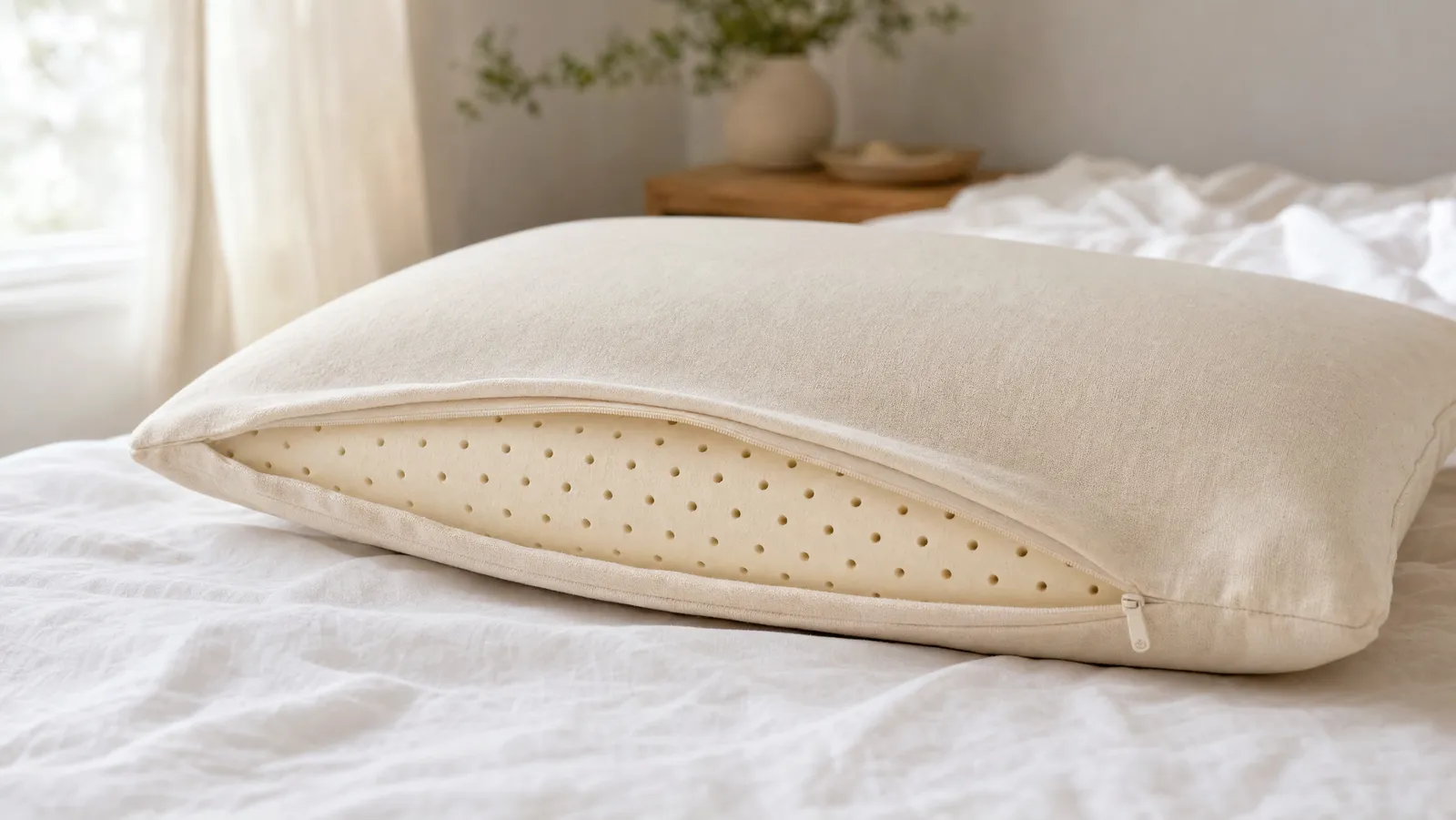
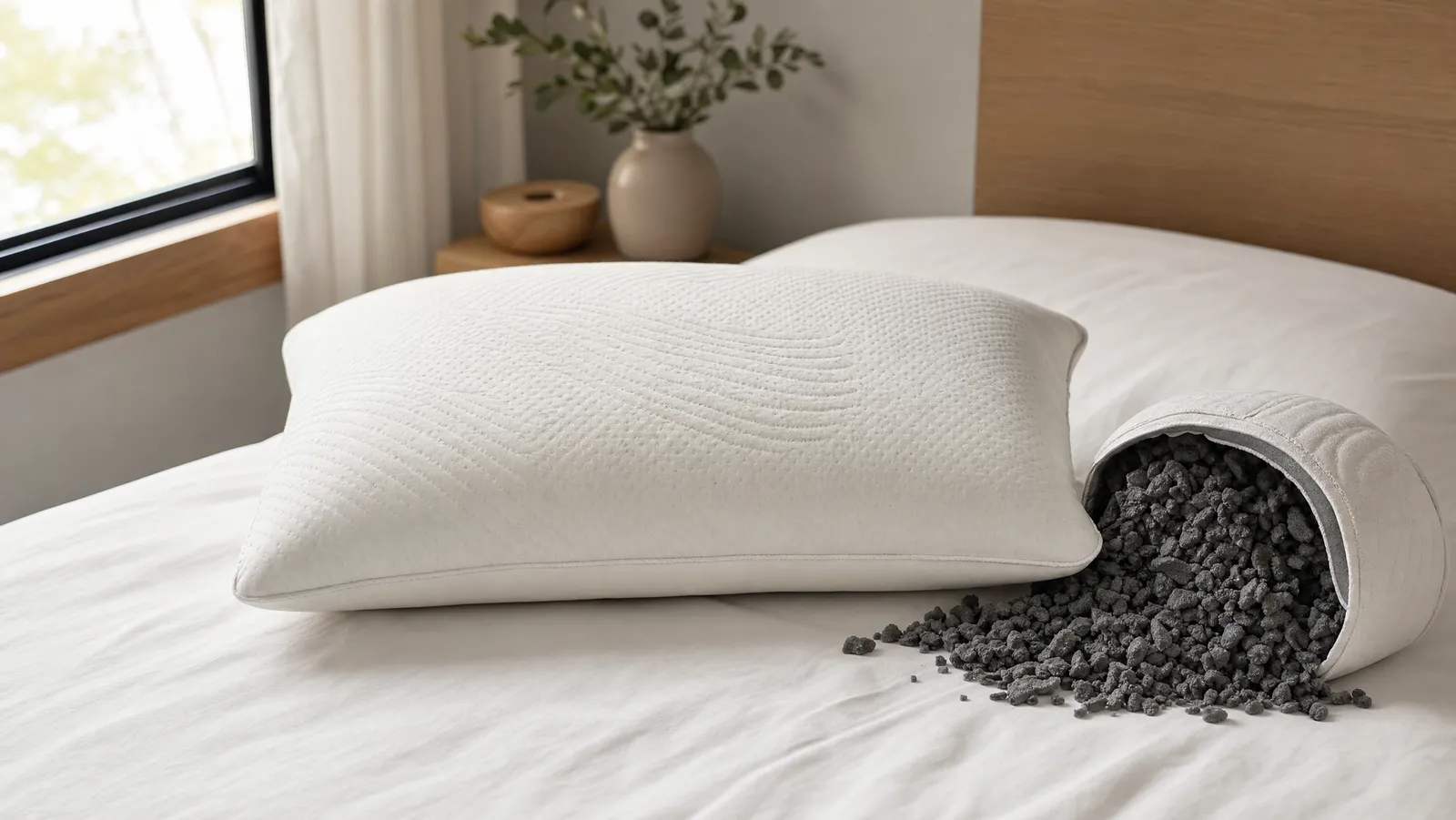
Memory foam is viscoelastic polyurethane. Polyurethane is made by reacting a polyol with a diisocyanate, with additives that control how the foam rises and sets; the viscoelastic version is tuned so it deforms slowly under body heat and pressure. Makers then blend in extras — the shredded gel memory foam in two of the pillows below is the everyday example — which is why two products described as "memory foam" can be quite different things.
The part worth understanding is what happens to those reactive ingredients. According to the American Chemistry Council's diisocyanates group — an industry body, so read it as such — the original reactive ingredients "are no longer present in their original form in the fully cured polyurethane product", and it lists mattresses and pillows among the products that are "completely cured and therefore considered 'inert' before they are sold".
So a finished foam pillow is a cured polymer, plus a residue of the volatile compounds left over from making it. That residue is real, it is measurable, and it is the entire substance of the off-gassing question. It is also not the same thing as the raw chemistry that made the foam, and the two get conflated constantly.
Memory foam pillow VOCs: why "detected" is not "harmful"
Volatile organic compounds are not a category of poison. They are a physical class: carbon-based chemicals that evaporate at room temperature. The US Environmental Protection Agency lists paints, varnishes, wax, cleaning, disinfecting, cosmetic, degreasing and hobby products among everyday sources, and notes that concentrations of many VOCs are consistently higher indoors than outdoors — by its estimate, up to ten times higher. The agency's phrasing on effects is deliberately hedged: VOCs "include a variety of chemicals, some of which may have short- and long-term adverse health effects."
That is the crux. A laboratory can detect compounds at concentrations far below any level that has been shown to do anything. "We found toluene coming off this foam" and "this foam is harming you" are separated by a dose, and the dose is what almost no consumer article on this topic supplies.
The smell is a different variable again. What your nose picks up is a question of odour thresholds, and those are not the same scale as toxicity: carbon monoxide is odourless, and a cut onion is not. How strong a new pillow smells is a poor guide to what you are inhaling. What it does tell you is that emissions are at their peak, which is why airing a new pillow is sensible and why how long pillow off-gassing lasts is a more useful question than whether it happens at all.
What the research on foam bedding actually found
The most relevant measurement we have is a 2022 study in Chemosphere by Beckett and colleagues, which monitored two new memory foam mattresses in a simulated consumer-use environment for 32 days. Airborne concentrations of the mattress-associated compounds — 2-propanol, acetone, chloromethane, toluene and total VOCs — peaked on the first day after installation and decayed over the following month. Those four compounds accounted for roughly 81 to 95 percent of the modelled first-year totals.
The decay had a shape worth knowing. Fitting the data to an emission model, the authors reported short-term emission half-lives on the order of hours — approximately 4 and 12 hours — and a long-term half-life of about 24 days. Modelled over a full year, average concentrations came out at about 2.7 and 4.2 micrograms per cubic metre for the two mattresses. The authors' own summary: the concentrations were "well below available health-based benchmarks", and it was unlikely the mattress models evaluated "would pose a health risk to consumers."
Now the limits, because they matter more than the headline:
- It is two mattress models, not a survey of the market, and not a claim about every foam product made anywhere.
- A mattress is not a pillow. A mattress is many times the quantity of foam a pillow holds, so a pillow should emit less of the same thing — but "should" is an inference we are drawing, not a result the study reports.
- It was a chamber-style simulated environment, not a study of people in bedrooms, and it measured air rather than anything in a human body.
- We have found no published VOC measurement of a memory foam pillow specifically. That gap is the most honest thing on this page.
Is memory foam safe to sleep on? The isocyanate question
Isocyanates are the scary word in almost every article on this topic, and the hazard is genuine — in the workplace. OSHA describes isocyanates as the leading attributable cause of work-related asthma, citing NIOSH, and the exposure scenarios it names are painting, foam-blowing, the manufacture of polyurethane products, and the thermal degradation of polyurethane when it is burned or heated. OSHA enforces a permissible exposure limit for MDI of 0.02 parts per million as a ceiling. That is a serious occupational hazard with serious controls attached to it.
None of that describes a cured pillow on a bed. The one quantitative consumer assessment we can find is a 2012 paper in Regulatory Toxicology and Pharmacology by Arnold and colleagues, which modelled a lifetime of sleeping on a flexible polyurethane foam mattress using migration and emission data and deliberately conservative assumptions. It reported margins of safety ranging from 200 for respiratory effects to 3 million for irritation, a theoretical excess cancer risk of one in ten million, and concluded that sleeping on a polyurethane foam mattress does not pose TDI-related health risks to consumers.
Read that with its provenance attached. Several authors were employed by diisocyanate producers — the lead author's affiliation is The Dow Chemical Company, and BASF Polyurethanes is among the affiliations listed on the paper — and the International Isocyanate Institute, the industry's own research body, lists it among its health and toxicology studies. It is a modelling exercise by interested parties, not an independent measurement of sleepers. We report it because it is the only quantitative attempt at the consumer question we have found, and because the alternative claim, that pillows are dosing you with isocyanates, has no measurement behind it at all.
What CertiPUR-US actually tests — and what it leaves out
CertiPUR-US is the mark you will see on most foam pillow listings, and its scope is narrower than shoppers assume. The programme certifies flexible polyurethane foam made without formaldehyde, ozone depleters, phthalates regulated by the Consumer Product Safety Commission, and mercury, lead and other heavy metals, with VOC emissions below 0.5 parts per million for indoor air quality. One line is worth reading exactly as written: CertiPUR-US says certified foam is "screened for relevant chemicals, including flame retardants, that are classified as carcinogens, mutagens or reproductive toxins" — screened for, which is a narrower promise than made without. Its FAQ is explicit that it only certifies flexible polyurethane foam, and it tells consumers to look companies up in its own directory rather than trusting a logo.
What follows from that scope:
- It certifies the foam, not the pillow. The cover, the zip and any finish on the fabric sit outside it. That is also why it is silent on fluorinated finishes, and why whether pillows contain PFAS is a separate question with separate evidence.
- It is a specification, not a health verdict. Meeting an emissions limit is a checkable fact. "Safe" is not a thing a foam certification issues.
- UL GREENGUARD Gold answers a different question. UL Solutions describes it as an emissions certification in which finished products are tested in dynamic environmental chambers, limiting emissions of more than 360 VOCs, with compliance required to the California Department of Public Health's Section 01350 chamber method and stricter limits aimed at sensitive settings such as nurseries and schools. The unit tested is the product submitted for certification, which on a pillow listing means the item as sold rather than the foam alone.
If you want the marks compared side by side, we go through all of them in pillow certifications explained. The short version: read the scope, not the badge.
Flame retardants, and the gap where pillows sit
This comes up constantly and deserves a flat answer. There is no federal flammability test that a bed pillow has to pass: the mattress flammability standard at 16 CFR 1632 defines "mattress" in terms that expressly exclude pillows, along with sleeping bags and foundations. No test requirement, no regulatory reason to add a flame retardant.
State law has moved separately. California's AB 2998 has, since 1 January 2020, prohibited selling juvenile products, mattresses and upholstered furniture containing covered flame retardant chemicals above 1,000 parts per million. Its "mattress" definition points back to the same federal rule that excludes pillows, and the juvenile products it names include nursing pillows and nap mats rather than adult bed pillows. So the standard pillow on your bed sits outside both frameworks — which is a gap, not a reassurance. Flame retardants in pillows are a subject we will treat properly on their own; the useful thing to know today is that CertiPUR-US publishes a list of flame retardants prohibited in certified foam, which is one of the few places the question is addressed at all for foam bedding.
Who has a real reason to avoid foam
Plenty of people, and none of them need a scare story to justify it.
- Anyone whose clinician has told them to. If you have a diagnosed sensitivity, asthma that a clinician has linked to your sleeping environment, or a contact allergy, follow that advice rather than anything on this page. We can tell you what a pillow is made of; we cannot examine you.
- Anyone who reacts badly to new-product smells. Sensitivity to odours is real, unevenly distributed, and a sufficient reason on its own.
- Anyone who simply prefers a fill they can name. Kapok, wool, buckwheat hulls, cotton and non-toxic latex pillows all give you a shorter materials list. Preferring that is a values decision, and it does not need a health claim propping it up.
What we would not do is throw out a foam pillow you already own on the basis of the evidence above. If it has been in the house for months, it is long past the steep part of the emissions curve the Chemosphere work describes.
Non toxic memory foam pillows: what to look for
We are not going to call any specific pillow non-toxic. That word is doing marketing work, not testing work, and we do not have lab results for these products. What we can tell you is what each one is made of and what a named third party has certified about it. Full details render at the end of this page; here is the short form.
The Coop Home Goods Original Adjustable Pillow is our pick at $75.65 as of September 2026, because Coop states it holds both CertiPUR-US and GREENGUARD Gold certification — the foam specification and the finished-product emissions test, which is as documented as this category gets. The ZAYLO Cooling Bamboo Shredded Gel Memory Foam Pillow is the budget version of the same idea at $34.99 as of September 2026, with ZAYLO stating the shredded fill is CertiPUR-US certified for content, emissions and durability. The QUTOOL Cooling Shredded Memory Foam Pillow, $29.99 as of September 2026, states the same certification and tells buyers to check it on the certifier's site, and its listing asks for one to two days of airing before use — which is the right instruction rather than a warning sign.
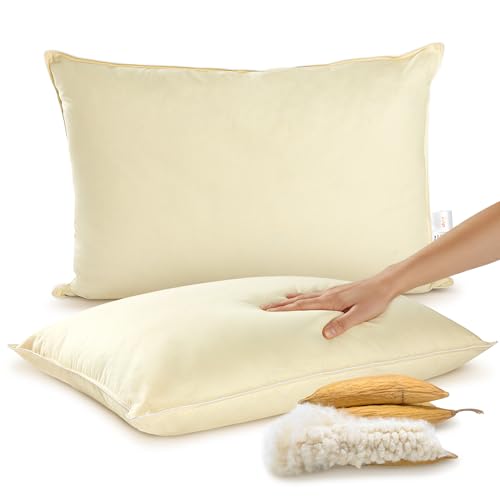
If you would rather not sleep on polyurethane at all, the Cheer Collection Organic Kapok set is $59.99 for two as of September 2026: plant fibre in a cotton shell, with no curing chemistry to ask about. And if this article has settled the question for you and you now want to shop on feel rather than fear, our memory foam pillow roundup sorts foam by sleeping position, as does our best cervical pillows guide for contoured shapes.
The bottom line
Are memory foam pillows toxic? Not on any evidence we can find. Foam emits VOCs, most heavily in the first day; the nearest peer-reviewed measurement put concentrations from new memory foam mattresses well below health-based benchmarks; the isocyanate argument describes a manufacturing hazard rather than a finished product; and no pillow-specific measurement turns up in the published literature we can search, which we would rather say than paper over.
If you want the extra margin anyway, buy foam that names a testing programme and check it at the source, give it a couple of days of air, and treat "non-toxic" on a listing as a word rather than a claim. If you would rather skip foam altogether, that is a legitimate preference and our guide to the best non toxic pillows lays out the alternatives. And if you are reading this because you feel unwell and suspect your bedroom, take that to a clinician, not to a checkout page.
The shortlist
4 pillows compared — firmness, loft, and temperature side by side. The top pick is highlighted.
| Pillow | Firmness | Loft | Sleeps | Best for | Price |
|---|---|---|---|---|---|
Medium Firm | Adjustable | Neutral | Certified foam with published emissions testing | $75.65 Check | |
Best Budget Certified FoamZAYLO Cooling Bamboo Shredded Gel Memory Foam Pillow (Standard) | Medium | Adjustable | Cooling | Budget certified foam | $34.99 Check |
Best Cooling Certified FoamQUTOOL Cooling Shredded Memory Foam Pillow (Queen, Single) | Medium | Adjustable | Cooling | Hot sleepers on a budget | $29.99 Check |
Best Non-Foam AlternativeCheer Collection Organic Kapok Bed Pillows (Standard, Set of 2) | Medium Soft | Medium | Neutral | Skipping foam entirely | $59.99 Check |
Coop Home Goods Original Adjustable Pillow (Queen)

I took out about two handfuls the first night and it went from too tall to exactly right, and the faint smell out of the bag was gone in two days.
Getting the fill level right is fiddly, foam ends up on the bedroom floor while you do it, and it costs roughly twice what the budget foam pillows do.
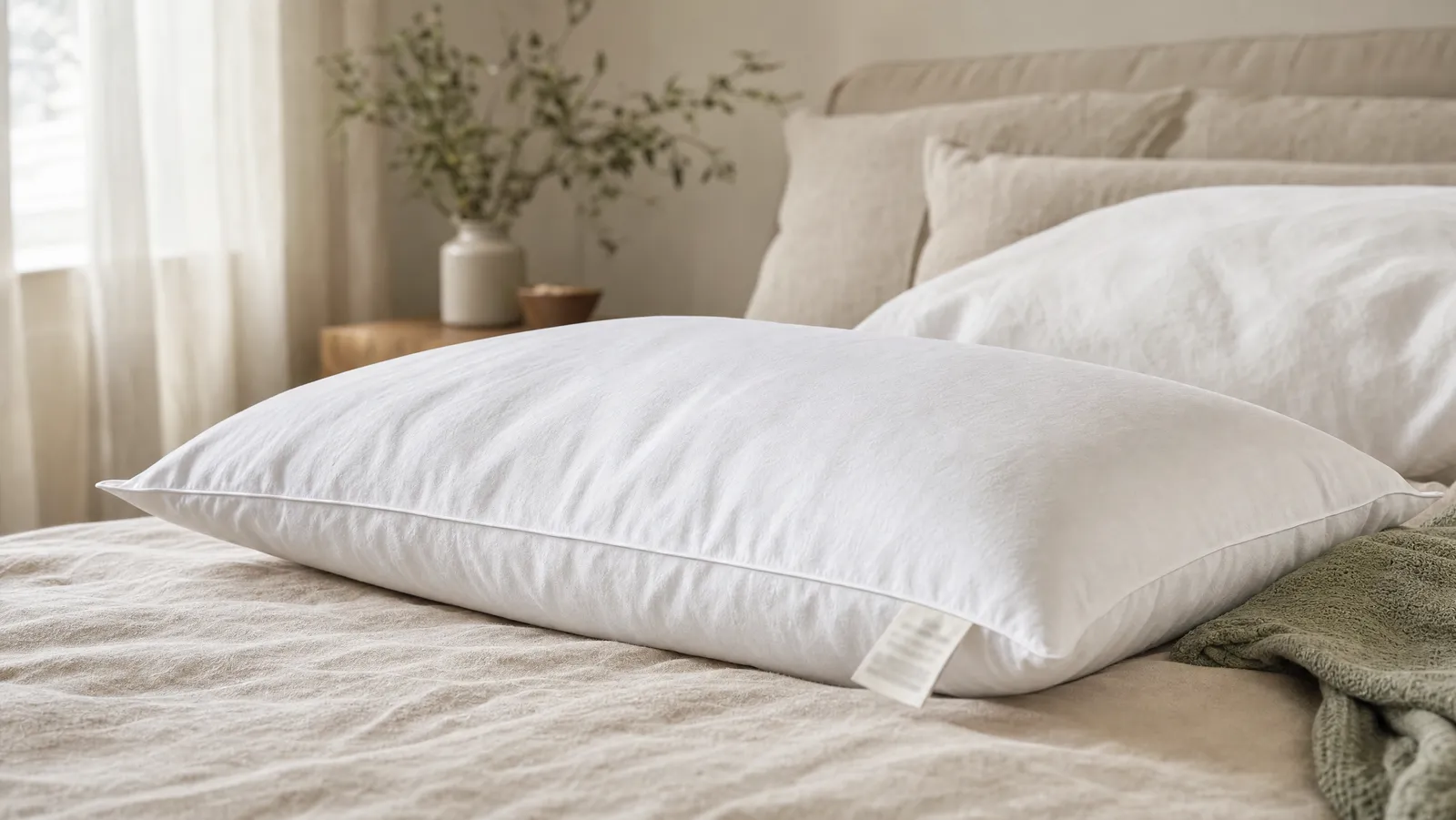
If your concern about foam is emissions, this is the pillow we would buy, because it is the one that names two testing programmes rather than one. Coop states that the pillow is both CertiPUR-US and GREENGUARD Gold certified. Those cover different things — CertiPUR-US certifies the flexible polyurethane foam itself against a content and emissions specification, while GREENGUARD Gold is UL Solutions' chamber test of a finished product's emissions — and together they are the most checkable answer available in this category.
The fill is what Coop calls its "Oomph" blend of cross-cut memory foam and microfiber, under a Lulltra polyester and rayon cover, and the whole point is that you can open the zip and take fill out until the height suits you. Coop says an extra bag of fill ships in the box. Coop also says it uses only freshly manufactured foam, never repurposed or recycled — its claim, not a tested finding. At $75.65 as of September 2026, against an $89 list price, it is the most expensive pick here and the best documented.
ZAYLO Cooling Bamboo Shredded Gel Memory Foam Pillow (Standard)

It arrived flat in a vacuum bag, fluffed out over an afternoon, and for thirty-odd dollars it holds its shape better than the fibre pillow it replaced.
Shredded foam clumps if you do not shake it out now and then, and the certification covers the fill, so the cover is a separate question.
This is the cheapest way here to get foam with a named certification attached to it. ZAYLO states that the shredded gel memory foam inside is CertiPUR-US certified for content, emissions and durability — which, if you take the programme at its published scope, is a claim about the fill and not about the bamboo-derived rayon cover wrapped around it. Worth knowing before you pay for the cover.
Shredded fill has a practical advantage in this conversation: it moves air, and you can add or remove it to set both loft and firmness, so one pillow can be tuned for side, back or stomach sleeping. ZAYLO markets it for all three. At $34.99 as of September 2026 it is the pick we would point a sceptical first-time foam buyer at, because it costs little enough to be an experiment.
QUTOOL Cooling Shredded Memory Foam Pillow (Queen, Single)

The cool side genuinely feels cooler for the first stretch of the night, and being able to pull fill out through the inner zip saved it for me.
It came with a distinct new-foam smell that took the full two days of airing the listing warns about, and you cannot wash the fill.
Two things make this the most honest listing of the three foam picks. QUTOOL states that its foam is CertiPUR-US certified and points buyers at the certifier's own site to check it, which is exactly the right instruction. And it tells you to let the pillow air out for about one or two days before use, which is what the emissions research would suggest anyway rather than something to be alarmed by.
The cover is double-sided — a cooling face and a 60% polyester, 40% bamboo-derived rayon face — so you can flip it depending on the season, and zips on both the inner and outer covers let you take shredded fill out. The cover is machine washable; the foam is not. At $29.99 as of September 2026 it is the least expensive pillow on this page.
Cheer Collection Organic Kapok Bed Pillows (Standard, Set of 2)
It has the give of down without the quills poking through, and two of them cost less than one certified foam pillow.
Kapok compresses over the first few weeks and needs fluffing to keep its loft, so it asks for more maintenance than foam does.
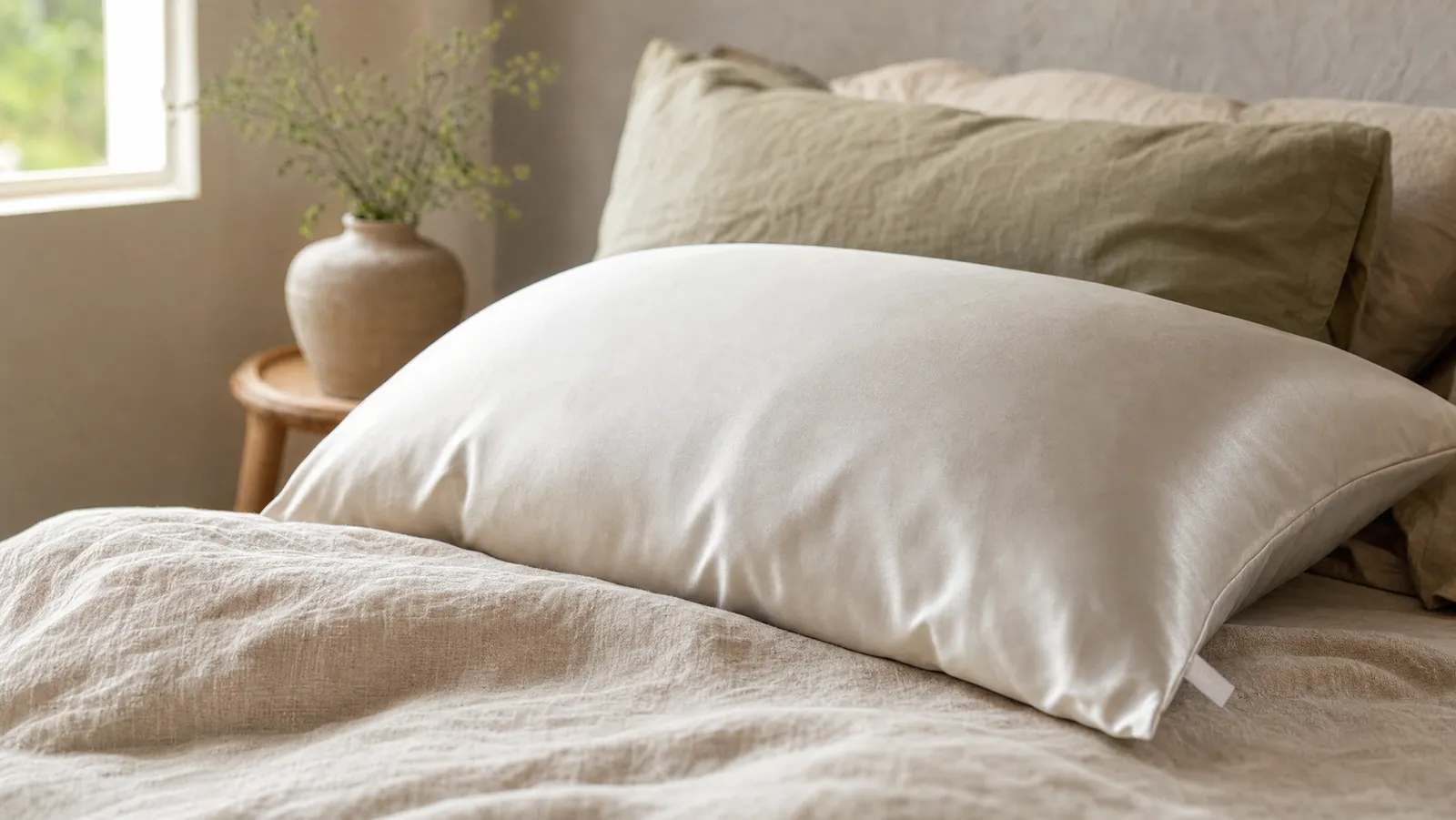
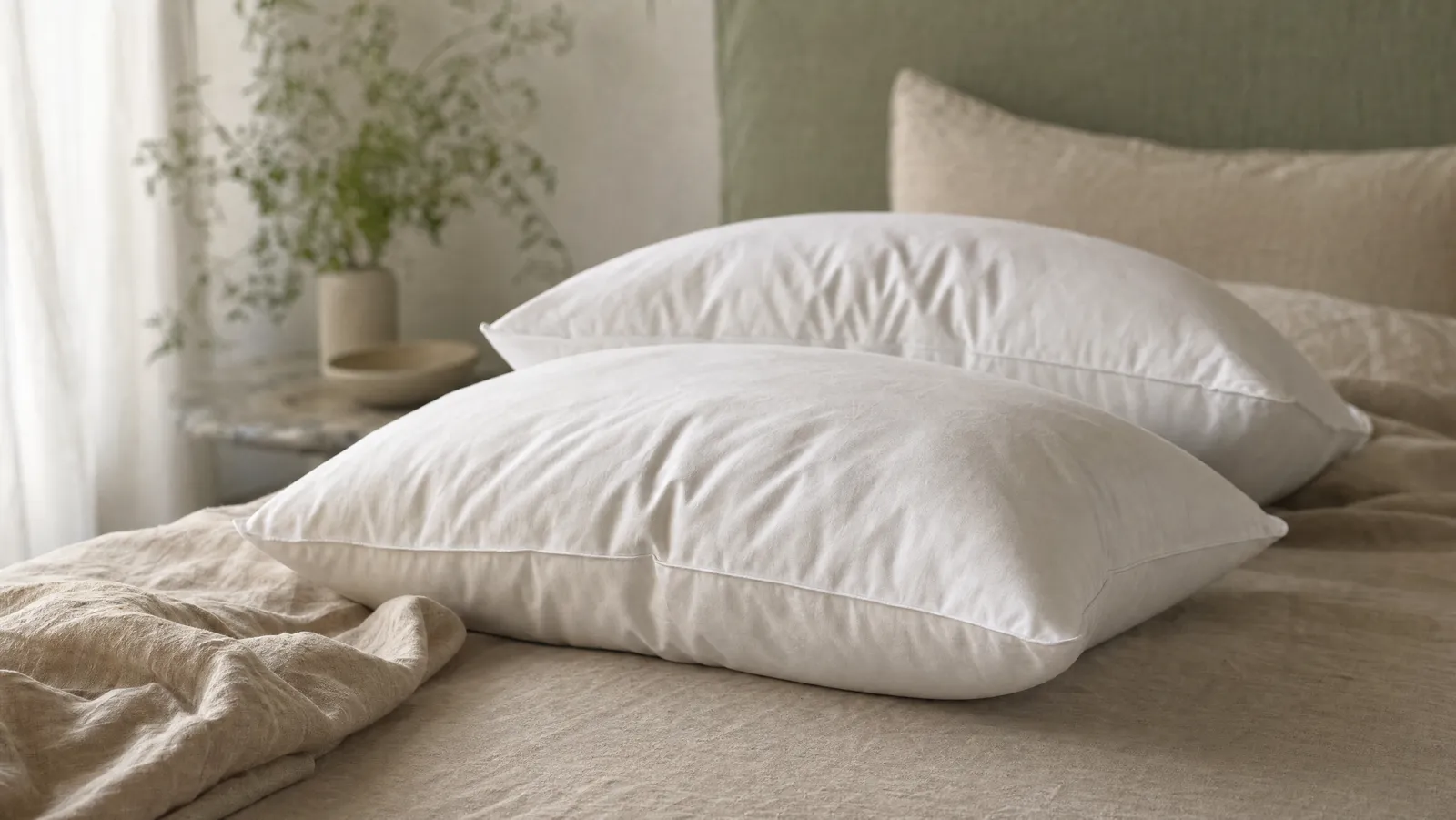
Some people would rather not sleep on polyurethane whatever the evidence says, and that is a perfectly reasonable preference to buy on. Kapok is the plant fibre that gets closest to down: Cheer Collection describes the fill as lightweight and more breathable than cotton or wool, with a down-like softness, inside a 100% cotton shell.
The appeal is subtractive. It is a seed fibre in a woven cotton bag, with no foam and nothing that needs curing, so the off-gassing question does not arise in the first place. You get two standard pillows, 20 by 28 inches, for $59.99 as of September 2026 against a $79.99 list price. There is no third-party certification on this listing, so judge it on its stated fibre content rather than on any claim about what it is free of.
How to Check a Foam Pillow's Emissions Testing in Five Minutes
You cannot measure VOCs at home. What you can do is find out whether anybody else has measured them for the foam you are about to buy, and that takes about five minutes on a listing.
Memory Foam and VOCs FAQ
Are memory foam pillows toxic? The peer-reviewed evidence we can find does not support that framing. In a 2022 Chemosphere study of two new memory foam mattresses, the authors reported concentrations "well below available health-based benchmarks" and concluded the models evaluated were unlikely to "pose a health risk to consumers." That is two mattresses in a simulated use environment, not every foam product on the market.
Do memory foam pillows off-gas isocyanates? We have found no evidence that a cured pillow does. Isocyanates are a documented workplace hazard — OSHA calls them the leading attributable cause of work-related asthma, citing NIOSH — and the exposures it describes happen during spraying, foam-blowing and manufacturing, not on a made bed. The American Chemistry Council's diisocyanates group, an industry body, states that in a fully cured polyurethane product the original diisocyanates are "no longer present in their original form."
How long does the new-foam smell last? Days rather than weeks, on the closest measurement we have. The Chemosphere study found short-term emission half-lives on the order of 4 and 12 hours and a long-term half-life of about 24 days, so most of what you can smell goes early and a low tail follows.
Does CertiPUR-US mean a pillow is non-toxic? No, and it does not claim to. It certifies flexible polyurethane foam made without formaldehyde, ozone depleters, CPSC-regulated phthalates, and mercury, lead and other heavy metals, with VOC emissions under 0.5 parts per million, and it says certified foam is "screened for" chemicals classified as carcinogens, mutagens or reproductive toxins — screened for, which is not the same as certified free of. It covers the foam only, and it is a specification, not a health verdict.
Do bed pillows contain flame retardants? There is no federal flammability test that would require one. The mattress flammability standard at 16 CFR 1632 defines "mattress" in a way that expressly excludes pillows, so a standard bed pillow has no federal test to pass.
Can I put a memory foam pillow in a crib? No. The American Academy of Pediatrics' 2022 safe sleep recommendations say to keep pillows, pillow-like toys, quilts, mattress toppers and loose bedding out of an infant's sleep area. Ask your pediatrician about your own child.
I feel unwell and I think it is the pillow. What now? Stop using it and talk to a clinician. Symptoms you associate with a bedroom have many possible causes, and no product page can examine you.
Why you can trust us

Aimee Cannon
Sleep & bedding writer
Aimee Cannon is a sleep and bedding writer who has spent years testing pillows of every kind — memory foam, down, wool, bamboo, buckwheat, and specialty support pillows. She focuses on matching the right pillow to each sleeping position and need, and reports what actually holds up after months of nightly use. When she is not testing pillows, Aimee is usually with her husband and her dog.