Non-Toxic Pillows for Kids: What to Buy and When
No pillow belongs in a baby's sleep space in the first year, and most children do not need one until they move out of a crib and into a bed, usually somewhere between 18 months and 3 years old. Only after that does the fill matter, and then the useful questions are narrow: what the stuffing actually is, which component carries a certificate, and whether the thing can be washed. We may earn a commission from links on this page, at no extra cost to you.
That order is not a stylistic choice. A parent searching for non toxic pillows for kids is usually worried about chemistry, and chemistry is a real second-order question. The counted, documented risk in this category is soft bedding in an infant's sleep space. So we deal with age first, then materials, then labels — and the general framework for choosing a non-toxic pillow still applies once your child is old enough for one.
When can a toddler use a pillow?
Not in the first year, and this is the one part of the page where the guidance is unambiguous.
The American Academy of Pediatrics' 2022 policy statement on sleep-related infant deaths lists this among its A-level recommendations: "Keep soft objects, such as pillows, pillow-like toys, quilts, comforters, mattress toppers, fur-like materials, and loose bedding, such as blankets and nonfitted sheets, away from the infant's sleep area." The same statement notes that each year in the United States 3,500 infants die of sleep-related deaths, and that airway obstruction from soft objects or loose bedding is the most common mechanism for accidental infant suffocation. The AAP's recommendations run through one year of age. The Consumer Product Safety Commission puts the same advice in four words on its safe sleep page — "Bare is Best" — and tells parents plainly not to add pillows or blankets to a baby's sleep space.
Regulators have been tightening the rules around the products most often mistaken for infant bedding. The CPSC approved a federal safety standard for infant support cushions in October 2024; the rule was published in the Federal Register on 4 November 2024 and took effect on 5 May 2025. It covers infant loungers, head positioner pillows, sleep positioners and anti-rollover pillows, wedge pillows for infants, tummy time pillows and crib pillows, and requires firmness testing across the surfaces an infant can contact. The CPSC says it is aware of 79 infant deaths and 124 injuries between 2010 and 2022 associated with these products, most among infants younger than three months, and that the majority of the deaths involved the cushion being used in or on a sleep product. None of that makes an infant pillow a good idea. It means the ones sold anyway now have to pass a test.
After twelve months, the guidance gets vaguer, and we would rather say so than invent precision. The AAP's safe sleep policy stops at one year and does not name an age at which a pillow becomes appropriate. What pediatric guidance generally points to instead is a milestone: the move out of a crib into a bed, which HealthyChildren.org, the AAP's parent-facing site, frames around readiness rather than a birthday — often when a toddler can climb out of the crib. In practice, the Cleveland Clinic says most toddlers switch from a crib to a bed between 18 months and 3 years old — a range that brackets the age 2 the makers of both toddler pillows on this page state on their listings.
So the checklist we would use:
- Out of the crib and into a bed. A pillow in a crib is still soft bedding in a small sleep space, whatever age is printed on the box.
- Age two at the earliest, and later is fine. Plenty of two- and three-year-olds sleep well flat, and we know of no benefit to adding a pillow before a child wants one.
- Small, low and firm rather than plush. 13 x 18 inches is the size toddler pillows are built around for a reason.
- Ask your pediatrician, particularly if your child has reflux, a breathing condition, low tone or a developmental delay. That conversation is worth more than any product page, including this one.
What "organic" actually describes on a kids' pillow
Here is the most common misreading in this category, and the cheapest pillow on our list is the clearest example of it.
ZPECC's toddler pillow is $9.99 as of September 2026. ZPECC says the pillowcase is 100% organic cotton, certified to Organic Content Standard 100 and OEKO-TEX Standard 100 — and that the fill is microfiber. Both halves of that are in the listing. The certification is attached to the cover — in this product set, the component that most often carries one.
That is not a scandal, and we are not going to frame it as one. It is a legitimate cheap, washable pillow, and the certifications ZPECC names sit on the case. The lesson is about reading, not about ZPECC: on a kids' pillow, an organic claim usually describes the case unless the listing separately states an organic fill. It is the same pattern we traced through the best organic cotton pillows for adult beds.
Two words we will not use about any of these products. We will not call a pillow "chemical-free," because everything is made of chemicals and the phrase means nothing. And we will not call a specific product "non-toxic" or "safe" as a statement of fact, because no one has tested these particular pillows for us and neither word tells you anything you can check. What we can tell you is what each one is made of and what a named third party has certified about which part.
Washability is the requirement that fights the natural fills
This is the most practical thing on the page, and it is specific to children.
Look at what the makers themselves say about cleaning:
- minimeri: spot clean only, no machine washing, no tumble drying — and the maker recommends pairing the pillow with a removable washable case.
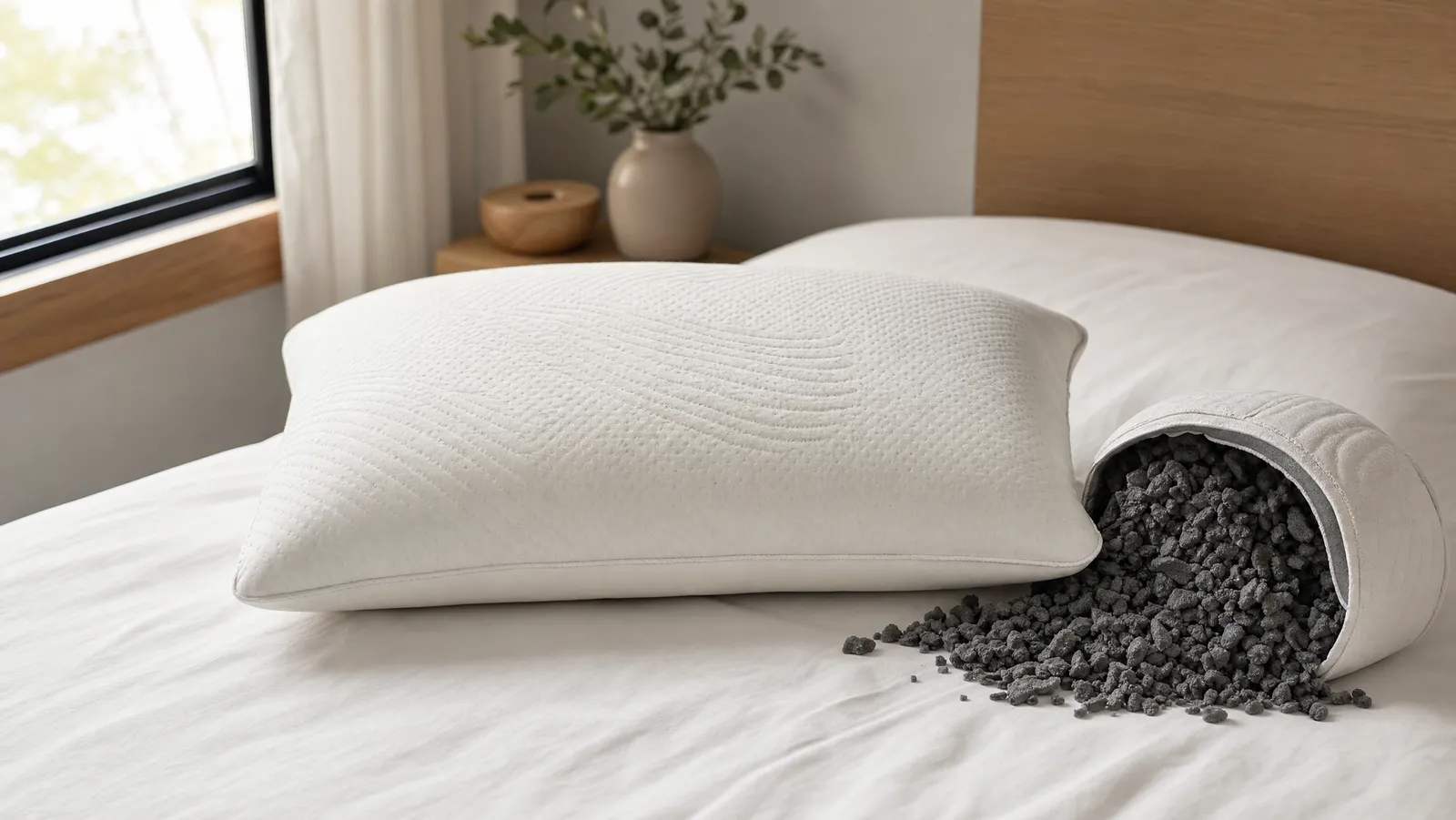
- LOFE: the kapok fill must not be washed; wash the pillowcase and air the interior.
- ORGANIC TEXTILES: spot clean the wool; the removable cover is washable.
- ZPECC: machine washable and tumble dryable, and the maker suggests washing before first use to restore loft.
The pattern is not a coincidence. The natural fills people want for a child's bed — tussah silk, wool, kapok — are all structurally unhappy in a washing machine, while the microfiber pillow washes like a T-shirt. Children, meanwhile, are the population most likely to be sick on their bedding at 2am.
The resolution is unglamorous: buy the washable layer separately. A zippered, certified case over a spot-clean-only pillow is how natural fills survive a child's bed. It is exactly why the MakeMake Organics toddler pillowcase set is on this page even though it is not a pillow — two 14 x 19 inch cotton cases MakeMake says are GOTS certified, $28.00 as of September 2026, one on the bed and one in the wash. If you buy any of the natural-fill picks, budget for a second case at the same time rather than after the first accident.
Size and loft: 13 x 18 versus 16 x 22
Fit is a real buying variable here and it gets skipped.
Toddler pillows cluster at 13 x 18 inches, which is why toddler pillowcases are sold at 14 x 19. Both age-2 picks on this page are that size. The LOFE kids pillow is deliberately not: at 16 x 22 inches it is a bigger pillow for a bigger child, and LOFE positions it for ages 4 to 12 with fill guidance for ages 4 to 6, 7 to 9 and 10 to 12.
The reason adjustable fill matters more for children than for adults is that a child's shoulders keep changing width. A pillow that is too tall can tip a small head out of line with the spine; the same pillow can be right two years later. A fill you can remove and put back is the honest answer to a body that changes every year — and it is the feature both the LOFE and the ORGANIC TEXTILES wool pillow share.
Kapok is worth a word, since fewer parents have met it. It is a seed fibre whose cells are essentially hollow microtubes: a 2025 paper in Global Challenges on kapok insulation boards describes the fibres as having "a very big lumen in proportion to the cell wall, forming hollow microtubes, which contain as much as 80% air." That structure is why kapok is so light for its bulk. It does not feel like a fibre pillow, though, and LOFE says so itself: the maker describes its kapok as more supportive and firm, and less fluffy, than common fibre fill.
What the certifications on kids' bedding actually cover
Four marks show up on these listings, and one fact about them is genuinely useful to parents.
OEKO-TEX STANDARD 100 sorts certified goods into product classes, and Product Class I is defined as "products for babies and children up to 3 years" — the class OEKO-TEX describes as carrying the strictest requirements and limit values. If you are buying for a small child, the class is the part of the claim worth chasing. A listing that says "OEKO-TEX certified" without a class or a certificate number has not told you which set of limits applies.
The others in short: GOTS is an organic fibre and processing standard, so on a pillow it typically covers the cotton cover or case rather than the stuffing; OCS 100 tracks organic content through the supply chain without making a chemical-safety claim; and the CPSC is a federal regulator, not a certification body, so "CPSC certified" on a listing is loose language for meeting the federal rules that apply to children's products. We unpack all four properly in our explainer on what pillow certifications actually mean rather than repeating it here.
Wool, flame resistance and children's bedding rules
Wool earns its place on this page for a reason that has nothing to do with marketing. Its ignition resistance is intrinsic to the fibre: a 2021 paper in Polymers attributes wool's flame retardancy to "the high amount of nitrogen, sulfur, and moisture contents," giving a limiting oxygen index of roughly 25% — above the roughly 21% oxygen content of air, which is why wool tends to smoulder and self-extinguish rather than carry a flame. That is a property of the material, not a finish added to it.
It is worth being precise about what is and is not regulated. The federal flammability standards at 16 CFR parts 1615 and 1616 apply to children's sleepwear in sizes 0 through 14 — nightgowns, pajamas, robes and similar garments — with exemptions including diapers, underwear, certain infant garments and tight-fitting garments. They are garment rules. A bed pillow is not sleepwear. If avoiding added treatments is the point of your search, wool is the fill that gets there by chemistry rather than by claim — at $89.95 as of September 2026, roughly nine times the price of the cheapest pick here.
The picks, in one place
Full details render on each card below, and every price here is as of September 2026. In short:
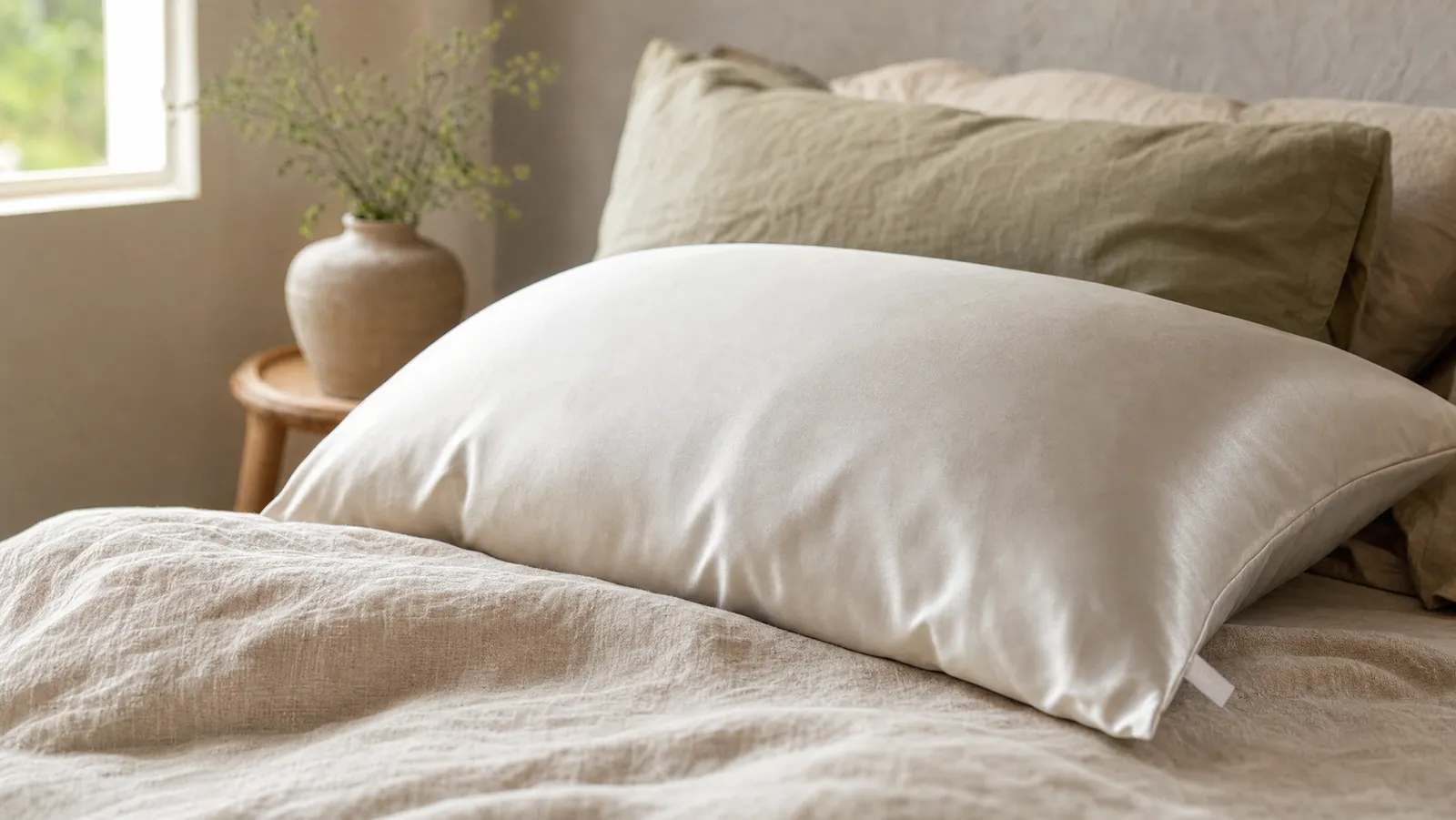
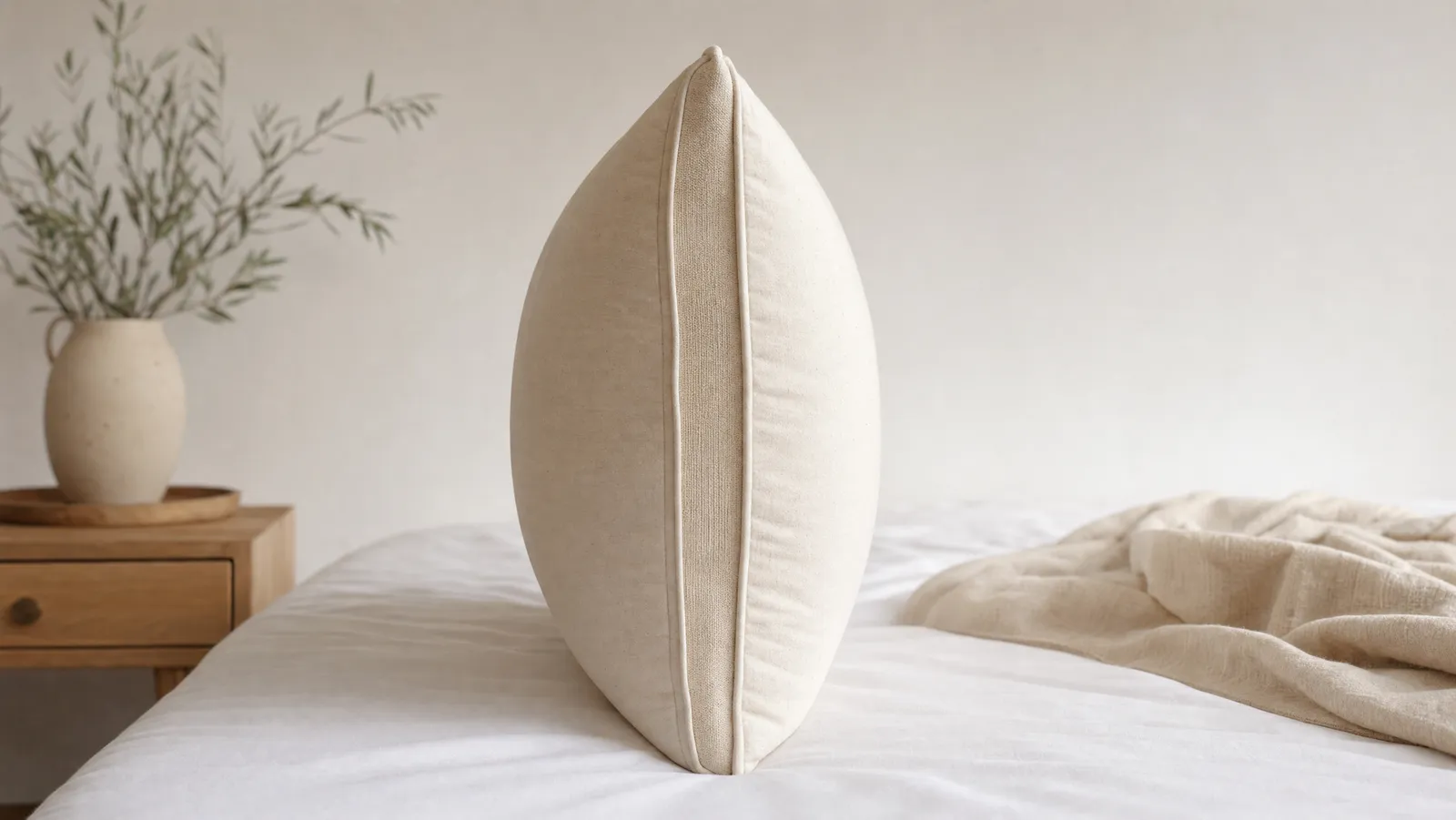
- minimeri Organic Toddler Pillow, $30.99 as of September 2026 — our pick for a child who has just moved into a bed. Tussah silk fill in a cotton shell, 13 x 18 inches, stated by the maker for age 2 and up, foldable to raise the loft, spot clean only.
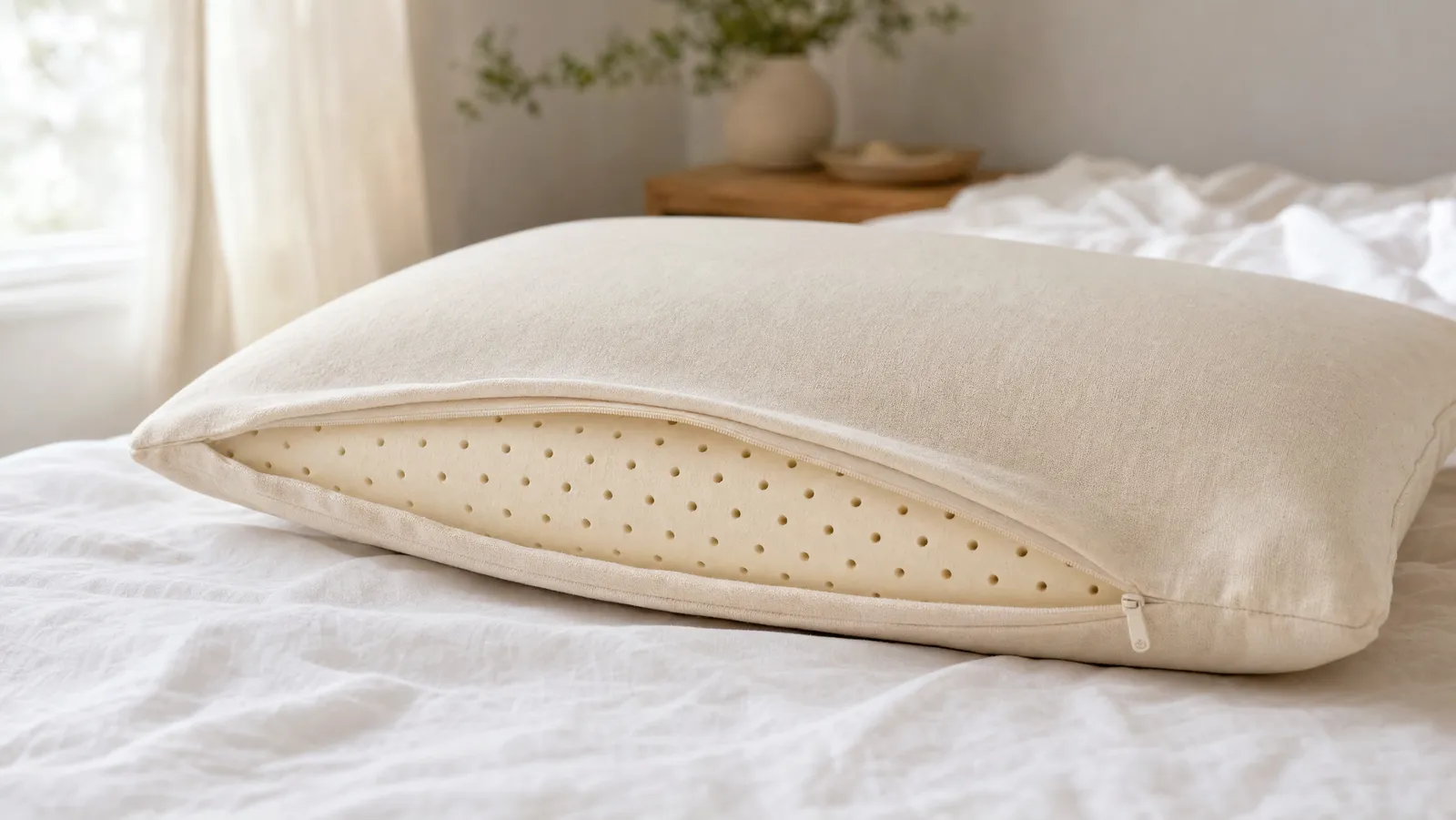
- LOFE Kids Pillow, $35.99 — 16 x 22 inches with organic kapok you remove as the child grows, for ages 4 to 12. Wash the case, not the fill.
- ORGANIC TEXTILES Wool Pillow, $89.95 — adjustable wool under an organic cotton cover, and the fibre that resists ignition on its own. The expensive option, and spot clean only.
- ZPECC Toddler Pillow, $9.99 — the honest budget pick, and the one that teaches the label lesson: certified organic cotton case, microfiber fill, and the only one you can machine wash whole.
- MakeMake Organics Pillowcase Set, $28.00 — two zippered GOTS certified cases, not a pillow. The accessory that makes the natural fills survivable.
We have not slept on any of these, and we have no lab results for them. What we can do is separate the maker's claims from the certified ones and tell you which is which.
The bottom line
Get the sequence right and this is a small decision. In the first year, no pillow — the AAP is unambiguous about soft objects in an infant's sleep area, and that is the only genuinely high-stakes call on this page. Once your child is out of the crib and in a bed — for most toddlers, somewhere between 18 months and 3 years — pick a small low pillow with a fill you can name, buy a washable certified case to go over it, and check which component any certification actually covers.
That is the whole method. If you want the same reasoning applied to the rest of the household, our roundup of the best non toxic pillows works through materials and certifications for adult beds. And if your child has symptoms you are attributing to their bedroom, take that to a pediatrician rather than to a checkout page. Some parents prefer to avoid certain fills and finishes on principle, and that is a perfectly reasonable thing to want — it is just a different question from the one that keeps a baby safe.
The shortlist
5 pillows compared — firmness, loft, and temperature side by side. The top pick is highlighted.
| Pillow | Firmness | Loft | Sleeps | Best for | Price |
|---|---|---|---|---|---|
Soft | Low | Neutral | A natural-fill first pillow for a child aged 2 and up | $30.99 Check | |
Best for Older KidsLOFE Kids Pillow with Pillowcase, 16x22 Organic Kapok Fill | Medium | Adjustable | Neutral | A pillow that adjusts as a child grows from 4 to 12 | $35.99 Check |
Medium Soft | Adjustable | Neutral | Naturally flame-resistant wool without added chemical treatment | $89.95 Check | |
Read the LabelZPECC Toddler Pillow with Pillowcase, 13x18 (Age 2+) | Soft | Low | Neutral | A washable, certified-cover toddler pillow at the lowest price | $9.99 Check |
Soft | Low | Neutral | Making a spot-clean-only natural pillow practical for a child | $28 Check |
minimeri Organic Toddler Pillow 13x18, Tussah Silk Fill (Age 2+)

It is much lighter than it looks, my daughter does not wake up sweaty on it, and folding it in half was enough to fix the height without buying a second pillow.
Spot clean only is exactly as annoying as it sounds when you have a four-year-old, so it lives inside a zip-up case that goes through the wash instead.
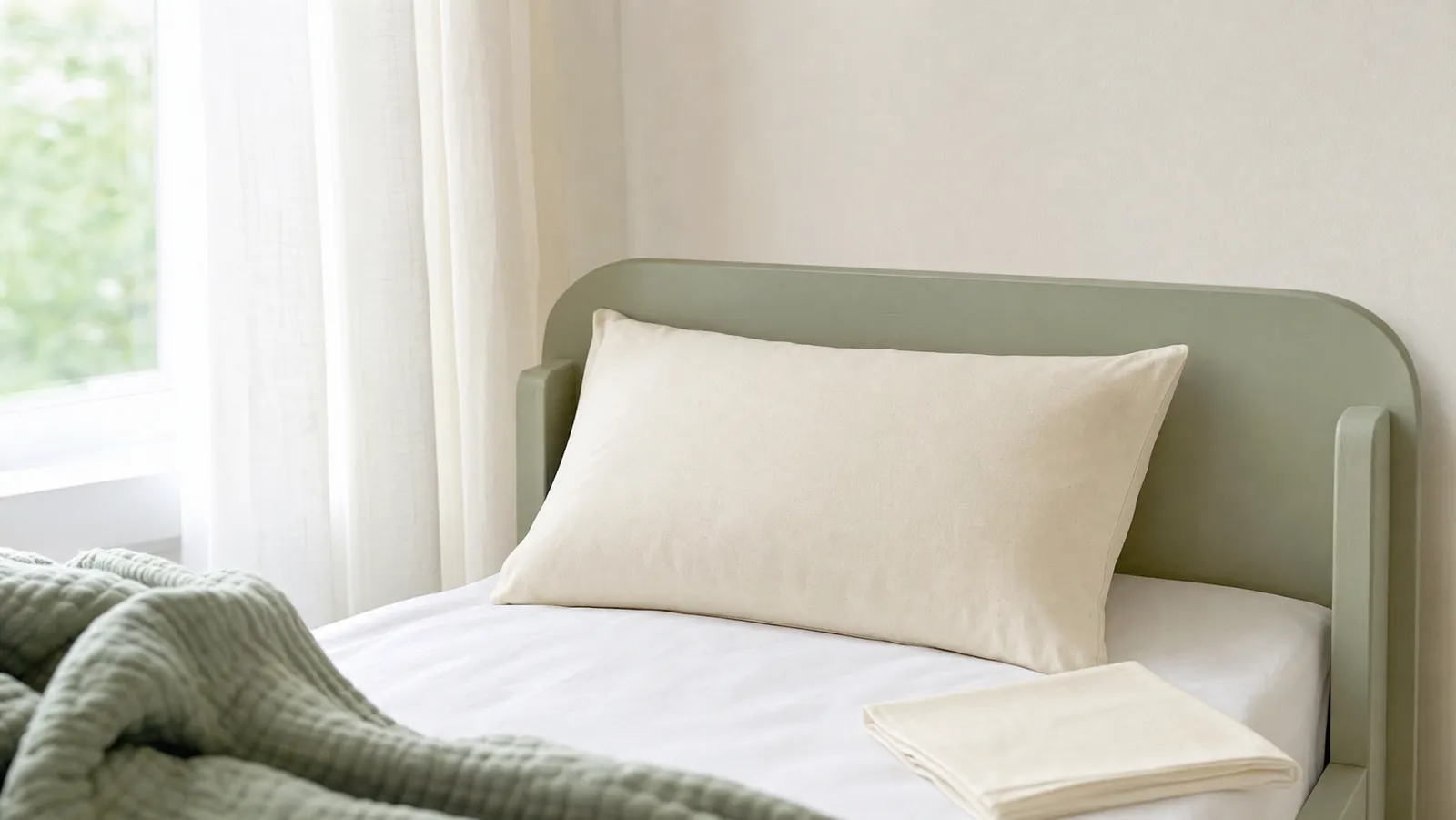
This is the pick we would hand to a parent whose child has just moved into a bed. minimeri says the fill is 100% natural tussah silk in a 100% cotton shell, and — unusually for this category — the maker is explicit about who it is for: age 2 and up, at a moderate loft that can be folded to raise the height. It is the standard 13 x 18 inch toddler size and comes with a storage bag.
Read the care line before you buy. minimeri says spot clean only, with no machine washing and no tumble drying, and recommends pairing the pillow with a removable washable case. On a child's pillow that is a real constraint rather than a footnote, and it is the reason we treat a spare case as part of the purchase. At $30.99 as of September 2026 it sits in the middle of this page on price.
LOFE Kids Pillow with Pillowcase, 16x22 Organic Kapok Fill

Taking out about a third of the kapok made it right for a six-year-old, and knowing I can put it back in a couple of years is why I stopped buying a new pillow every birthday.
It is firmer than the fibre pillow it replaced and took a week to get used to, and you genuinely cannot wash the inside — only the case.
At 16 x 22 inches this is not a toddler pillow, and that is the point. LOFE positions it for a child who has outgrown 13 x 18, and it is the only pick here whose fill is adjustable by age band: the maker gives guidance for ages 4 to 6, 7 to 9 and 10 to 12, so you take kapok out or leave it in as the child grows. LOFE says the shell and pillowcase are 100% organic cotton, the fill is organic kapok, and the pillow is CPSC and OEKO-TEX Standard 100 certified — the listing does not name a certificate number or product class, which is worth asking about.
Two honest notes from LOFE's own copy. The kapok must not be washed: wash the pillowcase and air the interior. And the maker describes kapok as more supportive and firm, and less fluffy, than common fibre fill, so a child expecting a squashy pillow will notice. It is $35.99 as of September 2026.
ORGANIC TEXTILES 100% Natural Wool Pillow for Kids and Toddlers (Child Size)

Pulling out two handfuls dropped it to a height that actually suited a seven-year-old, and it does not get hot the way his old foam pillow did.
It costs more than the rest of his bedding put together, and the wool itself cannot be washed, so everything depends on the cover.
Wool is the fibre that answers the flame-retardant question by being wool. Its resistance to ignition is a property of the fibre rather than a finish applied to it, which is why a wool-filled pillow does not need a treatment to be hard to set alight. ORGANIC TEXTILES says this child-size pillow is filled with 100% all-natural wool under an organic cotton cover, that the wool regulates temperature year-round, and that the loft is adjustable — you add or remove fill to change the height and firmness, which is what makes an adult-grade fibre workable under a small head.
The catch is the price. At $89.95 as of September 2026 it is roughly nine times the cheapest pick on this page, and the wool is spot clean only, with only the removable cover going in the wash.
ZPECC Toddler Pillow with Pillowcase, 13x18 (Age 2+)

Ten dollars, it went through the wash and dryer after a stomach bug and came out fine, and the certified part is the case, which is what touches her face all night.
I assumed I was buying an organic-fill pillow. The case is the organic part; the stuffing is microfiber, and that is in the listing if you read it.
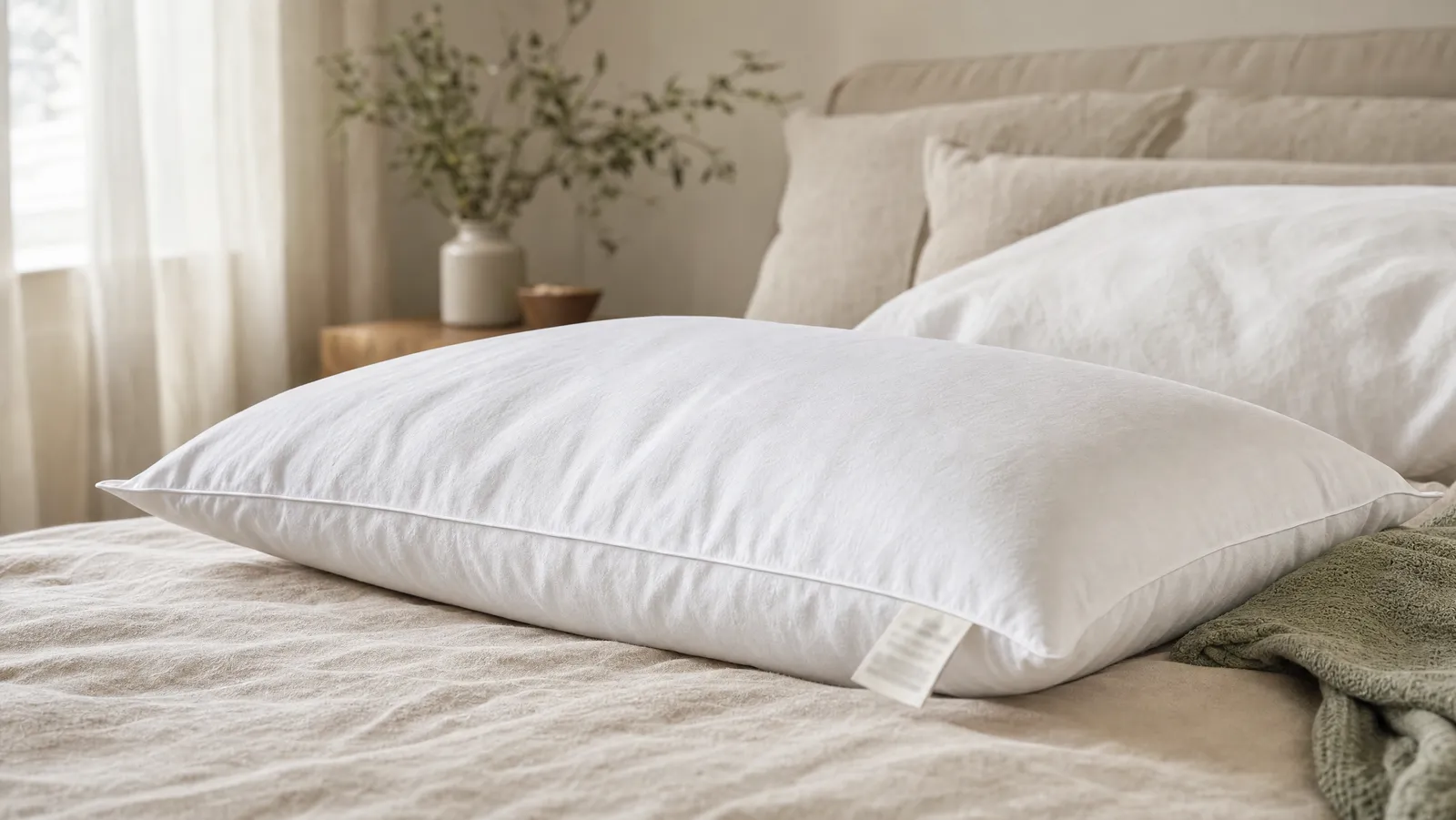
Read this listing the way we would like you to read every listing in this category. ZPECC says the pillowcase is 100% organic cotton, certified to Organic Content Standard 100 and OEKO-TEX Standard 100, and that the fill is microfiber. The word "organic" is doing its work on the cover, not on the stuffing. That is not a scandal and we are not treating it as one — it is simply what the certification covers.
Judged for what it is, it is a sensible cheap pillow. It is the 13 x 18 inch toddler size with a 14 x 19 inch case included, ZPECC says it is machine washable and tumble dryable and recommends washing before first use to restore loft, and it is intended for age 2 and up. At $9.99 as of September 2026, against a $14.99 list price, it is the only pick here you can throw in the machine whole.
MakeMake Organics GOTS Certified Organic Cotton Toddler Pillowcase, Zippered, 14x19 (Set of 2)

The zip is the whole reason I bought these — nothing crawls out at 3am — and they have washed a dozen times without going stiff or shrinking off the pillow.
It is two pillowcases. I know that is written on the listing, but I still half expected a pillow to arrive in the box.
This is a set of two pillowcases, not a pillow. Check what you are adding to the basket, because it is the one product on this page that does not have a fill at all.
It is here because it solves the problem that runs through every natural-fill pick above: the fills are spot clean only and children are not. MakeMake says the cases are GOTS certified organic cotton in a sateen weave, made without polyurethane or added chemical finishes, and closed with concealed YKK zippers so the pillow cannot work its way out in the night. At 14 x 19 inches they fit a standard 13 x 18 inch toddler pillow, and at $28.00 as of September 2026 for two you get one on the bed and one in the wash.
How to Read a Kids' Pillow Listing in Five Minutes
Almost every mistake in this category is a reading mistake. Five minutes on the listing settles most of it.
Non-Toxic Kids' Pillows FAQ
When can a toddler use a pillow? Not in the first year. The AAP's 2022 recommendations tell parents to keep soft objects, including pillows and pillow-like toys, away from the infant's sleep area, and those recommendations extend to one year of age. Past twelve months the AAP's safe sleep policy does not name a pillow age, and the practical marker most guidance uses is the move out of a crib into a bed, which the Cleveland Clinic says most toddlers make between 18 months and 3 years old — a range that brackets the age 2 both toddler pillows on this page are sold for. Ask your pediatrician about your own child.
Is an organic pillow safer for a child than a regular one? That is not a claim we can make, and neither can a listing. "Organic" is a fibre and processing claim, not a safety verdict, and on many kids' pillows it describes the cover rather than the fill. What you can check is the fibre content, which component carries a certificate, and whether the thing washes.
Does an OEKO-TEX label mean a pillow is made for babies? Only if it is certified in the right product class. OEKO-TEX's STANDARD 100 has four product classes, and Product Class I covers "products for babies and children up to 3 years," with what OEKO-TEX calls the strictest requirements and limit values. A listing that says "OEKO-TEX certified" without naming a class or a certificate number has not told you which one it holds.
Can I wash a wool or kapok pillow? Usually not. ORGANIC TEXTILES says to spot clean the wool and wash the removable cover; LOFE says the kapok fill must not be washed and that you should wash the pillowcase and air the interior. That is why a spare washable case is part of the purchase rather than an accessory.
What size pillow should a child have? Small and low. Toddler pillows cluster at 13 x 18 inches; the larger 16 x 22 inch size on this page is positioned by its maker for ages 4 to 12. A pillow that is too tall can push a small head out of line with the spine, which is a comfort problem before it is anything else.
My child has a rash or a cough I think is coming from their bedding. What should I do? Talk to a clinician. We can tell you what a pillow is made of and what somebody has certified about it. We cannot examine your child, and a different pillow is not a diagnosis.
Why you can trust us

Aimee Cannon
Sleep & bedding writer
Aimee Cannon is a sleep and bedding writer who has spent years testing pillows of every kind — memory foam, down, wool, bamboo, buckwheat, and specialty support pillows. She focuses on matching the right pillow to each sleeping position and need, and reports what actually holds up after months of nightly use. When she is not testing pillows, Aimee is usually with her husband and her dog.