Do Cooling Pillowcases Work? Covers, Cases, and Protectors Tested Against the Claims
Yes, better than most cooling pillows manage, and for a fraction of the price, but only at first touch. Do cooling pillowcases work? A thin, slippery, high-conductivity case changes the one surface your skin actually touches, which makes it the cheapest useful change available. What it cannot do is cool a hot pillow core. We earn a commission from links on this page, at no cost to you.
There is a second answer underneath the first, and it is why this page exists. Three products are sold under one search term: a cooling case, a waterproof protector, and a cover that is part of the pillow. One of the three is the layer most likely to make your pillow feel warmer, so working out which you are buying is worth more than any number on the packet. If it is the pillow rather than the surface cooking you, start with our guide to cooling pillows for hot sleepers.
The Short Answer
- The cool-touch effect is real, and it is the only claim here attached to a published test method. The metric is q-max, which North Carolina State University's Textile Protection and Comfort Center describes as indicating "the instantaneous thermal feeling sensed when there is initial contact of the material with the skin surface".
- The case captures more of that effect than a pillow does, because, in the same source's words, "the qmax value largely depends on the contact area between skin and fabric surface". The case is the surface.
- It fades for the same reason a cooling pillow's surface does, because conduction stops once the fabric reaches your temperature. Nobody publishes a measured duration for a pillowcase.
- The sellers' own numbers do not agree. Two of our picks claim the same fabric technology and the same q-max threshold, then quantify the result as "over 5°F" and "up to 5℃".
- A waterproof protector is a different product, and a waterproof film is the layer in your bed most likely to slow moisture leaving your skin.
- There is no published sleep outcome. A trial of cooling pillowcases is registered on ClinicalTrials.gov as NCT06415162. We checked again in October 2026 and found no results posted.
- The price is the real argument. At $7.20 a case as of October 2026, a case costs a fraction of a gel memory foam pillow, and unlike the pillow it goes in the wash weekly.
Case, Cover, or Protector: Three Products, One Search Term
This is the most useful thing on this page, so it goes first. On retail sites, "cooling pillowcase" is attached to three objects that do different jobs.
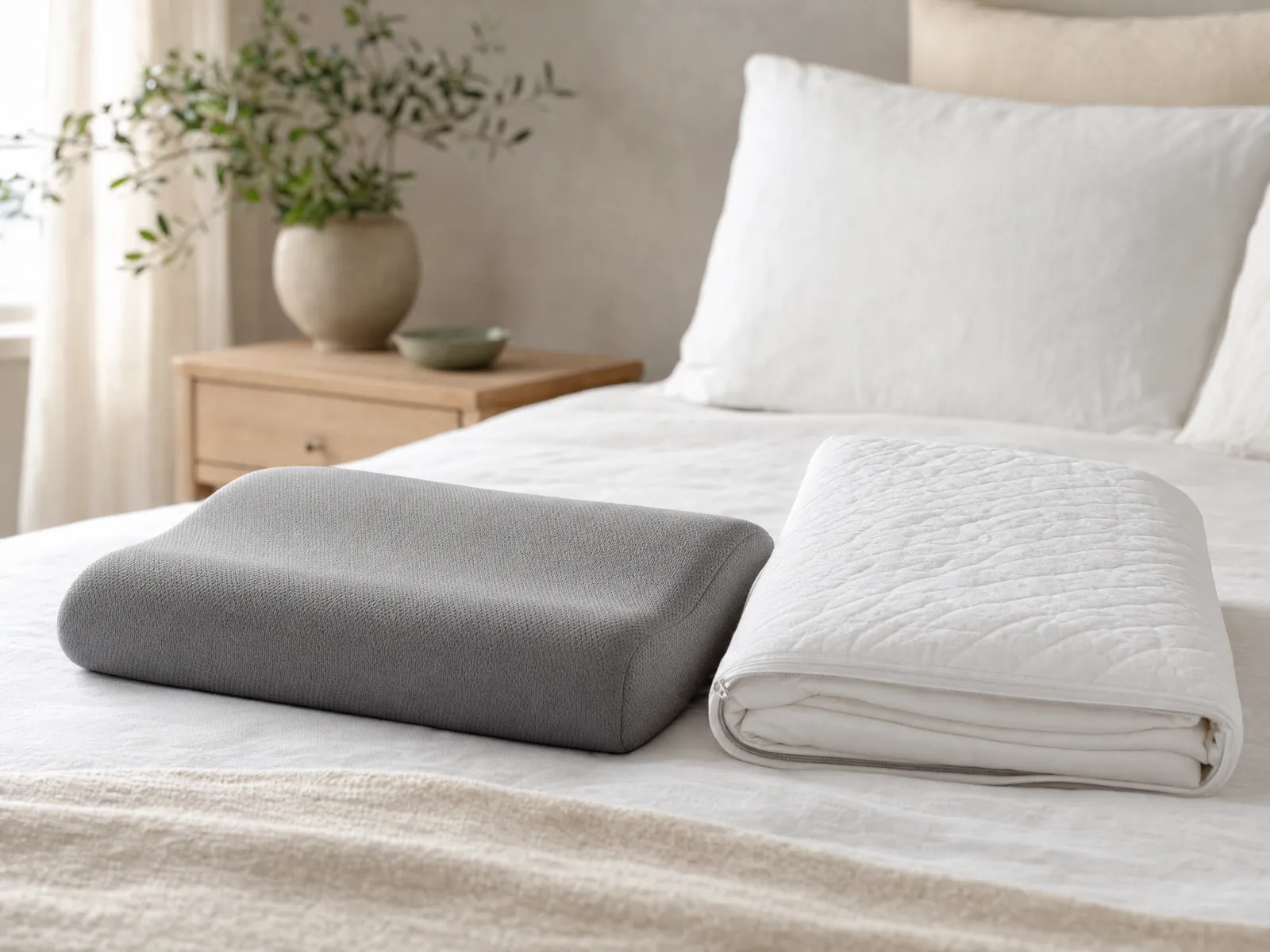
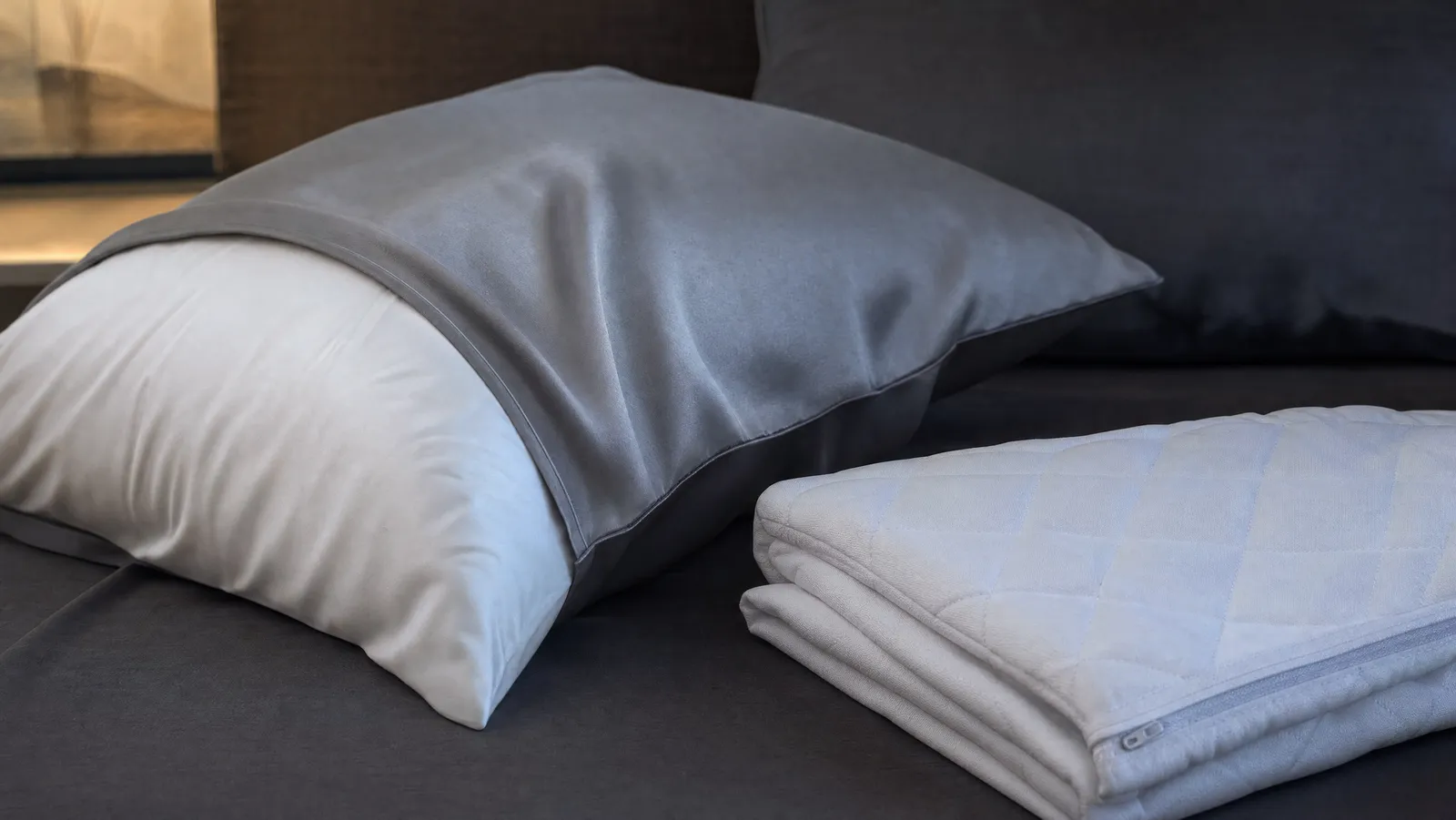
A cooling case is a thin fabric sleeve, usually with a hidden zipper, that you launder with the sheets. Its entire job is to change the surface in contact with your skin. Both cases on this page are this type, and the fabric is the product.
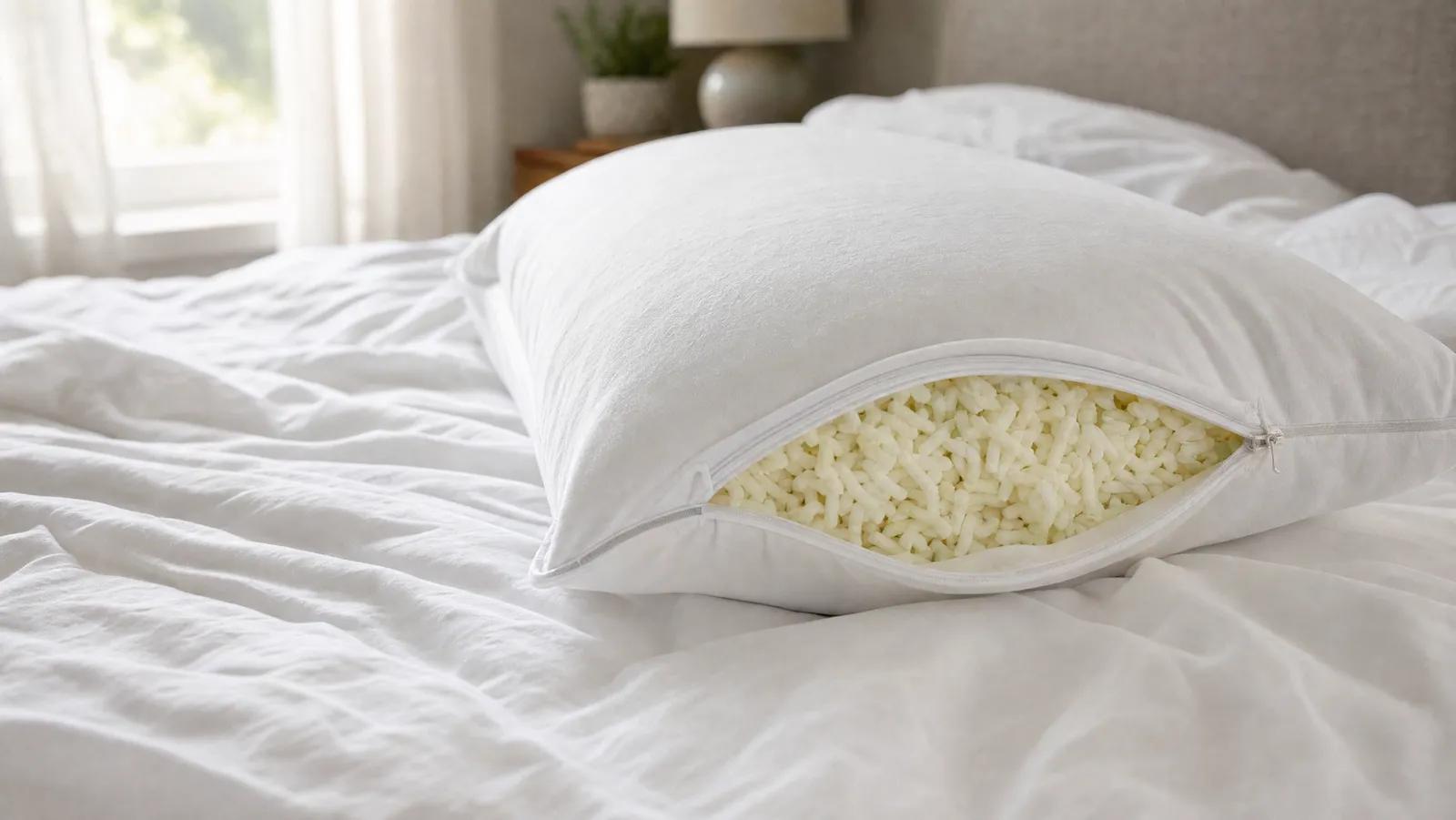
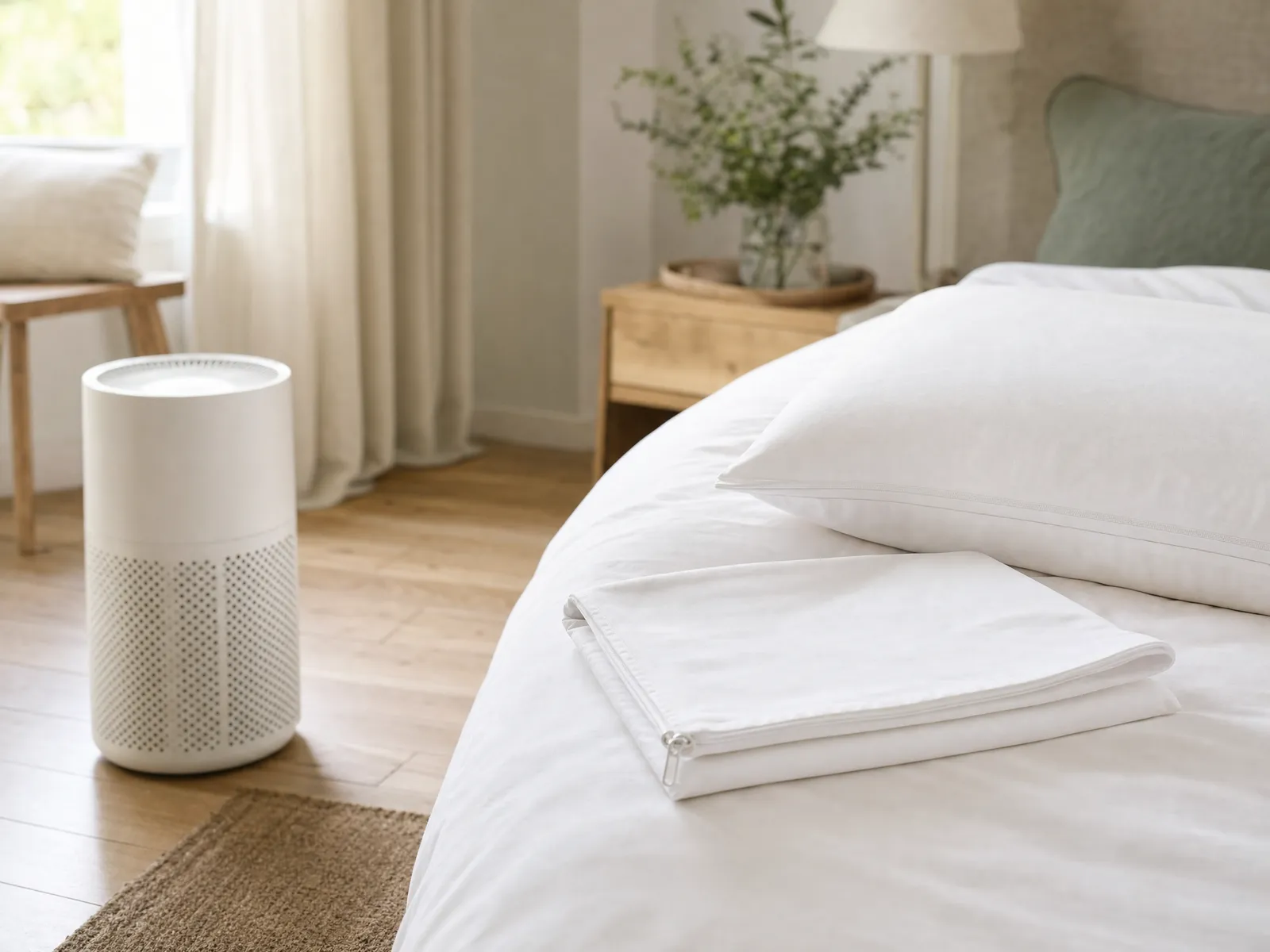
A protector is a barrier: normally zippered, often quilted, often with a waterproof film laminated to the back. Its job is to keep sweat, spills and allergens out of the fill, because a pillow core is the one thing in the bed you cannot really wash. Moisture in the fill is also what gets you mold in pillows, and an encasement is the measure the allergy guidelines actually grade for dust mites in pillows.
A cover is part of the pillow, sewn or zipped onto the fill, and whether it comes off for washing was decided for you by the maker. When a pillow listing promises a "cooling cover", this is what it means.
Only the first is trying to feel cool, and the third is often the quietly decisive one, because a removable launderable cover keeps working after the cool-touch effect has gone. If you want a nice case rather than a cold one, our guide to pillow cases is the better page.
What Q-Max Actually Measures
Q-max is a peak. Japan's standard for it, JIS L 1927, is titled "Textiles - Measurement method of cool touch feeling property", and the test presses a warm plate onto a cooler fabric and records the maximum heat flow in the moment of contact. North Carolina State University's Textile Protection and Comfort Center, which runs the test commercially, describes the qmax value as indicating "the instantaneous thermal feeling sensed when there is initial contact of the material with the skin surface", and says the test is "[s]imulating initial touch when shopping or when donning the fabric in wear".
So a q-max figure is a real, reproducible number describing the first second or so of contact. It is not a temperature, it is not a duration, and no part of it covers 3am. In TPACC's framing, this is the sensation you get picking a fabric up in a shop.
One more caveat, which the marketing never mentions. In The objective measurement of the 'cool feeling' in fabrics, in the Journal of the Textile Institute in 2001, Weedall and Goldie measured q-max and thermal absorptivity across a wide range of fabrics and had sixteen judges rank the same fabrics by warm-cool feeling. Neither number did well. Both "did not correlate well with subjective assessments when fabrics of different fibres were evaluated", and only "when fabrics with a common fibre were used" were the two measures "directly related to this warm-cool feeling, with b providing the better correlation" - b being thermal absorptivity. A q-max figure compared across different materials is not a forecast of what you will feel.
The Numbers Do Not Agree With Each Other
Here is the observation that made us write this article, checkable in two browser tabs.
The Avolare queen pair and the LUXEAR standard pair both name Arc-Chill 3.0 and both claim a fabric with Q-Max greater than 0.5: same named technology, same threshold on the same standardised metric. Then they quantify it. Avolare says the fabric "rapidly absorbs heat, lowering surface temperature by over 5°F upon contact". LUXEAR says it delivers "an immediate perceived temperature drop of up to 5℃", about 9 degrees Fahrenheit.
Those statements are roughly a factor of two apart, and both are offered as the consequence of the same fabric meeting the same q-max threshold. We cannot tell you which is nearer the truth, because the gap is not in the standardised part of the claim. Q-max has a test method. "Over 5°F" and "up to 5℃" do not: no published standard tells a seller how to turn a q-max value into a temperature drop, which is why that half of the claim moves around.
Two further things not to over-read. Arc-Chill is a fabric brand name rather than a specification, and it turns up across many sellers' blankets, quilts and pillowcases, quoting q-max figures that vary from listing to listing; we found no independent laboratory test of it, only sellers' figures. And both listings carry OEKO-TEX certification, a chemical-safety scheme: OEKO-TEX states that its "test methodology is mainly based on the release of harmful substances from the materials to be tested", with stricter requirements the more intensive the skin contact. Good to have against your face all night, and not a cooling claim. We untangle these labels in pillow certifications explained.
What a Cooling Pillowcase Can and Cannot Fix
Three things a thin case does, in descending order of our confidence in them.
- It changes the surface, the layer that matters for contact coolness. By TPACC's account, q-max depends heavily on contact area between skin and fabric, and the case touches your skin while the core does not.
- It washes. This is the unglamorous reason we would buy a case before a pillow. The Sleep Foundation recommends washing pillowcases once a week, and says it is "also recommended to wash sheets more often in the warm summer months, as you will likely get more sweat on your bedding". A foam core cannot take that, and how to wash a cooling pillow is its own problem for another day.
- It helps moisture move, which keeps working after conduction has stopped. A smooth, quick-drying face holds less sweat against your skin than a brushed cotton one. Mechanism rather than measurement: we found no study comparing pillowcase fabrics for overnight moisture in sleepers.
Two things it cannot do. It cannot cool a hot core, because a solid slab of foam is a dense insulator and no surface fabric opens it up; if the pillow is the heat source, the material is the problem, and what memory foam actually does well is the place to start. Nor can it rescue a collapsed pillow, which traps heat because compressed fill holds less air. How often to replace your pillow sets out the intervals.
Why Waterproof and Cooling Pull In Opposite Directions
A waterproof protector works by laminating a film, usually thermoplastic polyurethane, to the back of a fabric. The film blocks liquid water. The problem for a hot sleeper is that the same film stands in the way of water vapour leaving your skin, and evaporation is the part of your cooling that keeps working after the cool-touch effect has equilibrated.
The textile industry treats that trade-off as real enough to measure. The standard, ISO 11092, is titled "Textiles - Physiological effects - Measurement of thermal and water-vapour resistance under steady-state conditions (sweating guarded-hotplate test)", and it reports water-vapour resistance in square metre pascals per watt. Hohenstein, which tests bedding encasings for allergen barrier and for comfort, runs that method on its "Skin Model" - a porous sintered plate heated to skin temperature and fed with water - and grades the result "very good", "good" or "unsatisfactory" without publishing the numbers behind the grades. A 2012 account of its encasing label in Specialty Fabrics Review reported the criterion as "the water vapor resistance of encasings must not be higher than 20 m2Pa/W". Whether that exact figure still stands or not, the existence of a pass mark is the point: a barrier cover can fail a breathability test.
Our contrast pick shows the tension inside one feature list. The SOLOSHINE waterproof protector claims both "a durable waterproof TPU backing" and a "highly breathable fabric", which cannot both be maximised. To its credit, SOLOSHINE makes no cooling claim at all. We found no published water-vapour resistance figure for this cover, or for any pillow protector on Amazon, so we have rated it neutral rather than warm: we can explain the mechanism, we have not measured the product, and we would rather say so than invent a cell on a spec table.
None of which makes a protector a bad buy: it is the right product for keeping sweat out of a core you cannot launder, and if sweat is the complaint, our guide to cooling pillows for night sweats works through the whole stack. Buy it for the barrier, and put the thin case on top.
What the Evidence on Sleep Outcomes Actually Shows
The honest sentence: nobody has published a result.
A trial does exist on paper. ClinicalTrials.gov lists NCT06415162, "Evaluation of the Effects of Using Cooling Pillowcases, on the Symptoms of Hot Flushes, Sleep and Life Quality", run by Saglik Bilimleri Universitesi, with a target enrolment of 64 pre- or perimenopausal women receiving goserelin for hormone-receptor-positive breast cancer. The record describes a non-randomised, two-arm, unmasked design: the intervention arm gets education plus the cooling pillowcase, the control arm routine care. The listed start date is December 2023 and the estimated primary completion date was July 2024, but the record was last verified in May 2024 and its overall status is given as unknown. We checked again in October 2026 and found no results posted and no published paper.
So the evidence amounts to a measurable surface property, a plausible mechanism, one registered trial in a narrow clinical population, and no outcome data. That is thinner than the marketing implies, and it is the conclusion we reached about the pillows when we looked at whether cooling pillows actually work. We will not launder a mattress study or a cooling-pad trial into a pillowcase claim, and we have not tested any of these products in a laboratory ourselves. Nobody publishes thermal data for individual pillowcases, and we would rather say so than put up a number we cannot defend.
Our Picks: The Best Cooling Pillowcase, and the Protector That Is Not One
The arithmetic matters more than the adjectives. Per unit, as of October 2026, the Avolare queen pair is $7.20 a case, the LUXEAR standard pair is $7.98 a case, and the SOLOSHINE protector pair is $15.00 a cover.
The Avolare pair is our pick on structural grounds: it is the cheapest per case, it is a queen case for less than the standard-size pair, and its headline claim is at least pinned to a figure with a published test method behind it. Treat the "over 5°F" part as marketing and buy it for what is unarguable, a thin, slippery, quick-drying fabric against your skin that goes in the wash with the sheets.
The LUXEAR pair costs 78 cents more a case and earns it in one situation. It is dual-sided, cool-touch face on one side and plain knit on the other, so you can turn the effect off when the weather turns. Against that, it is the standard size and wants a separate cold gentle wash.
The SOLOSHINE protector is the contrast, not the recommendation: twice the price per unit, and a different job, which is keeping sweat out of a pillow core that cannot be washed.
Is a Case a Better Buy Than a Cooling Pillow?
As a first purchase, yes, and the argument does not depend on the cooling claim being true.
Spend in this order. The room first: nothing on the bed competes with a thermostat. Then airflow. Then the surface touching you, where the best cooling pillow cover you can buy is simply a thin, conductive, launderable one, and where $7.20 as of October 2026 buys the experiment. Then the pillow, if and only if the problem outlasts the first hour, which is the signature of a hot core rather than a hot surface.
The reason to put the case first is risk, not physics. If a cooling fabric suits you, a case tells you so for the price of a sandwich; if not, you have two spare pillowcases. Either way the case is the layer you wash weekly, which is the one benefit in this category that does not fade after ten minutes.
When Cooling Fabric Is Not the Answer
Some overheating at night is a bedding problem and some of it is not, and no product page can tell you which.
Mayo Clinic defines night sweats as "repeated episodes of very heavy sweating during sleep, heavy enough to soak your nightclothes or bedding", says they are "often caused by an underlying condition or illness", and notes that they "usually happen with other concerning symptoms, such as fever, weight loss, pain in a specific area, cough or diarrhea". If that describes your nights, the next step is a clinician rather than a cart. A pillowcase does not treat a cause, and buying one can be a way of not asking the question.
The Bottom Line
Do cooling pillowcases work? For the first minute, measurably, and better than the pillow underneath, because contact coolness is a property of the surface and the case is the surface. Past that the claim thins out fast: no published duration, no published sleep outcome, one registered trial with no results, and two sellers quoting the same fabric technology with temperature drops a factor of two apart.
Still a decent buy, bought for the right reasons. Pick the cheapest credible case, check the size, read the care line, and expect a cool first touch rather than a cold night. Then wash it weekly. If the heat is coming from the core rather than the cover, our cooling pillow buying guide is the next page.
The shortlist
3 pillows compared — firmness, loft, and temperature side by side. The top pick is highlighted.
| Pillow | Firmness | Loft | Sleeps | Best for | Price |
|---|---|---|---|---|---|
| — | — | Cooling | Lowest price per case here | $14.39 Check | |
Dual-Sided Knit ReverseLUXEAR Arc-Chill Cooling Pillowcases (Standard, Set of 2) | — | — | Cooling | Two faces: Arc-Chill and plain knit | $15.95 Check |
What a Protector Is InsteadSOLOSHINE Waterproof Bamboo Pillow Protector (Queen, 2 Pack) | — | — | Neutral | Blocking sweat from reaching the pillow | $29.99 Check |
Avolare Arc-Chill Cooling Pillowcases (Queen, 2 Pack)

For about seven dollars a case it is genuinely cold for the first minute or two when I turn it over, and because it goes in with the sheets every week I never have the stale-pillowcase problem I had before.
The stretch fit is snug on a thick contoured pillow, which Avolare does warn about, and the cold feeling is a first-contact thing that has gone by the time I am actually asleep.
Two queen cases for $14.39 as of October 2026 works out at $7.20 a case, the lowest per-unit price on this page, and for a larger case than the standard-size pair below. It is a stretch fabric with a hidden zipper, and Avolare states Arc-Chill 3.0 Cooling Technology with a fabric that is "Q-Max>0.5", claims it "rapidly absorbs heat, lowering surface temperature by over 5°F upon contact", and states OEKO-TEX STANDARD 100 certification. Read the first two as manufacturer claims and the third as what it is, a harmful-substances certification rather than a thermal one.
This is our pick because of what the claim is attached to rather than how big it is. Q-Max is the one figure in this category tied to a published test method, and that method measures the peak heat flow at initial contact, so buy it expecting a cool first touch and not a cool night. The mechanism that keeps working is duller and better: a thin, slippery, quick-drying fabric in direct contact with your skin, which Avolare says is machine washable and will "air dry in one hour". Two cautions from Avolare's own copy: the maker notes that "the pillow core's thickness may affect the pillowcase's fit", and no case of any kind can cool a hot foam core underneath it.
LUXEAR Arc-Chill Cooling Pillowcases (Standard, Set of 2)

Having a cool side and a normal side means I actually use these all year instead of putting them away in October, and the silky face does feel cold for the first few minutes.
Cold wash on a gentle cycle, separately, is a nuisance for something I want to launder every week, and the standard size is tight on my queen pillows.
A standard-size pair at $15.95 as of October 2026, or $7.98 a case, and the reason to choose it is the construction rather than the number. One face is the cool-touch fabric and the reverse is an ordinary knit, which LUXEAR describes as "cloud-soft, gentle comfort". That makes it the only pick here you can switch off in January by turning it over, which is a practical answer if you are among the sleepers who find a slippery conductive case clammy once the weather turns. LUXEAR states "specialized Japanese Arc-Chill cooling fibers featuring a Q-max rating of over 0.5" and OEKO-TEX 100 certification.
Where we part company with the listing is the size of the effect. LUXEAR quantifies it as "an immediate perceived temperature drop of up to 5℃", roughly 9 degrees Fahrenheit, while the Avolare pair above claims the same named technology and the same q-max threshold and says "over 5°F". Both cannot be describing the same measured thing. Two other practical notes: this is the standard size, so measure the pillow before you order, and LUXEAR's care instruction is to "machine wash separately in cold water on a gentle cycle", which is a real limitation if you are buying bedding you want to wash hot.
SOLOSHINE Waterproof Bamboo Pillow Protector (Queen, 2 Pack)

My pillow smells clean after a summer it would previously not have survived, and the bamboo face is soft enough that I forget there is a waterproof layer under it.
It does not feel cool at all, which it never promised to, and there is a faint crinkle from the waterproof backing when I move in the night.
This is on the page as the contrast case, not as a cooling buy, and it is the product most people are actually holding when they search for a "cooling pillow protector". It is a zippered barrier cover: SOLOSHINE states a "PREMIUM 100% RAYON FROM BAMBOO SURFACE" over "a durable waterproof TPU backing" that "helps block spills, sweat, drool and everyday moisture". At $29.99 as of October 2026 for two queen protectors, or $15.00 each, it costs about twice what either case above costs per unit, and it solves a different and genuinely useful problem: sweat that reaches a pillow core cannot be laundered back out of it.
The honest caveat is in its own feature list, which claims both a "waterproof TPU backing" and a "highly breathable fabric". Those pull in opposite directions, because a film that stops liquid water also adds resistance to the water vapour leaving your skin. SOLOSHINE makes no cooling claim at all, and we found no published water-vapour resistance figure for this cover, so we have rated it temp: neutral rather than guessing at warm. Buy it to protect the pillow, expect the surface to feel no cooler than a plain case, and if you want both jobs done, put a thin conductive case over the top of it.
How to Buy a Cooling Pillowcase Without Paying for an Adjective
Almost every listing in this category sells the same three things: a fabric brand name, a q-max threshold, and a temperature drop. Only one of those is a standardised measurement, and none of them is a night's sleep. These steps sort the product from the packet in about two minutes, using only what the seller publishes.
Do Cooling Pillowcases Work? FAQ
Do cooling pillowcases work? At first contact, yes, and that part is measurable. The textile industry quantifies contact coolness as q-max, and North Carolina State University's Textile Protection and Comfort Center notes that "the qmax value largely depends on the contact area between skin and fabric surface" — which is an argument for the case over the pillow, because the case is the surface your skin touches. What is not evidenced is any effect on how you sleep. A trial of cooling pillowcases is registered on ClinicalTrials.gov as NCT06415162 and we found no published results for it.
How long does a cooling pillowcase stay cool? Nobody publishes a measured duration, and the metric sellers quote does not contain one. Q-max is a peak heat flux at initial contact under Japan's JIS L 1927, titled "Textiles — Measurement method of cool touch feeling property". Conduction stops when the surface reaches your temperature, so expect the first minutes rather than the whole night, and expect flipping the case to restore it briefly for free.
Is a cooling pillowcase better than a cooling pillow? As a first purchase, we think so, on three grounds that have nothing to do with the cooling claim: it is the layer in contact with your skin, it costs a fraction as much, and it goes through the wash every week. What it cannot do is open up a hot foam core. If your complaint is hour three rather than minute one, the pillow is the problem.
Does a waterproof pillow protector cool anything? No, and the makers mostly do not claim it does. A waterproof film blocks liquid water, and the same film adds resistance to water vapour leaving your skin. Hohenstein, which tests bedding encasings, awards its breathability label on a pass mark measured with its "Skin Model" under DIN EN ISO 11092; a 2012 account of that label in Specialty Fabrics Review reported the criterion as "the water vapor resistance of encasings must not be higher than 20 m2Pa/W". The existence of a pass mark is the point: a barrier cover can fail a breathability test. A protector is bought to keep sweat out of the pillow, not to feel cold.
Can I use a cooling case over a protector? Yes, and that is the sensible arrangement if you need both jobs done: the barrier next to the fill, the thin conductive fabric next to you. You are adding a layer, so the cool-touch effect will be no better than the case on its own.
Does a cooling pillowcase help with night sweats? It may help with the feeling, and it will not change the sweating. The useful thing a case does for a sweaty sleeper is wash easily; the Sleep Foundation recommends washing pillowcases once a week and notes that it is "also recommended to wash sheets more often in the warm summer months, as you will likely get more sweat on your bedding".
I soak the bedding most nights. Is this the right product? That is a conversation for a clinician before it is a shopping decision. Mayo Clinic defines night sweats as "repeated episodes of very heavy sweating during sleep, heavy enough to soak your nightclothes or bedding", says they are "often caused by an underlying condition or illness", and notes they "usually happen with other concerning symptoms, such as fever, weight loss, pain in a specific area, cough or diarrhea". No pillowcase treats any of that.
Why you can trust us

Aimee Cannon
Sleep & bedding writer
Aimee Cannon is a sleep and bedding writer who has spent years testing pillows of every kind — memory foam, down, wool, bamboo, buckwheat, and specialty support pillows. She focuses on matching the right pillow to each sleeping position and need, and reports what actually holds up after months of nightly use. When she is not testing pillows, Aimee is usually with her husband and her dog.