Firm or Soft? The Right Pillow Feel for Neck Pain
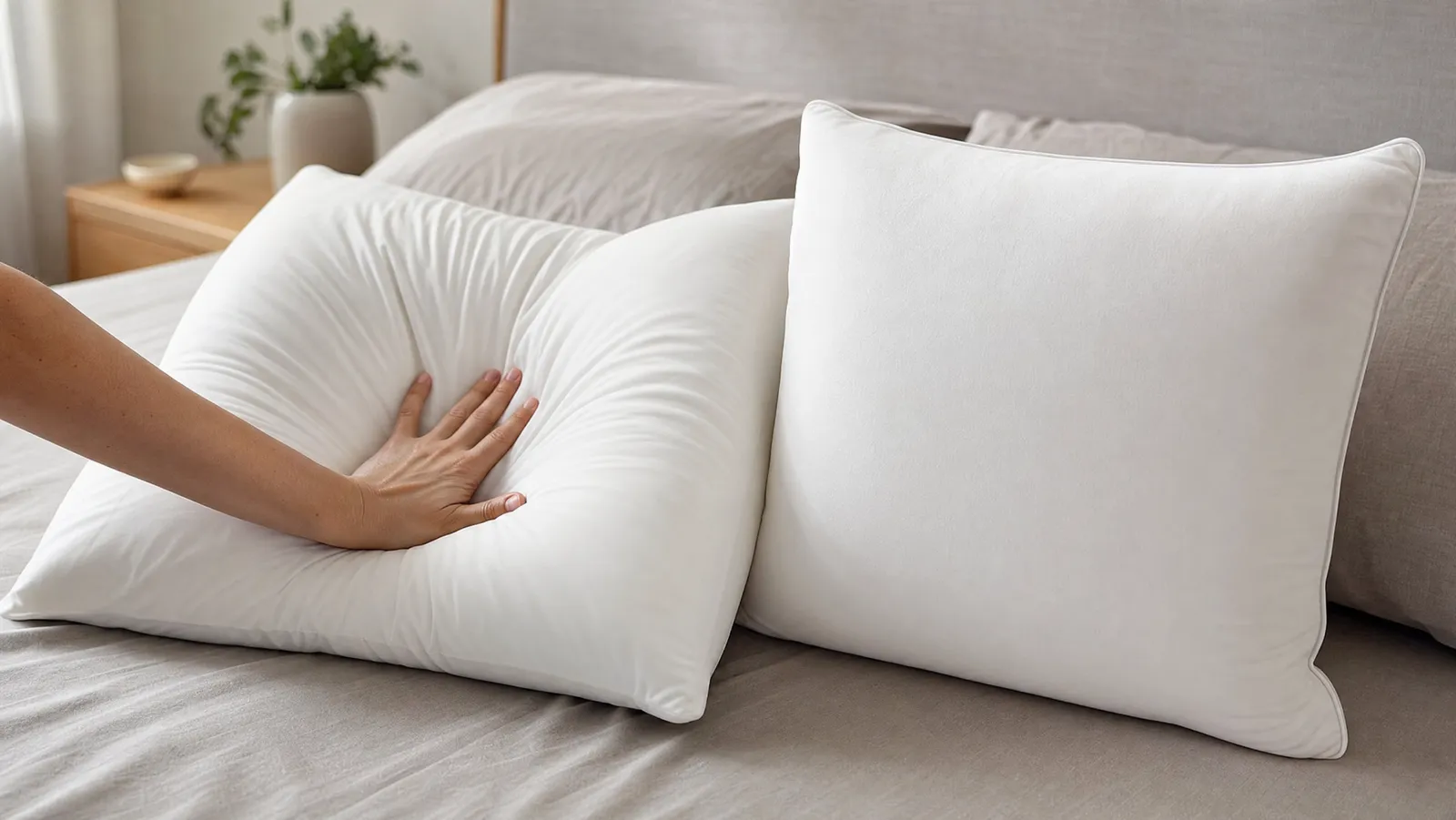
Ask five people whether a firm or a soft pillow is better for neck pain and you will get five confident, contradictory answers — your physical therapist, your mother, and that one great hotel all disagree. So here is ours, up front: firm is not automatically better. The right firmness is whichever one holds your head at a neutral height, level with your spine, in the position you actually sleep in — and for plenty of necks, that turns out to be genuinely soft. We may earn a commission from links on this page, at no extra cost to you.
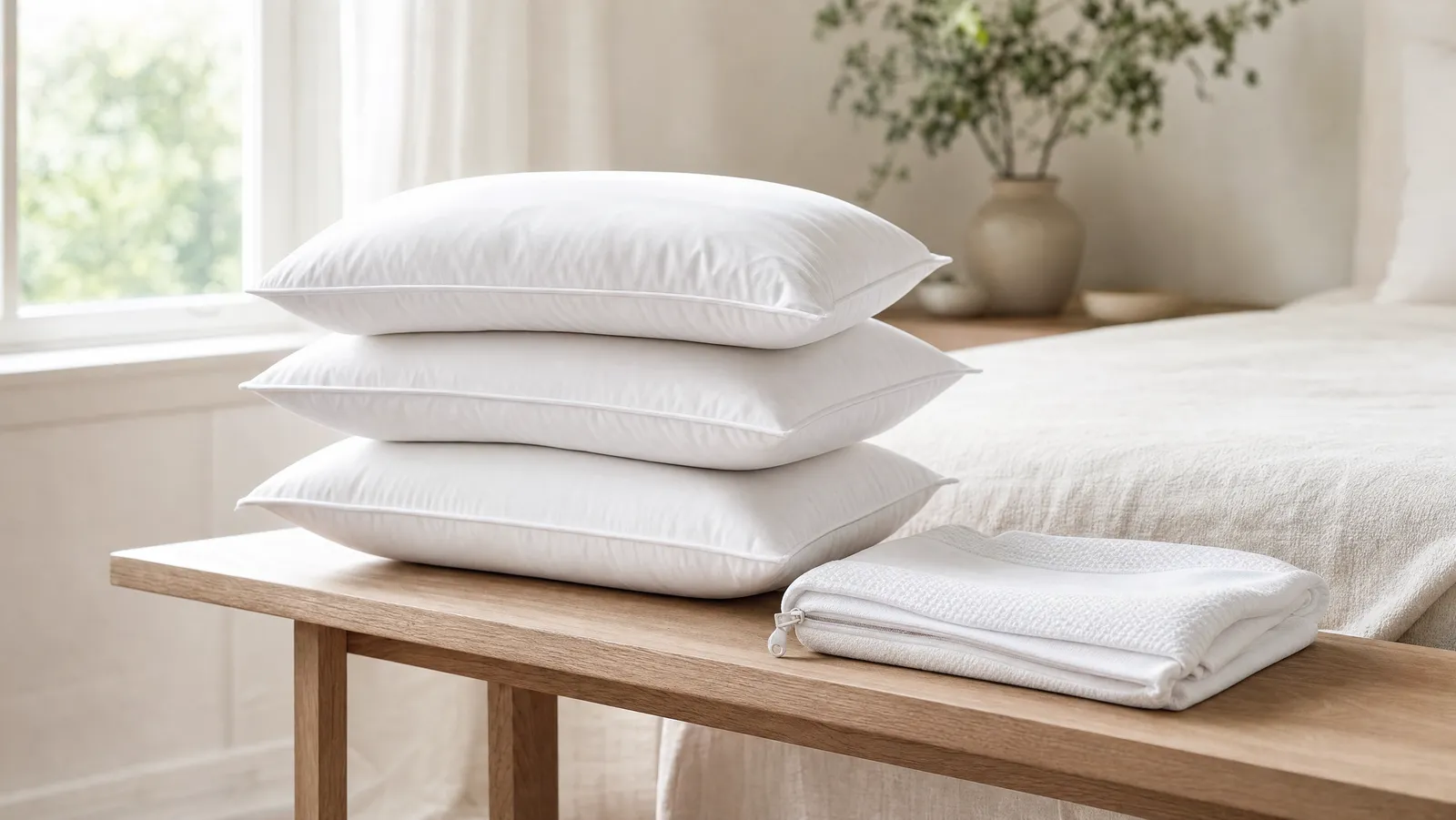
In this explainer we unpack where the "just buy a firm pillow" advice came from and where it goes wrong, who really does do better on a firmer feel, who does better on soft, and how fill material quietly decides the whole debate. Think of it as the firmness chapter of our bigger guide to the best pillow for neck pain. At the end, we recommend three pillows that span the full spectrum — one you can tune, one genuinely soft, one genuinely firm.
Is a firm pillow better for neck pain? Not automatically
The honest short answer: a firm pillow is better for neck pain only when your sleep position and build call for one.
The advice became the default for an understandable reason. Most pillows that fail necks fail by collapsing — the fill flattens under the weight of your head, your head drops below the line of your spine, and you wake up stiff. "Buy firmer" is a one-line fix for collapse, so somewhere along the way "supportive" got flattened into a synonym for "firm."
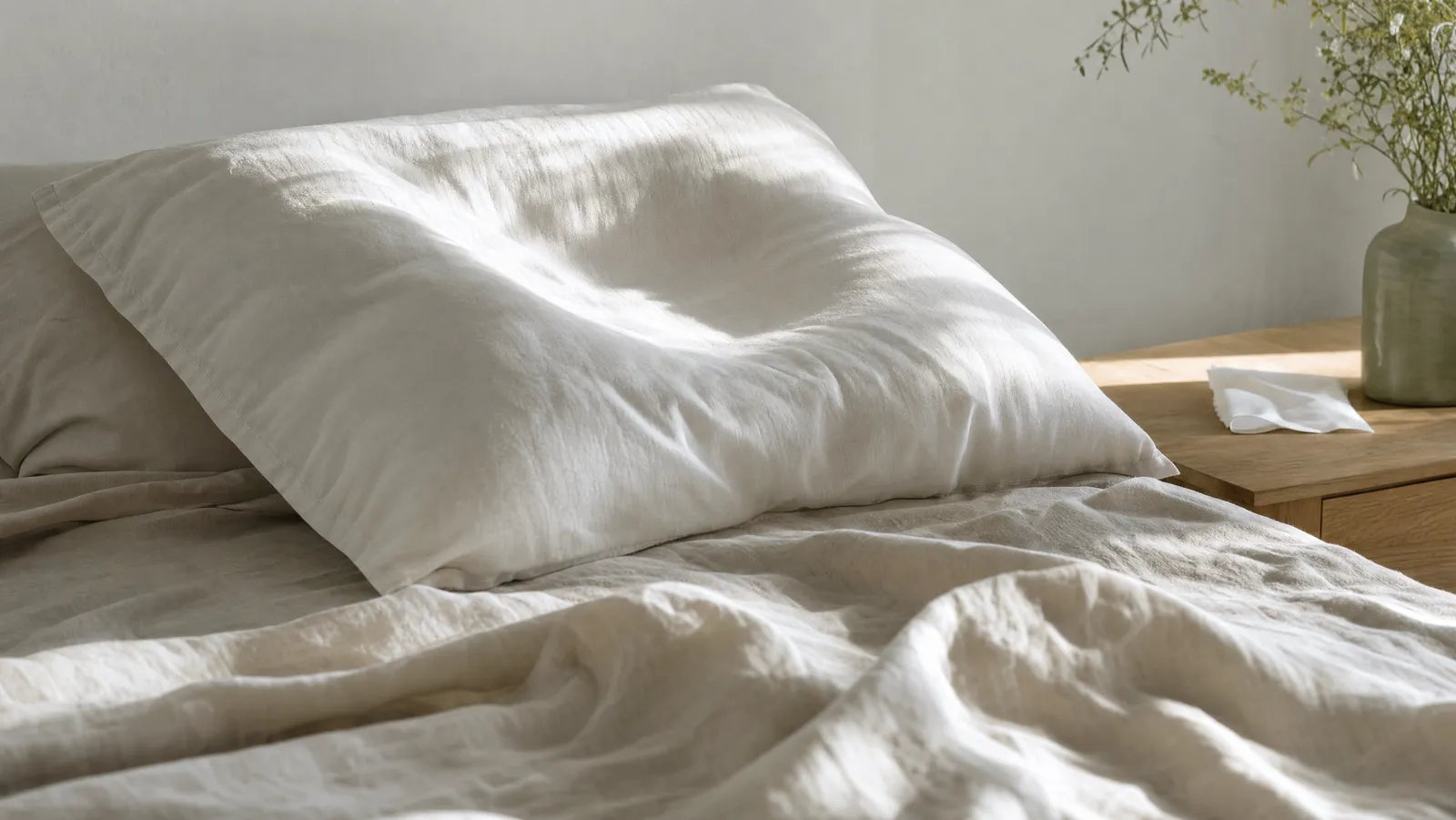
But firmness cuts both ways. A pillow that is too firm and too tall props your head above the line of your spine and holds it there all night, because you cannot sink into a surface that refuses to compress. The real enemy is a neck held bent in any direction for hours — the direction of the bend is almost beside the point. Firm at the wrong height is not support; it is a bad angle with better posture marketing.
Firmness is not support — separate the two and the debate dissolves
Three terms do all the work in this conversation, and pillow marketing blurs them constantly:
- Firmness is how much the surface compresses when your head presses into it. It is a property of the pillow.
- Loft is the pillow's height under load.
- Support is the outcome: your head and neck staying aligned with your spine all night.
Support comes from having the right loft for your position. Firmness merely determines how much of the pillow's advertised height survives once your head lands on it — in Sleep Foundation's pillow-testing methodology, testers note that soft and medium pillows typically sink beneath body weight while firmer pillows push back.
That reframing settles the argument. A soft pillow with generous height can settle into exactly the right loft and support you beautifully. A firm pillow at the wrong height guarantees a bad angle, because it will not get out of its own way. Firmness and height are two halves of a single decision, and we cover the other half in our guide to pillow height for neck pain.
When a firm pillow for neck pain makes sense
Some sleepers genuinely are better served at the firm end of the spectrum:
- Side sleepers. Your pillow has to bridge the entire gap between ear and mattress — roughly the width of your shoulder. Sleep Foundation notes that side sleepers generally need a thicker pillow to fill the space between head and shoulder, and a firmer fill is what keeps that thickness from sagging away by 3 a.m.
- Heavier heads and broader frames. More weight compresses more fill. The same medium pillow that supports a smaller sleeper perfectly can bottom out under a larger one.
- Molded and contoured shapes. A cervical pillow's raised ridge only works if the foam is firm enough to hold that shape under load — a soft version would just be a lump. Cleveland Clinic chiropractor Andrew Bang, DC, has said cervical contour pillows work best for most people with pillow-related neck complaints, and that whole category depends on firm, shape-holding foam. We compare those designs head-to-head in our guide to cervical versus contour pillows.
The failure mode to watch for: a too-firm, too-tall pillow presses on the ear and jaw, and for back sleepers it can push the head forward, chin toward chest.
When a soft pillow for neck pain is the right call
- Stomach sleepers. Harvard Health calls sleeping on your stomach tough on the spine — the back arches and the neck stays rotated to one side — and names side and back sleeping as the two positions easiest on the neck. If you cannot switch positions, the least-bad pillow is a soft, thin one (or none at all) that keeps your head as close to the mattress as possible. Sleep Foundation's stomach-sleeper guidance points the same way: thin pillows are usually the most comfortable in this position.
- Back sleepers with low loft needs. On your back, the pillow's job is modest — cushion the head, fill the small curve of the neck, and otherwise stay out of the way. Harvard Health suggests back sleepers do well with a rounded shape supporting the neck's natural curve and a flatter, softer pillow cushioning the head itself.
Soft's failure mode is the classic one: a plush pillow that bottoms out under a heavy head or across a side sleeper's shoulder gap, leaving the neck tilted downward for hours. Soft is not the villain. Soft at the wrong height is.
Fill type sets the firmness deal you are actually buying
Two pillows labeled "medium" can behave completely differently by morning, because the fill decides whether firmness holds:
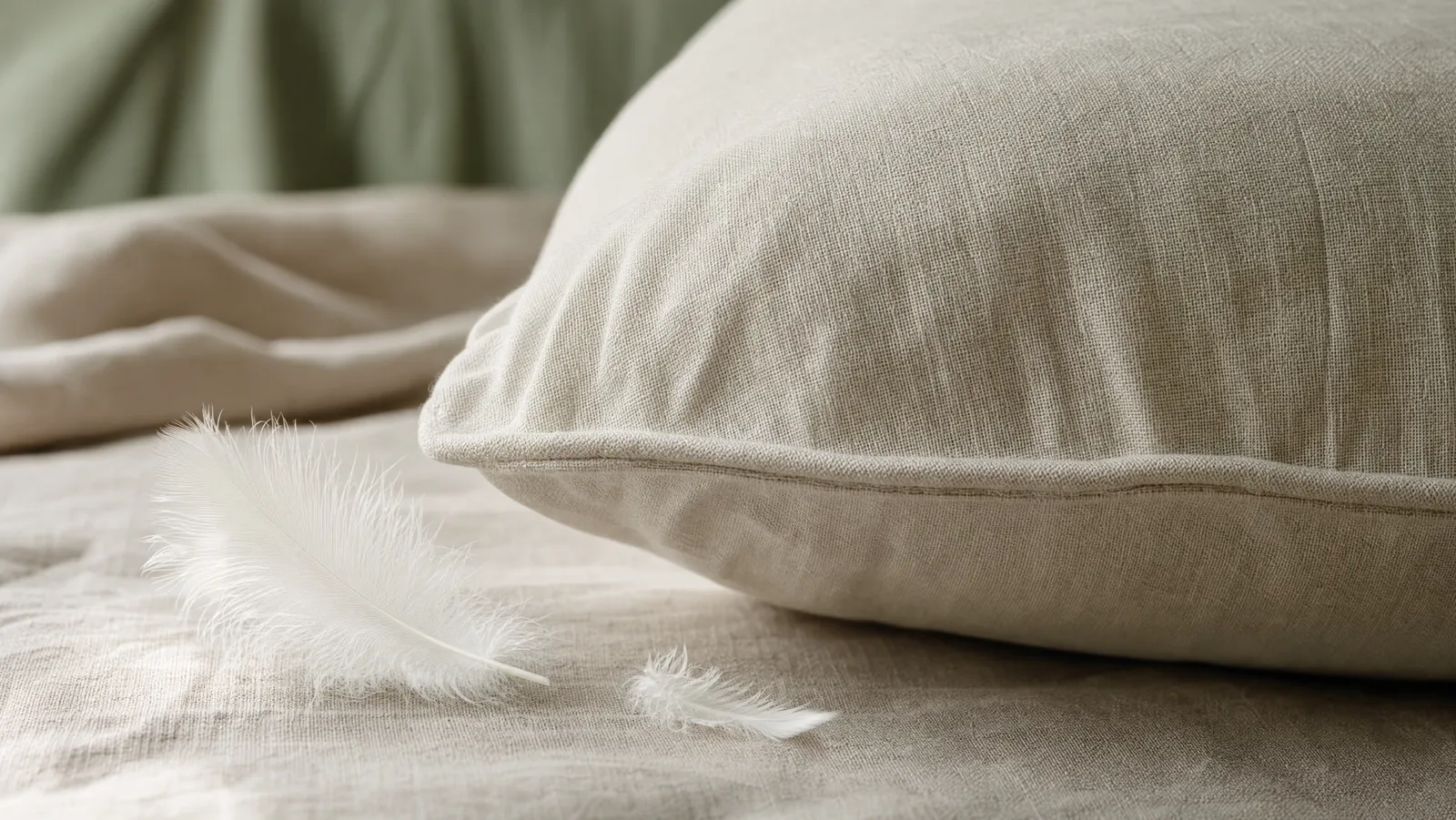
- Feather and down feel luxuriously moldable, then quietly collapse — overnight, as your head works the fill flat, and again over the months. Harvard Health notes feather pillows conform easily to the neck but collapse over time and may need replacing every year or so. The research agrees: in a field trial published in the Journal of Pain Research (Gordon and colleagues, 2010), side sleepers trialed five pillow types for a week each, and the feather pillow produced the highest frequency of waking symptoms such as stiffness and headache — while the latex pillow performed best.
- Solid memory foam and latex bake their firmness in. They resist compression, keep their loft, and hold molded shapes, which is exactly why contour designs use them.
- Polyester fiber sits in the middle and softens with use — the reason makers of fiber pillows tell you to fluff them regularly.
- Shredded foam is the wildcard. Each piece compresses individually, but collectively the fill resists flattening — and inside a zippered shell, the amount of fill becomes something you control.
The practical answer: make firmness a setting, not a guess
Here is the uncomfortable truth about buying firmness off a label: you do not know your ideal feel until your neck has voted, and your neck only votes overnight. Store-squeezing a pillow for five seconds tells you close to nothing about hour six.
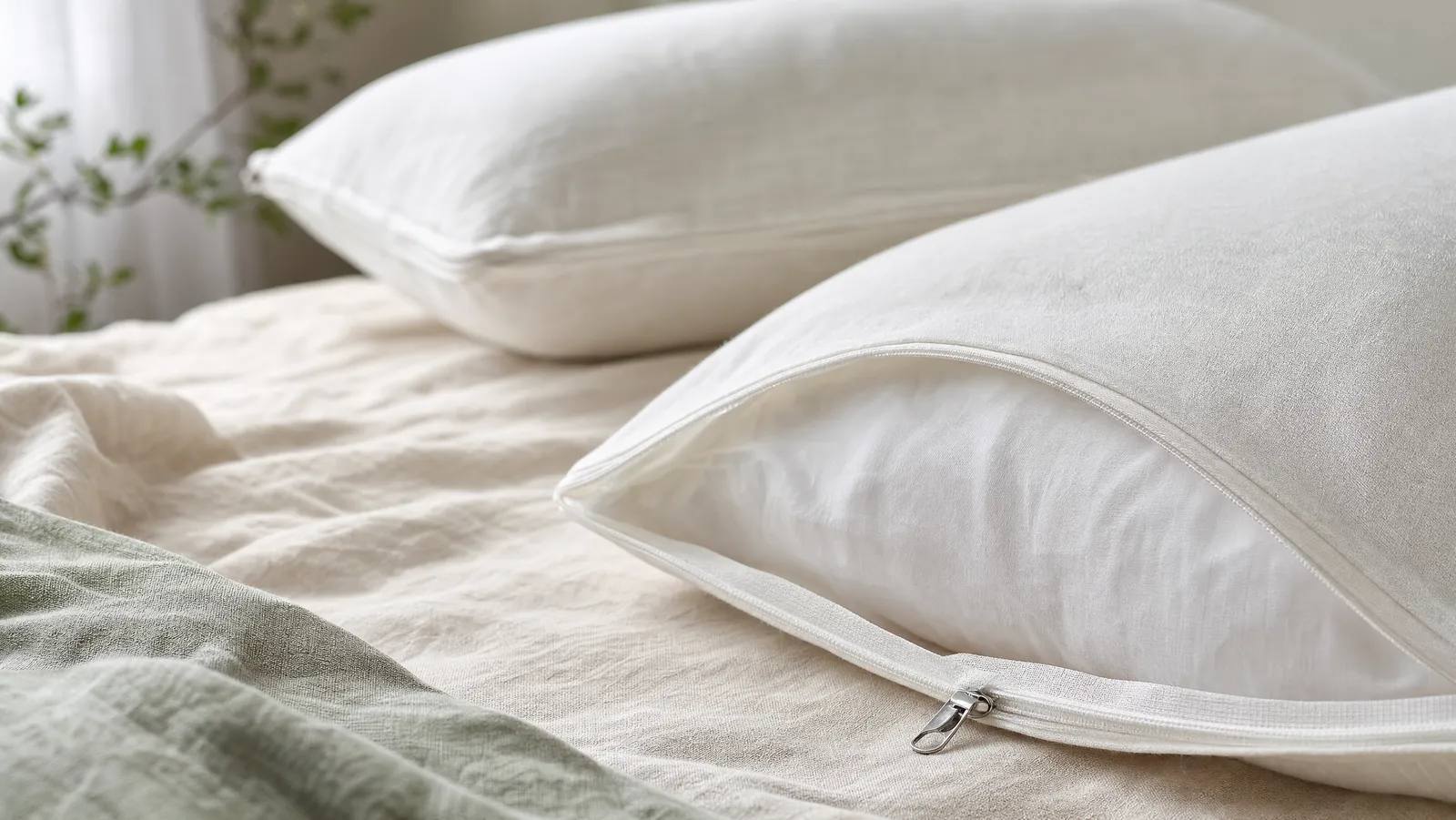
That is why our standing recommendation for anyone still experimenting is an adjustable-fill pillow. Our pick below, the QUTOOL adjustable pillow, has zippered inner and outer covers, so you add or remove shredded gel memory foam until your head sits level — many people find mornings start easier once it does. Remove fill and it sleeps softer and lower; leave it stuffed and it sleeps firmer and taller — one pillow, the whole spectrum. QUTOOL describes the foam as high-resilience and flattening-resistant, and says the cooling face of its double-sided cover lowers surface temperature by about 4–9°F — a maker claim, not something we have measured, but welcome news for hot sleepers.
One honest caveat before the picks: the soft and firm options below are two-packs with a fixed feel. They cannot be tuned — what you buy is what you get — so they make the most sense once you already know which end of the spectrum your neck prefers.
How we chose the three picks
We wanted the spectrum, not a top-ten list: one pillow that lets you find your firmness, and one committed pillow at each pole for sleepers who already know theirs. Every factual claim about the picks comes from the manufacturers' own published listings.
- Tunable: the QUTOOL adjustable shredded memory foam pillow ($20.69 as of July 2026) — the firmness-as-a-setting thesis, in a single standard-size pillow.
- Genuinely soft: the Serta Down Illusion soft/medium two-pack ($49.99 for the pair as of July 2026) — fluffy down-alternative fill in a 300-thread-count cotton shell, for back sleepers and anyone chasing the cradling feel without feather's overnight collapse.
- Genuinely firm: the JOLLYVOGUE firm two-pack ($18.99 for the pair as of July 2026) — high-loft, hotel-style fiber pillows for side sleepers who need height that survives until morning.
When the pillow is not the problem
A pillow can change the angle your neck rests at, and many people find that alone eases morning stiffness — but no pillow treats an underlying condition, and we will not pretend otherwise. If your neck pain is severe or persistent, follows an accident or injury, or comes with numbness, weakness, or pain radiating down an arm, see a clinician before you spend another dollar on bedding.
The bottom line
- Firm is not automatically better. The right firmness holds your head at neutral height for your position, all night.
- Firmness is not support. Support is alignment. Firmness just decides how much loft survives under your head.
- Firmer tends to suit side sleepers, heavier heads, and molded shapes; softer tends to suit stomach sleepers and low-loft back sleepers.
- Fill sets the terms. Feather collapses, foam and latex hold, shredded fill can be tuned.
- When in doubt, buy adjustable and let your neck vote, a handful of fill at a time.
For the full picture — shapes, materials, and picks for every sleep position — see our guide to pillows for neck pain. Below are our three picks, from tunable to genuinely soft to genuinely firm.
The shortlist
3 pillows compared — firmness, loft, and temperature side by side. The top pick is highlighted.
QUTOOL Adjustable Shredded Memory Foam Pillow (Standard)

I started with it overstuffed, pulled out about two handfuls of foam over the first week, and the night the loft finally matched my ear-to-shoulder gap was the first morning in months my neck did not complain.
Fresh from the box it needed the full two days of airing out the maker recommends, and dialing in the right amount of fill is genuine trial and error spread across several nights.
If this article has one thesis — that the right firmness is whichever one holds your head at neutral height — the QUTOOL is that thesis in pillow form. Zippered inner and outer covers let you add or remove the shredded gel memory foam, so loft and firmness become settings rather than gambles. Start it overstuffed, pull out a little fill each night, and stop at the point where your neck wakes up quiet. The maker describes the high-resilience foam as resisting flattening while keeping the spine aligned.
The cover is double-sided: an ice-silky cooling face QUTOOL says lowers surface temperature by about 4–9°F, and a soft face of 60% polyester and 40% bamboo-derived rayon. The gel memory foam is CertiPUR-US certified and freshly manufactured — the maker advises airing it out for 1–2 days — and the removable cover machine washes in cold water (skip heat drying). Note that this is a single standard-size pillow, not a pair.
Serta Down Illusion Soft/Medium Pillows (Queen, 2-Pack)
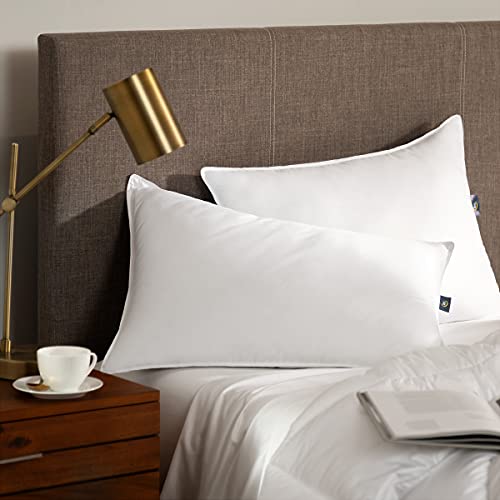
As a back sleeper I gave up on firm slabs years ago, and these have that sink-in, hotel-plush cradle without leaving my head flat against the mattress by morning.
The soft fill is honest about what it is — my broad-shouldered partner bottomed one out on his side within minutes, and there is no zipper to add fill for him.
Soft has a bad reputation in neck-pain circles, and the Serta Down Illusion is the counterargument: a genuinely plush pillow that still shows up with enough body to do its job. The down-alternative fiber fill is, in the maker's words, exceptionally fluffy and made to cradle the head and neck, wrapped in a 300-thread-count 100% cotton shell. For back sleepers who need their head to sit low, and for anyone who finds firm surfaces press on the jaw and ear, this is the soft, cradling feel done properly.
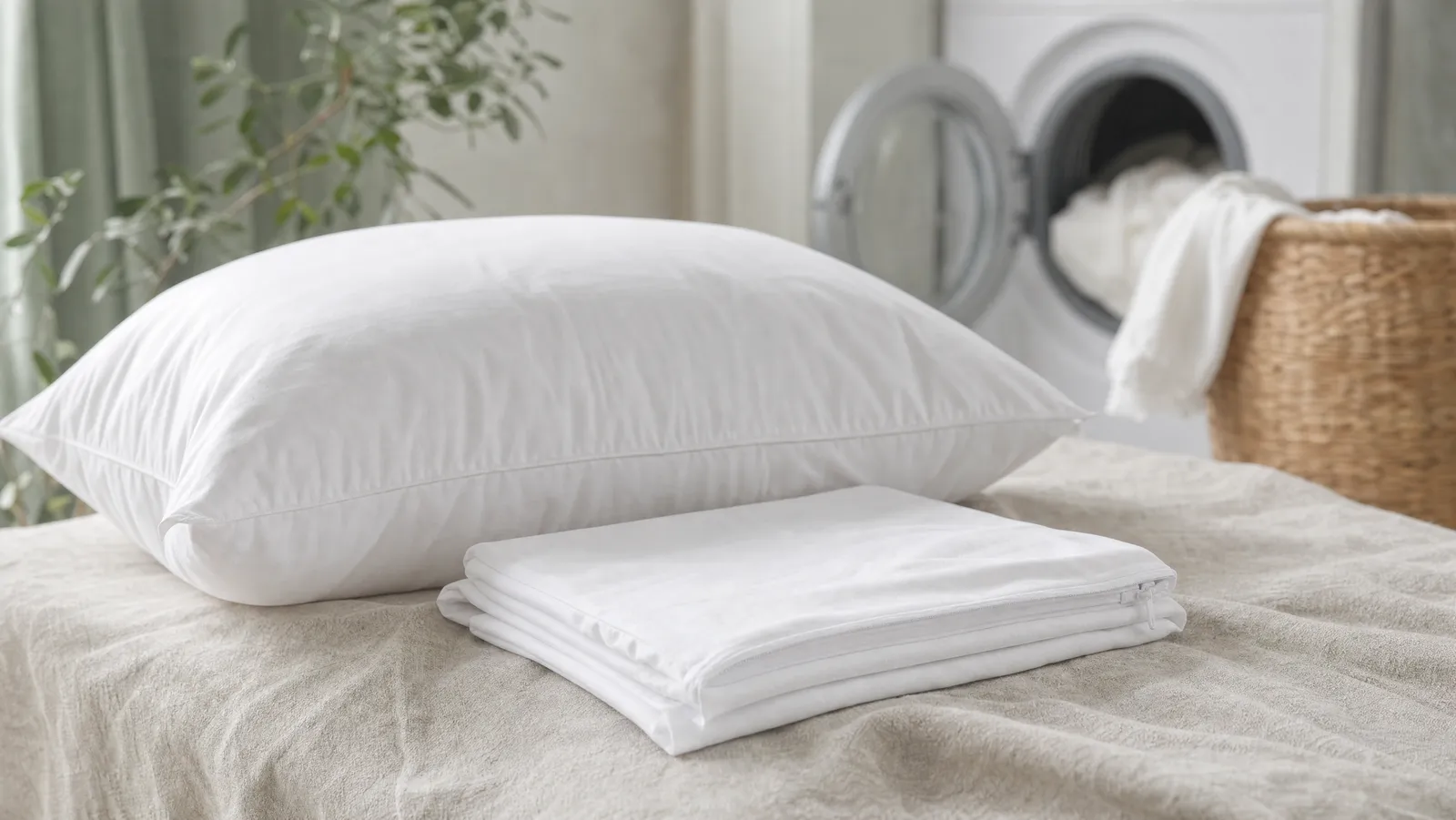
Serta weaves the shell as an allergen barrier the company says blocks dust mites and household allergens, and the pillows are machine washable on a cold gentle cycle (tumble dry low, in large front-loading machines). They arrive as a queen-size 20 x 28 inch set of two and need 24–48 hours to reach full fluffiness after unpacking. What you buy is what you get, though — a two-pack with a fixed feel cannot be tuned.
JOLLYVOGUE Firm Down-Alternative Pillows (Queen, 2-Pack)
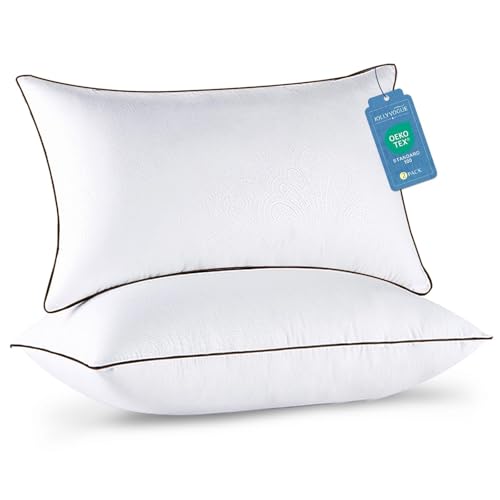
I am a strict side sleeper who used to fold a flat pillow in half every night — these hold their height until morning, and I have stopped wedging my arm underneath for backup.
The loft is genuinely tall; on my back it tipped my chin toward my chest, and because the pair cannot be adjusted, back-sleeping nights send me to a different pillow.
When firm really is the right call — a side sleeper with a wide ear-to-shoulder gap, or a heavier head that flattens ordinary pillows — the JOLLYVOGUE two-pack is the affordable way to get there. These are high-loft, hotel-style pillows the maker pitches as a balance between softness and plump firmness, with a micro-polyester fiber fill that holds its tall shape under load instead of quietly deflating by 3 a.m. That is the entire job description of a firm pillow.
The breathable, skin-friendly shell comes from an OEKO-TEX Standard certified factory, and the pillows are machine washable (air dry or tumble dry). They ship vacuum-packed; JOLLYVOGUE says they recover quickly but advises allowing 24 hours to fully fluff, and recommends fluffing them regularly to retain their shape. Like the Serta set, this queen two-pack is a fixed feel — if the high loft proves too tall for you, there is no fill to remove.
Firmness vs Support in 60 Seconds
Firmness and support get used interchangeably in pillow marketing, and that mix-up is where most bad purchases start. They are not the same thing:
So a soft pillow with generous loft can support a back sleeper beautifully, while a firm pillow at the wrong height locks the neck at a bad angle and refuses to compress out of the way. If you do not know your ideal height yet, an adjustable-fill design like the QUTOOL adjustable pillow lets you test instead of guess.
Pillow Firmness FAQ
Is a firm pillow better for neck pain? Not automatically. Clinician guidance and pillow research point to alignment, not firmness: the best pillow is the one that holds your head level with your spine in your sleep position. Side sleepers often do need a firmer feel; stomach sleepers and many back sleepers do better with softer, lower pillows.
What firmness is best for side sleepers? Usually medium-firm to firm. The pillow has to bridge the full gap between ear and mattress, and a fill that compresses too easily lets the head sag toward the shoulder as the night goes on.
Can a soft pillow cause neck pain? It can contribute if it bottoms out — fill that flattens under the weight of your head leaves the neck tilted downward for hours. Soft tends to work best for stomach sleepers and for back sleepers who need low loft.
How can I tell my pillow is too firm? Common signs: your head sits propped above the line of your spine, you feel pressure on your ear or jaw, and mornings start stiff on whichever side you slept. A too-firm pillow cannot compress out of the way, so the bad angle lasts all night.
Do firm pillows stay firm? Not forever. Fiber fills soften and flatten with use, which is why makers advise regular fluffing, and feather collapses fastest — Harvard Health suggests feather pillows may need replacing every year or so. Solid foam and latex hold their feel the longest.
Why you can trust us

Aimee Cannon
Sleep & bedding writer
Aimee Cannon is a sleep and bedding writer who has spent years testing pillows of every kind — memory foam, down, wool, bamboo, buckwheat, and specialty support pillows. She focuses on matching the right pillow to each sleeping position and need, and reports what actually holds up after months of nightly use. When she is not testing pillows, Aimee is usually with her husband and her dog.