The Best Pillows for Neck Pain (2026 Review)
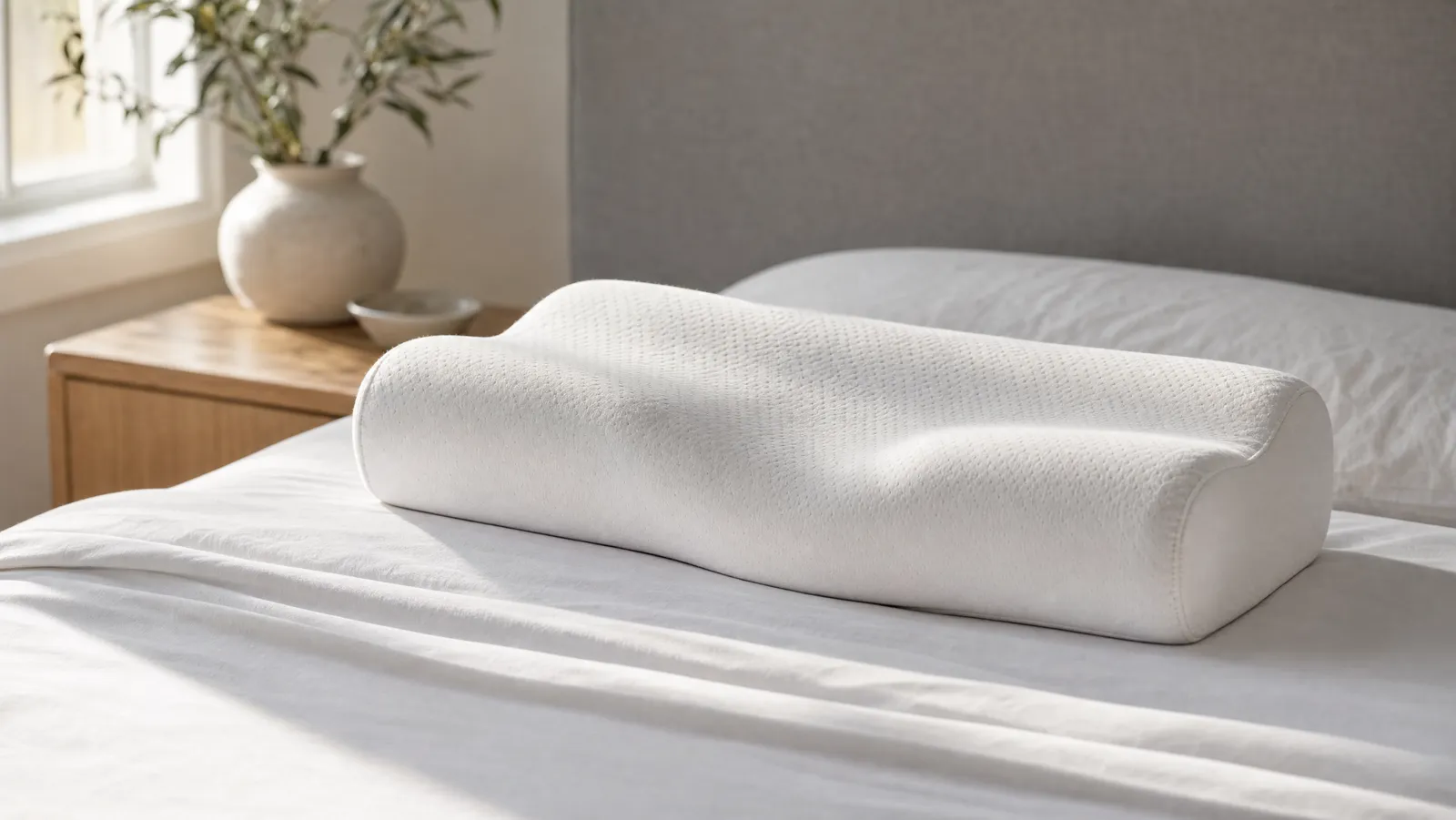
If you wake up with a stiff, one-sided ache and spend the first ten minutes of the day rolling your head around trying to loosen it, the best pillow for neck pain is the one that keeps your head level with your spine all night — usually a medium-firm pillow whose height matches the gap between your ear and the mattress. Shape helps. Height decides. We may earn a commission from links on this page, at no extra cost to you.
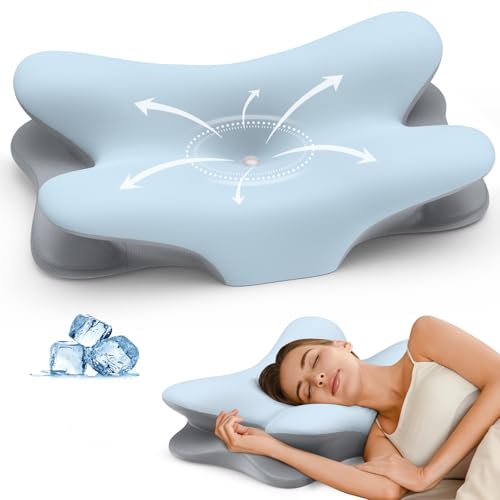
That is the short answer, and most people can act on it this week. Our overall pick is the CosBed Dual-Height Cervical Neck Pillow, at 33.98 dollars as of July 2026, because it is a molded cervical shape that gives you two heights in one pillow — which quietly solves the biggest problem with buying a neck pillow online, namely that you cannot try it first.
But "best" is doing a lot of work in that sentence. The right pillow for a broad-shouldered side sleeper is the wrong pillow for a back sleeper who wakes with headaches, and neither is right for someone whose real problem is a shoulder being crushed all night. This guide is the hub for everything we have written about pillows and neck pain: how to size one, how to place one, when to suspect the pillow is not the culprit at all, and which six we would actually buy right now.
How we chose
We built this list around the variables that change how a pillow behaves under a head, not around marketing language:
- Loft, and whether you can change it. Every pillow here is either dual-height or fill-adjustable, because getting height wrong is the most common and most fixable mistake.
- Shape. Molded cervical contours, a flat adjustable pillow, and one arm-channel design, so there is an option for people who hate contours.
- Firmness under load. All six sit in the medium to medium-firm range, which is where most neck-pain buyers end up.
- Cover washability and temperature. Foam runs warm. Every cover here is removable and machine washable, and most are marketed as cooling.
- Certifications the maker actually lists. CertiPUR-US, OEKO-TEX and similar, quoted from the listing rather than assumed.
Two things we deliberately do not do. We do not quote star ratings or review counts, because that data is not available to us for these listings and we would rather say nothing than guess. And we do not claim any pillow treats a condition. Prices are the live Amazon listing prices as of July 2026 and will move.
What the research actually says
Neck pain is not a niche complaint. According to a Global Burden of Disease analysis published in The Lancet Rheumatology in 2024, neck pain affected about 203 million people worldwide in 2020, and the same analysis projects roughly 269 million cases by 2050.
The pillow evidence is thinner and more mixed than the marketing suggests, but it is not empty. A 2021 systematic review and meta-analysis in Clinical Biomechanics pooled thirty-five studies, nine of them high quality, covering 555 participants, and found significant results favouring rubber (latex) pillows for reducing neck pain. It also reported reduced waking pain and neck disability, and higher pillow satisfaction, with pillow use in general, and its authors concluded that spring and rubber pillows both help in chronic neck pain. Notably, the same analysis found no significant effect on general sleep quality — a useful reminder that a pillow is a targeted fix, not a sleep upgrade.
A separate 2021 systematic review of pillow designs led by Radwan and colleagues, covering eleven studies and 309 participants, reported moderate evidence that a latex material, a contoured design, a height of roughly 7 to 11 cm measured at the unloaded central part of the pillow, and a cooling surface may improve sleep quality and spinal alignment while decreasing sleep-related pain.
None of that makes a pillow a medical device. Mayo Clinic advises contacting a health care provider if neck pain is severe, persists for several days without relief, spreads down your arms or legs, or is accompanied by headache, numbness, weakness or tingling, and seeking immediate care if severe pain follows an injury such as a car accident, a fall or a diving accident. If any of that describes you, see a clinician first and treat the pillow as a comfort question afterwards.
Side sleepers: the widest gap to fill
Shopping for a pillow for neck pain if you sleep on your side is mostly an exercise in measuring a gap. Lying on your side opens the largest distance of any sleep position between the mattress and the side of your head — the width of your shoulder, essentially — and your pillow's only job is to fill it exactly. Fill it short and your head tips toward the mattress. Fill it tall and your head cranes upward. Either way one side of your neck spends seven hours stretched.
The Sleep Foundation notes that side sleeping is the most common adult sleep position and may lower the risk of spine and neck pain, but it also cautions that side sleepers should avoid pillows or stacks of pillows that are too thick, since excess elevation can cause neck pain of its own. In our experience most adults end up somewhere in the 4 to 6 inch range once the pillow has compressed under their head, with broader shoulders needing more and smaller frames needing less — that is our own rule of thumb from measuring readers, not a published figure.
Two practical tests. First, have someone photograph you from behind while you lie on your side in your normal position: your nose should point straight ahead and your head should look level, not tilted. Second, notice where you wake up sore. Pain on the underside of your neck usually means too little loft; pain on the topside usually means too much.
Our pick here is the Bespillow Contour Cervical Pillow, whose 5.5-inch side sits right in the middle of that 4 to 6 inch range, with a 3.7-inch side if you turn onto your back overnight.
When the pain reaches your shoulder
Some people do not really have a neck problem. They have a shoulder problem that shows up in the neck, and pillows for neck and shoulder pain need to solve something a taller pillow cannot. If you sleep on your side, the shoulder underneath you carries a large share of your upper body weight all night, pressed flat between your ribcage and the mattress. The classic tell is waking with a dead arm, pins and needles, or a deep ache along the top of the shoulder that eases once you are upright.
Raising your pillow does not fix this — it can make it worse, because a taller pillow pushes your head further from a shoulder that is already compressed. The two things that do help are giving the shoulder somewhere to go and reducing how much of your weight lands on it. Rolling slightly forward onto a body pillow takes load off the joint. So does a pillow with a channel cut into it.
That is what the Wattne is for. The Wattne Side Sleeper Pillow with Arm Hole has an enlarged arm channel and a widened opening so the bottom arm threads through rather than being pinned, and Wattne positions it for neck, shoulder and rotator cuff pressure relief. The Besyodo takes a lighter version of the same approach with its armrest cut-outs.
Worth saying plainly: persistent shoulder pain with numbness or weakness is not a pillow problem. Get it looked at.
Is your pillow the actual problem?
Before you spend anything, spend a week working out whether your pillow is causing your neck pain or merely failing to relieve it. Those are different problems with different price tags.
Three signals point at the pillow. Timing: discomfort that is worst in the first hour after waking and fades through the morning is classic bedding-related stiffness. Pain that is equally bad at 3pm points elsewhere. Location changes with position: if the ache switches sides depending on which side you slept on, something about your sleeping setup is doing it. The hotel test: if you consistently sleep better on strange pillows away from home, yours is probably wrong for you.
Three signals point away from it. Pain that started after a specific event. Pain that worsens through the working day, which more often tracks desk setup, screen height and hours spent looking down. And pain that does not change at all no matter what you sleep on.
Also check the mattress. A sagging mattress drops your shoulder and hip below your spine line, which no pillow can compensate for, and an old pillow that has lost half its loft is functionally a different pillow than the one you bought. Most foam pillows are worth reassessing after about two years, and a pillow that stays folded when you bend it in half has lost the resilience it needs to support anything.
If the answer is the pillow, the fix is cheap. If it is not, buying pillows is an expensive way to avoid the real question.
Loft: the measurement that matters most
Loft is the single most consequential number on this page, and getting pillow height for neck pain right is worth more than any material, brand or price bracket. Loft is how tall the pillow stands once your head has compressed it — not the number on the box, which is measured empty.
The biomechanics are measurable. A 2016 study published in PeerJ tested four pillow heights from 110 mm to 170 mm and found that cranio-cervical pressure and cervical spine alignment were both height-specific: average cranial pressure at the tallest height was roughly 30 percent higher than at the lowest, average cervical pressure at the lowest height was 65 percent lower than at the tallest, and moving from the lowest to the highest pillow increased the cervical angle by 66.4 percent. In plain terms, a few centimetres of pillow height meaningfully changes both where the pressure lands and what shape your neck holds for hours.
The 2021 Radwan review found moderate evidence supporting a height of roughly 7 to 11 cm — a figure the authors specify for the unloaded central part of the pillow, so it is closer to a box measurement than to the compressed height you actually sleep on. Treat it as a starting range rather than a prescription — a 6-foot-2 side sleeper with wide shoulders will need more than a petite back sleeper.
How to find your own number without guessing: lie in your normal position with your current pillow, and have someone check whether your head is level. Then adjust in small increments. This is exactly the case for an adjustable pillow. The TWK Original ships with an extra bag of foam filler so you can add or remove fill a handful at a time until your head sits level, which is a slower but far more precise route than buying three pillows.
Cervical, contour, and ergonomic shapes
The words get used interchangeably in listings, so it helps to be clear about cervical versus contour pillows before you spend. A contour pillow describes a shape: raised ridges along the long edges with a lower, flattened hollow in the middle, so side sleepers get height at the edges and back sleepers get a shallower centre. A cervical pillow is a contour pillow marketed specifically at neck support, usually with a more pronounced roll under the neck. "Ergonomic" is a marketing word that can mean either. In practice, almost every cervical pillow you will see is a molded memory foam contour.
The appeal is that a contour holds a deliberate shape instead of relying on you to arrange it. The 2021 Radwan review found moderate evidence supporting contoured designs for spinal alignment and sleep-related pain, and the design logic is sound: the neck's natural curve is not flat, so a flat pillow leaves a void under it.
The catch is fit. A contour only works if its geometry matches your body, and there is no way to know that from a photograph. If the neck roll is too tall, it pushes your head back; too short and it does nothing at all. This is why we favour the dual-height contours here — the CosBed and Bespillow both rotate 180 degrees to give you a second try, and the Besyodo lists two curve heights of its own.
If you have tried a contour and hated the feel of being held in place, a plain adjustable pillow is not a downgrade. Many people simply prefer a flat surface, and good memory foam pillows come in both shapes.
Firmness: firm is not automatically better
"Get a firm pillow" is the most repeated and least useful piece of neck-pain advice, and it is worth understanding why it misleads people. Firmness is not support. Firmness describes how much the pillow resists compression; support describes whether your head ends up in a neutral position. The two interact, which is exactly what makes deciding whether a firm pillow is better for neck pain harder than it sounds.
Here is the interaction. A firm pillow keeps almost all of its stated height under your head, so a firm 6-inch pillow behaves like a 6-inch pillow. A soft one of the same height might compress to 3 inches. That means firmness effectively changes your loft. Buy a firm pillow that is too tall and you have made the misalignment worse, not better, because now nothing gives.
Where firmness genuinely helps is consistency. A firm or medium-firm pillow holds its height for the whole night rather than flattening by 2am, and it does not need punching back into shape at 4am. That is why every pillow on this list sits between medium and medium-firm, and why we would steer most people away from very soft down or low-fill polyester if neck pain is the reason they are shopping.
The practical rule: decide your height first, then choose the firmness that maintains it. If you are between options, medium-firm is the safer default. Very firm foam can also transmit more pressure to the ear and jaw for side sleepers, which some people find is its own source of morning discomfort.
Placement beats price
The cheapest improvement available to most people costs nothing, because how to position your pillow for neck pain matters as much as which pillow you own. Most people place a pillow under their head and stop there.
Three adjustments worth trying tonight:
- Push the pillow into the shoulder gap. Side sleepers should slide the bottom edge of the pillow right up against the top of the shoulder, so it fills the whole gap rather than sitting under the head only. A pillow that has drifted an inch away leaves a void your neck muscles hold shut all night.
- Do not sleep on your shoulders. If the pillow slips under your shoulder, it tilts your whole upper body and cancels out whatever loft you carefully chose.
- Support the rest of the chain. A pillow between the knees for side sleepers, or under the knees for back sleepers, keeps the pelvis from twisting. The Sleep Foundation notes that a pillow beneath the knees or thighs can help keep the muscles along the spine flat.
Cleveland Clinic advice on sleeping positions also flags chin position: avoid tucking your chin toward your chest and try to sleep looking straight ahead, keeping the neck's natural curve rather than repeating the head-down posture that causes daytime "tech neck".
One caveat about elevation. If you also sleep propped up for reflux or congestion, wedge pillows support your torso, not your head — you still need a properly sized pillow on top of the wedge, or you will trade one problem for another.
Back sleepers: less loft than you think
Almost every back sleeper we have measured is using too much pillow. The correct pillow setup for back sleepers with neck pain fills a much smaller gap than side sleeping does — the distance from the mattress to the back of your head, which is a couple of inches at most for most people, not the width of a shoulder.
Cleveland Clinic guidance describes back sleeping as the position that puts the least pressure on the spine, and advises looking for a pillow height that keeps your head in a neutral position: too low and your jaw points toward the ceiling, too high and it aims toward your chest. The Sleep Foundation similarly describes back sleeping as the second most common adult position and one often recommended for spinal pain, adding that a small pillow at the base of the neck can keep the head in a neutral position while a pillow beneath the knees or thighs keeps the muscles along the spine flat.
The failure mode is specific and easy to spot: a tall pillow pushes your chin toward your chest, which holds the back of your neck stretched for hours and often shows up as an ache at the base of the skull. If you sleep on your back and wake with that, the first thing to try is a thinner pillow, not a better one.
This is where dual-height contours earn their keep. The published low sides on the Besyodo, Bespillow and SOFTGAS all sit in the 3.7 to 4.3 inch range, and the CosBed offers a lower contour too, which is a reasonable back-sleeping starting point, and you can switch back if you change position later.
Morning headaches and jaw tension
A distinct group of readers writes to us about pillows for neck pain and morning headaches: a dull head, a tight jaw, and a stiff upper neck that all arrive together and all fade by mid-morning. It is a frustrating combination because it is hard to know which part is driving the others.
We want to be careful here. Headache has many causes and we are not in a position to diagnose any of them — Mayo Clinic specifically lists headache accompanying neck pain among the reasons to contact a health care provider, so that is the first step rather than a shopping trip.
What we can say is what a pillow contributes mechanically. Muscles at the base of the skull sit directly under the part of the pillow that supports your head, and holding those muscles at end range for hours is uncomfortable in a way that often gets described as a headache rather than neck pain. Too much loft on your back, or too little on your side, both do exactly that. So does a very firm pillow pressing into the ear and jaw of a side sleeper, which can add jaw tension to the mix.
Two things worth trying while you are getting it looked at. Reduce loft slightly if you sleep on your back, since it is the more common error in this group. And try a softer surface at the contact point — a silk or ice silk cover reduces the friction and pressure your cheek and jaw feel against the foam, which is one of the quieter advantages of the covers on the SOFTGAS and Bespillow.
If you want a dedicated cervical pillow
If you have worked through everything above and want to commit, here is how we would shop for the best cervical pillows for neck support without wasting money.
Buy on measurements, not adjectives. Listings that state actual contour heights in inches are telling you something useful. Listings that say "ergonomic support" are not. Three of our picks — the Besyodo, Bespillow and SOFTGAS — publish both of their contour heights, and that is the kind of listing detail worth paying for.
Prefer dual-height or adjustable-fill. You are buying a shape you cannot try on. A pillow that gives you a second option after the first one fails halves your risk. That is the single reason the CosBed is our overall pick rather than a fixed-height contour.
Check the cover, not just the foam. Foam runs warm and cannot go in a washing machine. A removable, washable cover is the difference between a pillow you keep for two years and one you quietly stop using.
Read the certifications the maker actually lists. CertiPUR-US and OEKO-TEX certifications on the foam and cover are worth having on a product your face is pressed against all night.
Give it two to four weeks, and check the return window first. Contour pillows feel strange at first, and most people need one to two weeks to adapt. That said, adaptation should mean "unfamiliar", not "worse". If a pillow sharply increases your pain in the first few nights, stop using it and go back to what you had.
The honest downsides
We would rather you buy nothing than buy something on the strength of an overstated promise, so here is the unflattering side.
A pillow may not be your answer. The 2021 Clinical Biomechanics meta-analysis found no significant pooled effect of pillow type on general sleep quality, and the effect sizes it did find for neck pain were modest. Pillows are one variable among posture, workstation setup, stress, exercise, mattress condition and underlying medical causes.
Contour pillows are polarising. A shape that holds your head in place is wonderful if it fits and irritating if it does not, and there is no reliable way to predict which camp you are in.
Memory foam runs warm and has a break-in smell. Cooling covers and gel layers help, but foam is still foam. SOFTGAS itself advises ventilating its pillow for 24 to 48 hours before the first night.
Adjustable pillows are a chore. Getting the fill right on the TWK takes several nights and makes a mess.
"Ergonomic" is not a regulated claim. Any pillow can be labelled ergonomic or cervical. The measurements and certifications are the only parts of the listing doing real work.
And the obvious one: none of these pillows treat, cure or manage a medical condition. If your neck pain is severe, persistent, follows an injury, or comes with numbness, weakness or pain radiating into an arm, see a clinician rather than shopping.
Our bottom line
Get the height right, keep firmness in the medium to medium-firm range, and place the pillow properly against your shoulder. Those three things account for most of the difference, and none of them requires a specific brand.
If you want one recommendation: start with the CosBed, because two heights in one pillow is the closest thing to trying before you buy. If you are a dedicated side sleeper, go straight to the Bespillow and its 5.5-inch side. If your problem is really a compressed shoulder, the Wattne is the only pillow here shaped for it. If you sleep hot, the SOFTGAS. And if you have no idea what height you need, the adjustable TWK will let you find out one handful at a time.
Prices are as of July 2026 and change often. Here are our picks.
Explore the full series
- The Right Pillow for Neck Pain if You Sleep on Your Side — the loft math that makes or breaks side sleeping, plus our tested picks.
- Pillows for Neck and Shoulder Pain: What Actually Helps — where a pillow can help the shoulder, and where you need a clinician instead.
- Can Your Pillow Cause Neck Pain? How to Tell — the two-minute self-check that tells you whether the pillow — or something else — is to blame.
- Pillow Height and Neck Pain: Finding Your Loft — how to find your loft number for your sleep position, and the adjustable route when you cannot measure.
- Cervical vs Contour Pillows: What's the Difference? — untangling cervical, contour, orthopedic and ergonomic — and who each shape actually suits.
- Firm or Soft? The Right Pillow Feel for Neck Pain — why firmness is not support, and how to pick the feel that holds your head at neutral height.
- How to Position Your Pillow to Ease Neck Pain — the placement fixes that cost nothing, from where the pillow edge sits to the rolled-towel trick.
- The Best Pillow Setup for Back Sleepers With Neck Pain — why back sleepers usually need less loft than they own, and what to put under the knees.
- Pillows for Neck Pain and Morning Headaches — when a stiff neck and a sore head travel together, and when the pillow is not the lever.
- The Best Cervical Pillows for Neck Support (2026 Review) — five contoured pillows compared on height, certification and honest limitations.
The shortlist
6 pillows compared — firmness, loft, and temperature side by side. The top pick is highlighted.
| Pillow | Firmness | Loft | Sleeps | Best for | Price |
|---|---|---|---|---|---|
Medium Firm | Adjustable | Cooling | Two-height versatility | $33.98 Check | |
Best Contoured SupportBesyodo Ergonomic Cervical Neck Pillow | Medium Firm | Adjustable | Cooling | Contoured neck support | $33.99 Check |
Best for Side SleepersBespillow Contour Cervical Pillow | Medium Firm | Adjustable | Cooling | Side sleepers | $35.99 Check |
Best AdjustableTWK Original Adjustable Bed Pillow (Queen) | Medium | Adjustable | Neutral | Dialing in your own loft | $39.99 Check |
Best CoolingSOFTGAS Cooling Gel Cervical Neck Pillow | Medium | Adjustable | Cooling | Hot sleepers with neck pain | $59.99 Check |
Best for Shoulder PressureWattne Side Sleeper Pillow with Arm Hole | Medium | High | Cooling | Shoulder and arm pressure | $59.99 Check |
CosBed Dual-Height Cervical Neck Pillow

Flipping it over on the second night was what sold me — the lower side finally let my head sit level instead of propped forward.
It is still a molded contour, so if neither of the two heights matches your shoulder width there is no way to fine-tune it.
The CosBed is the pillow we would hand to someone who has never slept on a cervical shape before, because it lets you try two lofts without buying twice. The foam core is molded with a thickened neck contour and a hollow center that cradles the head, and rotating the pillow 180 degrees swaps you between a higher and a lower contour. That matters if you move between your side and your back, or if you simply do not know yet which height suits your shoulders.
The core is high-density slow-rebound memory foam that CosBed lists as OEKO-TEX, CertiPUR-US and ISPA certified and describes as non-toxic and odorless, and the breathable cooling cover is removable and machine washable. The honest trade-off is range: two fixed heights is more flexibility than most molded contour pillows offer, but it is still two heights rather than a dial, and the manufacturer warranty runs six months.
Besyodo Ergonomic Cervical Neck Pillow
The arm cut-out is the detail I did not know I needed; my shoulder stopped going numb around 4am.
It takes up a lot of bed. On a smaller mattress shared with a partner it feels enormous.
Besyodo's take on the ergonomic contour adds the feature side sleepers ask about most: extended armrest cut-outs so the lower arm has somewhere to go. The hollow center cradles the head while the contoured edges support the neck's natural curve, and Besyodo says the cut-outs are there specifically so side sleepers can position their arms without numbness.
Like our top pick it offers two curve heights, listed at 5.3 inches and 3.7 inches, on a slab of high-density slow-rebound memory foam measuring 25.6 by 15.7 inches and carrying CertiPUR-US and Oeko-Tex certification. The zippered ice silk pillowcase comes off for the wash. The catch is footprint: at over 25 inches wide this is a large pillow, and Besyodo notes the dimensions are measured by hand with a tolerance of half an inch, so treat the loft figures as close rather than exact.
Bespillow Contour Cervical Pillow

I measured the gap between my ear and the mattress before ordering, and the 5.5-inch side was almost exactly right.
Rolling from my side to my back means a second or two of foam slowly resetting underneath me.
The Bespillow is the one we would point a committed side sleeper toward first. Its US-patented contour puts a hollow under the head and a raised roll under the neck, and the two-height design is unusually well matched to sleep position: 5.5 inches on one side, which is where a lot of side sleepers land, and 3.7 inches on the other for back and stomach sleeping. You change between them by rotating the pillow 180 degrees.
The foam is CertiPUR-US and Oeko-Tex certified with a rebound Bespillow states at 3 to 5 seconds, meaning it sinks slowly rather than springing back under your ear, and the ice silk cooling pillowcase is removable and machine washable (the maker recommends cleaning it monthly). The downside is the usual one with slow-rebound foam: it does not reshape instantly when you roll over, so combination sleepers may find themselves waiting for the pillow to catch up.
TWK Original Adjustable Bed Pillow (Queen)

I pulled about two handfuls of fill out over the first week, and the morning stiffness I had been blaming on my mattress eased off.
Adjusting it is a genuinely messy job, and it needs re-fluffing more often than a solid foam pillow.
An adjustable-fill pillow solves a problem molded foam cannot: it lets you match loft to your own shoulder width instead of to the average of everyone else's. The TWK ships as a queen-size pillow with an extra bag of foam filler, so you can add fill until your head sits level or pull handfuls out until it does. That makes it the most forgiving option here if you genuinely do not know what height you need, and the only one you can re-tune later when you change mattresses or sleep positions.
TWK describes the memory foam interior as breathable and pressure-reducing, and the cover detaches for machine washing and dries quickly. The trade-off is effort and mess. Getting the fill right takes a few nights of experimenting, loose foam gets everywhere while you do it, and an adjustable pillow will never hold the neck's curve as deliberately as a molded cervical shape.
SOFTGAS Cooling Gel Cervical Neck Pillow

I run hot and used to flip my pillow three times a night; with this one I mostly stopped noticing the temperature at all.
There was a faint new-foam smell for the first couple of days, and it costs well over half again what the cheaper contour pillows here do.
The SOFTGAS is the pick for people whose neck pain comes with a hot head. It is an ergonomic S-curve with a six-zone support system and dual heights, 4.22 inches on the low side and 5.43 inches on the high side, built from CertiPUR-US certified memory foam infused with cooling gel and wrapped in a removable silk satin pillowcase. SOFTGAS states that the cooling gel lowers skin temperature by up to 5 degrees C, to roughly 25 C; that is the maker's own claim rather than an independently verified figure, and how much of it you notice will depend on your room and your bedding.
At 59.99 dollars as of August 2026 it is among the most expensive pillows on this list, which is the main argument against it if temperature is not part of your problem. SOFTGAS also advises ventilating the pillow for 24 to 48 hours before the first night, so plan for that rather than unboxing it at bedtime.
Wattne Side Sleeper Pillow with Arm Hole

Threading my bottom arm through the opening took two nights to feel normal, and after that the ache under my shoulder blade settled down.
It is big and oddly shaped, and it only really makes sense if you sleep on your side nearly all night.
The Wattne addresses a narrower problem than the rest of this list: side sleepers whose ache sits in the shoulder rather than the neck itself. Instead of a plain slab, it has an enlarged arm channel and a widened sleep opening so the bottom shoulder and arm have somewhere to go instead of being pinned under your own body weight. Wattne positions it for neck, shoulder and rotator cuff pressure relief, and it is the only pillow here designed around that idea.
It uses CertiPUR-US certified 70D slow-rebound memory foam and ships with two machine-washable pillowcases, an all-season cover and a cooling cover, plus a rear pocket for an aromatherapy sachet. It also doubles as a leg, lap or sofa cushion. The catch is that it is bulky and committed to one position: if you spend much of the night on your back, the arm opening does nothing for you and the loft is taller than you want.
How to Choose a Pillow for Neck Pain
Work through these four questions in order. Height comes first — shape, material and price only matter once the height is right.
One caution: a pillow is comfort equipment, not medical treatment. Mayo Clinic advises contacting a health care provider if neck pain is severe, persists for several days without relief, spreads down your arms or legs, or comes with headache, numbness, weakness or tingling.
Neck Pain Pillow FAQ
What is the best type of pillow for neck pain? There is no single answer, but the evidence leans toward a supportive, medium-firm pillow at the correct height. A 2021 systematic review and meta-analysis in Clinical Biomechanics pooled thirty-five articles, nine of them high quality and covering 555 participants, and found rubber (latex) pillows favoured for reducing neck pain; its authors concluded that spring and rubber pillows both helped waking symptoms and neck disability. Height mattered more consistently than any single material.
Is a firm pillow better for neck pain? Not automatically. Firmness controls how much the pillow sinks under load, which changes its effective height. A firm pillow that is too tall props your head up and away from neutral; a soft pillow that collapses leaves your head unsupported. Many people find medium-firm the safest starting point.
How high should my pillow be if I sleep on my side? High enough to fill the gap between your ear and the mattress so your nose stays in line with the centre of your chest. In our experience that tends to be somewhere in the 4 to 6 inch range once the pillow is compressed — our own rule of thumb rather than a published figure — and broader shoulders need more.
Do cervical or contour pillows really work? Some people love them and some cannot settle on them. The Radwan review found moderate evidence supporting a contoured design, but the fit has to match your body, and there is usually an adjustment period of one to two weeks.
How long before a new pillow helps? Give it two to four weeks before deciding, and check the return window before you buy. If a pillow makes your pain sharply worse in the first few nights, stop using it.
When should I stop blaming my pillow? If your neck hurts equally at 3pm and 7am, the pillow is probably not the main driver. Pillow-related discomfort tends to be worst on waking and to ease within the first hour or two of the day.
Why you can trust us

Aimee Cannon
Sleep & bedding writer
Aimee Cannon is a sleep and bedding writer who has spent years testing pillows of every kind — memory foam, down, wool, bamboo, buckwheat, and specialty support pillows. She focuses on matching the right pillow to each sleeping position and need, and reports what actually holds up after months of nightly use. When she is not testing pillows, Aimee is usually with her husband and her dog.